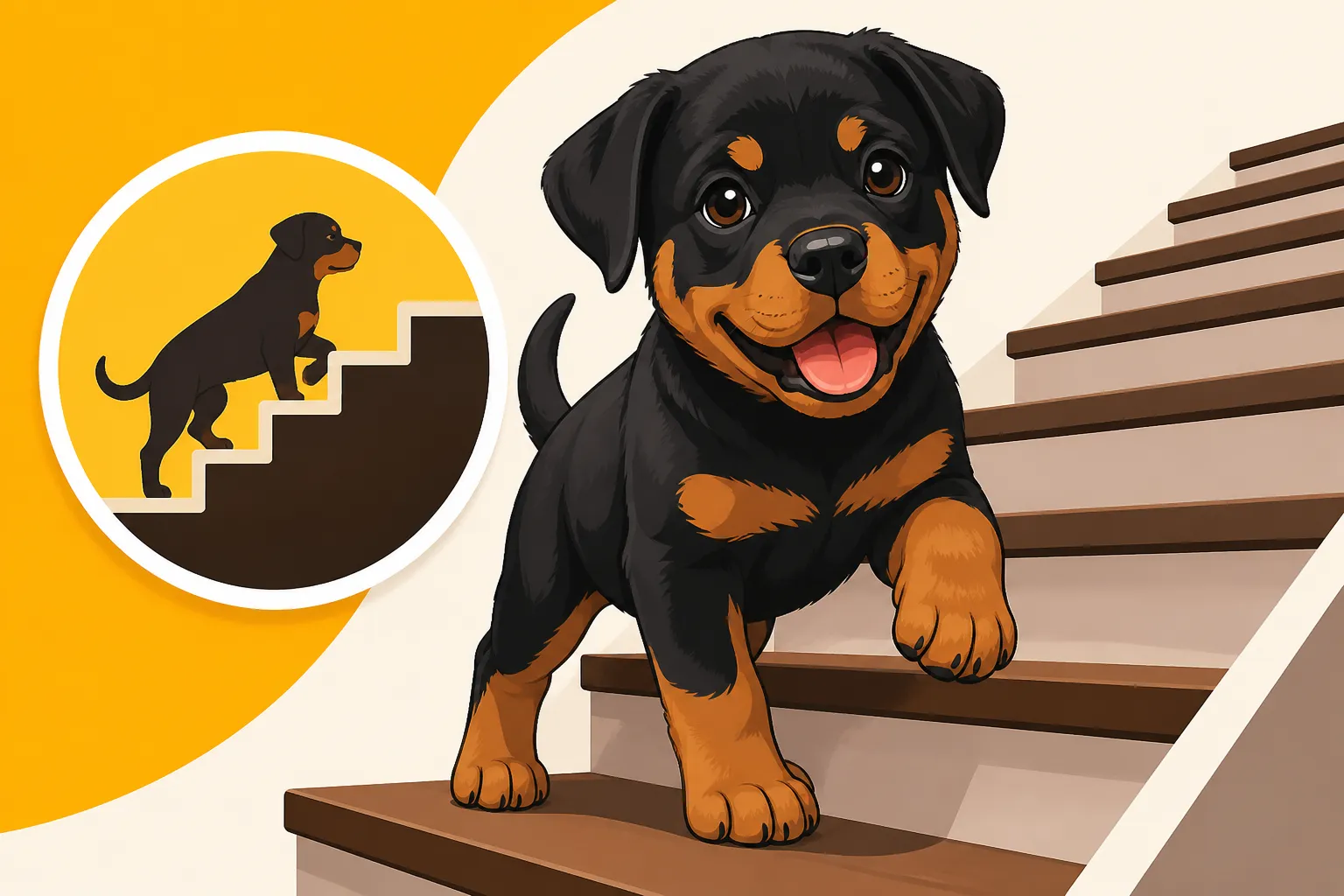
Stairs and a Rottweiler Puppy Every Day
It’s a common sight: a tiny, adorable Rottweiler puppy tumbling around your home, all paws and floppy ears. But then they spot the stairs, and a little knot forms in your stomach. You know these dogs grow incredibly fast and get quite heavy, and the thought of those growing joints navigating stairs every day can be genuinely concerning. This guide is here to walk you through exactly why stairs are a potential hazard for your Rottweiler puppy and, more importantly, how to manage them safely to protect their long-term health.
The Hidden Dangers of Stairs for Growing Rottweiler Puppies
Bringing home a Rottweiler puppy is an exciting time, full of wagging tails and clumsy play. However, unlike smaller breeds, a Rottweiler's rapid growth and substantial adult size mean we need to be extra vigilant about protecting their developing bodies, especially their joints. Stairs, though seemingly innocuous, can pose a significant risk during this critical period.
Understanding Rottweiler Growth Plates
One of the biggest concerns for Rottweiler puppies and stairs lies in their growth plates. These are areas of soft, developing cartilage located near the ends of long bones in puppies and adolescents. Unlike adult bones, which are fully ossified and strong, growth plates are incredibly vulnerable to injury. For large breeds like Rottweilers, these growth plates remain open and susceptible to damage for much longer than in smaller dogs. We're talking about a window that can stretch from 18 to 24 months before they finally fuse and harden. Until then, any excessive or repetitive impact, like the jarring motion of going up and down stairs, can cause microtraumas or even more significant damage to these delicate structures. Imagine a series of tiny, repeated stresses on something that's still forming – it’s not ideal for proper development. This is why understanding Rottweiler Growth Plates and Why They Close So Late is so crucial for any owner.
The Impact of Weight and Repetitive Stress
Now, couple those delicate growth plates with the sheer weight a Rottweiler puppy puts on. Even at just a few months old, a Rottweiler puppy is significantly heavier than many other breeds. As they clumsily bound up and down stairs, that weight multiplies the impact on their still-developing joints. Each jump, each landing, each twist on a step sends a shockwave through their knees, hips, and elbows. This isn't just a concern for the occasional trip; it's the repetitive nature of daily stair climbing that really adds up. Think about how many times a puppy might go up and down stairs in a single day, fetching a toy, following you, or just exploring. This constant, high-impact stress on immature joints can contribute to long-term issues, making seemingly minor movements a big deal for their future mobility. This type of repetitive stress is exactly why we talk so much about A Growing Rottweiler's Joints and Overexercise and the need for careful management.
Recognizing the Risks to Long-Term Joint Health
It's not just about preventing an immediate injury; it's about setting your Rottweiler up for a healthy, active life free from unnecessary joint pain down the road. The choices we make during their puppyhood can have profound impacts years later, and how we handle stairs is a significant part of that equation.
Potential for Developmental Orthopedic Diseases
One of the most heartbreaking consequences of early joint stress in Rottweilers is the increased risk of developmental orthopedic diseases. Conditions like hip dysplasia and elbow dysplasia, while often having a genetic component, can be exacerbated by environmental factors during growth. The constant pounding and torque on immature joints from stair climbing can contribute to the improper formation of the hip and elbow sockets, leading to looseness, inflammation, and eventually debilitating arthritis. You might think, "Well, my dog has good genetics," and while that's wonderful, even genetically sound puppies can suffer if their growth is mismanaged. The goal is to provide the best possible environment for those joints to develop correctly, minimizing any external factors that could lead to pain later in life. This is why breeders strive for clearances like Rottweiler Hip Dysplasia and the OFA Grade and Rottweiler Elbow Dysplasia and Front Leg Lameness, and why you, as an owner, need to continue that commitment to joint health.
Acute Injuries and Falls
Beyond the long-term developmental risks, there's the more immediate danger of acute injuries. Rottweiler puppies, for all their growing size, can be incredibly clumsy. Their bodies are still disproportionate, their coordination isn't fully developed, and they often lack the spatial awareness that older dogs possess. A misstep on a stair, a sudden stumble, or a frantic dash can lead to a fall. These falls can result in sprains, strains, torn ligaments, or even fractures, particularly to those vulnerable growth plates. Imagine your excited puppy trying to follow you down a slippery wooden staircase and losing their footing – it's a terrifying scenario that can lead to an emergency vet visit and a long, painful recovery. Even if they don't fall, a hard landing on a step can twist a limb or impact a joint in a way that causes immediate discomfort. Prevention here isn't just about avoiding future pain; it's about protecting them from present harm.
Practical Strategies for Managing Stairs with Your Rottweiler Puppy
So, what's a conscientious Rottweiler owner to do? You can't just avoid stairs forever, especially if they're a part of your daily home life. The key is strategic management, starting with prevention and gradually introducing safe practices.
Implementing Physical Barriers and Assisted Passage
The simplest and often most effective method for managing stairs with a young Rottweiler puppy is to physically prevent access. Investing in sturdy baby gates is a non-negotiable for many large breed puppy owners. Look for gates that are tall and strong enough to withstand a growing Rottweiler's weight and determination. You can find excellent options on sites like Chewy or Amazon, ranging from pressure-mounted to hardware-mounted designs. For smaller puppies, carrying them up and down stairs is a great option. Yes, they get heavy fast! But for the first few months, it's manageable and ensures zero impact. As they grow, and carrying them becomes less feasible, consider using a lifting harness or sling. This allows you to support their weight and guide them, taking the pressure off their joints. Some owners even use ramps, especially for a short set of steps or to get them into a car, which you can also find on Amazon.
| Strategy | Age Range (Approx.) | Benefits | Considerations |
|---|---|---|---|
| Carrying | 8 weeks – 4-5 months | Zero joint impact, builds bond | Puppy gets heavy quickly, not practical for long flights |
| Baby Gates | 8 weeks – 18-24 months | Prevents unsupervised access, constant barrier | Needs to be sturdy, consistent use required |
| Lifting Harness/Sling | 4-12 months | Supports weight, reduces impact, aids coordination | Requires handler strength, dog must tolerate harness |
| Ramp (for short steps) | 8 weeks – Adult | Eliminates steps, low impact | Requires space, not always practical for indoor stairs |
| Supervised & Guided | 6-18 months | Teaches proper technique, builds confidence | Requires constant vigilance, limited repetitions |
Gradual Introduction and Safe Training Techniques
Once your Rottweiler puppy is a bit older, perhaps around 6 months and showing better coordination, you can begin a very gradual and controlled introduction to stairs. The emphasis here is on slow, deliberate movements, not frantic rushing. Start with just one or two steps, always on a leash, and use high-value treats to lure them up and down slowly. Reward calmness and control. The goal isn't speed, but teaching them to walk, not bound, and to place their paws intentionally. Break it down into tiny steps: one step up, reward, then back down one step, reward. Gradually add more steps over weeks or months. Think of it like teaching a child to navigate stairs; you wouldn't just push them down. This slow and steady approach helps build muscle memory and confidence without overstressing their joints. Enrolling in Rottweiler Puppy Training Through the First Year can provide invaluable guidance on these and other foundational behaviors.
Supporting Joint Health Through Nutrition and Lifestyle
Beyond direct stair management, a holistic approach to joint health is paramount for Rottweilers. This starts with their diet. Always feed a high-quality, large-breed puppy formula designed for slow growth, like those offered by brands you might find on Chewy or even through specialized services like Ollie. These formulas have carefully controlled calcium and phosphorus levels to prevent rapid growth spurts that can stress developing bones. Avoid overfeeding at all costs; a chubby puppy is not a healthy puppy, as extra weight puts immense pressure on growing joints, worsening the risks of conditions like Osteochondrosis From Overfeeding a Rottweiler. Keep your puppy lean, allowing you to easily feel their ribs. Discuss joint supplements, such as glucosamine and chondroitin, with your veterinarian. While not a magic bullet, starting joint supplements early under vet guidance can provide additional support during their crucial growth phase, especially if you have an active puppy or one with a predisposition to joint issues.
When Can a Rottweiler Puppy Safely Navigate Stairs Solo?
This is the million-dollar question for many Rottweiler owners, and the answer isn't a hard and fast date, but rather a developmental window combined with careful observation. There's no single "flip the switch" moment.
The Timeline for Growth Plate Closure
As we discussed, Rottweilers are large and slow to mature, which means their growth plates don't fully close until much later than smaller breeds. While some might begin to fuse around 12-14 months, most veterinarians and experienced breeders recommend caution until at least 18 months, with many suggesting waiting until closer to 24 months of age. It's crucial to remember that this is an average; every dog is an individual. Factors like genetics, nutrition, and overall activity level can influence the exact timing. Your veterinarian can offer the best guidance based on your puppy's individual development. They might even recommend X-rays to check on the status of growth plate closure if you have significant concerns or an unusually active dog. Until those plates are fully closed, the risk of damage remains.
Assessing Physical Maturity and Confidence
Even after growth plates have fused, the transition to full, unrestricted stair use should still be gradual and supervised. Observe your Rottweiler's gait, coordination, and confidence. Do they still stumble occasionally? Are they still prone to bursts of clumsy puppy energy? A truly mature Rottweiler will navigate stairs with a smooth, controlled motion, not a bouncy, haphazard scramble. Look for signs of strength and stability, not just in their limbs, but in their core. Their muscles should be well-developed, supporting their frame effectively. Continue to encourage a slow pace and discourage racing up and down. Even for adult Rottweilers, minimizing repetitive, high-impact activities like sprinting down a long flight of stairs can help preserve joint health in the long run. Focus on Building Adult Rottweiler Fitness Safely through controlled exercise, not through uncontrolled stair usage, to ensure their joints are ready for the demands of their powerful bodies.
Navigating stairs with a Rottweiler puppy can feel like a minefield, but with patience and a proactive approach, you can protect their precious joints during their critical growth period. It's about making conscious choices now that will lead to a more comfortable and active life for your big, beloved companion.
Disclaimer
This article is for general informational purposes only and does not constitute professional advice. Laws, prices and regulations vary by location and change over time. Consult a qualified professional for guidance on your specific situation.