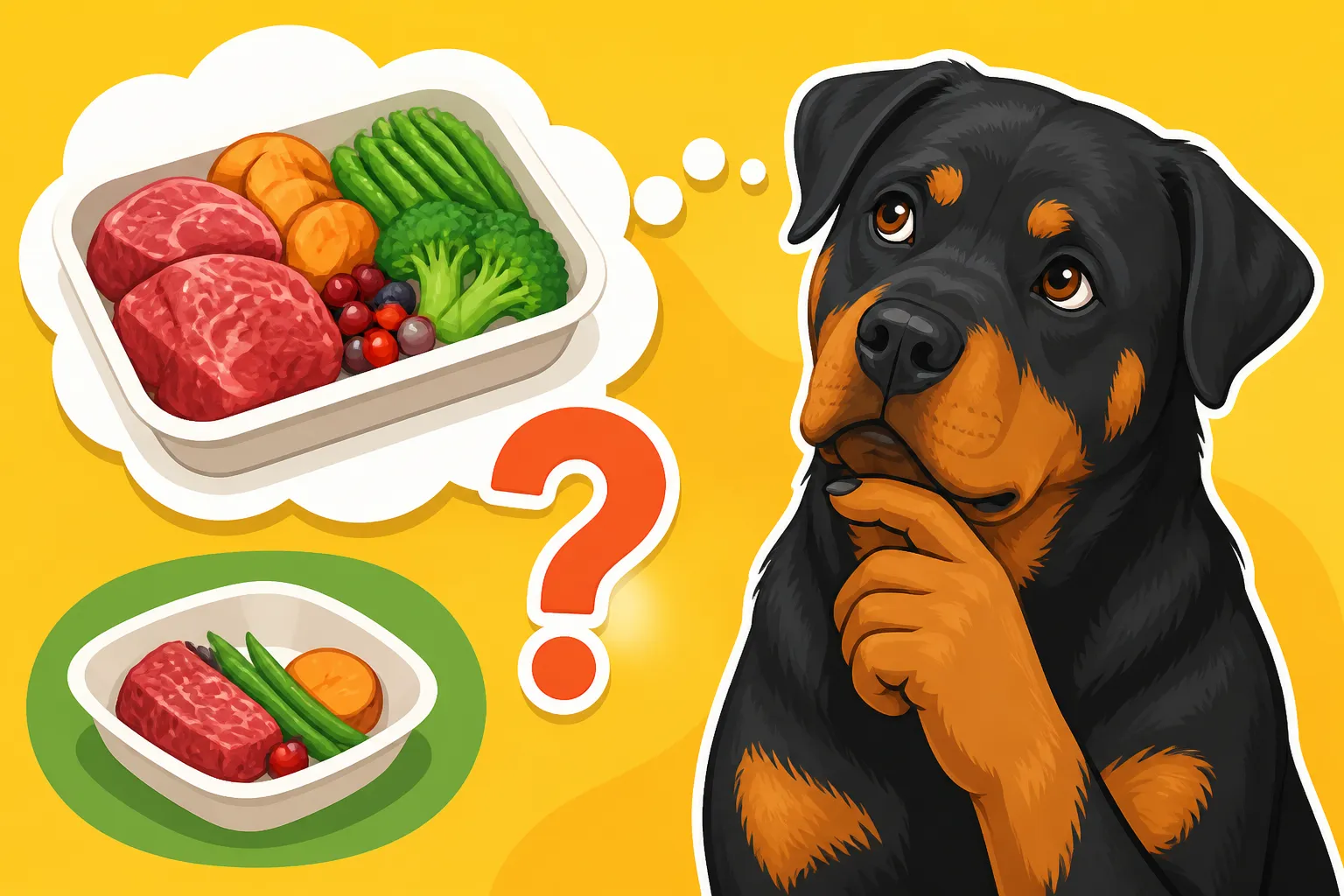
Whether Fresh Food Brands Portion Big Enough for a Rottweiler
As a Rottweiler owner, you know the absolute mountain of food these magnificent dogs can put away. So, when you start looking into the trendy "fresh food" options, your first thought is probably, "Will they even make enough for my behemoth?" It's a completely valid concern, and it stops many well-meaning owners in their tracks. This guide is here to break down whether popular fresh food brands genuinely offer portion sizes sufficient for a growing or adult Rottweiler, and what you need to consider before making the switch.
The Allure of Fresh Food and the Reality of Rottweiler Hunger
There's a lot of buzz around fresh dog food these days, and for good reason. Many of us are looking for ways to give our beloved companions the best possible nutrition, moving away from what feels like anonymous brown pellets. But when your "companion" weighs as much as a small human and eats like a champion wrestler, the practicalities of fresh food become a whole different ballgame.
Why Owners Seek Fresh Food Options for Their Big Dogs
It's natural to want to provide wholesome, minimally processed meals for our Rottweilers. We read labels, we research ingredients, and we often find ourselves wondering if the kibble we're scooping is truly the pinnacle of canine nutrition. Fresh food brands often promise human-grade ingredients, transparent sourcing, and recipes that look a lot more appetizing than a bag of dry crunchies. Many owners turn to these options hoping to see improvements in coat health, digestion, energy levels, or even to tempt a picky eater. The idea of feeding something that looks like actual food, with visible vegetables and real meat, is incredibly appealing. We want to know exactly what's going into our Rottweiler's powerful body, especially when we consider their potential health challenges. For some, it's about perceived better health, for others, it's an attempt to manage sensitive stomachs or Rottweiler Allergies and Recurring Skin Infections that might be linked to diet.
The Sheer Scale of a Rottweiler's Appetite and Nutritional Needs
Let's be honest, a Rottweiler isn't just a big dog; they're a massive dog with an equally massive appetite and energy output. A fully grown male Rottweiler can easily weigh over 100 pounds, and a female isn't far behind. These aren't dainty eaters, and their bodies require a substantial amount of calories, protein, and other nutrients to maintain muscle mass, organ function, and overall health. When they're puppies, the nutritional demands are even more critical. Growing Rottweilers need careful balancing of protein and fat, and especially calcium and phosphorus, to support their rapidly developing bones without causing skeletal issues. You've got to watch the calcium intake closely in a young Rottie, as too much can be just as detrimental as too little. Rottweiler Calcium Limits and Why Supplements Hurt is a prime example of how crucial this balance is.
This isn't just about throwing extra food in the bowl; it's about providing balanced nutrition at scale. An adult Rottweiler might need anywhere from 2,000 to 3,000+ calories per day, depending on their activity level, age, and metabolism. That's a lot of food, whether it's kibble or fresh. So, the question isn't just if a fresh food company can make enough, but if it's practically and financially feasible for them to do so in a way that truly sustains your Rottweiler without you constantly worrying if they're still hungry.
Decoding Fresh Food Portions: Are They Truly Sufficient?
When you consider a large breed like a Rottweiler, "portion size" takes on a whole new meaning. What might be a generous serving for a smaller dog can look like a tiny appetizer for your big guy. Understanding how fresh food brands approach portioning and how to evaluate if it's actually working for your dog is key.
How Fresh Food Brands Calculate Portions for Your Dog
Most reputable fresh food companies use sophisticated algorithms to calculate your dog's daily caloric and nutritional needs. This isn't just a generic "large dog" recommendation. They usually ask for detailed information about your Rottweiler: their age, current weight, target weight, activity level (couch potato or active working dog?), spay/neuter status, and any existing health conditions. Brands like Ollie, for instance, pride themselves on creating custom meal plans based on this kind of data.
Based on this information, they'll often suggest a specific daily amount, usually divided into two meals. This might come in pre-portioned trays or larger bulk packages that you then measure out yourself. The idea is to provide exactly what your Rottweiler needs to maintain a healthy weight and energy level. However, these calculations are just a starting point. They're based on averages and typical dog metabolism. Your Rottweiler, with their unique genetics and individual quirks, might burn calories differently or simply have a more voracious appetite than the average Rottie. It's a journey of observation and adjustment, not a one-and-done solution.
The "Scoop" Versus "Weight" Conundrum for Accurate Feeding
This is where the rubber meets the road, especially for large breeds. While some fresh food brands might give you "scoop" recommendations, the gold standard for accuracy is always to measure by weight using a kitchen scale. Why? Because the density of fresh food can vary significantly, even within the same recipe batch. A "scoop" could be packed tightly one day and loosely the next, leading to inconsistent feeding.
For a Rottweiler, even a slight variation can mean the difference between getting enough fuel and feeling perpetually hungry, or worse, overfeeding and leading to unhealthy weight gain. We know how much of a load Rottweiler Obesity and the Load It Adds to their joints, so precision is paramount. If you're feeding a food that arrives in a large container from a brand found on Chewy or Amazon, you'll need to weigh it out carefully. The portions might look smaller than a bowl full of puffed-up kibble because fresh food is denser and contains more moisture. This can be a mental hurdle for owners used to seeing a giant mound of food. Rest assured, if the calorie count is correct, the smaller volume can still be nutritionally complete. But you have to trust the numbers and monitor your dog, not just the visual impact of the portion. Measuring Rottweiler Food by Weight Not Cups is truly the most accurate way to ensure your big dog is getting what they need.
Here's a quick comparison of general characteristics for different food types for a large breed like a Rottweiler:
| Food Type | Perceived Volume per Calorie | Storage Needs | Moisture Content | Cost Implication (Relative) | Monitoring for Rottweiler |
|---|---|---|---|---|---|
| Dry Kibble | High | Cool, dry place | Low | Lower | Body condition, stool |
| Fresh (Cooked) | Medium-Low | Refrigerated/Frozen | High | Higher | Body condition, energy, hunger cues |
| Raw (Frozen) | Medium-Low | Frozen | High | Higher | Body condition, energy, hunger cues |
This table illustrates why visually, fresh food might seem like less, even when calorically equivalent.
Supplementing and Adjusting for Your Rottweiler's Needs
Even with the best algorithms, your Rottweiler might have unique needs that require some tweaking of the prescribed fresh food portions. This is a journey, not a destination, and it involves close observation and flexibility.
When the Provided Portions Fall Short: Signs and Solutions
So, you've switched to fresh food, you're carefully measuring, but your Rottweiler still seems to be staring at you with those deep, soulful eyes, demanding more. How do you know if it's genuine hunger or just their usual Rottweiler charm?
Look for these signs that the portions might be falling short:
- Constant Scavenging: Your Rottie is always looking for dropped crumbs, trying to get into the pantry, or showing an unusual interest in your food beyond their normal curiosity.
- Weight Loss: This is the most objective indicator. Regularly Feeling for Ribs Under a Rottweiler's Coat and tracking their weight can tell you if they're losing mass. Don't wait for them to look visibly thin.
- Lack of Energy: While Rottweilers aren't typically high-strung, a significant dip in their usual playfulness or a lethargic demeanor could indicate insufficient calories.
- Eating Poop: While sometimes a behavioral issue, coprophagia can also be a sign that a dog isn't getting enough nutrients from their diet.
If you observe these signs, the first step is always to consult your veterinarian. They can rule out any underlying health issues and provide guidance on increasing calorie intake safely. Never just add more food willy-nilly, especially with a growing puppy, as too rapid growth can lead to problems like Osteochondrosis From Overfeeding a Rottweiler. For adult dogs, a slight increase might be warranted. Some fresh food brands allow you to adjust your dog's profile online to get larger portions, or you might need to supplement with approved, calorie-dense additions like plain cooked meat or specific healthy oils, under vet guidance. Remember, Feeding an Adult Rottweiler at a Hundred Twenty Pounds means needing a lot of energy, and some days, they just need more.
The Cost Factor and Practicality for Feeding a Large Breed
Let's face it, feeding a Rottweiler isn't cheap, no matter the food type. But fresh food, by its very nature of being minimally processed and often human-grade, generally comes with a significantly higher price tag. When you're feeding a dog that consumes thousands of calories a day, that cost can quickly become prohibitive for some households. This is a frustration many Rottweiler owners experience – wanting the best but feeling the pinch.
Consider the practicalities beyond just the sticker price:
- Storage Space: Fresh food often requires refrigeration or freezer space. For a large Rottweiler, you're talking about a substantial volume of food, which can quickly fill up your fridge or deep freezer.
- Delivery Frequency: Many fresh food services deliver on a subscription basis. You'll need to manage these deliveries and ensure you have enough on hand, especially during holidays or if there are delivery delays. Brands on Amazon or Chewy might require you to be more proactive in ordering bulk quantities.
- Preparation Time: Even if pre-portioned, there's often more handling involved than just scooping kibble from a bag.
Because of these factors, many Rottweiler owners find a balanced approach works best. This might involve feeding fresh food as a topper to high-quality kibble, using it as a high-value training treat (Treat Allowance for a Rottweiler in Daily Training), or feeding it for one meal while kibble makes up the other. This way, your Rottweiler gets some of the benefits of fresh ingredients without the full financial and logistical burden of an all-fresh diet.
Seamlessly Integrating Fresh Food into Your Rottweiler's Routine
Deciding to incorporate fresh food doesn't mean you have to completely overhaul your Rottweiler's diet overnight. There are smart ways to introduce it, combine it with other foods, and ensure it's truly beneficial for your big dog.
Mixing Fresh Food with Kibble or Other Diets
For many Rottweiler owners, a hybrid approach makes the most sense. You might decide to mix fresh food with a high-quality kibble, providing the best of both worlds. This can help manage costs and storage, while still giving your Rottweiler the benefits of fresh ingredients. When mixing, always introduce new foods slowly over several days to a week. A sudden change can upset your Rottweiler's digestive system, leading to loose stools or stomach upset. Start with a small amount of fresh food mixed into their regular meal, gradually increasing the ratio until you reach your desired balance. Watch for any changes in stool consistency, appetite, or energy.
Some owners use fresh food as an "enrichment" topper for kibble, making mealtime more exciting and palatable. Others use it as a special treat or for Rottweiler Mental Work on a Rainy Day to make puzzle feeders even more enticing. This flexibility allows you to tailor the diet to your dog's specific needs, your budget, and your lifestyle. Just remember to account for the added calories from toppers in your Rottweiler's daily intake to prevent unwanted weight gain. Monthly Food Cost for a Hundred Twenty Pound Rottweiler is already high, so smart integration can help you manage your budget.
The Undeniable Importance of Veterinary Oversight
Regardless of what diet you choose for your Rottweiler, consistent veterinary oversight is paramount. This is especially true when making significant dietary changes, such as switching to fresh food or altering portion sizes. Your vet is your best partner in ensuring your Rottweiler's nutritional needs are met.
Before starting a new fresh food diet, discuss it with your vet. They can help you:
- Assess your Rottweiler's current body condition: They can objectively tell you if your dog is at an ideal weight, too thin, or carrying too much weight, helping you determine appropriate starting portions.
- Evaluate specific health needs: If your Rottweiler has allergies, sensitivities, or conditions like heart disease, your vet can advise on ingredients to include or avoid.
- Monitor progress: During regular check-ups, your vet can track weight, muscle mass, and overall health to ensure the diet is working for your dog. They can also perform blood work to check for any nutrient deficiencies or imbalances over time.
- Address concerns: If your Rottweiler is showing signs of hunger, weight loss, or digestive upset, your vet can help troubleshoot and adjust the diet plan safely.
Remember, commercial fresh food brands do their best, but they don't know your specific dog like your veterinarian does. Regular discussions with your vet, especially regarding Senior Rottweiler Feeding and Mobility as your dog ages, will ensure your Rottweiler thrives on whatever diet you choose to provide.
Disclaimer
This article is for general informational purposes only and does not constitute professional advice. Laws, prices and regulations vary by location and change over time. Consult a qualified professional for guidance on your specific situation.