Cutting a Rottweiler’s Ration While Keeping Two Meals
It's incredibly frustrating, isn't it, when you look at your beloved Rottweiler and realize they're carrying a few too many pounds? You want to help them shed that extra weight for their health, but the thought of making them feel hungry or constantly changing their routine feels just as bad. This guide is here to walk you through exactly how to effectively reduce your Rottweiler's daily food intake while still maintaining a consistent and satisfying two-meal schedule, ensuring they stay healthy and happy without feeling deprived.
Why Your Rottweiler Might Need a Reduced Ration
It's a tough conversation to have with ourselves, but acknowledging that our Rottweiler might be overweight is the first crucial step towards their better health. These magnificent dogs are prone to putting on weight, and due to their sheer size and powerful build, those extra pounds can lead to significant health complications down the road. Understanding the "why" can often be the motivation we need to make those necessary changes.
The Dangers of an Overweight Rottweiler
An overweight Rottweiler isn't just a slightly more cuddly version of their lean self; it's a dog facing a higher risk of serious health problems. Imagine carrying an extra twenty or thirty pounds on your own frame every single day. Now, imagine doing that as a heavy, large-boned dog. The strain on their joints, already susceptible to issues like Rottweiler Hip Dysplasia and the OFA Grade and elbow dysplasia, becomes immense. Each step is an added burden, accelerating the wear and tear on cartilage and leading to earlier and more severe arthritis. This isn't just about discomfort; it's about chronic pain that significantly reduces their quality of life.
Beyond the joints, excess weight places a tremendous strain on their cardiovascular system. Their heart has to work harder to pump blood through a larger body mass, increasing the risk of conditions like Rottweiler Heart Disease and Subaortic Stenosis. They might become less tolerant to exercise, pant more, and generally have less energy, creating a vicious cycle where less activity leads to more weight gain. Overweight dogs are also more susceptible to metabolic diseases like diabetes, certain cancers, and even a decreased immune response. It’s a sad reality that obesity can directly contribute to shortening their precious Rottweiler Lifespan and the Eight to Ten Year Average, something every Rottweiler owner desperately wants to extend. The weight multiplies the load on their hips and other joints, turning everyday activities into potential sources of pain.
Identifying When Your Rottweiler is Overweight
So, how do you really know if your Rottweiler is carrying too much weight? It's not always as obvious as we think, especially with their dense coats and powerful build. The most reliable method is through a process called Body Condition Scoring (BCS), which your veterinarian will use. However, you can learn to do a basic check at home. Start by feeling along their rib cage. You should be able to easily feel their ribs without pressing hard, almost like feeling the back of your hand. If you have to dig your fingers in, or can't feel them at all, they're likely overweight.
Next, look at them from above and from the side. From above, your Rottweiler should have a discernible waistline that tucks in behind their ribs, almost like an hourglass shape, even if a subtle one. From the side, their abdomen should tuck up, not sag down or appear parallel to the ground. If they look like a solid block from above or have a saggy belly from the side, it's a red flag. Lastly, pay attention to their energy levels and breathing. Are they getting winded easily? Are they struggling to jump into the car or climb stairs? These can also be subtle indicators of excess weight affecting their mobility and stamina. Always confirm your assessment with your vet, as they can provide an objective professional opinion and guidance.
Here's a simplified guide to body condition scoring:
| Body Condition Score | Appearance | What You Feel | Action Needed |
|---|---|---|---|
| 1: Emaciated | Ribs, spine, pelvic bones easily visible, severe waist tuck. | No fat, prominent bones. | Urgent vet attention, significant weight gain needed. |
| 2: Very Thin | Ribs, spine, pelvic bones easily visible, pronounced waist tuck. | Minimal fat, bones easily felt. | Needs weight gain, vet check to rule out illness. |
| 3: Ideal | Ribs easily felt, visible waist, abdominal tuck. | Ribs felt with slight pressure, good muscle. | Maintain current feeding and exercise. |
| 4: Overweight | Ribs felt with difficulty, less defined waist, slight abdominal sag. | Ribs require firm pressure, fat deposits over lumbar area. | Implement diet and exercise changes. |
| 5: Obese | Ribs not felt, no waist, obvious abdominal distention. | Heavy fat deposits, difficult to feel bones. | Urgent diet and exercise changes, vet guidance crucial. |
Strategic Approaches to Cutting Calories, Not Meals
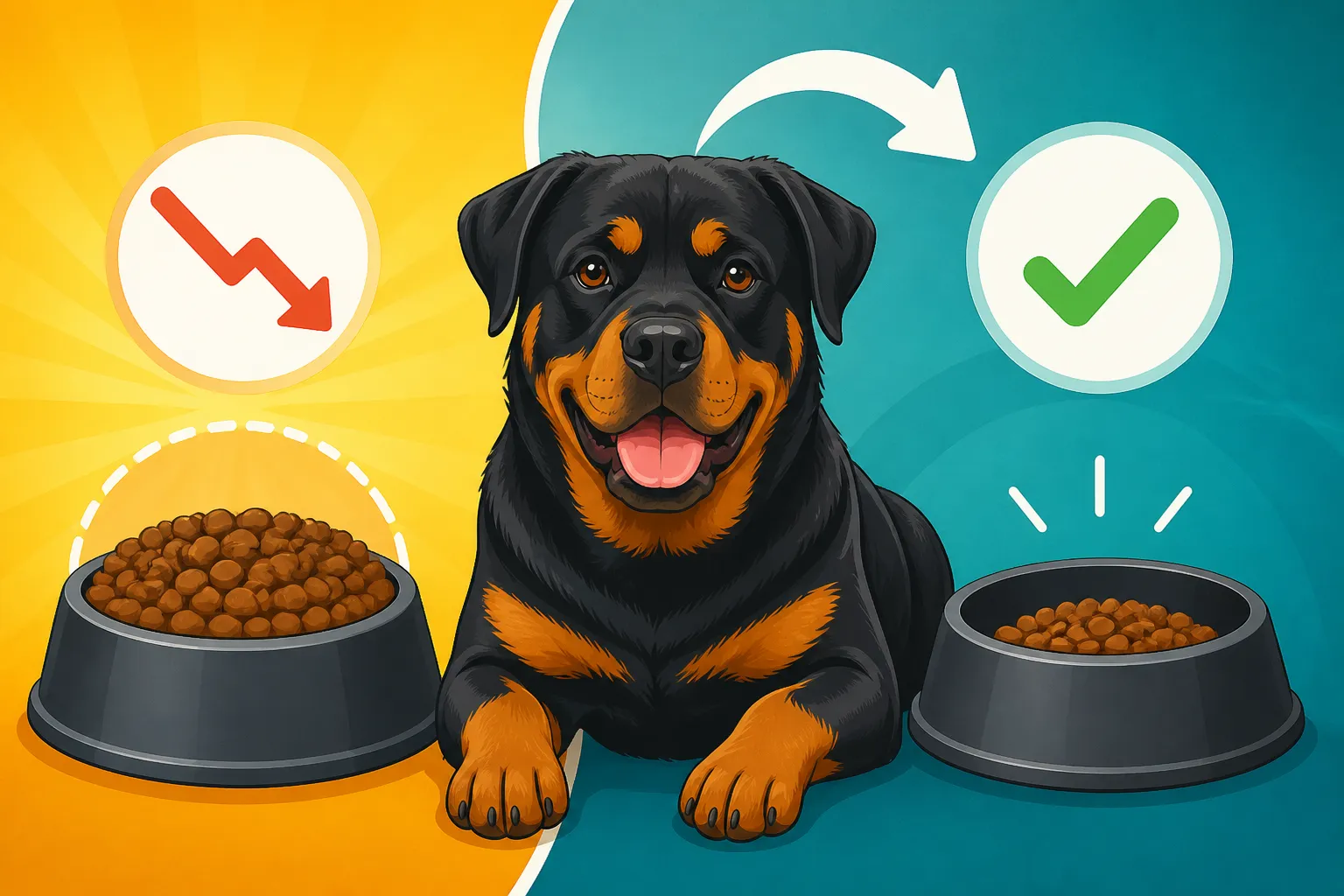
The good news is you don't have to overhaul your entire routine to help your Rottweiler lose weight. The goal here is smart, strategic calorie reduction that keeps them feeling full and satisfied on their existing two-meal schedule. It’s about being deliberate with every morsel that crosses their lips, not just slashing quantities indiscriminately.
Re-evaluating the Current Food Intake
Before you can cut anything, you need to know exactly what your Rottweiler is currently consuming. Many owners feed by the "cup" measurement, but this can be incredibly inaccurate. Different kibbles have different densities, and a "cup" of one brand can weigh significantly more and contain more calories than a "cup" of another. Invest in a digital kitchen scale and measure your dog's food by weight (grams or ounces) instead of volume. This gives you a precise baseline. Also, be honest about treats, chew items, and table scraps. Those small additions throughout the day can add up to hundreds of extra calories, completely derailing any efforts to reduce their main meals. A handful of treats might seem insignificant, but for a dog on a diet, it's like us having an extra dessert every day.
Once you have that precise measurement, look at the calorie content per serving on your dog food bag. Most high-quality dog foods will list calories per cup or per gram. Do the math to find out their actual daily caloric intake. This figure is your starting point. From there, your vet can help you determine a target calorie intake for healthy, gradual weight loss, typically a 10-20% reduction from their current intake. Remember, consistency is key across all food items, not just the kibble. Every calorie counts, and understanding where they come from is the first step toward effective management.
Choosing the Right Food for Weight Management
If your Rottweiler is significantly overweight, simply reducing their regular food might leave them feeling too hungry and could potentially lead to nutrient deficiencies if done drastically. This is where specialized weight management formulas come in. These foods are designed to be lower in calories but higher in fiber, which helps your dog feel full without consuming excess energy. The increased fiber content often means they can eat a similar volume of food but receive fewer calories, helping to satisfy their appetite. Look for formulas specifically labeled "weight management," "light," or "healthy weight."
When choosing a food, read the labels carefully. You want a balance of good protein to help maintain muscle mass during weight loss, moderate fat, and plenty of fiber. Some owners even consider incorporating specific types of foods for dogs with sensitivities, which might include novel proteins, much like what's explored in Elimination Diets on a Rottweiler That Eats Six Cups. Always transition new foods slowly over 7-10 days to avoid digestive upset. Companies like Purina Pro Plan Veterinary Diets and Hill's Prescription Diet offer excellent weight management formulas, often available through your vet or online retailers like Chewy. You might find that a food you thought was healthy for maintenance is actually quite calorie-dense for a dog trying to shed pounds.
Maximizing Satiety with Smaller Portions
Even with lower-calorie food, portion control is paramount. The goal is to make those two meals feel more substantial and last longer, tricking your Rottweiler's brain (and stomach) into feeling full. One excellent strategy is to add low-calorie, high-fiber vegetables to their meals. Steamed green beans, plain cooked pumpkin (not pie filling!), carrots, or broccoli florets can add bulk and nutrients without packing on calories. Start with a small amount and gradually increase to see what your dog tolerates well without digestive upset. These additions can turn a smaller portion of kibble into a more satisfying-looking meal.
Another fantastic tool is the use of slow feeder bowls or puzzle toys. Instead of gulping down their meal in 30 seconds, a slow feeder forces them to work for each bite, extending mealtime significantly. This not only aids in satiety but also reduces the risk of gulping air, which is a factor in conditions like Recognizing Bloat in a Rottweiler. Puzzle toys that dispense kibble gradually provide mental stimulation and physical effort, turning mealtime into a productive activity. You can find a wide variety of these products, from simple mazes to more complex dispensers, on sites like Amazon. Making meals a challenge rather than a race can profoundly impact how full your Rottweiler feels both physically and mentally.
Implementing and Monitoring the New Feeding Plan
Starting a new diet plan can feel daunting, but with a structured approach and consistent monitoring, you'll see your Rottweiler making healthy progress. Remember, slow and steady wins the race when it comes to canine weight loss.
Gradual Reduction for Smooth Transition
Never slash your Rottweiler's food intake dramatically overnight. A sudden, drastic cut can lead to intense hunger, behavioral issues like increased begging or scavenging, and potentially even nutrient deficiencies. It can also cause digestive upset, which is the last thing you want for a dog prone to sensitive stomachs. The best approach is a gradual reduction. If your vet has given you a target calorie count, work backward from that.
Start by reducing their current daily ration by about 10% for a week or two. Monitor their behavior and energy levels. If they seem comfortable and aren't acting excessively hungry, you can make another small reduction. If you're also transitioning to a new weight management food, combine the slow food transition with the calorie reduction over a few weeks. The aim is to make changes subtle enough that your Rottweiler barely notices the difference, reducing stress for both of you. It's about finding that sweet spot where they're losing weight at a healthy pace (typically 1-2% of their body weight per week) without feeling constantly starved.
Tracking Progress and Adjusting as Needed
Weight loss is rarely a straight line; there will be plateaus and minor fluctuations. The key is consistent monitoring and patience. Weigh your Rottweiler weekly or bi-weekly on the same scale, at the same time of day. Keep a simple log of their weight. More importantly, continue to perform regular body condition checks. Are their ribs becoming easier to feel? Is their waistline more apparent? These visual and tactile cues are often more telling than the numbers on the scale alone.
If your Rottweiler isn't losing weight after 2-4 weeks, or if their progress stalls, don't get discouraged. Re-evaluate their entire intake: have hidden treats or table scraps crept back in? Are they getting enough exercise? It might be time for another slight calorie adjustment, or a discussion with your veterinarian. Sometimes, an underlying medical condition, like Rottweiler Hypothyroidism and Unexplained Weight Gain, can hinder weight loss, making vet consultation essential if progress is stubborn. Your vet can offer insights, adjust target weights, or recommend further diagnostics. Remember, this is a long-term commitment to their health, not a quick fix. Regular Vet Visit Frequency for a Senior Rottweiler is also important, as metabolism changes with age.
The Role of Exercise (Without Overdoing It)
Diet is about 80% of weight loss, but exercise is the crucial other 20%. For a large, heavy dog like a Rottweiler, however, it’s vital to approach exercise with caution, especially if they are currently overweight. Their joints are already under strain, and sudden, intense activity can lead to injury. Think "consistent and low-impact" rather than "fast and furious." Gentle, daily walks are a fantastic starting point. Aim for two shorter walks a day, gradually increasing the duration and pace as their stamina improves and they start to shed weight.
Avoid high-impact activities like intense jumping, long runs on hard surfaces, or abrupt stops and starts, particularly when they are still carrying extra weight. Their growth plates also close late, meaning even growing puppies need careful exercise planning, as discussed in A Growing Rottweiler's Joints and Overexercise. Swimming is an excellent low-impact exercise that burns calories and builds muscle without stressing joints. Consider a local dog-friendly pool or a calm body of water if accessible and safe. A detailed discussion on this can be found in Swimming as Low-Impact Rottweiler Exercise. The goal is to get their metabolism moving and build lean muscle, which helps burn more calories even at rest, but always prioritizing joint health above all else.
Addressing Common Challenges and Pitfalls
You're committed to helping your Rottweiler, but let's be realistic: it's not always smooth sailing. There will be moments where their puppy-dog eyes could melt steel, or where you wonder if they're truly getting enough to eat. Anticipating these challenges can help you navigate them successfully.
The Begging Game and How to Win It
Rottweilers are smart, and they learn quickly what gets them attention or food. If your dog has a history of receiving table scraps or extra treats when they beg, they will intensify this behavior when their ration is cut. This is where consistency and a united front from all family members become absolutely critical. The first rule: no human food. Period. No exceptions. Even tiny bits add up and reinforce the begging behavior.
When your Rottweiler starts begging, whether it's staring intently, nudging your hand, or sighing dramatically, the key is to ignore it completely. Do not make eye contact, do not speak to them, and certainly do not give in. Wait until they have settled down before acknowledging them. You can also redirect their attention to a safe chew toy or a short training session using very low-calorie, pre-portioned training treats. For example, instead of a large biscuit, use a single plain green bean or a tiny piece of carrot for a "sit" command. Eventually, they will learn that begging doesn't work, but calm behavior might earn them a healthy alternative. This takes immense patience, but it pays off in the long run for both their waistline and your peace of mind.
The "Still Hungry" Rottweiler
Sometimes, even when receiving an appropriate amount of food for weight loss, your Rottweiler might act perpetually hungry. This isn't always true physical hunger; often, it's a combination of habit, boredom, or psychological hunger. They're used to a certain routine or volume of food, and when that changes, their internal clock and expectations get disrupted.
To combat this, increase their mental stimulation. A mentally tired dog is often less "hungry." Engage them in daily training sessions (using their measured kibble as rewards, or very low-calorie treats as mentioned above). Invest in more interactive puzzle toys that make them think and work for their food and treats. Prolong meal times with slow feeder bowls. You can also split their two meals into smaller portions, feeding three or four times a day using the same overall daily amount, if your schedule allows, to give them more frequent "full" sensations. Ensure they have plenty of appropriate chew toys to redirect their oral fixations. Sometimes, simply making their existing meals more engaging and spread out can go a long way in convincing them they're not actually starving.
Navigating Multiple Dogs in the Household
If you have more than one dog, dieting one Rottweiler while keeping another on a different diet (or free-feeding) presents a unique set of challenges. Food theft is a real concern, and it can completely sabotage your efforts. The most effective solution is to feed your dieting Rottweiler separately from any other dogs. This means in a separate room, a crate, or even in different areas of the yard, ensuring no one can get to another's bowl.
Make sure all food bowls are picked up immediately after your Rottweiler finishes eating, or after a set amount of time (e.g., 15 minutes). This prevents other dogs from scavenging any leftovers and prevents your dieting dog from trying to eat another dog's food. Be extra diligent with treats. All treats should be given individually, and ideally, everyone gets the same low-calorie option if possible, to avoid jealousy. If one dog is a free-feeder, this system absolutely must change. All dogs in the house should be transitioned to scheduled meals to prevent the dieting dog from constantly grazing on the free-fed food. It requires careful management, but it's essential for the success of your Rottweiler's weight loss journey.
Beyond the Kibble Bowl
Weight management for a Rottweiler isn't just about what goes into their dinner bowl. It's a holistic approach that considers every bite, every activity, and every decision you make regarding their well-being. Thinking beyond the standard meal can often reveal hidden opportunities for success.
Smart Treat Strategies
Treats are often the biggest sabotaging factor in a Rottweiler's weight loss journey. While it's tempting to shower them with love in the form of tasty snacks, most commercial dog treats are calorie bombs, especially for a large breed like a Rottweiler. The key is to completely rethink your approach to treats. First, always factor treats into their daily calorie budget. That means if you give treats, you reduce the amount of kibble in their main meals to compensate. As covered in Treat Allowance for a Rottweiler in Daily Training, measuring these calories is crucial.
Secondly, opt for low-calorie, healthy alternatives. As mentioned, plain green beans, baby carrots, apple slices (without seeds), or even small pieces of cooked lean chicken breast (unseasoned) can be excellent, satisfying treats. Some commercial brands offer very low-calorie training treats, but even those need to be given sparingly. If you're using a fresh food service like Ollie, inquire about their lower-calorie options or how their fresh food could be safely portioned into treat-sized bites as part of the overall daily allowance. The trick is to make the treat experience rewarding, not necessarily the caloric content. Use them for training, for positive reinforcement, or just for a quick moment of connection, but always mindfully.
Hydration and Its Importance
While water doesn't contain calories, proper hydration plays a subtle but important role in overall health and can sometimes assist with satiety. Ensuring your Rottweiler always has access to fresh, clean water is fundamental. Sometimes, a dog might feel a sensation similar to hunger when they are actually thirsty. Encouraging water intake, especially before and after meals, can sometimes help them feel a bit fuller.
You can also consider adding a splash of low-sodium chicken or beef broth to their water bowl (check ingredients carefully for xylitol or onion powder, which are toxic) or to their food. This can encourage them to drink more and add a bit of flavor without significant calories. Hydration is critical for all bodily functions, including metabolism and organ health, and a well-hydrated dog is generally a healthier dog, which supports a successful weight management program.
Consulting Your Veterinarian
This cannot be stressed enough: your veterinarian is your most valuable partner in your Rottweiler's weight loss journey. While this guide provides actionable steps, every dog is an individual. Before making significant dietary changes, especially if your Rottweiler has other health issues or is senior, always consult your vet. They can accurately assess your dog's current weight, determine a healthy target weight, and calculate a precise daily calorie goal.
Your vet can also help rule out any underlying medical conditions that might be contributing to weight gain, such as thyroid problems, or pain that limits exercise. They can recommend specific prescription weight loss diets if necessary, and advise on safe exercise levels tailored to your Rottweiler's current condition and age. They are also your best resource for troubleshooting if weight loss stalls or if your dog experiences any adverse effects. Think of them as your primary coach, providing the personalized game plan and continuous support your Rottweiler needs to reach and maintain a healthy weight.
Disclaimer
This article is for general informational purposes only and does not constitute professional advice. Laws, prices and regulations vary by location and change over time. Consult a qualified professional for guidance on your specific situation.