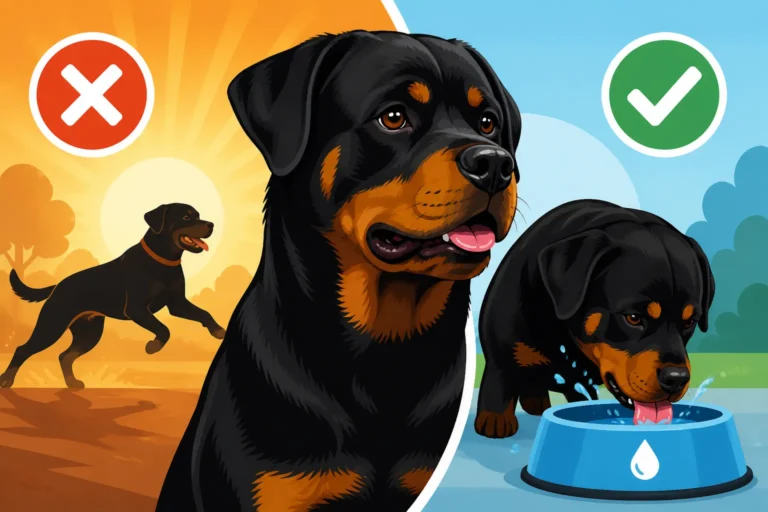
Where a Rottweiler’s Waist Should Tuck In
It's incredibly frustrating when you're doing your best to care for your beloved Rottweiler, but you're constantly second-guessing if they're at a healthy weight. So many people mistake a heavy, solid Rottweiler for a healthy one, not realizing that those extra pounds, hidden under a powerful build, can be silently adding immense strain to their joints and organs. This guide is here to clear up that confusion, showing you exactly what a healthy, properly "tucked-in" waist should look like on your Rottweiler and why understanding this visual cue is absolutely vital for their long-term well-being.
Understanding the Rottweiler Body Standard
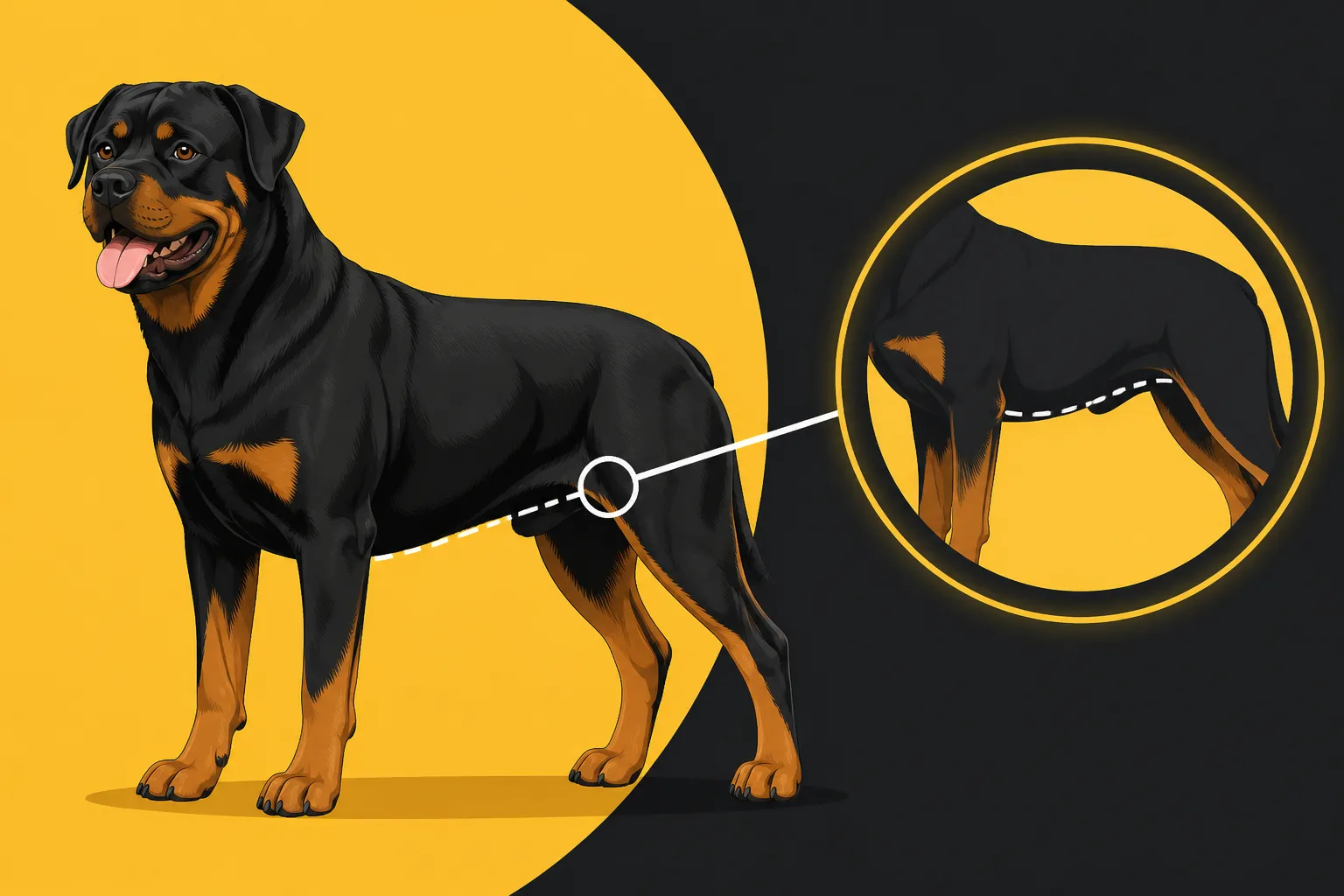
When we talk about a Rottweiler's "waist," we're not expecting a svelte, greyhound-like indentation. That's just not how our blocky, muscular friends are built! However, the breed standard, and more importantly, veterinary science, dictates that a Rottweiler should still possess a discernible waist or "tuck-up" when viewed from the side and a defined taper when viewed from above. This isn't about vanity; it's a crucial indicator of a healthy body composition that minimizes stress on their robust, yet vulnerable, skeletal structure. Overfeeding and under-exercising can quickly obscure this essential feature, setting the stage for a host of health problems that could have been avoided.
The Importance of a Lean Condition for Large Breeds
For a breed as powerfully built and naturally heavy as the Rottweiler, carrying even a few extra pounds can have significant, long-term detrimental effects. Imagine strapping a heavy backpack onto yourself every single day, year after year; that's essentially what excess weight does to your dog's body. Their joints, particularly the hips and elbows which are already prone to conditions like hip and elbow dysplasia, bear the brunt of this added load. Each step, jump, or even just standing still becomes a greater strain, accelerating the wear and tear on cartilage and contributing to painful arthritis much earlier in life.
Beyond the joints, extra weight puts a strain on your Rottweiler's cardiovascular system, making their heart work harder and potentially exacerbating conditions like Rottweiler Heart Disease and Subaortic Stenosis. Their respiratory system can also become less efficient, leading to panting and decreased stamina. Think about how much more work it takes for an overweight dog to simply get up from a lying position, or how quickly they tire on a walk that a leaner dog would breeze through. This isn't just about comfort; it's about preserving their quality of life and potentially adding years to their Rottweiler Lifespan and the Eight to Ten Year Average. A lean Rottweiler is a more agile, more comfortable, and ultimately, a healthier Rottweiler.
Visual Cues of a Healthy Rottweiler Body
Learning to assess your Rottweiler's body condition visually is a skill every owner needs to develop. It's often easier to see changes in weight when you know what to look for from different angles. First, let's consider the side view. When your Rottweiler is standing naturally, you should observe an "abdominal tuck." This means that the belly area, from the end of the rib cage back to the hind legs, should rise slightly upwards, rather than sagging downwards or running straight back like a plank. It’s a subtle curve, not a deep hollow, showing that there isn't excess fat dragging the abdomen down.
Next, take a look from above. Stand directly over your Rottweiler while they are standing. You should be able to see a distinct hourglass shape. Their body should be wider at the shoulders, narrow slightly at the waist (just behind the rib cage), and then flare out again slightly over their hips. If your Rottweiler looks like a straight, solid block or a barrel from above, with no noticeable narrowing, they are likely carrying too much weight. This isn't just about aesthetics; these visual cues are your first line of defense against Rottweiler Obesity and the Load It Adds, helping you catch weight gain before it becomes a significant health issue.
Feeling for Those Ribs and Spine
While visual cues are incredibly helpful, sometimes a Rottweiler's dense muscle mass or even a slightly thicker coat (though their coats are typically short) can mask early signs of weight gain. This is where getting hands-on with a body condition check becomes indispensable. Feeling your dog's body is a direct way to assess their fat cover and gauge their true condition, regardless of what the scales might say alone.
The Rib Test: A Hands-On Guide
The "rib test" is one of the most reliable methods for checking your Rottweiler's body condition. To perform it, gently place both hands on your dog's sides, just behind their front legs, and run your fingers along their rib cage. You should be able to feel each individual rib with relatively little pressure, much like feeling the back of your own hand. You shouldn't see their ribs prominently, but you should definitely be able to distinguish them without having to press hard.
If you have to press firmly to feel the ribs, or if you can't feel them at all, your Rottweiler is carrying too much fat. This thick layer of padding over their ribs is a strong indicator of excess weight, even if their waist tuck looks "okay" at first glance. Conversely, if their ribs are easily visible or feel sharp and pronounced, like your knuckles, it suggests they are too thin. This hands-on assessment is particularly important because a Rottweiler's powerful build can make them seem heavier than they are, or their solid musculature can hide underlying fat. Consistent checks help you to monitor subtle changes and adjust their Daily Calories for a Hundred Twenty Pound Rottweiler accordingly.
Checking the Spine and Hip Bones
Beyond the ribs, checking the spine and hip bones provides additional tactile feedback on your Rottweiler's body condition. Gently run your hand down the length of your dog's back, along their spine. You should be able to feel the individual bumps of their vertebrae, but again, without them being sharply protruding. There should be a thin layer of muscle and fat over them, providing a smooth but defined contour. If the spine feels like a ridged mountain range with no cushioning, your Rottweiler might be underweight. If you can't feel the spine at all, it's a red flag for excessive fat cover.
Similarly, move your hands to their hip bones (the bony prominences on either side of their tail base). You should be able to feel these bones with moderate pressure. They shouldn't stick out prominently, but they also shouldn't be completely obscured by fat. Being unable to feel them indicates an unhealthy amount of fat, while seeing them stick out sharply suggests a dog that is too thin. These checks complement the rib test and visual assessment, giving you a comprehensive understanding of your Rottweiler's body condition and helping you prevent issues like Rottweiler Hip Dysplasia and the OFA Grade from being worsened by unnecessary weight.
Here's a quick guide to body condition scoring for your Rottweiler:
| Score | Description (Visual) | Description (Palpation) | Action Needed |
|---|---|---|---|
| 1-2 | Ribs, spine, hip bones very visible; no fat. | Ribs, spine, hip bones sharp, easily felt. | Increase food, vet check for underlying issues. |
| 3 | Ribs, spine, hip bones easily felt; defined waist. | Ribs felt easily; spine and hip bones felt with slight pressure; abdominal tuck. | Ideal weight, maintain. |
| 4 | Ribs, spine, hip bones felt with more pressure; less defined waist. | Ribs felt with moderate pressure; slight fat cover. | Reduce food, increase exercise. |
| 5 | Ribs, spine, hip bones hard to feel; no waist. | Ribs, spine, hip bones difficult to feel; heavy fat cover. | Significant weight loss plan, vet consult. |
Why a "Chubby" Rottweiler Puppy is a Problem
One of the biggest misconceptions in dog ownership, especially with large breeds like Rottweilers, is that a round, plump puppy is a healthy puppy. In reality, nothing could be further from the truth. While a healthy puppy should certainly not be emaciated, a "chubby" Rottweiler puppy is a serious concern that can lead to lifelong health problems, particularly with their developing skeletal system. It's a common, understandable mistake borne from love and the desire to see our puppies thrive, but it's one we must actively avoid.
Growth Plate Stress and Developmental Issues
Rottweiler puppies grow at an astonishing rate, transforming from small, chunky pups into magnificent, powerful adults in under two years. Their bones and joints are constantly developing, and their growth plates – areas of soft, growing tissue at the ends of long bones – remain open and vulnerable for much longer than in smaller breeds. This is why Rottweiler Growth Plates and Why They Close So Late is such a critical topic. When a puppy carries excess weight during this crucial developmental period, those delicate growth plates and immature joints are subjected to undue stress.
This added pressure can disrupt the normal formation of bone and cartilage, leading to serious and often irreversible developmental orthopedic diseases. Conditions like Osteochondrosis From Overfeeding a Rottweiler (OCD) and Hypertrophic Osteodystrophy in a Rottweiler Puppy (HOD) are prime examples. These aren't minor issues; they can cause lifelong pain, lameness, and require extensive, costly veterinary interventions. A puppy that grows too fast or carries too much weight might look cute and robust, but internally, you could be setting them up for a lifetime of joint pain and limited mobility. The goal is steady, controlled growth, not rapid bulk.
Preventing Puppy Obesity from the Start
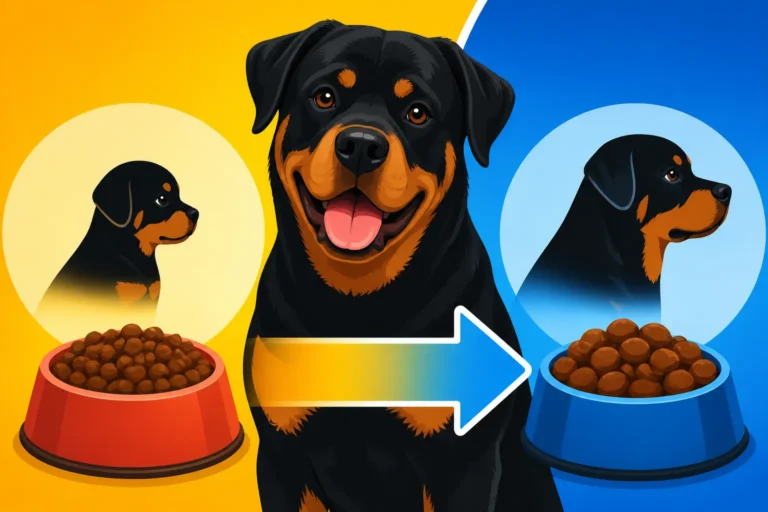
Preventing puppy obesity begins with making informed choices about nutrition and exercise from the moment your Rottweiler puppy comes home. First and foremost, choose a high-quality large breed puppy formula, specifically designed to support the slower, more sustained growth rate needed for giant breeds. These formulas have carefully controlled calcium and phosphorus levels and appropriate calorie densities to prevent rapid growth spurts. Never supplement your puppy's diet with extra calcium, as this can severely disrupt bone development. We cover this in Why Calcium Supplements Damage a Rottweiler Puppy.
Avoid free-feeding at all costs. Instead, measure out your puppy's food precisely and feed them multiple small meals throughout the day, typically three to four times initially, gradually reducing to two as they mature. Always consult your veterinarian for specific feeding guidelines based on your puppy's age, weight, and individual growth curve. When it comes to exercise, remember that puppies need structured, low-impact activity, not prolonged or high-impact exercise that can stress their unclosed growth plates. Short, frequent walks and gentle playtime are much better than long hikes or intense running. The goal is to keep your Rottweiler puppy lean and in a condition we often refer to as Keeping a Rottweiler Puppy Lean on Purpose to protect their developing body and set them up for a healthy future.
Maintaining a Healthy Weight Through Adulthood
Once your Rottweiler has reached maturity, usually around 18-24 months of age when their growth plates have closed, the focus shifts from managing growth to maintaining a stable, healthy adult weight. This phase requires ongoing vigilance, as metabolic rates can change, activity levels might fluctuate, and it's easy for pounds to creep on unnoticed, especially as they enter their middle and senior years. A proactive approach to their care and nutrition is key to ensuring they live a full, active life.
Calorie Control and Portioning
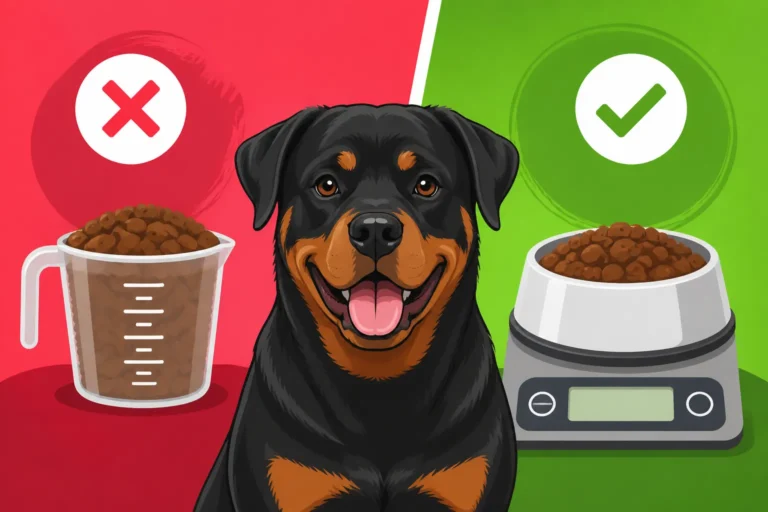
Maintaining an adult Rottweiler's healthy weight hinges significantly on precise calorie control and proper portioning of their food. It's not enough to simply "eyeball" their meals or follow the bag's recommendations without adjustment. Those guidelines are often generic and don't account for your specific dog's metabolism, activity level, or individual needs. For a hundred-plus-pound Rottweiler, even a slight overestimation of food each day can lead to significant weight gain over weeks and months. We're talking about Measuring Rottweiler Food by Weight Not Cups for ultimate accuracy.
A great first step is to invest in a kitchen scale to weigh your dog's food. This provides far greater accuracy than measuring cups, which can vary wildly in how much kibble they actually hold. You should also regularly assess your dog's body condition using the visual and hands-on methods discussed earlier. If you notice weight creeping up, you'll need to slightly reduce their portion size and/or increase their exercise. Many owners find brands like Chewy helpful for their wide selection of precise measuring tools and high-quality large breed formulas, making it easier to stick to a plan. If you're exploring fresh food options, services like Ollie often provide pre-portioned meals based on your dog's ideal weight and activity level, taking some of the guesswork out of calorie management. Remember, even healthy treats contribute to daily calories, so factor those in too.
The Role of Exercise and Lifestyle
Diet alone isn't the sole component of weight management; a consistent and appropriate exercise regimen is equally vital for your adult Rottweiler. These are powerful, working dogs with a need for regular physical activity to maintain muscle tone, joint flexibility, and overall fitness. However, "appropriate" is the keyword here – it's not about endless, high-impact running that could still stress their joints, but rather sustained, moderate activity.
Daily walks are paramount. Aim for at least 30-60 minutes of brisk walking each day, split into two sessions if possible. Beyond walks, engaging in activities like swimming (which is low-impact and excellent for building muscle), or structured playtime in a securely fenced yard can contribute significantly. Mental enrichment through puzzle toys and training sessions also helps, as a bored Rottweiler can become a destructive or over-eating one. When considering Building Adult Rottweiler Fitness Safely, always remember to start slow and gradually increase intensity, especially if your Rottweiler has been less active. Consistent exercise not only burns calories but also builds lean muscle, which in turn helps boost metabolism and supports joint health, preventing Senior Rottweiler Mobility Decline for as long as possible.
Regular Vet Checks and Body Condition Scoring
Even with diligent at-home monitoring, nothing replaces the expertise of your veterinarian. Regular check-ups are essential for your Rottweiler's overall health, and a key part of these visits will be a professional assessment of their body condition. Veterinarians use a standardized Body Condition Scoring (BCS) system, typically on a scale of 1 to 9 (or 1 to 5), to objectively evaluate your dog's weight. This allows them to identify subtle changes you might miss and provide data-driven recommendations.
Your vet can offer personalized advice on your Rottweiler's diet, recommend specific food types if needed, and help you adjust their calorie intake as they age or their activity levels change. They can also rule out any underlying medical conditions that might be contributing to weight gain or loss, such as Thyroid Disease Behind a Rottweiler's Dull Coat or other metabolic issues. These routine veterinary visits are your best tool for proactive health management, ensuring your Rottweiler maintains that ideal, healthy tuck-in and lives their best life. Finding the right treats that don't derail your calorie budget can be a challenge, but platforms like Amazon offer a huge variety of low-calorie training treats suitable for larger dogs that your vet might even recommend as part of a weight management plan.
Disclaimer
This article is for general informational purposes only and does not constitute professional advice. Laws, prices and regulations vary by location and change over time. Consult a qualified professional for guidance on your specific situation.