How Tall a Male Rottweiler Stands at the Shoulder
When you picture a male Rottweiler, you probably envision a powerful, broad-chested dog. But have you ever stopped to think about exactly how tall that impressive stature measures up? It's a common question, and understanding a male Rottweiler's typical height isn't just about trivia; it helps you appreciate their conformation, understand their physical needs, and even manage daily life with such a substantial companion. This guide will walk you through the official standards for male Rottweiler height, what that means in your home, and the crucial factors that shape their growth.
The Official Rottweiler Height Standard for Males
There's a reason why well-bred Rottweilers look so consistent in their overall appearance, and much of that comes down to carefully established breed standards. These standards define the ideal physical traits, including height, that breeders strive to achieve and maintain for the health and integrity of the breed.
Understanding the AKC Standard for Height
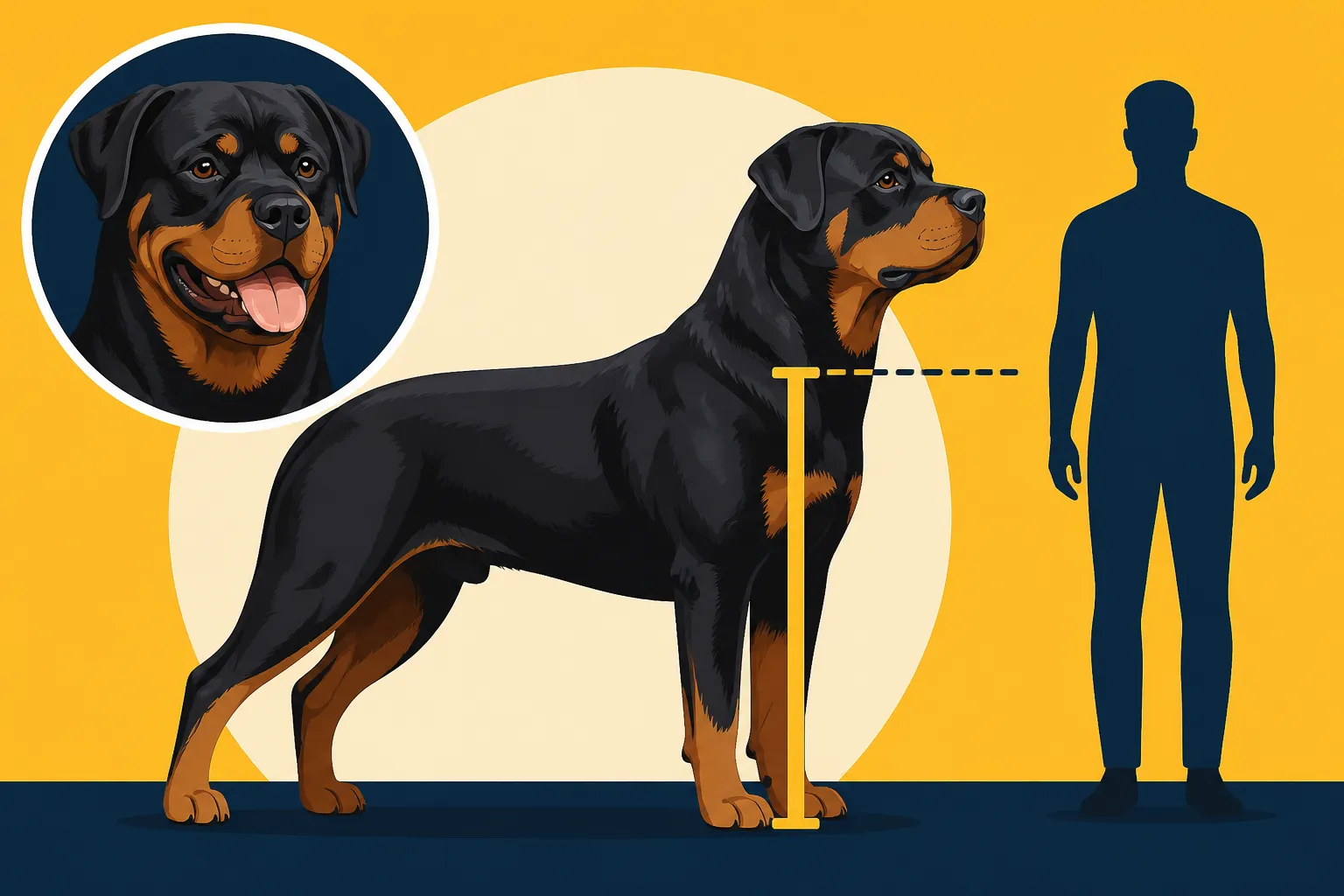
For a male Rottweiler, the widely accepted standard, such as that outlined by the American Kennel Club (AKC), specifies a height range measured at the withers. The withers are the highest point of the shoulder blades, where the neck meets the back. This isn't just a random measurement; it's a key indicator of their overall proportions and athleticism.
For a mature male Rottweiler, the AKC standard typically calls for a height between 24 to 27 inches (61 to 69 cm) at the withers. This range allows for natural variation while ensuring the dog maintains the robust, powerful build characteristic of the breed. Anything significantly outside this range might be considered a fault in the show ring, but more importantly, it could sometimes hint at underlying issues or mixed heritage. It's also important to remember that Rottweilers are often described as being Why a Rottweiler Is Longer Than It Is Tall, meaning their body length often exceeds their height, giving them that characteristic rectangular silhouette rather than a square one. This proportion is just as crucial to their functionality as their actual height. When you're looking at a breeder's paperwork, you might see references to Rottweiler Size Under the AKC Standard, which encapsulates these guidelines.
Why the Standard Matters to Breeders and Owners
Adhering to these height and conformation standards is about much more than just winning ribbons at dog shows. For responsible breeders, it's a commitment to producing dogs that are true to type, healthy, and capable of performing the tasks they were historically bred for. A dog that is too tall might lack the desired substance and power, while one that is too short might not possess the necessary reach and drive.
For owners, understanding the standard provides a benchmark. It helps you recognize a well-bred Rottweiler and appreciate the deliberate choices made in its lineage. A dog that conforms to the standard is more likely to move efficiently, carry its weight properly, and potentially experience fewer structural issues down the line. While not every Rottweiler needs to be show-ring perfect, choosing a puppy from parents who meet these standards is often a good indicator of health and genetic quality. It also gives you a realistic expectation of how big your puppy will eventually get, helping you plan for their adult size, whether that's for crate shopping or car travel.
What Male Rottweiler Height Means in Day-to-Day Life
Living with a large, powerful dog like a male Rottweiler means making some practical adjustments to your home and lifestyle. Their impressive height isn't just for show; it influences everything from what they can reach on your counters to the size of their gear.
Practical Implications of a Large Dog's Stature
A male Rottweiler standing 24 to 27 inches at the shoulder is a formidable presence. This height means they can easily nose kitchen counters, reach items on low shelves, and sometimes even look you straight in the eye when standing on their hind legs (which, of course, we train them not to do). You'll find yourself investing in heavy-duty equipment – think extra-large crates, sturdy beds, and strong leashes designed for dogs over 100 pounds. Even simple things like dog bowls need to be appropriately sized. Many owners opt for elevated bowls for comfort, though some discussions around The Raised Bowl Argument in Rottweiler Bloat exist.
Transporting a Rottweiler also becomes a consideration. Not all cars are spacious enough for a fully grown male Rottweiler to travel comfortably, especially on longer journeys. You might need a larger SUV or a dedicated travel crate. When it comes to everyday interactions, a large dog's presence can be intimidating to some people, regardless of the dog's actual temperament. Their sheer size means you must be extra vigilant about training and socialization, ensuring they are always polite and under control, particularly around children or vulnerable individuals. While your Rottweiler might be a gentle giant, others may only see their imposing height and build. Stores like Chewy offer a fantastic range of extra-large dog beds, crates, and car accessories specifically designed to accommodate a dog of this stature.
The Difference Between Height and Overall Mass
It's easy to conflate a dog's height with its overall mass, but they are distinct measurements. While a tall male Rottweiler is undeniably impressive, his weight and bone structure are equally, if not more, important when considering his physical presence and potential health. A dog might be at the upper end of the height standard but be relatively lean, while another might be at the lower end but carry more substance and bone, appearing much heavier.
The combination of height and weight has significant implications for a Rottweiler's long-term health, particularly concerning their joints. A taller, heavier Rottweiler places immense stress on their hips, elbows, and other joints, making them more susceptible to conditions like Rottweiler Hip Dysplasia and the OFA Grade and Rottweiler Elbow Dysplasia and Front Leg Lameness. This is why maintaining a lean body condition and providing appropriate, low-impact exercise throughout their lives is critical, regardless of their exact height. A responsible owner understands that a "big" dog isn't just about how tall he stands, but how well that frame is supported and maintained through diet and exercise.
Factors That Influence a Male Rottweiler's Mature Height
While the breed standard gives us an ideal range, several factors ultimately determine where a male Rottweiler falls within that spectrum, or even if he exceeds or falls short of it. It's a complex interplay of genetics, early life care, and environmental influences.
Genetics and Breeding Lines
By far, the most dominant factor in a male Rottweiler's mature height is his genetic inheritance. Just like in humans, height is a highly heritable trait. A puppy's likely adult size is largely dictated by the size of its parents and the broader genetic lines they come from. Responsible breeders carefully select breeding pairs not only for temperament and health clearances but also for conformation, which includes appropriate height.
Differences can sometimes be observed between different breeding philosophies, such as those emphasizing German Rottweiler Lines and the ADRK versus those more aligned with American standards. While both aim for the core Rottweiler type, there can be subtle variations in emphasis on substance, bone, and overall size. Generally, dogs from established, health-focused lines are more likely to fall within the recognized height standards. If a breeder is consistently producing dogs significantly outside the standard range, it could indicate less rigorous selection practices or a different breeding goal entirely. This is why looking into the pedigree and understanding How German and American Rottweiler Type Diverged can provide insight into the potential size of your future companion.
Nutrition and Growth During Puppyhood
Proper nutrition during a Rottweiler's critical growth phases is absolutely vital. This isn't just about feeding them enough, but feeding them the right kind of food. Large breed puppies like Rottweilers have unique nutritional needs, particularly concerning calcium and phosphorus ratios, and overall calorie density. Overfeeding a large breed puppy or supplementing their calcium can lead to rapid, unhealthy growth. This can put undue stress on their developing bones and joints, contributing to conditions like osteochondrosis or panosteitis, which can affect their final height and overall soundness.
It's a common misconception that more food or calcium will make a puppy bigger or stronger. In fact, the opposite is often true for large breeds. Controlled, steady growth on a high-quality, large-breed specific puppy food is crucial. These specialized formulas are designed to support a slower, more even growth rate, which is better for skeletal development. Discussions around Rottweiler Calcium Limits and Why Supplements Hurt highlight the dangers of improper supplementation during these critical months when Rottweiler Growth Plates and Why They Close So Late are still developing.
Exercise and Environmental Factors
While genetics and nutrition lay the groundwork, appropriate exercise and environmental factors play a significant supporting role in a male Rottweiler's healthy development. During puppyhood and adolescence, when growth plates are still open and bones are still forming, excessive or high-impact exercise can be detrimental. Activities like jumping from heights, long-distance running on hard surfaces, or prolonged, strenuous play can damage vulnerable joints, potentially leading to long-term lameness or impacting their final skeletal structure and height.
Instead, a growing Rottweiler puppy needs moderate, controlled exercise. Short, frequent walks, gentle play sessions on soft surfaces, and controlled socialization are far more beneficial than pushing them too hard. As they mature, typically after 18-24 months when growth plates have fused, their exercise regimen can gradually increase. This careful management of physical activity during their formative years is essential for ensuring strong, healthy bones and joints that can support their eventual impressive size. For more on this, consider resources on A Growing Rottweiler's Joints and Overexercise and Why a Rottweiler Should Not Jump Down From the Car.
Here's a quick comparison of the typical height and weight ranges for male and female Rottweilers:
| Trait | Male Rottweiler (AKC Standard) | Female Rottweiler (AKC Standard) |
|---|---|---|
| Height (at withers) | 24 – 27 inches (61-69 cm) | 22 – 25 inches (56-63 cm) |
| Weight | 95 – 135 pounds (43-61 kg) | 80 – 100 pounds (36-45 kg) |
| Build | More massive, heavier bone | Less massive, slightly lighter bone |
Ultimately, a male Rottweiler's height is a testament to their heritage as powerful working dogs, descended from the ancient Roman drover dogs, eventually becoming the "Butcher's Dogs" or "Metzgerhund" of Rottweil, Germany. Understanding this aspect of their physical makeup is part of being a responsible owner and appreciating the breed for all its impressive qualities. Ensuring proper care throughout their growth, from choosing a well-bred puppy to providing optimal nutrition and exercise, sets the stage for a healthy, magnificent adult Rottweiler.
Disclaimer
This article is for general informational purposes only and does not constitute professional advice. Laws, prices and regulations vary by location and change over time. Consult a qualified professional for guidance on your specific situation.