Dropping a Rottweiler From Four Meals to Three
It’s a truly joyful, yet often overwhelming, experience raising a Rottweiler puppy. You watch them grow at an astonishing rate, sometimes feeling like they gain a pound a day! With all that growth comes a meticulous feeding schedule, and often, new owners feel a bit lost on when and how to transition their hungry little land shark from frequent small meals to fewer, larger ones. This guide is here to walk you through the process of safely and effectively transitioning your Rottweiler puppy from four meals a day down to three, ensuring their continued healthy development without any unnecessary stress.
Understanding Your Rottweiler Puppy's Nutritional Journey
Rottweiler puppies are unique because they grow for such a long time, often not reaching full maturity until they are nearly two years old. This extended growth period means their nutritional needs are critical, especially in those first few months. Getting it right ensures they develop strong bones and joints, which is paramount for a large, heavy breed.
The Rapid Growth Phase: Why Frequent Feeding is Crucial Initially
When you first bring home a Rottweiler puppy, especially between eight and twelve weeks, they're in a period of incredibly rapid development. Their tiny bodies are working overtime, forming bone, muscle, and organs at an astounding pace. During this time, their stomachs are still quite small, and they need a consistent supply of nutrients and calories to support this intense growth. Think about it like a human infant – they eat frequently because they're developing so fast and can't hold much food at once.
For a Rottweiler puppy, four smaller meals spread throughout the day helps prevent their blood sugar from dipping too low, provides a steady stream of energy, and ensures they get all the necessary building blocks for their growing frame without overwhelming their digestive system. It's not just about the quantity of food, but the regularity and digestibility. Feeding a Rottweiler Puppy Three or Four Times a Day covers more on these early stages. This early phase is also about establishing a routine, helping your puppy feel secure and understand when and where food will be available. Many owners find setting meal alarms helpful to maintain consistency during this busy time.
Caloric Demands and Developmental Health
A Rottweiler puppy's caloric demands are surprisingly high for their size during these early months, but it's a delicate balance. We want healthy growth, not fast growth, which can put undue stress on developing joints. Large breed puppy formulas are specifically designed to support this steady, moderate growth, often with controlled calcium and phosphorus levels. You'll want to be familiar with Reading a Large Breed Puppy Food Label to ensure your pup is getting the right balance. Overfeeding a puppy, or supplementing with extra calcium, can actually lead to serious orthopedic problems like osteochondrosis or panosteitis later on.
The food you choose, whether it's a high-quality kibble you find on Chewy or a fresh food option like Ollie, needs to be specifically formulated for large breed puppies. These foods typically have slightly lower protein and fat percentages compared to regular puppy foods, and critically, a carefully controlled calcium-to-phosphorus ratio. Monitoring your puppy's body condition – making sure they stay lean, with ribs easily felt but not seen – is far more important than hitting specific weight targets or relying on how much food they seem to want. Too much weight too soon places immense pressure on their Rottweiler Growth Plates and Why They Close So Late, leading to long-term issues.
Signs Your Rottweiler is Ready for Fewer Meals
Knowing when to make the switch is often the trickiest part. There's no hard and fast rule like "at exactly X weeks," because every puppy is an individual. Instead, you need to become a keen observer of your Rottweiler's behavior and physical development.
Changes in Appetite and Mealtime Behavior
One of the clearest signals your Rottweiler puppy is ready to drop a meal is a change in their mealtime enthusiasm. When they're very young, they typically gobble down every single kibble as if it's their last. But as they get a little older, perhaps around 4-6 months, you might notice them start to leave a few pieces in the bowl, or not rush to the bowl with quite the same frantic energy. Maybe they'll eat half, wander off, and then come back later. This isn't necessarily a sign they're sick; often, it just means their stomach capacity has increased, their growth rate has plateaued slightly, and they can comfortably go longer between meals.
Another sign can be them being less interested in the mid-day meal. For example, if you're offering meals at 7 AM, 11 AM, 3 PM, and 7 PM, you might find they're picking at the 11 AM or 3 PM meal. Or perhaps they're showing less hunger cues – not nudging your hand for food, not getting antsy around typical feeding times. Of course, always rule out any underlying health issues with a quick check-in with your vet if you're concerned about appetite changes, but for a healthy, growing Rottweiler, it's often a natural progression.
Growth Plate Development and Energy Levels
Physical maturity also plays a role in when to reduce meals. While Rottweiler Growth Plates Closing at Eighteen to Twenty-Four Months means they're growing for a long time, the most rapid growth phase usually slows down between four and six months. At this point, their bodies are becoming more efficient at processing food, and they can absorb enough nutrients from larger, less frequent meals. You might also notice their energy levels becoming a bit more consistent rather than the bursts and crashes of a very young puppy. They might be able to handle longer periods of activity, like extended walks, without needing immediate refueling.
As your puppy approaches this age, their body is less in a constant state of "build, build, build" and more in a sustained growth pattern. Their metabolism adapts, and they no longer require the intense, almost continuous fuel supply of their earliest weeks. Observing their overall condition – maintaining a healthy, lean physique, good coat quality, and consistent stool – are all indicators that their current diet and feeding frequency are meeting their needs. A puppy that's still ravenous at every meal, regardless of age, might need a bit more time on a four-meal schedule, or a slight adjustment in portion sizes, as outlined in Rottweiler Puppy Calories From Fourteen Hundred Up.
The Transition from Four to Three Meals a Day
Making the change isn't about suddenly cutting out a meal. A gradual approach is always best to avoid upsetting your Rottweiler's digestive system and help them adapt to the new rhythm.
Gradual Adjustment Strategies
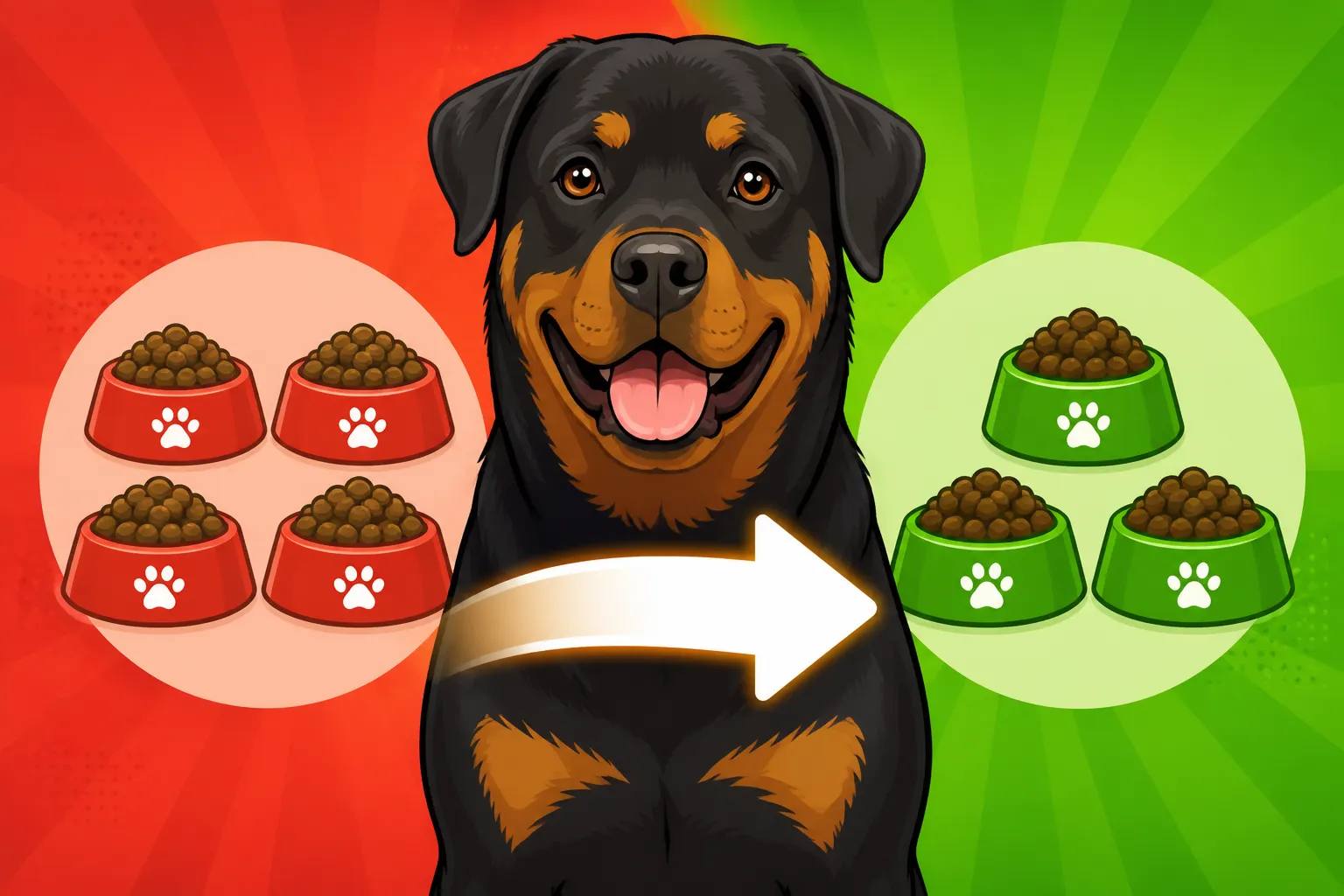
The key to a smooth transition is to make it slow and steady. Instead of just eliminating a meal, you'll want to redistribute the total daily amount of food across the remaining meals. Let's say your puppy is eating 4 cups of food total per day, divided into four 1-cup meals. When you transition to three meals, you'd aim for three meals of approximately 1.33 cups each. The total daily caloric intake should remain the same initially, unless your vet advises otherwise based on your puppy's body condition.
Here's a common way to approach it:
- Choose which meal to drop: Often, the mid-day meal (e.g., the 11 AM or 3 PM one) is the easiest to eliminate, as puppies are typically more active and potentially napping during these hours.
- Shift the portions: Gradually add a small amount of the dropped meal's portion to the surrounding meals. For instance, if you're dropping the 11 AM meal, add a quarter cup to the 7 AM meal and a quarter cup to the 3 PM meal for a few days.
- Adjust the timing: You might slightly shift the remaining meal times to bridge the gap. So, if meals were 7 AM, 11 AM, 3 PM, 7 PM, they might become 7:30 AM, 1:30 PM, 7:30 PM. This helps stretch the time between feedings without feeling like a huge jump.
- Monitor closely: Watch your puppy for signs of hunger, digestive upset, or changes in energy. If they seem too hungry or have loose stools, slow down the transition. This whole process might take a week or two to complete comfortably.
Remember, consistency is paramount. Once you've established the new three-meal schedule, stick to it as closely as possible. This helps your Rottweiler's internal clock adjust and reduces anxiety around meal times.
Monitoring Weight and Digestion
After dropping a meal, close monitoring becomes even more important. You need to keep a keen eye on your Rottweiler's weight, body condition, and digestive health. Weight checks every week or two can be very helpful; a simple bathroom scale (weigh yourself, then weigh yourself holding the puppy, and subtract) can give you a rough idea. You want to ensure your puppy isn't gaining too much weight too fast, nor losing weight or becoming too lean. How Rottweiler Weight Multiplies the Load on Its Hips shows why maintaining a healthy, lean weight is crucial.
Check their stool daily. Any changes in consistency (too soft, too hard), color, or frequency could indicate that their digestive system is struggling with the new schedule or increased portion sizes per meal. A little temporary softness might be okay, but persistent diarrhea or vomiting warrants a call to your veterinarian. Look for signs of bloat, especially if your puppy tends to gulp their food – things like pacing, drooling, restlessness, or attempts to vomit without bringing anything up. While less common in puppies, it's a critical emergency in Rottweilers of any age. Recognizing Bloat in a Rottweiler provides more detail on this urgent issue. Using a slow feeder bowl, readily available on Amazon or Chewy, can help slow down enthusiastic eaters and reduce gulping, making the transition smoother and safer.
| Age Range (Approximate) | Meals Per Day | Key Considerations |
|---|---|---|
| 8-16 Weeks | 4 | Rapid growth, small stomach, stable blood sugar |
| 16 Weeks – 6 Months | 3-4 | Assess appetite, slower growth, larger stomach capacity |
| 6 Months – 18 Months | 2-3 | Consistent growth, maintaining lean body condition |
| 18 Months + | 2 | Adult needs, joint health, bloat prevention |
Note: These are general guidelines. Always consult your veterinarian for personalized advice based on your Rottweiler's individual needs.
Common Challenges and Solutions During Feeding Transitions
Even with the best intentions and a gradual approach, you might encounter a few bumps in the road during your Rottweiler's feeding transition. It's totally normal, and knowing how to troubleshoot can save you a lot of worry.
Addressing Finicky Eating or Digestive Upset
Sometimes, when you transition to fewer meals, a puppy might suddenly seem finicky or hesitant to eat their new, larger portions. This could be due to the slight change in timing, or simply adjusting to a larger volume of food at once. If your Rottweiler puppy is otherwise healthy and playful, try to stick to the schedule. Don't immediately offer alternatives or constantly change their food, as this can inadvertently teach them that holding out will get them something better. Leave the food down for 15-20 minutes, then pick it up, regardless of whether they've eaten it all. They'll learn that mealtime is when food is available, and they'll usually adjust.
On the flip side, digestive upset is a common concern. If your puppy experiences loose stools, gas, or even vomiting after the transition, it's a sign that their system needs a little more time to adjust. Go back to the previous feeding schedule for a few days, or make the portion redistribution even more gradual. Adding a probiotic or a small amount of plain pumpkin (not pie filling!) to their food can sometimes help settle their stomach. If symptoms persist or worsen, especially with a large breed puppy, don't hesitate to contact your vet. Sometimes, what seems like a simple transition issue can mask a budding problem like Panosteitis in a Growing Rottweiler Puppy, which can cause discomfort.
Maintaining a Healthy Routine
The shift from four to three meals isn't just about food; it's about establishing a new rhythm for your puppy's entire day. With fewer meal times, you might find you need to adjust potty breaks, playtime, and training sessions. For example, if you dropped a mid-day meal, you'll still need to ensure your puppy gets a potty break around that time, as their bladder capacity isn't directly tied to their feeding schedule. Consistency in all aspects of their routine – waking up, potty breaks, play, training, and sleep – provides stability and reduces anxiety for your Rottweiler.
This is also a great time to ensure you're sticking to appropriate exercise limits for a growing Rottweiler. While they feel like they have endless energy, The Five Minute Rule for Rottweiler Puppy Walks is still important to protect their developing joints. Make sure the longer gaps between meals are filled with engaging activities, short training bursts, or quiet chew time. Puzzle toys or Kongs, filled with a portion of their kibble or a safe treat, can be excellent ways to keep them mentally stimulated and occupied, especially during those times when they used to get a meal. You can find a wide variety of these enrichment toys on Chewy or Amazon. A well-adjusted routine contributes significantly to a happy, healthy, and well-behaved Rottweiler as they continue to grow into that magnificent adult you envision.
Disclaimer
This article is for general informational purposes only and does not constitute professional advice. Laws, prices and regulations vary by location and change over time. Consult a qualified professional for guidance on your specific situation.