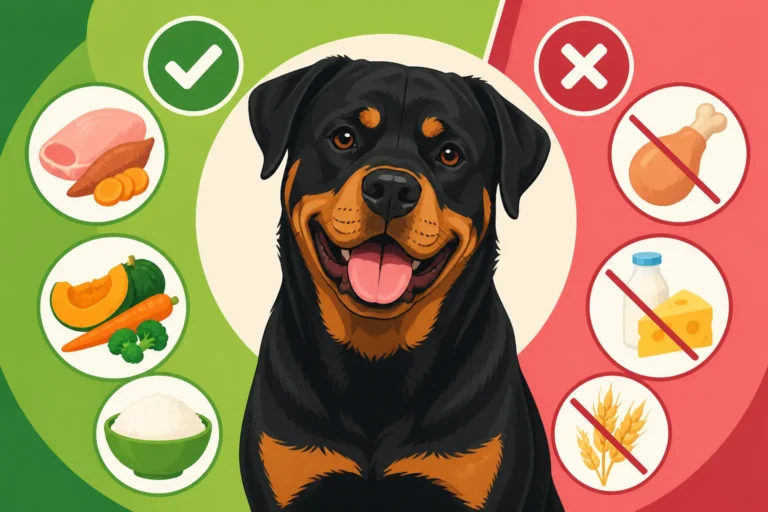
Daily Calories for a Rottweiler Puppy at Four Months
Bringing home a four-month-old Rottweiler puppy is an exciting time, but it often comes with a heap of questions, especially when it comes to feeding. You're trying your best to give them everything they need to grow into a strong, healthy adult, and figuring out the right amount of food, particularly their daily caloric intake, can feel like a real puzzle. This guide aims to clear up that confusion, offering practical advice and deep insights into how to fuel your growing Rottweiler responsibly and avoid common pitfalls.
Why Four Months Is a Critical Growth Period for Your Rottweiler Puppy
At four months old, your Rottweiler puppy is no longer a tiny infant; they're rapidly transforming into a powerful adolescent. This stage is absolutely crucial because it sets the foundation for their adult health, especially concerning their massive skeletal and muscular systems. It's a period of intense development that demands precise nutritional support, and getting it wrong here can have lasting consequences.
The Rapid Development Beneath the Surface
Beneath that soft, puppy fur, your four-month-old Rottweiler is undergoing an incredible internal transformation. Their bones are lengthening at an astonishing rate, muscle fibers are thickening, and vital organs are maturing to support a much larger body. It's not just about getting bigger; it's about developing the structural integrity and physiological efficiency that will carry them through their adult years. Think about the sheer volume of new tissue being built every single day—each cell requires energy and building blocks. This rapid construction process explains why their caloric demands are so much higher than an adult dog's, even though they're still relatively small. They're basically little growth machines, constantly running on high.
The quality and quantity of calories during this phase directly impact how well these systems develop. For instance, strong bones require the right balance of minerals, which are assimilated and integrated with energy. Without sufficient, but not excessive, fuel, their bodies can struggle to keep up with the demands of their own inherent growth potential. This is a time when their body is quite literally building itself from the ground up, and every dietary choice you make contributes to that construction project.
Balancing Growth with Joint Health
One of the biggest concerns with a rapidly growing large breed like a Rottweiler is the delicate balance between promoting healthy growth and protecting their still-developing joints. Unlike smaller breeds, Rottweilers continue to grow for a much longer period, with their Rottweiler Growth Plates and Why They Close So Late often not fully closing until they're 18 to 24 months old. This extended growth phase means their joints are vulnerable for a significant amount of time. Overfeeding, even by a little, can accelerate growth beyond what their skeletal structure is ready to support.
Imagine a construction crane lifting too much weight too quickly; the underlying structure can be compromised. Similarly, excessive calories can lead to overly rapid weight gain and bone development, placing undue stress on the soft, vulnerable cartilage of their growth plates. This can predispose them to serious developmental orthopedic diseases such as hip and elbow dysplasia, or even conditions like Osteochondritis Dissecans in a Rottweiler Shoulder. The goal isn't to stunt their growth, but to ensure it's steady and controlled, allowing their bones and joints to mature at a healthy, natural pace. This balance is paramount, and it’s why understanding their caloric needs is so much more than just keeping them full.
Understanding Your Four-Month-Old Rottweiler's Caloric Needs
When you're looking at your four-month-old Rottweiler puppy, trying to decipher how many calories they truly need, it can feel like a guessing game. Every puppy is an individual, of course, but there are some fundamental principles and estimation methods we can use to get you started on the right track. The critical thing to remember is that puppies aren't just smaller versions of adult dogs; their metabolism and nutritional requirements are unique.
Estimating Basal Metabolic Rate (BMR) for a Growing Giant
The Basal Metabolic Rate (BMR) is essentially the amount of energy your puppy burns just to exist – to breathe, pump blood, maintain body temperature, and perform all other essential bodily functions while at rest. For a four-month-old Rottweiler puppy, this BMR is considerably higher per pound of body weight than an adult dog's. Why? Because they are literally building a body from scratch, and that takes an incredible amount of energy. Their cells are dividing rapidly, their immune system is still developing, and their internal organs are scaling up to adult size.
While there are complex formulas to calculate BMR, for practical purposes, it's more helpful to think of it as a baseline from which to add calories for activity and growth. A very general starting point for active large breed puppies like Rottweilers at four months old might be in the range of 1,400 to 1,800 calories per day, but this is a broad stroke, and their actual needs could fall outside this. It's simply a way to conceptualize the sheer energy demand. The actual number found on specific food labels will be your best friend here, giving you the calorie content per cup or gram, which allows you to portion more accurately. Remember, this isn't a fixed number for every puppy; it's a dynamic target that shifts with their growth and activity levels, emphasizing why constant monitoring is key.
Factors That Influence Calorie Requirements
It would be wonderfully simple if every four-month-old Rottweiler needed the exact same number of calories, but that's just not how biology works. Several factors play a significant role in determining your individual puppy's precise caloric needs.
First, activity level is a huge one. Is your puppy a whirlwind of energy, constantly zooming around the yard, wrestling with siblings, or engaging in vigorous play sessions? Or are they more of a chill, introspective type, content to nap for long stretches between shorter bursts of activity? A more active puppy will naturally burn more calories and require a higher intake to maintain their growth trajectory and energy levels. On the flip side, a less active puppy could easily become overweight on the same diet.
Second, individual metabolism varies from dog to dog, just like it does in people. Some puppies are simply more efficient at utilizing calories, while others burn through them at a faster rate. This is often an innate trait that you'll come to recognize as you get to know your specific puppy. Their unique genetic makeup plays a role in how their body processes food and converts it into energy and growth.
Third, the type and quality of food you're feeding makes a difference. Not all "large breed puppy foods" are created equal in terms of calorie density. A premium kibble might be packed with more easily digestible nutrients and higher caloric content per cup than a budget brand. Always check the "guaranteed analysis" and "calorie content" on the food packaging. This information, often listed as Kcal/kg or Kcal/cup, is crucial for accurate portioning. Brands like Ollie, for example, often provide precise feeding guides based on your dog's weight and age, simplifying the calculation for fresh food options, while general pet retailers like Chewy carry a wide array of kibbles with varying calorie densities.
Finally, environmental factors can also play a subtle role. Puppies living in colder climates might expend slightly more energy to maintain body heat, especially if they spend any time outdoors. Conversely, puppies in very warm environments might be less active during peak heat, slightly reducing their energy expenditure. All these nuances mean that while guidelines are helpful, your keen observation of your puppy's body condition and energy level is truly the most accurate gauge.
Practical Feeding Guidelines and Best Practices
Navigating the feeding journey for your four-month-old Rottweiler puppy requires more than just knowing their caloric needs; it demands a practical approach to portioning, food selection, and consistent monitoring. This is where the rubber meets the road, ensuring all those calculated calories translate into healthy growth and development.
How to Calculate and Adjust Portions
The feeding guidelines on the back of your large breed puppy food bag are excellent starting points, but they are just that—starting points. They usually provide a range based on your puppy's current weight and age, but they can't account for your puppy's individual metabolism or daily activity level. To truly dial in their portion, you need to become a keen observer of your puppy's body condition. Many veterinarians and nutritionists advocate for using a kitchen scale to measure food by weight rather than by cups, as cup measurements can vary wildly based on how densely packed the kibble is. This simple step ensures consistency in their daily caloric intake.
For a four-month-old Rottweiler, it’s generally recommended to split their daily calorie allowance into three meals. This helps manage their rapidly growing appetite, prevents them from consuming too much food at once which can lead to digestive upset, and helps maintain steady energy levels throughout the day. You might even find yourself gradually making the transition from four meals a day to three around this age. Dropping a Rottweiler From Four Meals to Three is a common adjustment as they grow. Continually evaluate your puppy's body condition weekly. Are they gaining weight too quickly? Are they looking a little too lean? A slight adjustment of 10-20% up or down can make a big difference over time. Remember, the goal is controlled, steady growth, not rapid bulk.
The Importance of Large Breed Puppy Formulas
This isn't just a marketing ploy; feeding a specific large breed puppy formula is absolutely critical for your Rottweiler's long-term health. These specialized foods are meticulously formulated to support the unique growth curve of giant breeds. The most significant difference lies in the calcium and phosphorus balance and controlled calorie content. Large breed puppy foods are designed to have slightly lower calcium levels and a carefully maintained calcium-to-phosphorus ratio (typically between 1.1:1 and 1.5:1) compared to regular puppy foods. This is because excessive calcium intake during rapid growth can severely disrupt normal bone development, leading to orthopedic issues like osteochondrosis. This is why Rottweiler Calcium Limits and Why Supplements Hurt is such a vital topic.
Feeding a regular adult dog food or even a standard puppy food (not formulated for large breeds) to your four-month-old Rottweiler can be detrimental. Adult foods typically don't have the appropriate nutrient density or the specific calcium/phosphorus ratios needed for proper bone development in growing giants. Why Adult Food Harms a Rottweiler Puppy by accelerating their growth too quickly and throwing off those delicate mineral balances. When shopping for food, look specifically for labels that state "large breed puppy formula" or "large breed growth formula." Reputable brands, widely available on platforms like Amazon and Chewy, invest heavily in research to get these formulations right. Prioritizing these specialized diets is one of the best preventative measures you can take for your Rottweiler's joint health.
Monitoring Weight and Body Condition Score
The scale can tell you your Rottweiler puppy's weight, but the Body Condition Score (BCS) tells you if that weight is healthy. This visual and tactile assessment is far more informative than a number alone. At four months, your Rottweiler puppy should be lean, not chubby. You should be able to easily feel their ribs with slight pressure, but not see them prominently. When viewed from above, they should have a discernible waist that tucks in behind the ribs. From the side, their belly should tuck up slightly rather than hanging low.
Regularly performing a BCS check (a quick feel of the ribs, waist, and spine) is your most powerful tool for adjusting their diet. If you can't easily feel their ribs, or if their waist isn't apparent, it's a sign they're likely being overfed, and you need to reduce their portion. Conversely, if their ribs are visibly prominent, they might need a slight increase in food. Maintaining a lean body condition throughout puppyhood is absolutely vital for reducing the risk of conditions like Rottweiler Hip Dysplasia and the OFA Grade and Rottweiler Elbow Dysplasia and Front Leg Lameness. Your veterinarian will also assess their BCS at each check-up, so don't hesitate to ask them for guidance on what’s ideal for your specific puppy. Being proactive in Keeping a Rottweiler Puppy Lean on Purpose will pay dividends in their adult life.
| Body Condition Score | Appearance (Visual) | Touch (Tactile) | What it Means for Your Puppy |
|---|---|---|---|
| Ideal (Lean) | Waist clearly visible, belly tuck. Ribs not seen but easily felt. | Ribs easily felt with light pressure. Slight fat cover. Spine and hip bones felt without prominence. | Exactly where you want your four-month-old Rottweiler puppy to be. Promotes healthy joint development and controlled growth. |
| Underweight | Ribs, spine, hip bones prominent. No fat cover. | Ribs, spine, hip bones very easily felt. Little to no fat. | Indicates insufficient calories or potential health issue. Needs calorie increase or vet check. |
| Overweight | No waist, belly rounded. Ribs hard to see/feel. | Ribs hard to feel under moderate pressure. No waist. | Avoid this at all costs for a Rottweiler puppy. Significantly increases risk of joint disease. Reduce calories immediately. |
Common Feeding Mistakes to Avoid
Even with the best intentions, it's easy to fall into common feeding traps, especially when you have a big, growing puppy like a Rottweiler. Understanding these pitfalls and actively working to avoid them can literally change the trajectory of your puppy's health and longevity. Your four-month-old is at a vulnerable stage, and minor mistakes now can lead to significant problems down the line.
Overfeeding and Its Consequences
This is arguably the most critical mistake to avoid with a Rottweiler puppy. It's a natural human instinct to want to provide abundantly for our pets, and a hungry-looking puppy can be hard to resist. However, overfeeding a large breed puppy doesn't make them "stronger"; it actually places immense strain on their still-developing skeletal system. When puppies grow too quickly, their bones, joints, and cartilage can't keep pace with the rapid weight gain. This disproportionate growth is a primary contributing factor to developmental orthopedic diseases.
Consider the risk of hip and elbow dysplasia. While these conditions have a genetic component, environmental factors, particularly nutrition, play a huge role in their expression. An overfed puppy will put on weight faster than their joints can solidify, leading to malformation or undue stress on vulnerable areas. This can manifest as debilitating lameness and arthritis later in life. It's a tough truth to swallow, but a slightly lean Rottweiler puppy is a healthier puppy. The adage "a fat puppy is a cute puppy, but a lean puppy is a healthy puppy" holds particular weight for these powerful breeds. You really want to avoid Why a Chubby Rottweiler Puppy Is a Problem as it sets them up for a lifetime of joint pain.
The Dangers of Calcium Supplementation
Another common, well-intentioned but dangerous mistake is supplementing a Rottweiler puppy's diet with extra calcium. Many owners mistakenly believe that because their puppy is growing big bones, more calcium must be better. This couldn't be further from the truth. Large breed puppy foods are already carefully formulated with the correct, controlled levels of calcium and phosphorus, designed to promote slow, steady bone growth.
Adding extra calcium, whether through supplements, dairy products, or raw bones, can throw this delicate balance completely out of whack. Excessive calcium intake in large breed puppies interferes with normal bone modeling, leading to abnormal skeletal development. It can cause conditions like osteochondrosis (OCD), hypertrophic osteodystrophy (HOD), and other painful, often irreversible, bone deformities. This is why Why Calcium Supplements Damage a Rottweiler Puppy is a concept every Rottweiler owner needs to grasp. Trust the formulation of a high-quality large breed puppy food, and do not add any additional calcium without explicit veterinary guidance. Your vet might recommend a calcium supplement in very rare, specific medical cases, but never assume your puppy needs it.
Free Feeding Versus Scheduled Meals
Free feeding, where food is left out all day for a puppy to graze, is a practice best avoided for Rottweilers, especially puppies. While it might seem convenient, it prevents you from accurately monitoring how much your puppy is eating, making it difficult to control their caloric intake. This can easily lead to overfeeding, with all the associated orthopedic risks we've discussed.
Beyond calorie control, scheduled meals are crucial for digestive health and establishing a predictable routine. Eating regular, portioned meals helps regulate their digestive system and makes house training much easier, as you can anticipate when they'll need to go outside. For Rottweilers, in particular, establishing mealtime routines from puppyhood can also play a role in mitigating the risk of bloat (gastric dilatation-volvulus) later in life. While bloat is a complex issue, feeding larger meals less frequently or allowing rapid eating are considered risk factors. Splitting their daily ration into two or three controlled meals, allowing for a period of rest before and after eating, contributes to a healthier digestive rhythm. This structured approach, outlined in resources like Feeding Rules That Lower Rottweiler Bloat Risk, not only helps with weight management but fosters better overall health and a predictable lifestyle for your growing Rottweiler.
Disclaimer
This article is for general informational purposes only and does not constitute professional advice. Laws, prices and regulations vary by location and change over time. Consult a qualified professional for guidance on your specific situation.