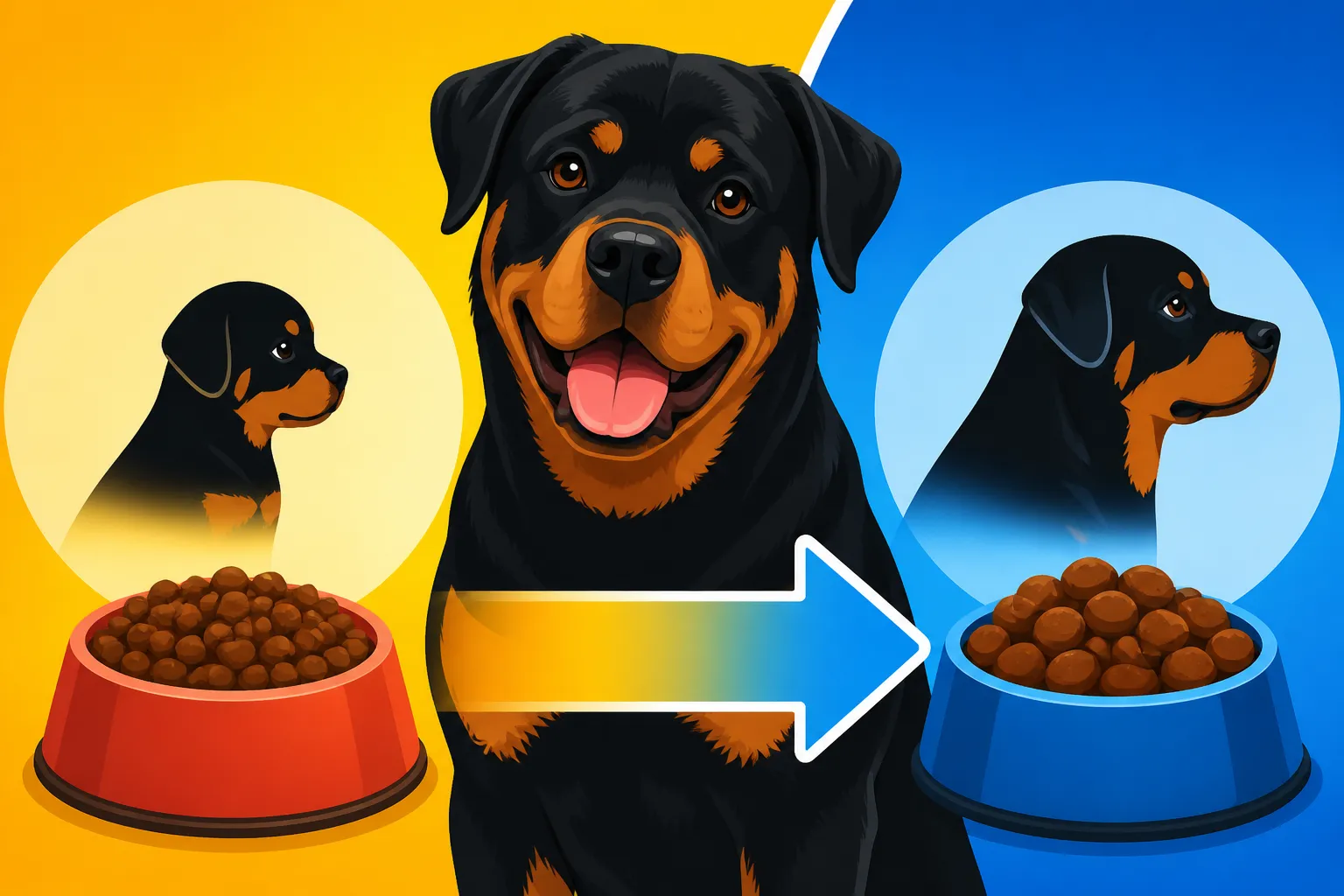
Switching a Rottweiler to Adult Food at Eighteen Months
It's a common point of confusion for new Rottweiler owners: exactly when do you switch them from puppy food to adult food? Because Rottweilers are such magnificent, fast-growing giants, many people mistakenly think they need puppy food for a shorter period, or conversely, keep them on it for far too long. This guide will help you understand why around eighteen months is the sweet spot for transitioning your Rottweiler to an adult diet, what nutritional differences matter, and how to make that change smoothly to support their long-term health.
Why Eighteen Months is the Right Time for Rottweilers
Switching a large breed like a Rottweiler from puppy food to adult food isn't just about their chronological age; it's deeply tied to their physical maturity, particularly the closure of their growth plates. While smaller breeds might transition around 9-12 months, a Rottweiler's development takes a good deal longer. This extended growth period means their nutritional needs are unique, and getting the timing right for the food switch is crucial for preventing long-term health issues.
The Science Behind Growth Plate Closure
A Rottweiler is a large, heavy-boned dog, and their skeletal system takes a significant amount of time to fully mature. Unlike smaller dogs whose growth plates – the areas of cartilage at the ends of long bones responsible for bone growth – close much earlier, a Rottweiler's growth plates typically don't fuse completely until they are between 18 and 24 months of age. You can learn more about this crucial period in Rottweiler Growth Plates and Why They Close So Late. If you introduce adult food too early, before these plates are closed, you risk nutrient imbalances that can have serious implications.
Imagine a construction project: you wouldn't start putting on the roof before the foundation and walls are fully stable. Similarly, a Rottweiler's bones need adequate, but not excessive, nutrients during this prolonged development phase. Overfeeding or feeding an inappropriate diet (like a regular puppy food, not a large breed specific one) can lead to rapid growth, which in turn puts undue stress on these still-developing joints and can contribute to conditions like hip and elbow dysplasia, even if the genetic predisposition is present. Keeping them on a large-breed puppy formula until around 18 months helps manage their growth at a safe, steady pace.
Avoiding Accelerated Growth Risks
One of the biggest pitfalls for Rottweiler owners is the temptation to "bulk up" their puppy too quickly. We all love a robust, muscular Rottweiler, but forcing rapid weight gain during their formative months is detrimental. Large breed puppy foods are specifically formulated with controlled levels of calcium, phosphorus, and calories to support a slower, more sustained growth rate. This isn't about denying them nutrients; it's about providing the right balance to avoid problems down the line.
When a Rottweiler puppy grows too fast, their bones can outpace the development of their muscles, ligaments, and tendons. This creates structural instability that can lead to orthopedic issues. Switching to adult food prematurely or too late can disrupt this delicate balance. If you switch too early, they might not be getting enough of certain developmental nutrients. If you switch too late, they could be getting too many calories or too much calcium/phosphorus for their now-slowing growth rate, potentially contributing to obesity or exacerbating joint problems. The 18-month mark is often cited as the ideal age because by then, most Rottweilers have reached a significant portion of their adult height and bone density, and their growth plates are typically nearing complete closure, setting them up for a healthier adult life.
The Nutritional Shift: Puppy vs. Adult Food
Understanding why the nutritional composition of puppy food differs from adult food is key to appreciating the transition. It’s not just marketing; these formulas are designed to meet very different metabolic demands. For a giant breed like a Rottweiler, these distinctions are even more pronounced and critical for healthy development and adult maintenance.
Key Differences in Nutrient Profiles
Large breed puppy food, specifically formulated for dogs like Rottweilers, focuses on controlled growth. This means managing calorie density to prevent excessive weight gain and carefully balancing calcium and phosphorus. Too much calcium, for instance, can interfere with bone development, even leading to skeletal abnormalities. You can dive deeper into this topic by reading Rottweiler Calcium Limits and Why Supplements Hurt. Large breed puppy formulas often have slightly lower fat content than regular puppy foods to help keep growth steady and include an optimal calcium-to-phosphorus ratio, typically between 1.1:1 and 1.5:1. They also generally contain higher protein levels to support muscle development, but again, in a balanced way.
Adult Rottweiler food, on the other hand, shifts its focus to maintenance. It typically has a moderate protein level to sustain muscle mass without overtaxing kidneys, a lower fat content to prevent obesity, and a carefully balanced, but lower, calcium and phosphorus ratio simply because bones are no longer actively growing. The caloric density is also usually lower, reflecting the reduced energy requirements of a dog that is no longer growing at an exponential rate. The goal with adult food is to provide all necessary nutrients for energy, organ function, and coat health, without encouraging weight gain or promoting further bone growth. This shift is less about building and more about sustaining.
The Role of Large Breed Specific Formulas
When choosing food for your Rottweiler, whether puppy or adult, opting for a large breed specific formula is paramount. Generic puppy foods often have higher caloric densities and calcium levels designed for fast-growing small and medium breeds, which can be detrimental to a Rottweiler. This is a topic thoroughly explored in Why a Rottweiler Puppy Needs Large Breed Formula. For example, a standard puppy food might have 1.8% calcium, which sounds good for growth, but for a Rottweiler, it can be too much, forcing bones to grow too quickly or improperly mineralize.
When your Rottweiler transitions to adult food, continue to seek out large breed adult formulas. These foods are designed with the unique needs of bigger dogs in mind, often containing ingredients that support joint health, such as glucosamine and chondroitin, which can be beneficial for their heavy frames. They also consider the metabolism of a large dog, providing a balanced, digestible diet that helps maintain a healthy weight and robust muscle condition without leading to excessive energy or fat accumulation. Brands like Purina Pro Plan, Royal Canin, Eukanuba, and Hill's Science Diet all offer excellent large breed specific lines that are widely available on platforms like Chewy and Amazon, making it easier to find suitable options.
The Transition Process for Your Rottweiler
Switching your Rottweiler's food isn't a race; it's a marathon. A gradual transition is essential to prevent digestive upset and ensure your dog adapts well to their new diet. Rushing the process can lead to vomiting, diarrhea, and a very uncomfortable Rottweiler (and owner!).
A Gradual Seven-Day Plan
The key to a successful food transition is to do it slowly, typically over a period of 7 to 10 days. This allows your Rottweiler's digestive system to gradually adjust to the new ingredients and nutrient profile without being overwhelmed. Here's a common schedule you can follow:
- Days 1-2: Mix 75% old food with 25% new food. Your Rottweiler might not even notice the change, and this small introduction allows their gut flora to start adapting.
- Days 3-4: Adjust the ratio to 50% old food and 50% new food. At this point, you might start to see subtle changes in stool consistency, but generally, it should still be well-formed.
- Days 5-6: Move to 25% old food and 75% new food. Most of the meal is now the adult formula, and if your dog is tolerating it well, you're on the right track.
- Day 7 onwards: Offer 100% new adult food.
During this entire process, observe your Rottweiler closely for any signs of digestive distress like loose stools, vomiting, or excessive gas. If you notice any issues, slow down the transition. For instance, if day 3 leads to soft stools, go back to the day 1-2 ratio for another couple of days before trying the 50/50 mix again. Every dog is different, and some may need a longer transition period, especially if they have sensitive stomachs.
Monitoring Your Rottweiler During the Change
Beyond just watching for digestive upset, it's important to monitor your Rottweiler's overall health and demeanor during the food transition. Are they still energetic? Is their coat looking healthy? Is their appetite consistent? Sometimes, a food change can impact more than just their stool.
Pay particular attention to their stool quality and frequency. A healthy stool should be firm, moist, and easy to pick up. If it becomes consistently soft, watery, or contains mucus or blood, it’s a sign that their digestive system isn't happy. You might also notice changes in thirst or urination, though these are less common during a simple food transition. Also, keep an eye on their energy levels. A healthy Rottweiler should maintain their usual zest for life. If they seem lethargic or reluctant to eat, that warrants a closer look. If any concerning symptoms persist, it's always best to consult your veterinarian, who can rule out other underlying health issues or recommend specific probiotics to aid digestion.
Troubleshooting the Switch
Even with the best intentions and a gradual approach, sometimes the transition isn't perfectly smooth. Rottweilers, like all dogs, can have individual sensitivities, and what works for one might not work for another. Don't get discouraged if you hit a snag; there are often ways to troubleshoot.
Dealing With Digestive Upset
The most common issue during a food switch is digestive upset. This can manifest as diarrhea, vomiting, or excessive gas. If your Rottweiler experiences severe symptoms, like persistent vomiting, refusal to eat, or lethargy, contact your vet immediately. However, for milder issues, you can often manage them at home by slowing down the transition even further. Instead of a 7-day plan, stretch it to 10, 14, or even 21 days, staying on each step for longer until their system fully adjusts.
Consider adding a digestive aid. A good quality canine probiotic can help balance their gut flora, making the transition easier. Many pet supply stores and online retailers like Chewy offer various probiotic supplements specifically formulated for dogs. A small amount of plain, canned pumpkin (not pumpkin pie filling!) can also work wonders for both diarrhea and constipation due to its fiber content. Start with a tablespoon or two mixed into their food once or twice a day. If your Rottweiler seems particularly sensitive, you might even introduce the new food in very tiny amounts, like a few kibbles, as treats for a few days before attempting to mix it into their meals.
Addressing Picky Eaters
Some Rottweilers can be surprisingly picky, turning their nose up at new foods, especially if they’ve been on the same kibble for a long time. It can be frustrating when you're trying to do what's best for them, and they decide it's not up to their gourmet standards. This is where patience and persistence come into play.
First, ensure the new food is palatable. Some dogs prefer certain flavors or kibble shapes. If you've chosen a new brand, consider getting a small bag first to test the waters. Warming the food slightly (if it's kibble, you can add a little warm water or low-sodium broth) can enhance its aroma and make it more appealing. For truly stubborn eaters, incorporating a small amount of a highly palatable topper might help, such as a spoonful of plain yogurt, wet dog food, or even a few bits of cooked chicken. Just be careful not to add so much that it unbalances the diet or makes the dog only eat the topper. If you're exploring fresh food options like Ollie, their palatability is often higher, which can be a good way to entice a picky eater. However, always ensure any additions are safe and appropriate for your Rottweiler's diet.
Beyond the Switch: Maintaining Adult Health
The transition to adult food is a milestone, but it's just the beginning of a lifetime of healthy eating and management for your Rottweiler. Maintaining their ideal body condition and ensuring they get the right exercise are ongoing responsibilities that directly impact their longevity and quality of life.
Portioning and Body Condition
Once your Rottweiler is fully on adult food, diligent portion control becomes even more critical. Rottweilers are prone to obesity, and extra weight puts immense strain on their joints, which are already susceptible to issues like hip and elbow dysplasia. Refer to the feeding guidelines on your chosen large breed adult dog food bag, but remember these are just starting points. Every dog's metabolism is different.
The best way to determine the correct portion is by assessing your Rottweiler's body condition. You should be able to easily feel their ribs without pressing hard, and they should have a visible waist when viewed from above, as well as an abdominal tuck when viewed from the side. You don't want to see their ribs distinctly, but you also don't want a smooth, barrel-shaped body. Adjust their food intake up or down by small increments (e.g., a quarter cup) every few days until you find the amount that maintains their ideal weight. You can find detailed guidance on this in Portioning an Adult Rottweiler by Body Condition. Using a kitchen scale to measure food by weight rather than cups is far more accurate and highly recommended, especially for large breeds.
Incorporating Joint Support and Proper Exercise
As your Rottweiler matures, their large size means their joints will always be a consideration. Many large breed adult dog foods include joint-supporting ingredients like glucosamine, chondroitin, and omega-3 fatty acids. However, you might also consider adding supplemental joint support, especially as they get older or if they've had any orthopedic concerns during their growth. This is a practice many owners begin even before their Rottweiler turns two, as discussed in Joint Supplements Started Early in a Rottweiler. Products available on Amazon or through your vet can offer effective support.
Alongside proper nutrition, appropriate exercise is vital. While intense, high-impact activities should be limited during puppyhood to protect growth plates, an adult Rottweiler needs regular, moderate exercise to maintain muscle mass and joint flexibility. Long, brisk walks, swimming (which is excellent low-impact exercise), and structured play sessions are ideal. Avoid extreme activities that involve excessive jumping or repetitive hard impact on pavement. Consistent, controlled exercise helps keep their weight in check and strengthens the muscles supporting their joints. You can learn more about safe exercise routines in Building Adult Rottweiler Fitness Safely. Remember, a healthy, well-muscled Rottweiler will manage their weight and joint health far better than an overweight, sedentary one.
Understanding Meal Frequency and Bloat Risk
When your Rottweiler is a puppy, they generally eat three or even four small meals a day. As they mature and transition to adult food, it’s common to reduce this frequency. However, for a deep-chested breed like a Rottweiler, how you feed them, and the number of meals, can play a role in mitigating the risk of a life-threatening condition called bloat (gastric dilatation-volvulus or GDV).
Splitting Meals for Gastric Health
Instead of feeding your adult Rottweiler one large meal a day, which can be tempting for convenience, splitting their daily ration into two or even three smaller meals is highly recommended. This practice is detailed in Splitting a Rottweiler's Ration Across the Day and helps reduce the volume of food and gas in the stomach at any one time, which is thought to be a factor in bloat. Imagine filling a balloon: one big puff can overinflate it faster than several smaller ones. Similarly, a large amount of food and accompanying gas can distend the stomach.
By offering two meals, say one in the morning and one in the evening, you distribute the digestive workload and minimize the risk of the stomach becoming excessively full. If your schedule allows for three smaller meals, that can be even better for some sensitive dogs. Always provide fresh water alongside meals, but avoid letting them gulp down large quantities of water immediately after eating or heavy exercise, as this can also contribute to stomach distension. Slow feeder bowls, readily available from retailers like Chewy or Amazon, can also be a game-changer for Rottweilers who tend to eat too quickly, further reducing the risk of gulping air and food.
Managing Exercise Around Meal Times
The timing of meals relative to exercise is another critical consideration for Rottweiler owners concerned about bloat. It's generally advised to avoid strenuous exercise, vigorous play, or stressful situations immediately before or after meals. The hours surrounding mealtime should be calm and relaxed.
A good rule of thumb is to wait at least 30 minutes to an hour before feeding after exercise, and perhaps more importantly, wait at least one to two hours after a meal before allowing any strenuous activity. This gives the stomach time to process the food and begin emptying, reducing the chance of it twisting if the dog is jumping, running, or rolling. Even excited barking or car rides right after eating can be a risk factor for some Rottweilers. Think of it this way: you wouldn't want to go for a jog right after a big holiday dinner, and neither does your Rottweiler. Prioritizing calm periods around meals is a simple but important preventive measure you can take to keep your deep-chested friend safe and healthy.
The Financial Aspect of Feeding a Rottweiler
Let's be real, owning a Rottweiler means you're going to spend a good chunk of change on food over their lifetime. These aren't small dogs that nibble at a cup a day! Their size dictates not only what they eat but also how much it costs. Understanding these ongoing expenses helps you budget effectively and ensures you can always provide for your big buddy.
Estimating Monthly Food Costs
Once your Rottweiler is an adult and on a high-quality large breed formula, you can expect to go through a substantial bag of food quite regularly. A 30-40 pound bag of premium large breed adult kibble might last anywhere from 3 to 6 weeks, depending on your dog's specific caloric needs and how much they weigh. For a healthy 100-120 pound adult Rottweiler, you're likely looking at feeding 4-6 cups of kibble per day.
This translates to a significant monthly food bill. While prices vary widely by brand, region, and whether you buy in bulk or subscribe and save, you should budget a realistic amount. Keep in mind that a good quality food often means better ingredients, which can mean better digestion and potentially fewer vet visits down the line. Don't be tempted to cut corners on food quality to save money, as this can be a false economy in the long run. Shopping for large bags online from retailers like Chewy can often provide a better per-pound price and the convenience of home delivery for those heavy bags.
Here's a generalized comparison of large breed food types and what they might entail for a Rottweiler:
| Food Type | Typical Daily Servings (Cups for 100lb Rottweiler) | Cost Impact | Pros | Cons |
|---|---|---|---|---|
| Premium Large Breed Kibble | 4-6 cups | Moderate to High | Balanced, convenient, good shelf life | Can be less palatable for some |
| Fresh/Cooked (e.g., Ollie) | Varies by brand, often pre-portioned | High | Highly palatable, human-grade ingredients | Requires refrigeration, higher cost |
| Raw/BARF | Varies significantly by diet | Very High | Often perceived health benefits | High cost, strict handling, potential risks |
Note: The costs listed are illustrative and depend heavily on brand, ingredients, and region.
The Value of High-Quality Nutrition
While the initial sticker shock of feeding a Rottweiler might be real, investing in high-quality nutrition from puppyhood through adulthood is one of the best long-term investments you can make in their health. A diet that provides optimal nutrients supports everything from their immune system and coat health to their energy levels and joint integrity. Just as we wouldn't thrive on a diet of cheap, processed foods, neither will our dogs.
Good nutrition can help prevent common Rottweiler issues like dull coats (sometimes a sign of Thyroid Disease Behind a Rottweiler's Dull Coat), skin allergies, and even contribute to better cognitive function as they age. Think of it as preventative medicine in a bag. While it’s certainly an expense, a well-fed Rottweiler is more likely to live a healthier, more active life, potentially reducing the frequency and cost of vet visits for diet-related issues. This isn't to say a premium diet will cure all ailments, but it certainly sets the foundation for a robust immune system and strong body, helping your beloved Rottweiler enjoy their Rottweiler Lifespan and the Eight to Ten Year Average to the fullest.
Disclaimer
This article is for general informational purposes only and does not constitute professional advice. Laws, prices and regulations vary by location and change over time. Consult a qualified professional for guidance on your specific situation.