Rottweiler Herding Trials
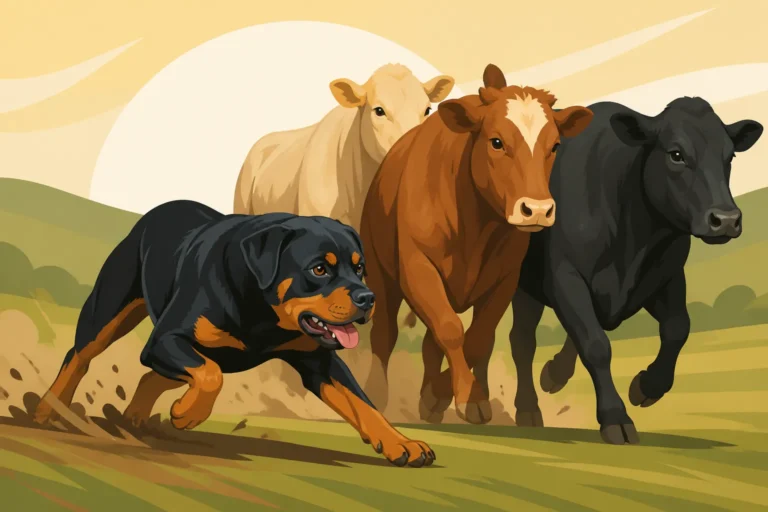
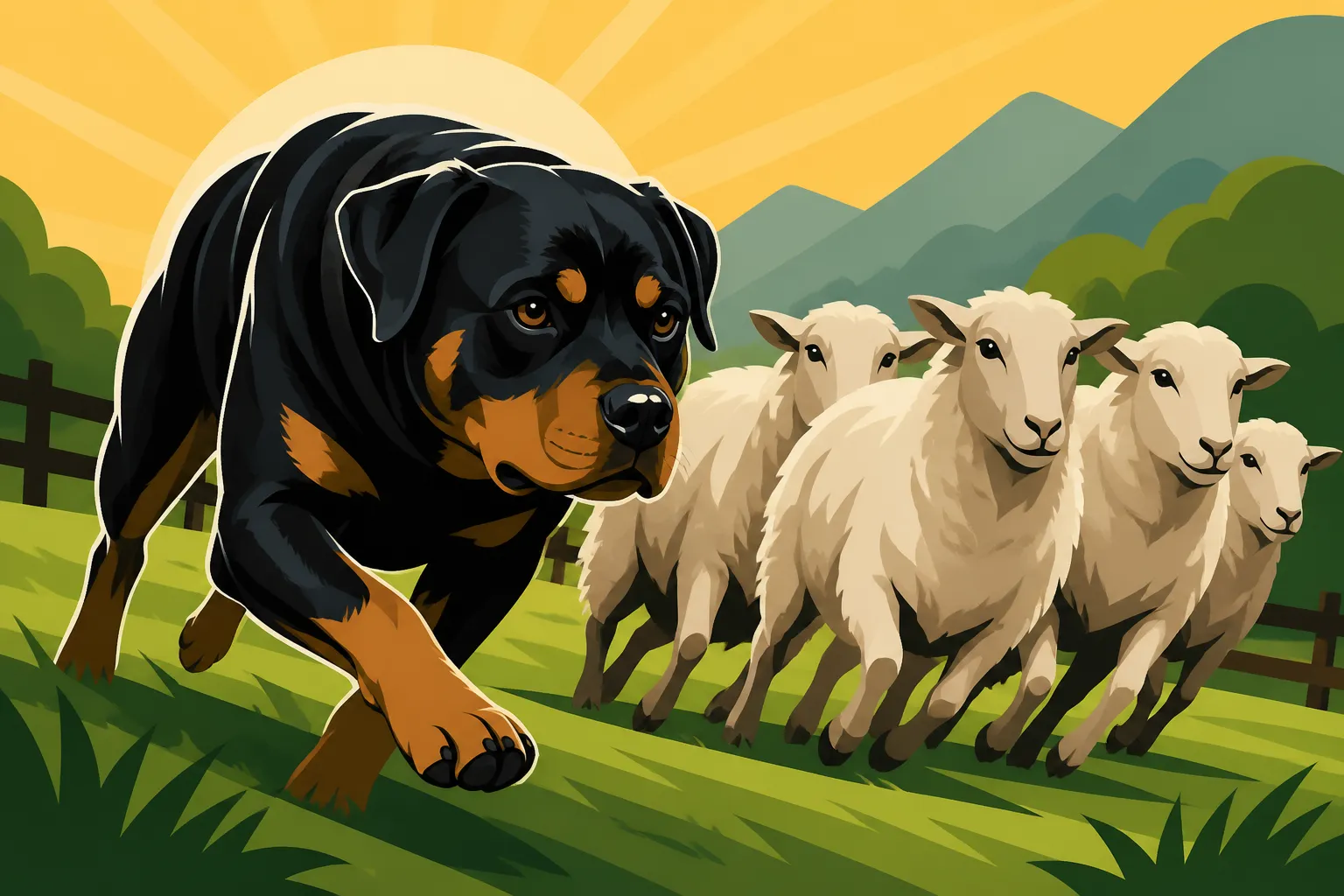
It might seem surprising to imagine a powerful, imposing Rottweiler, known for its guarding instincts and steadfast loyalty, gracefully moving a flock of sheep across a field. Many people assume herding is reserved for the collies and shepherds of the world, but the truth is, the Rottweiler's ancestral roots are deeply intertwined with droving and livestock management. If you've ever felt a deep, perhaps unexplainable, pull to explore this ancient working instinct with your own Rottweiler, this guide is for you. We'll dive into the rich history that makes herding a natural fit for some Rottweilers, what herding trials actually entail, how to begin your journey, and the incredible benefits this sport can bring to your relationship with your magnificent companion.
The Surprising History of Rottweilers and Herding
When we think of Rottweilers today, images of formidable guard dogs, devoted family protectors, or even highly trained police dogs often come to mind. What many don't realize is that before these roles became prominent, the Rottweiler was a true "working dog" in the most fundamental sense, deeply involved in the daily lives of butchers and farmers in the town of Rottweil, Germany. This history is crucial to understanding why herding, though less common now, is still very much a part of their genetic makeup.
Tracing the Drover Dog Ancestry
Our beloved Rottweilers trace their lineage back to the powerful drover dogs brought across the Alps by the Roman legions. These formidable ancestors were not just camp guardians; they were essential for moving and protecting the cattle that fed the Roman armies as they marched through Europe. Imagine the sheer logistical challenge of feeding thousands of soldiers on the move – these dogs were vital for keeping the herd together, pushing them forward, and protecting them from wild animals or opportunistic thieves.
As the Roman Empire receded, some of these dogs remained, eventually settling in the bustling market town of Rottweil, a prominent cattle trading hub in southern Germany. It was here that the breed, as we know it today, truly began to take shape. These dogs became indispensable to the local butchers, earning them the affectionate, yet highly descriptive, title "Metzgerhund" – butcher's dog. Their job wasn't just about guarding the butcher's shop or cart; it was about driving cattle to market, controlling them during sales, and even protecting the money bag tied around their necks on the return journey. This involved a keen understanding of livestock behavior, strong nerves, and the ability to apply pressure and control without aggression – all hallmarks of a good herding dog. This foundational role as a herder and drover is a historical nugget that often gets lost in modern narratives, but it's where the heart of the Rottweiler's working drive truly lies.
Why the Herding Instinct Still Matters
Even centuries removed from those cattle-driving days, the echoes of the Rottweiler's herding ancestry often manifest in subtle, and sometimes not-so-subtle, behaviors we see in our modern companions. Have you ever noticed your Rottweiler "body blocking" you or other family members through a doorway, or gently bumping you with their nose or shoulder when they want you to move? That "lean" that Rottweilers are so famous for, where they press their full weight into you, can be seen as a residual behavior from applying pressure to livestock. These seemingly innocuous actions are, in fact, small demonstrations of their innate droving instinct, a desire to move and control.
For some Rottweilers, this instinct runs much deeper than just a casual bump. They might show a focused, intense gaze on moving objects – children playing, squirrels darting across the yard, or even cars passing by. They might try to gather family members in a group or circle. These aren't just quirks; they're potential indicators of a dormant, yet powerful, herding drive waiting to be channeled. Recognizing and understanding these inherited traits can unlock an entirely new world of enrichment and partnership with your dog. Exploring this instinct through structured activities like herding trials provides an incredibly fulfilling outlet, allowing them to engage with their historical purpose in a safe and controlled environment. It’s a chance to honor the working spirit of the Roman Drover Dogs Behind the Rottweiler and let them be who they were truly meant to be.
Understanding Rottweiler Herding Trials
So, what exactly happens at a herding trial, especially for a breed like the Rottweiler? It's not just about chasing sheep. Herding trials are a nuanced test of a dog's natural instinct, training, and partnership with its handler. They evaluate how well a dog can calmly and effectively control livestock, demonstrating both innate ability and learned precision.
What Herding Trials Involve
At its core, a herding trial involves a dog, its human handler, and a small group of livestock – most commonly sheep or ducks, though sometimes cattle are used, particularly with larger, more powerful breeds like Rottweilers. The goal is simple: to move these animals through a predetermined course, which might include gathering them, driving them through gates, around obstacles, or into a pen, all while maintaining control and not stressing the animals. It’s a dance of communication and anticipation, where the dog uses its presence, eye, and movement to influence the flock, guided by the handler’s commands.
There are different levels of competition, starting with instinct tests or pre-trial courses, which are designed to see if a dog has any natural interest or aptitude for herding. If they show promise, they can move on to "started," "intermediate," and "advanced" levels, each building on complexity and requiring more sophisticated skills and responsiveness. Imagine navigating a small flock of sheep through a winding path, over a bridge, and into a narrow chute – all under the watchful eye of a judge. It's an intricate challenge that requires both dog and handler to work as a seamless team, where the dog needs to understand when to apply pressure, when to back off, and when to hold the stock in place. It's a testament to their intelligence and cooperative nature.
The Specific Skills a Rottweiler Needs
While their size and power might seem intimidating, herding for a Rottweiler isn't about brute force. In fact, aggressive or overly forceful handling of livestock is heavily penalized. Instead, a successful herding Rottweiler relies on a combination of innate instinct and finely tuned training. First and foremost, impeccable obedience is non-negotiable. A Rottweiler needs to respond instantly and reliably to commands, even with the distraction and excitement of moving animals. This means a solid "stay," "come," "down," and directional commands are absolutely crucial. Without this foundation, the safety of both dog and livestock is compromised.
Beyond basic commands, a Rottweiler needs to develop what's called "stock sense" – the ability to read the animals' movements and anticipate their reactions. They learn to move around the flock to gather them, drive them forward, or stop them, often using what's known as "the eye" – an intense, focused stare that keeps the stock moving. They also learn to apply appropriate pressure, which means understanding when a gentle nudge or a firm presence is needed, versus an overwhelming charge. Patience is key; a good herding dog is calm, deliberate, and thoughtful in its approach. This is where a dog’s natural intelligence truly shines, as they have to make quick decisions based on the ever-changing dynamics of the flock. Early training with a focus on clear communication and positive reinforcement, perhaps building on a strong foundation from an online program like BAXTER & Bella, can make all the difference in shaping these vital skills.
Getting Started with Herding for Your Rottweiler
The idea of herding with your Rottweiler might sound exciting, but where do you even begin? It’s a journey that requires patience, the right guidance, and a realistic understanding of your dog’s individual capabilities. Not every Rottweiler will be a natural, but many will surprise you with their latent instincts.
Assessing Your Rottweiler's Herding Instinct
The very first step is to see if your Rottweiler even has the instinct. This isn't something you can force; it either exists or it doesn't, though some dogs have a stronger drive than others. The best way to assess this is through an "instinct test" at a dedicated herding facility. During an instinct test, your dog will be introduced to livestock (usually a small, calm group of sheep or ducks) in a controlled pen, often with an experienced instructor guiding the process. The instructor will observe your dog's natural reactions: Does your Rottweiler show curiosity? Do they attempt to move the animals, even in a clumsy way? Do they show a low crouch, an intense gaze, or try to gather the stock?
Some Rottweilers might immediately engage, showing a strong desire to circle and gather, while others might just sniff curiously or even seem disinterested. It's important to remember that a lack of initial interest doesn't necessarily mean zero instinct, but a strong, immediate engagement is a positive sign. The instructor will be looking for specific behaviors that indicate a working aptitude, and they'll be able to tell you if your Rottweiler has enough "spark" to pursue further training. Don't be discouraged if your dog doesn't instantly turn into a sheepdog; the goal is simply to uncover any existing potential. If your dog shows a strong prey drive but no desire to gather, herding might not be the right path, as pure predatory behavior is actively discouraged and unsafe in herding.
Finding a Herding Instructor and Facility
Once you've confirmed your Rottweiler has some herding instinct, the next critical step is finding the right instructor and facility. This isn't like finding a basic obedience class; herding requires specialized knowledge and experience, especially with powerful breeds. Look for instructors who have experience working with Rottweilers or other large, strong working breeds. They should understand how to channel power and instinct into controlled, useful actions without resorting to harsh methods. A good instructor will prioritize safety for both your dog and the livestock and will teach you how to read both your dog and the animals.
Word-of-mouth from local dog clubs, breed-specific associations, or online herding communities can be excellent resources. Many national breed clubs, including the American Rottweiler Club, might list recommended herding facilities or trial dates. When you visit a potential facility, observe a class or two if possible. Pay attention to how the instructor interacts with the dogs and handlers, the condition of the livestock, and the overall atmosphere. Ensure the facility is well-maintained and provides a safe, structured learning environment. It’s also wise to check if they offer progressive training steps, from beginner instinct development to more advanced trial preparation.
Essential Gear and Safety Considerations
Getting started in herding doesn't require a lot of fancy gear, but what you do need should be robust and reliable. A strong, comfortable leash and a sturdy collar or harness are paramount. Your dog is going to be moving with purpose and potentially exerting considerable force, so you need equipment that won't fail. Many handlers use a flat buckle collar or a well-fitting, balanced harness that provides good control without restricting movement. For some, a front-clip harness can be helpful for added control if your Rottweiler is prone to pulling when excited, and you can find a wide range of options on Amazon. Avoid retractable leashes, as they offer no control in a herding situation.
Safety is the absolute top priority. This means ensuring your Rottweiler is healthy and physically capable of the work. It also means respecting the livestock; they are not toys, and their well-being is crucial. An experienced instructor will always oversee initial sessions to ensure safe interactions. You'll also need to be mindful of your own footing in a working arena, which can be uneven or muddy. Always wear appropriate footwear. Finally, consider bringing water for both you and your dog, especially on warmer days, as herding can be surprisingly demanding physically. Remembering these basics will help ensure a positive and safe experience for everyone involved. For a growing Rottweiler puppy, remember to be mindful of A Growing Rottweiler's Joints and Overexercise as you begin any new physical activity.
Benefits Beyond the Ribbons
While the thrill of competition and earning titles can be rewarding, the true benefits of engaging your Rottweiler in herding extend far beyond any ribbons or trophies. It's about tapping into their core essence and fostering a deeper, more meaningful bond.
Mental and Physical Enrichment
Rottweilers are intelligent, powerful dogs that thrive on having a job to do. Herding is one of the most intellectually stimulating activities you can engage in with your dog. It's not just running; it requires problem-solving, anticipation, and constant communication. Your Rottweiler has to think about how to influence the stock, where to position themselves, and how to respond to your commands, all while the "problem" (the livestock) is constantly moving and reacting. This intense mental workout is incredibly satisfying for a Rottweiler, often leaving them more tired and content than a simple physical run.
Physically, herding provides a fantastic, low-impact full-body workout. Dogs move in circles, make quick stops, start, and change direction, all of which build strong muscles and improve agility and coordination. Unlike repetitive activities, herding is dynamic and ever-changing, which keeps dogs engaged and prevents boredom. This engagement in their natural drives is crucial for a breed that can sometimes develop behavioral issues if under-stimulated. A Rottweiler that is given the opportunity to work its mind and body in this way is generally a happier, more balanced companion at home, demonstrating the importance of structured activity in preventing issues like Rottweiler Behavior Problems That Start Small.
Strengthening the Human-Rottweiler Bond
Perhaps the most profound benefit of herding is the incredible strengthening of the bond between you and your Rottweiler. Herding demands a level of trust, communication, and mutual understanding that few other activities can rival. You are working as a true team, facing challenges together, and relying on each other's cues and instincts. As you learn to read your dog’s subtle signals, and they learn to anticipate your commands and trust your guidance, your relationship deepens exponentially.
There's a unique satisfaction in seeing your powerful Rottweiler, guided by your quiet instructions, expertly move a flock of animals. It's a shared accomplishment that builds confidence in both dog and handler. The focus and cooperation required in the arena translate into better communication and a stronger partnership in daily life. This shared purpose and deep connection truly allow the Rottweiler's loyal and intelligent nature to shine, reinforcing why they are such magnificent working companions. It's an opportunity to experience firsthand the depth of their intelligence and their unwavering desire to work alongside their chosen human, much like their ancestors did centuries ago. This kind of shared experience helps build a formidable partnership, solidifying the idea of Why a Rottweiler Must Be Trained Before It Grows and throughout its life.
Here's a quick look at typical herding trial levels:
| Trial Level | Description | Focus for Rottweiler | Key Skills Tested |
|---|---|---|---|
| Instinct Test | Initial assessment to see if a dog has any natural interest in working livestock. Short, supervised. | Observing natural curiosity, desire to move stock, eye contact. Low pressure. | Initial engagement, responsiveness to stock. |
| Pre-Trial/Novice | Introduces basic control and communication. Dog and handler learn to gather, drive, and stop stock in a small arena. | Developing controlled movement, responding to basic directional commands (e.g., "walk up," "lie down," "come by"). | Obedience under distraction, basic gathering, driving. |
| Started | More complex patterns, including driving through gates and possibly penning. Requires more precise handling. | Refining directional control, understanding pressure and release, managing a small flock independently. | Driving a course, navigating obstacles, maintaining calm control, basic penning. |
| Intermediate | Longer courses, larger working areas, more challenging patterns. Dog needs to anticipate and react faster. | Advanced flock management, independent decision-making, working with more varied livestock behavior. | Greater precision, speed, and endurance, more complex outruns and fetches. |
| Advanced | Full, complex field courses, often involving large numbers of stock, open field work, and shedding. | Masterful control, ability to separate specific animals (shedding), exceptional communication between dog and handler. | High-level strategy, deep understanding of livestock, flawless teamwork, handling diverse situations with composure. |
Disclaimer
This article is for general informational purposes only and does not constitute professional advice. Laws, prices and regulations vary by location and change over time. Consult a qualified professional for guidance on your specific situation.