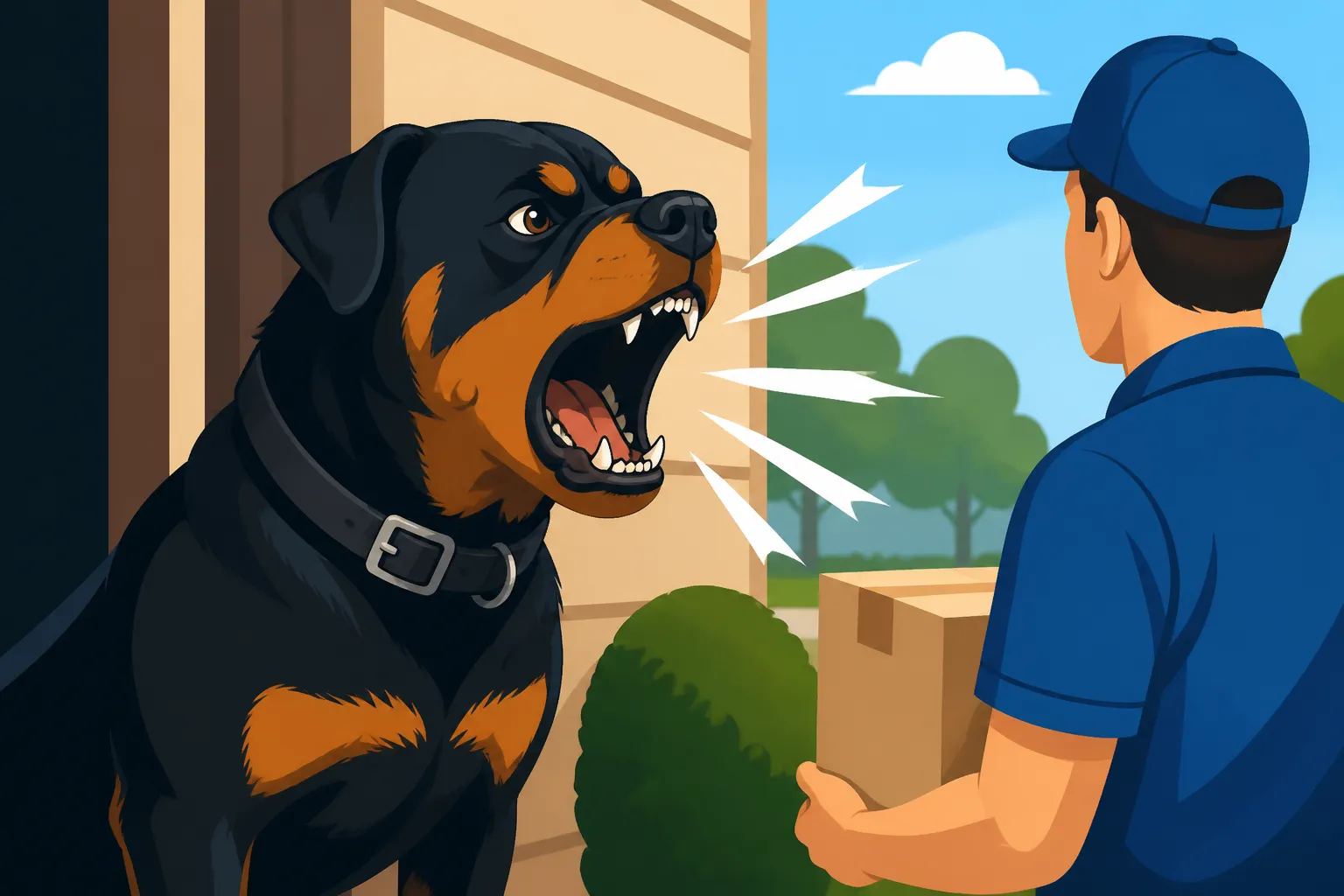
A Rottweiler That Barks at Delivery Drivers
That moment when the delivery truck pulls up, and your usually composed Rottweiler erupts into a furious barking frenzy, lunging at the window or door, is incredibly frustrating and frankly, often embarrassing. It feels like all your hard work on their manners goes right out the window. This guide is here to help you understand the deep-seated reasons behind your Rottweiler's intense reaction to delivery drivers and provide clear, actionable strategies to foster a much calmer, more appropriate response.
Understanding Why Your Rottweiler Barks at Delivery Drivers
Rottweilers are magnificent dogs, known for their strength, intelligence, and a loyal, protective nature that runs centuries deep. When they bark at delivery drivers, it's rarely out of pure malice or aggression. Instead, it’s usually a complex cocktail of their breed instincts, perceived threats, and often, a dash of frustration or excitement. Dissecting these motivations is the first step toward finding a lasting solution.
The Guarding Instinct is Strong
Let's face it, your Rottweiler was practically bred for this job, even if "this job" has evolved from guarding Roman cattle and butchers' money to protecting your latest Amazon package. Their ancestors, the Roman drover dogs, were tasked with keeping livestock safe and, later, protecting the butcher's earnings during market trips. This innate guarding instinct isn't something you can simply switch off; it's woven into their DNA.
When a delivery driver approaches, especially if they're wearing a uniform or carrying packages, your Rottweiler's ancient programming kicks in. They perceive this stranger, often moving purposefully and perhaps even quickly, as an intruder. Their bark is a natural alarm, a warning signal to you (their pack leader) that someone is approaching their territory, and a clear message to the stranger to back off. It's a testament to their protective nature, even if it's inconvenient in modern suburban life. This behavior is part of The Rottweiler Guarding Instinct and How to Shape It.
Territory and Perceived Threats
Your home, your yard, and even your car are all part of your Rottweiler's perceived territory. A delivery driver, by crossing the property line, stepping onto the porch, or even just pausing at the curb, is entering this guarded zone. For many Rottweilers, this isn't a friendly visit; it's an intrusion. The speed at which a driver approaches, the sound of the vehicle, the sudden appearance at the door – all these can heighten a Rottweiler's sense of alarm.
Furthermore, the driver often doesn't interact with your dog in a way that signals "friend." They might avoid eye contact, move quickly, or leave without acknowledgment, all behaviors that a guarding dog might interpret as suspicious or even hostile. This lack of positive interaction reinforces the idea that these strangers are indeed threats, even if they're just trying to drop off your new vacuum cleaner. It creates a cycle where the dog's alarm barking "works" to make the "threat" go away, thus strengthening the behavior.
Excitement, Frustration, or Fear
While guarding is primary, other emotions can fuel the barking. Some Rottweilers bark out of sheer excitement. They might be thrilled by the novelty of a person at the door, even if they don't fully understand the purpose. This can sometimes look like guarding, but it's driven by a burst of energy and anticipation. They might even whine or jump along with the barking.
Then there's frustration. Imagine being a powerful, intelligent dog, seeing someone on your property, but being unable to get to them or investigate. That can lead to what's called barrier frustration, especially if they are behind a window, fence, or door. They want to engage, but can't, so the barking escalates. This is often seen in dogs who also pull intensely on the leash, demonstrating Rottweiler Leash Manners at a Hundred Pounds.
Finally, a less common but still possible factor is fear. While Rottweilers are known for their confidence, some individuals, especially if not Socializing a Rottweiler Puppy Properly when young, might genuinely be anxious or fearful of strangers. The barking in this case is a "keep away" signal, an attempt to make the scary person retreat. It's essential to observe your dog's body language closely: are they stiff and low, or high and assertive? Their posture can tell you a lot about their underlying emotion.
Practical Strategies to Manage the Barking
Managing a Rottweiler's barking at delivery drivers isn't about silencing them entirely – it's about teaching them a more appropriate, measured response. It requires consistency, patience, and a clear understanding that you're working with deeply ingrained instincts. You're essentially retraining centuries of behavior for a modern world, and that takes dedication.
Management Techniques to Reduce Exposure
Before you even start formal training, managing the environment is crucial. This means preventing your Rottweiler from practicing the unwanted behavior, because every time they bark and the delivery driver leaves, they're essentially getting a reward for their "alert."
One of the simplest strategies is to remove the visual trigger. If your Rottweiler barks at the window, consider using privacy film on the lower panes, keeping blinds closed, or even installing a baby gate to block access to front-facing rooms when you know deliveries are expected. A solid fence or barrier that prevents them from seeing people approach the property line can also be incredibly effective. For those inevitable times when a delivery is coming, ensure your Rottweiler is safely confined in a back room, a crate, or on a leash with you, away from the immediate door, before the driver even gets out of their vehicle. Using a secure crate, sized correctly for your full-grown companion, like those large enough for The Crate Size a Hundred Twenty Pound Rottweiler Needs, can be a lifesaver.
Another management tactic is to redirect their attention before they even see the driver. Keep a supply of high-value treats or a favorite toy nearby. The moment you hear a truck or doorbell, immediately engage your Rottweiler in a fun activity or give them a puzzle toy. The goal is to interrupt the pattern before the barking starts, shifting their focus to something positive and engaging with you.
Training for a Calm Response
Once you've got management down, it's time for some intentional training. This isn't a quick fix; it's a process of counter-conditioning and desensitization. You want your Rottweiler to associate the arrival of a delivery driver not with alarm, but with something pleasant and calm.
Start by working on a solid "leave it" or "quiet" command in a low-distraction environment. Practice these commands until your Rottweiler can reliably disengage from a mild distraction. Then, you can gradually introduce the delivery driver scenario. This might mean having a friend or family member pretend to be a delivery driver, starting far away from your house, and slowly moving closer over many sessions.
The key is to reward calmness. As soon as your Rottweiler notices the "driver" but remains quiet, or stops barking on command, immediately mark that behavior with a verbal cue like "yes!" or a clicker, and provide a high-value treat. If they start barking, calmly remove them from the situation or block their view, wait for them to calm down, and then try again. The goal is to keep the exposure below their reactivity threshold, meaning they notice but don't explode into a barking fit. Think of it like this: the driver's arrival predicts good things from you, not a reason to sound the alarm. Many online training platforms, such as BAXTER & Bella, offer structured courses that can guide you through these steps with video tutorials.
Consistent Training is Key for a Big Dog
With a Rottweiler, consistency isn't just important; it's absolutely non-negotiable. These are powerful, intelligent dogs, and if you let the behavior slide "just this once," you're effectively undoing weeks of hard work. Every member of the household needs to be on board with the training plan, using the same commands, rewards, and management techniques.
Because Rottweilers grow into formidable adults, it's critical to remember Training a Rottweiler Before It Outweighs You. Starting this training when they're a puppy makes a huge difference, but it's never too late to begin. Regular, short training sessions are far more effective than infrequent, long ones. Five to ten minutes, several times a day, reinforcing calm behavior around the door, can yield incredible results. Practice various scenarios: someone walking past the window, the doorbell ringing, a knock at the door.
Remember that a Rottweiler's bark, even if it means Rottweiler Barking and When It Means Something, can be intimidating. You are teaching them that you are in charge of assessing threats and managing the household, not them. This builds their trust in you and reduces their need to take matters into their own paws. Never punish a growl, as this simply teaches a dog to suppress their warning signals, which can lead to sudden bites without warning. As highlighted in Why You Should Never Punish a Rottweiler Growl, it's always better for a dog to communicate their discomfort.
Tools and Resources to Help Your Training
Successfully addressing your Rottweiler's delivery driver barking often involves a multi-pronged approach, utilizing various tools and resources to support your training efforts. These aids can help manage the environment, provide mental stimulation, and offer expert guidance when you feel stuck.
Physical Barriers and Visual Blocks
As mentioned earlier, physical barriers play a significant role in managing the problem by preventing your Rottweiler from practicing the unwanted behavior. Investing in good quality window films can obscure the view for your dog without blocking out all natural light for you. These come in various patterns and opacity levels and can be found easily on Amazon. For glass doors, a tasteful curtain or blind that can be easily closed when needed works wonders.
If your yard is where much of the action happens, assess your fencing. Can your Rottweiler see over or through it? Opaque fence extensions or strategically planted shrubs can block their view of the street or neighboring properties, reducing triggers. Even simple indoor baby gates can be invaluable for keeping your Rottweiler in a designated "safe zone" away from the front door or windows during prime delivery times. Remember, every time they don't get to bark at a driver, it's a small victory for your training.
Enrichment and Mental Stimulation
A tired Rottweiler is often a well-behaved Rottweiler. Their powerful minds and bodies need appropriate outlets for their energy and intelligence. If your dog is under-stimulated, they might be more prone to reactivity and barking simply out of boredom or pent-up frustration. Incorporate puzzle feeders and treat-dispensing toys into their routine. These force your dog to think and work for their food, providing valuable mental exercise. Look for durable, large-breed appropriate Puzzle Feeders Built for a Rottweiler on sites like Amazon.
Beyond physical exercise, engage their minds with regular training sessions that reinforce basic obedience and introduce new tricks. Practicing Rottweiler Impulse Control Games can be particularly helpful, as they teach your dog to manage their excitement and make thoughtful choices rather than reacting impulsively. Scent work, even simple "find it" games where you hide treats around the house, can be incredibly enriching and tiring for a Rottweiler. A dog that's mentally engaged is less likely to fixate on external triggers like the mail carrier.
Professional Help When You Need It
Sometimes, despite your best efforts, the barking behavior might be too ingrained, too intense, or you might simply feel overwhelmed. This is where professional help becomes invaluable. A certified professional dog trainer or a veterinary behaviorist can assess your specific situation, identify the root cause of the barking, and develop a tailored training plan. They can also help you understand subtle body language cues you might be missing and teach you advanced techniques.
Don't hesitate to seek help if you're struggling. A qualified trainer, especially one experienced with working breeds like Rottweilers, can make a significant difference. They can provide hands-on guidance, demonstrate proper techniques, and help you navigate the complexities of your dog's behavior. Many offer virtual consultations now, which can be convenient for busy schedules. Remember, asking for help isn't a sign of failure; it's a commitment to your Rottweiler's well-being and your peace of mind.
| Barking Trigger | Probable Motivation | Body Language Cues | Initial Management/Response |
|---|---|---|---|
| Mail truck arrives | Guarding, territorial | Stiff body, ears forward, focused gaze, loud bark | Block view, redirect with treat/toy, go to safe room |
| Doorbell rings | Guarding, alert, excitement | Similar to above, might jump/lunge at door | Keep on leash near door, reward for "sit/stay" away from door |
| Driver approaches door | Guarding, perceived threat | Stiff, low growl, possible raised hackles | Remove from area, use a "quiet" command, reward calmness |
| Driver leaves | Confirmation of "success" | Continued barking, might try to chase | No response if still barking, only reward if quiet post-departure |
| UPS/FedEx uniform sighted | Association with prior incidents | Immediate alert, often before the driver is close | Proactive redirection before the bark starts |
Quiet on the Home Front: Achieving Calm with Your Rottweiler
Dealing with a Rottweiler that barks at delivery drivers is a common challenge, but it's one that can absolutely be overcome with the right approach. By understanding their powerful guarding instincts, managing their environment to reduce triggers, and consistently engaging in positive reinforcement training, you can teach your Rottweiler to respond to visitors with a calm confidence rather than a reactive uproar. It takes time, patience, and a dedicated effort from everyone in the household, but the reward of a peaceful home and a well-adjusted companion is immeasurable. Stick with it, celebrate small victories, and remember that you're building a stronger bond of trust and understanding with your loyal Rottweiler.
Disclaimer
This article is for general informational purposes only and does not constitute professional advice. Laws, prices and regulations vary by location and change over time. Consult a qualified professional for guidance on your specific situation.