Why a Rottweiler Body Blocks a Doorway
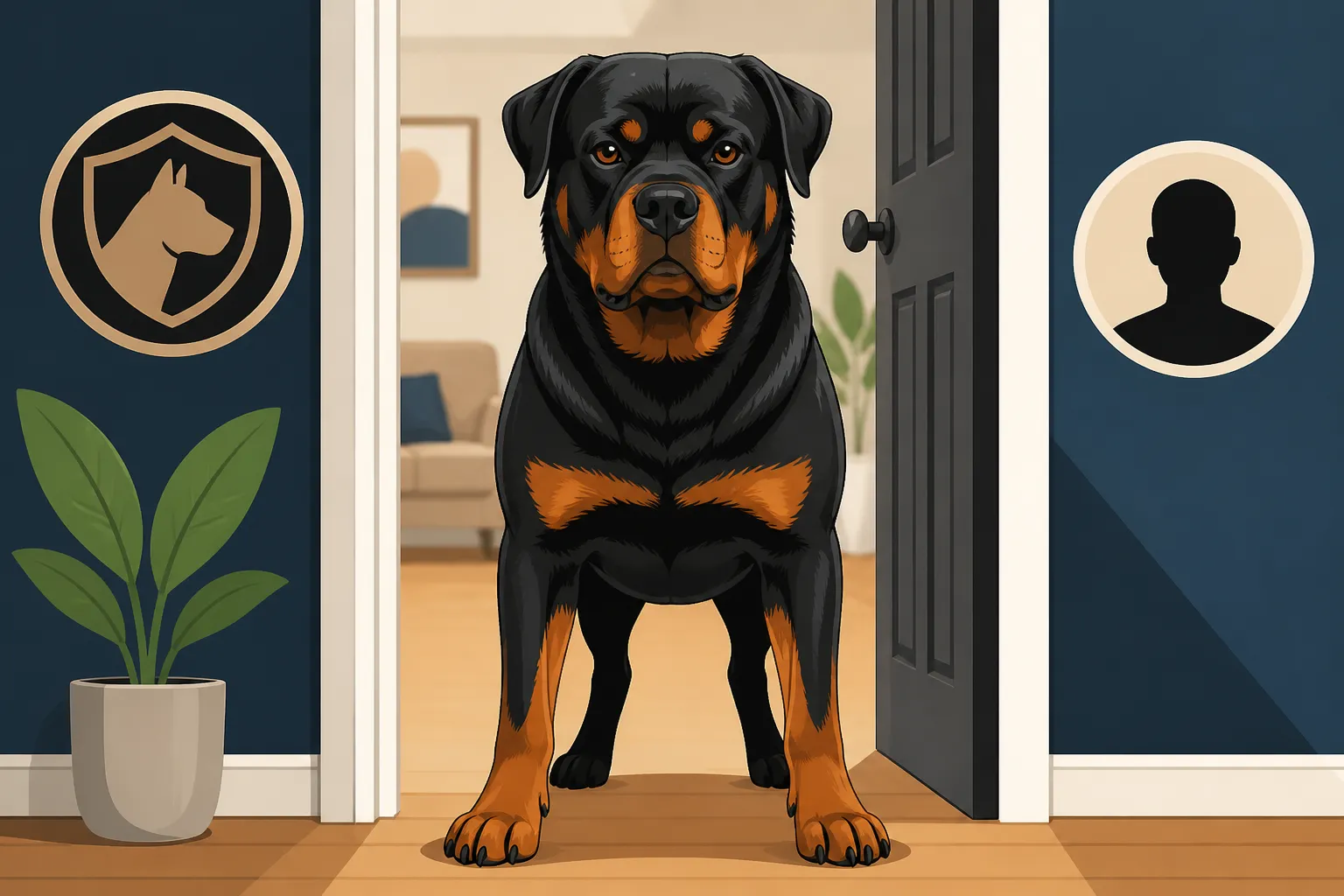
It’s a scenario many Rottweiler owners know all too well: you’re trying to walk from the kitchen to the living room, or maybe step out into the yard, and suddenly, your big, loving Rottweiler is planted squarely in your path, a furry, immovable mountain. This isn't just an inconvenience; it can be downright baffling, sometimes even a little frustrating when you’re in a hurry. You wonder, "Are they trying to be annoying? Are they guarding something? Do they just not understand personal space?" This guide will break down the common reasons why your Rottweiler might be body blocking doorways and offer practical, empathetic strategies to navigate and gently redirect this unique behavior.
Understanding the Root of the Behavior
When your Rottweiler parks themselves in a doorway, it rarely comes from a place of malice or a deliberate attempt to obstruct you. Instead, it’s usually a complex blend of ancient instinct, deep affection, and sometimes, a little bit of protective guarding. Unpacking these motivations is the first step to truly understanding and managing the behavior.
The Herding and Droving Instinct
To truly understand why a Rottweiler might "block" a doorway, we have to travel back in time to their roots as Roman drover dogs. These magnificent animals weren't just guardians; they were working dogs responsible for moving livestock from one place to another. Imagine a herd of unruly cattle – a dog doesn't just bark at them from a distance. A drover dog, especially one with the Rottweiler's physical presence, uses its body to influence movement. They would bump, lean, and place themselves strategically to guide the herd where it needed to go.
Now, fast forward to your living room. Your Rottweiler doesn't have cattle to herd, but that instinct is still very much alive in their DNA. You, your family members, and even other pets can become their "herd." When they body block a doorway, they might genuinely be trying to "guide" you, to keep the family unit together, or to simply be aware of everyone's movements. They might see the doorway as a natural choke point, an area where they can most effectively keep track of their "charges." It’s less about stopping you and more about managing your movement within their perceived domain. Think about when you try to leave a room and they step in front of you, looking back as if to say, "Where are you going? We should all be together." This isn't necessarily aggression; it's a manifestation of that ancient desire to keep the flock cohesive. Rottweiler Bumping That Comes From Droving Cattle goes into more depth on this specific behavior.
Seeking Proximity and Affection
Despite their imposing appearance, Rottweilers are often deeply affectionate and devoted to their families. They thrive on close proximity and being an integral part of the household. For many Rottweilers, body blocking a doorway is simply another way to be near you, to soak up your presence, and to feel connected. It's their clumsy, oversized way of saying, "I love you, and I want to be where you are."
When you're moving between rooms, a Rottweiler might see this as an opportunity to engage, to get a head scratch, a belly rub, or just a moment of shared space. If they lean into you heavily, making it impossible to pass, it could be their equivalent of a big, furry hug. They might gently nudge you with their head or try to push their body against your legs as you attempt to squeeze past. This is particularly common in homes where the Rottweiler is very bonded with one specific person and wants to accompany them everywhere. It’s their unique way of requesting attention or expressing their desire to be involved in whatever you're doing, even if that means just observing from the threshold. Sometimes, we might unintentionally reinforce this by giving them a quick pat or a reassuring word to get them to move, which, in their mind, is a successful plea for interaction.
Resource Guarding, (Sometimes)
While the previous two points often explain the benign nature of doorway blocking, it's crucial to acknowledge that in some cases, it can stem from a form of resource guarding. This is less common but definitely something to be aware of, especially if the behavior presents with other guarding signs. A "resource" isn't just food or a favorite toy; it can be anything your Rottweiler values highly, including a particular space, a person, or even the perception of access to the household.
If the doorway leads to a room where a high-value item is, like their food bowl, a special chew, or even you when you're resting, the blocking behavior might shift from affectionate or instinctive to protective. You might notice a subtle stiffening of their body, a low growl, a direct stare, or even a slight lip curl if you try to push past them. This is different from the relaxed, leaning behavior of a dog seeking proximity. For a deeper dive into this, check out A Rottweiler That Guards a Doorway. It's vital to differentiate between a dog that wants to be near you and one that is trying to control access to a valued resource. Recognizing these subtle differences in body language is key to addressing the behavior appropriately and safely.
Reading Your Rottweiler's Intent
Deciphering your Rottweiler's true intentions when they block a doorway is paramount. It informs how you respond and whether you're dealing with a quirky habit or something that requires more focused intervention. Their body language and the context of the situation will give you most of the clues you need.
Body Language Clues
Your Rottweiler communicates volumes with their body, even when they're simply standing still. Learning to read these signals can tell you if their doorway blockade is a sign of affection, a remnant of their droving past, or something more concerning.
If your Rottweiler is leaning into you or standing in your way out of affection or habit, you’ll typically see a soft, relaxed demeanor. Their muscles won't be tense, their ears will be in a natural position (not flattened back or rigidly forward), and their tail, if undocked, might be wagging gently or held in a relaxed neutral position. Their eyes will likely be soft, perhaps even a bit squinty if they're enjoying the interaction. They might give a gentle nudge or a little "woof" that sounds more like a greeting than a warning. There's an overall impression of "I just want to be here with you." They might even shift their weight slightly if you gently encourage them to move, indicating a willingness to yield.
On the other hand, if the behavior is tied to guarding, the body language will be distinctly different. You might observe a stiffening of their posture, with their body becoming rigid and unyielding. Their head might be held high, and their gaze could be hard and direct, potentially accompanied by "whale eye," where you see the whites of their eyes. Their ears might be pulled back or pinned to their head, indicating tension. A low, guttural growl or even a subtle lip curl could be present. If their tail is docked, you might notice the stump held stiffly or vibrating rapidly, rather than a relaxed wag. If you attempt to move past, they might block you more deliberately, perhaps even snapping or air-snapping if they feel their boundary is being crossed. For more on subtle warning signs, take a look at Reading a Still Rottweiler That Is Not Relaxed. It’s important to note that these guarding behaviors are often subtle at first and can escalate if ignored, so early recognition is crucial.
Context Matters
Beyond body language, the specific circumstances surrounding the doorway blocking can provide immense insight into your Rottweiler's motivation. Think of yourself as a detective, piecing together the clues.
Consider when the blocking occurs. Does it happen every time you approach the front door, perhaps because they associate it with you leaving them behind? Or is it when you try to enter the kitchen, especially if meal prep is happening? If it consistently occurs when you're trying to exit the house, it could be a plea for attention, a desire to come with you, or even a protective instinct kicking in. If it's always at the bedroom door at night, it might be an attempt to join you or to "guard" the family's resting place.
Who is present also plays a significant role. Is it just you? Are other family members around? Does the behavior change when guests visit? If your Rottweiler only blocks doorways when strangers are around, it might be a protective display, trying to control access to their family or territory. If it's a doorway to a child's room and your Rottweiler exhibits guarding signs, that's a much more serious situation than them simply wanting to be near you while you cook dinner. When a Rottweiler Guards a Child delves into this sensitive topic.
Lastly, consider the environment. Is the doorway leading to an area with strong smells, like the pantry or a room where a new package has just been opened? The presence of high-value resources, even if unseen, can influence their behavior. By paying close attention to these contextual factors, you can develop a clearer picture of why your Rottweiler is choosing to become a living doorstop.
Strategies for Managing Doorway Blocking
Once you've got a better handle on why your Rottweiler might be body blocking, you can start to implement strategies to manage and redirect the behavior. The goal isn't to punish them for their instincts or affection, but rather to teach them appropriate ways to interact and move within the home.
Teaching an "Off" or "Place" Command
One of the most effective tools in your training arsenal for doorway blocking is a solid "off" or "place" command. These commands teach your Rottweiler to move away from a specific spot or to go to a designated area, giving you clear control over their positioning.
To teach "off," start in a low-distraction environment. Hold a high-value treat in your hand and entice your Rottweiler to step away from the doorway. As soon as they move that first paw, say "Off" and reward them. Repeat this, gradually increasing the distance they need to move. You want them to associate the word "Off" with moving away from whatever they are currently near. Practice this in various doorways around the house, ensuring consistency.
The "place" command teaches your Rottweiler to go to a specific spot, like a dog bed or a mat, and stay there until released. Start by luring them onto their "place" with a treat, saying "Place!" as they step onto it. Reward them heavily once they're on it. Gradually increase the duration they stay, then the distance you move away, and finally, add distractions. Many online training programs, like those offered by BAXTER & Bella, have excellent modules on teaching these foundational commands with clear, positive reinforcement techniques. Once your Rottweiler understands "place," you can direct them to their mat when you need to pass through a doorway, giving you free passage. Consistency is key here; everyone in the household needs to use the same commands and expectations.
Managing Space and Boundaries
Sometimes, training alone isn't enough, or you need an immediate solution while you're still working on those commands. Managing your home environment with physical barriers can be incredibly helpful, especially with a large, strong breed like a Rottweiler.
Baby gates or pet gates are your best friend here. Placing a sturdy, tall gate across a frequently blocked doorway can prevent the behavior from happening in the first place, giving you peace of mind and your Rottweiler a clear boundary. This is particularly useful for doorways leading to children's rooms, the kitchen during meal prep, or entryways when guests are arriving. It allows your Rottweiler to still be present in the general area but physically prevents them from planting themselves directly in the path.
Leash management indoors can also be a game-changer. Keeping your Rottweiler on a long line or even a regular leash when you anticipate needing to move freely through the house allows you to gently guide them away from doorways without a physical struggle. This is especially useful during initial training phases or if you have a new puppy. Crates are another excellent tool for managing space, particularly if your Rottweiler tends to block entryways or exits when you're trying to leave. A well-crate-trained Rottweiler can be comfortably settled in their crate, knowing they're safe and secure, while you move about unhindered. The Crate Size a Hundred Twenty Pound Rottweiler Needs offers advice on selecting the right size. These tools aren't about punishment; they're about setting clear, consistent expectations and boundaries for your Rottweiler, which actually makes them feel more secure. You can find a wide variety of these practical aids on platforms like Amazon.
Redirection and Consistent Leadership
Redirection is a powerful, non-confrontational way to manage unwanted behaviors, including doorway blocking. Instead of scolding your Rottweiler or trying to push them out of the way, which can be seen as an invitation to a game or a challenge, you offer them an alternative, more desirable behavior.
When your Rottweiler moves to block a doorway, immediately ask them for a known command that takes them away from the doorway. This could be "sit," "stay," or their "place" command. Once they comply, reward them with praise and a treat. The trick is to be proactive – if you see them heading for the doorway with the intent to block, intercept them with a command before they settle in. You're essentially saying, "That's not where we want you to be, but this is."
Consistency from every member of the household is absolutely critical. If one person allows the blocking and another corrects it, your Rottweiler will become confused and the behavior will likely persist. All family members must use the same commands, the same tone, and the same expectations every single time. This establishes clear leadership and helps your Rottweiler understand the rules of the house. Don't inadvertently reinforce the blocking by giving attention (even negative attention) or by struggling with them. Calmly and consistently redirect to the desired behavior, and they will eventually learn that blocking the doorway doesn't get them what they want (usually attention or proximity), but moving to their designated spot does.
Professional Help When Needed
While many cases of doorway blocking can be managed with consistent training and environmental management, there are times when it’s wise to seek professional help. Recognizing these moments is not a sign of failure but a responsible step in ensuring your Rottweiler's well-being and the safety of your home.
If the blocking behavior escalates beyond a simple inconvenience and starts to involve clear signs of aggression – such as growling, snapping, or outright preventing passage with a stiff, threatening posture – it's time to call in a certified professional dog trainer or a veterinary behaviorist. These experts can assess the specific nuances of your Rottweiler’s behavior, identify underlying anxieties or triggers, and develop a tailored training plan. They can differentiate between typical Rottweiler guarding instincts (which are part of their genetic makeup but need careful management) and true aggression stemming from fear or resource guarding gone awry.
Another reason to seek professional help is if you feel overwhelmed, frustrated, or simply aren't seeing progress despite consistent efforts. Rottweilers are powerful dogs, and their behaviors, if mismanaged, can become challenging to handle. A professional can provide an objective perspective, introduce new techniques, and guide you through the process, ensuring both your safety and your dog's. They can also help you rule out any potential medical issues that might be contributing to behavioral changes, as pain or discomfort can sometimes manifest as irritability or guarding. Never hesitate to reach out if you have concerns about the intensity or persistence of your Rottweiler's doorway blocking.
Long-Term Prevention and Training
Managing doorway blocking isn't just about reacting in the moment; it's about setting your Rottweiler up for success throughout their life. This involves a proactive approach that incorporates early training, consistent exercise, and thoughtful reinforcement of desired behaviors.
Early Socialization and Training
The foundation for a well-behaved Rottweiler, one who understands appropriate boundaries and interactions, is laid during puppyhood. Early socialization and training are absolutely non-negotiable for a breed as powerful and perceptive as the Rottweiler.
From the moment you bring your Rottweiler puppy home, expose them to a wide variety of sights, sounds, people, and experiences in a positive and controlled manner. This helps them develop into confident, well-adjusted adults who are less likely to feel the need to "manage" the environment or their family's movements out of uncertainty or fear. Enroll in puppy classes early; these are excellent for teaching basic obedience, exposing your pup to other dogs in a structured setting, and allowing them to meet various people. Rottweiler Puppy Training Through the First Year provides a comprehensive guide on what to expect.
During these formative months, specifically address spatial awareness and impulse control. Teach your puppy that you are the one who dictates movement through doorways. Practice having them sit and wait before you enter or exit a room, reinforcing calm behavior with treats and praise. Never let them barge through ahead of you. This isn't about dominance; it's about establishing clear, consistent expectations and teaching them polite manners. Using physical barriers like baby gates, readily available on sites like Amazon, from a young age can also help them understand boundaries without feeling confined, preventing the development of door-blocking habits before they even start.
Providing Ample Exercise and Mental Stimulation
A tired Rottweiler is usually a well-behaved Rottweiler. These are working dogs, and they need both physical and mental outlets to thrive. A Rottweiler with pent-up energy or boredom is more likely to invent their own "jobs," and sometimes, that can manifest as over-attentiveness to doorways or other behaviors that seek attention or control.
Regular, appropriate exercise is crucial. For puppies, this means short, frequent play sessions and structured walks, always being mindful of their developing Rottweiler Growth Plates and Why They Close So Late. For adult Rottweilers, this might involve longer walks, hiking, swimming, or engaging in dog sports. The goal is not just physical exertion but also providing an opportunity for them to explore the world and burn off excess energy in a constructive way.
Mental stimulation is just as important. Rottweilers are intelligent and need to use their brains. This can come in many forms: puzzle feeders that make them work for their meals, scent work games (hiding treats around the house for them to find), training sessions that introduce new tricks or reinforce old ones, or even just regular opportunities for them to observe the world from a secure vantage point. Rottweiler Enrichment Beyond Walks offers many great ideas. When your Rottweiler's physical and mental needs are met, they are less likely to engage in attention-seeking or overly controlling behaviors like constantly blocking doorways, as they will be more relaxed and content within their environment.
Reinforcing Calm, Independent Behavior
Beyond addressing the unwanted behavior, proactively reinforcing positive, calm, and independent behavior is a cornerstone of long-term success with a Rottweiler. You want to teach them that not being in your immediate path, not demanding attention, and not controlling doorways is what actually earns them rewards and your appreciation.
Actively seek out moments when your Rottweiler is calmly lying down away from a doorway, perhaps on their bed, or simply observing quietly. Approach them, offer gentle praise, and perhaps a small, high-value treat. This teaches them that calm, independent behavior is valued. You're essentially catching them being good and reinforcing that desired state. Don't always wait for them to do something "wrong" before you interact.
Encourage independent downtime. Rottweilers, while devoted, should also be able to settle on their own without constant human interaction. Provide them with appropriate chew toys or long-lasting chews in a designated "place" away from high-traffic areas. When they are engaging with these items independently, give them a quiet word of praise. This helps them learn to self-entertain and not rely solely on you for stimulation or direction, reducing the likelihood of them feeling the need to insert themselves into every movement you make around the house. By building their confidence in calm, independent behavior, you're fostering a well-adjusted companion who respects boundaries and understands their role within the family, leading to fewer instances of unwanted doorway blocking.
| Rottweiler Doorway Behavior | Likely Intent | Key Body Language Cues | Recommended Response |
|---|---|---|---|
| Gentle Lean/Body Block | Affection, Proximity-seeking, Mild Droving Instinct | Soft eyes, loose body, relaxed ears, gentle nudges, sometimes a soft "woof" or tail wag. | Gently redirect with a "Place" command, ask for a "Sit," reward for moving, or step over (if safe). |
| Standing Squarely in Path | Droving Instinct, Attention-seeking | Alert but not tense, ears forward, watching your movement, might look back at you expectantly. | Use "Off" or "Place" command, practice "wait" at doorways, maintain consistent boundaries. |
| Stiffening/Blocking Passage | Guarding (Space, Person, Resource) | Tense body, direct hard stare, "whale eye," ears back, low growl, possibly lip curl or low rumble. | Do NOT challenge. Create space. Redirect with a high-value treat away from the doorway if safe. Seek professional behaviorist help immediately. |
| Attempting to Follow Closely | Affection, Desire for inclusion | Happy demeanor, nudging legs, trying to get ahead, often accompanies you from room to room. | Teach "wait" at doorways, reinforce a "Place" or "Stay" in another room, or use baby gates for temporary separation. |
Disclaimer
This article is for general informational purposes only and does not constitute professional advice. Laws, prices and regulations vary by location and change over time. Consult a qualified professional for guidance on your specific situation.