Harnesses and Head Halters Sized for a Rottweiler
One of the most common frustrations for Rottweiler owners is the sheer power and determination these magnificent dogs possess, especially when they decide to pull on the leash. It’s not just annoying; a hundred-plus-pound Rottweiler dragging you down the street can be downright dangerous for both of you. This guide is here to walk you through the various types of harnesses and head halters designed specifically for powerful breeds like the Rottweiler, helping you choose the right tools for safer, more enjoyable walks.
The Challenge of Leash Walking a Powerful Rottweiler
Let's be real: walking a Rottweiler isn't like strolling with a Chihuahua. Their strength, their musculature, and their sheer enthusiasm for the world outside your door can make what should be a pleasant walk feel more like a full-body workout – and not the good kind. Many owners find themselves bracing, pulling, and feeling completely outmatched, and it's not a reflection on their dog's temperament, but rather the immense power they wield.
Why Standard Equipment Falls Short
For years, a simple flat collar was the go-to for walking any dog. For smaller breeds or those with impeccable leash manners, it still works just fine. But when you have a Rottweiler at the end of that leash, a flat collar often becomes completely inadequate, and frankly, a bit of a choke hazard. The pressure it applies directly to their throat, impacting their trachea and delicate neck structures, isn't just uncomfortable; it can lead to damage over time. Imagine trying to steer a freight train by its bumper – that's often what it feels like trying to control a strong Rottweiler with just a flat collar around its neck.
Beyond the physical discomfort and potential harm, flat collars on a determined Rottweiler can also slip off if they back out of it, or if it's not perfectly fitted. A sudden lunge at a squirrel or another dog, and your beloved companion could be loose in a potentially dangerous situation. This lack of secure control forces many owners into a constant state of anxiety, making walks less about enjoyment and more about crisis management. It’s no wonder so many of us start looking for better solutions when our dog starts hitting that Rottweiler Leash Pulling at Adult Weight stage.
The Weight and Drive Behind a Pulling Rottweiler
It’s crucial to understand why Rottweilers pull. It’s not usually out of malice or disobedience; it’s often because they have an incredibly strong natural drive and a powerful physique built for work. These dogs were bred to herd cattle, to guard property, and to move with purpose. That instinct doesn't just vanish because they're now a beloved pet walking down a suburban street. When they catch a scent, spot a person, or see another dog, that drive kicks in, and their substantial body weight – easily topping 100 pounds for males and 90 pounds for females – becomes a force of nature.
Compounding their natural strength is the fact that many Rottweilers are still growing well into their second year. Rottweiler Growth Plates Closing at Eighteen to Twenty-Four Months means their bodies are still developing, and imposing heavy physical stress on their joints with constant leash pulling can be detrimental. You might not realize it, but a dog that pulls consistently is putting incredible strain on its entire skeletal system, not just its neck. This is why addressing pulling early, and with the right equipment, is so important for their long-term health and your sanity.
Understanding Different Types of Leash Control Tools
Navigating the world of dog walking equipment can feel overwhelming with the sheer number of options available. From traditional collars to various harnesses and head halters, each tool has its own method of operation, its own set of advantages, and its own specific considerations, especially when dealing with a powerful breed like the Rottweiler. It’s not about finding a magic bullet, but rather the right tool that complements your dog’s training and your ability to handle them safely.
The Traditional Collar: Limitations and Risks
While a traditional flat collar is essential for holding ID tags and licenses, relying solely on it for leash control with a full-grown Rottweiler is often an exercise in futility and risk. As mentioned, the primary limitation is where the pressure is applied: directly to the neck. For a strong puller, this can lead to gagging, coughing, and potential damage to the trachea, especially if your dog has a sensitive airway or existing respiratory issues. It can also exacerbate eye pressure, which is a concern for breeds prone to certain eye conditions.
Beyond physical harm, a flat collar offers very little leverage for redirecting a powerful dog's attention or changing its direction. If your Rottweiler decides it must go after that squirrel, the collar simply becomes a fixed point that you pull against, and their sheer mass usually wins. This can lead to frustration for both you and your dog, creating a negative association with walks. It's a foundational piece of equipment, yes, but rarely the primary control tool for a strong, energetic Rottweiler on a walk.
Harnesses: Front-Clip vs. Back-Clip Designs
Harnesses are a fantastic alternative to collars for many dogs, as they distribute pressure across the chest and shoulders, rather than concentrating it on the neck. This immediately makes them a safer and often more comfortable option for your Rottweiler. However, not all harnesses are created equal, particularly when it comes to managing pulling.
Back-Clip Harnesses: These harnesses feature a leash attachment ring located on your dog's back, usually between their shoulder blades. For dogs that don't pull, or for small breeds, they offer comfort and prevent neck strain. The problem with a back-clip harness for a Rottweiler that pulls is that it actually encourages the opposition reflex. When you pull back on the leash, your dog’s natural instinct is to lean into it and pull forward harder, similar to a sled dog. You become their anchor, making it easier for them to engage their powerful chest and shoulders and drag you along. For this reason, while comfortable, they are generally not the best choice for a Rottweiler with a significant pulling habit.
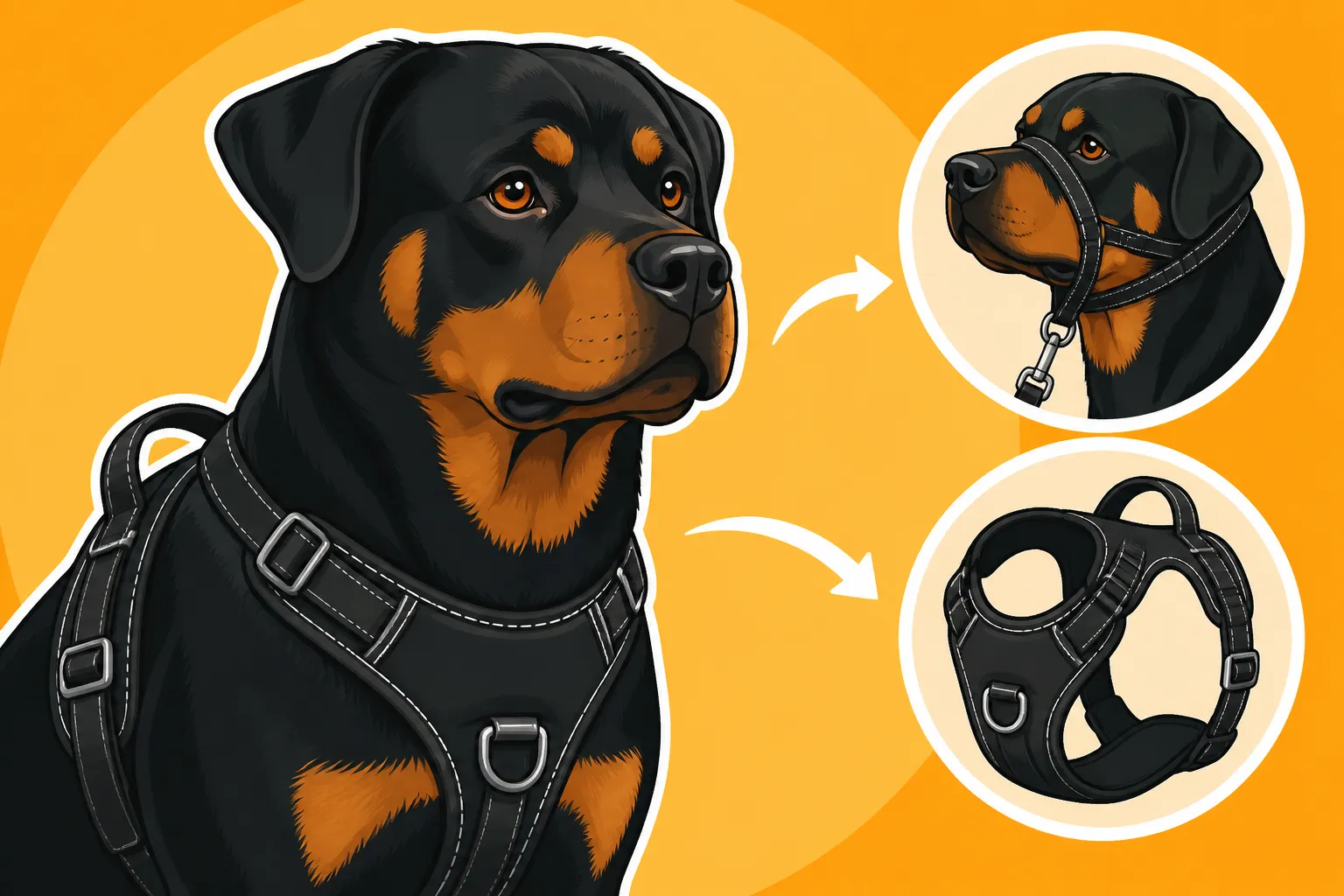
Front-Clip Harnesses: These are often called "no-pull" harnesses, and for good reason. The leash attachment ring is located on the dog's chest, right in the front. When your Rottweiler pulls forward, the leash connection point is redirected to the side, gently turning their body towards you. This makes it physically uncomfortable and difficult for them to pull directly forward. It disrupts their momentum and encourages them to pay attention to your direction. This design allows you to "steer" your dog more effectively, making them a game-changer for many owners struggling with a strong puller. You'll find many varieties on sites like Amazon, from basic nylon straps to more padded, ergonomic designs.
Head Halters: How They Work and Why They're Effective
Head halters, sometimes referred to as head collars or gentle leaders, are another highly effective tool for managing a powerful puller like a Rottweiler. They work on a principle similar to how horses are led: control the head, and the body will follow. The halter fits over your dog's snout and behind their ears, with the leash attaching under their chin. When your Rottweiler pulls forward or tries to lunge, a gentle tension on the leash turns their head to the side, interrupting their forward momentum and redirecting their focus back to you.
This immediate redirection of the head is incredibly effective because dogs naturally go where their nose points. If their head is turned, their body simply cannot continue pulling in the original direction. Head halters also offer a strong degree of control with minimal physical effort, which can be particularly beneficial for Walking a Rottweiler Safely as a Smaller Person. However, they require careful introduction and positive association to ensure your Rottweiler doesn't view them as a muzzle or a punishment device. Brands like BAXTER & Bella often emphasize positive training methods that can be applied when introducing such tools.
Front-Clip Harnesses for Rottweilers: A Deeper Dive
When it comes to controlling a large, powerful dog like a Rottweiler on leash, front-clip harnesses have become a popular and often highly effective solution. They offer a biomechanical advantage that other harnesses or collars simply can’t match for a dog determined to pull. Understanding how they work, their practical benefits, and how to fit them properly is key to success.
The Mechanics of Redirecting Pulling Power
The genius of a front-clip harness lies in its design. Unlike back-clip harnesses that give your Rottweiler a solid point to pull against, the leash attachment on a front-clip harness is located at the center of your dog's chest. When your Rottweiler surges forward, the tension on the leash doesn't just pull them back; it pulls them to the side. This lateral redirection is disruptive to their forward momentum. Imagine trying to run straight ahead while someone constantly pulls your arm to the side – it’s incredibly difficult. Your dog’s body naturally wants to align with its head and chest, so when their chest is turned, their entire body follows, forcing them to reorient themselves towards you.
This action effectively disengages the strong chest and shoulder muscles that Rottweilers use to pull. Instead of feeling like they can just lean into the pressure, they find their balance compromised, making it uncomfortable and inefficient to continue pulling. It's not a pain-based correction, but rather a gentle physical redirection that makes pulling self-correcting. This subtle shift in leverage can dramatically improve your walking experience, turning a struggle into a manageable stroll.
Pros and Cons: What to Expect in Practice
Front-clip harnesses offer several compelling advantages for Rottweiler owners:
Pros:
- Reduced Pulling: This is the primary benefit. For many dogs, pulling is significantly diminished or eliminated, making walks much more enjoyable.
- No Neck Strain: All pressure is distributed across the chest and shoulders, protecting your Rottweiler's trachea and neck.
- Better Control: The ability to redirect your dog's movement means you have more steering capability, especially in unpredictable situations.
- Safer: Less chance of your dog slipping out of the harness compared to a collar, and less risk of injury from sudden jerks.
- Comfortable (when fitted correctly): Most dogs adapt well to the chest and shoulder straps, allowing for a full range of motion.
Cons:
- Potential for Entanglement: If the leash is too long or you're not careful, your dog's legs can get tangled in the leash as they pivot.
- Requires Proper Fit: A poorly fitting harness can chafe, rub, or be ineffective at controlling pulling. Harness Hardware That Holds a Pulling Rottweiler is crucial, but so is the right sizing.
- May Not Stop All Pulling: While highly effective, some extremely determined pullers might still manage to lean into it, though usually with less force. Training, in conjunction with the harness, is always necessary.
- Aesthetics: Some owners dislike the look of a harness, preferring the simplicity of a collar.
Fitting a Front-Clip Harness Correctly for Maximum Safety and Comfort
A front-clip harness is only as good as its fit. A harness that's too loose can shift and rub, or your Rottweiler could back out of it. One that's too tight can restrict movement, cause chafing, or be generally uncomfortable. Here's how to ensure a good fit:
- Chest Strap: This strap should lie horizontally across your dog's chest, just above the "keel" (the prominent bone at the front of the chest). It should not ride up into their throat.
- Girth Strap: This strap goes around your dog's rib cage, just behind their front legs. You should be able to comfortably fit two fingers under this strap. Ensure it's far enough back from the armpits to prevent chafing – about 2-3 inches.
- Shoulder Straps: These should fit snugly but not restrict your Rottweiler's shoulder movement. They shouldn't gap open, nor should they dig in.
- No Gaps: Check for any large gaps where your dog could potentially slip a leg through or back out.
- Adjust Regularly: As your Rottweiler grows or their weight fluctuates, re-check the fit periodically. Remember that Rottweiler Growth Plates and Why They Close So Late means they can continue to fill out for a long time.
Brands like Easy Walk or Freedom No-Pull Harnesses are popular choices that offer robust designs suitable for a Rottweiler's size and strength. Always consult the manufacturer's sizing guide, as measurements vary significantly between brands. Taking accurate chest and girth measurements of your Rottweiler is essential before purchasing.
| Harness Type | Leash Attachment | Primary Mechanism for Pulling | Pros | Cons | Best For |
|---|---|---|---|---|---|
| Flat Collar | Top of Neck | Neck Pressure | ID tags, minimal equipment | Neck injury, little control for pullers | Non-pullers, ID only |
| Back-Clip Harness | Top of Back | Body pressure against leash | Comfortable, prevents neck strain | Can encourage pulling, less control | Non-pullers, small dogs, comfortable walks |
| Front-Clip Harness | Front of Chest | Redirects forward momentum | Reduces pulling, no neck strain, good control | Can tangle legs, requires proper fit | Strong pullers, training loose-leash walks |
| Head Halter | Under Chin | Head redirection | Excellent control, low physical effort | Requires acclimation, looks like a muzzle | Strong pullers, difficult to control dogs |
Head Halters for Rottweilers: Precision Control
For some Rottweiler owners, even a front-clip harness might not provide the level of control they need, especially with particularly strong, reactive, or large dogs. This is where head halters step in, offering a unique approach to leash control that leverages a dog's natural movement and physiology.
The Principle of Head Control, Body Follows
The underlying principle behind a head halter is elegantly simple: where the head goes, the body must follow. Think about it in terms of steering. If you can control your Rottweiler’s head, you can instantly influence their direction, stopping them from lunging, pulling, or fixating on distractions. When your dog pulls, the pressure from the leash under their chin or around their muzzle gently turns their head to the side. This subtle action breaks their forward focus and redirects their attention, often back to you.
This method of control doesn't rely on brute force or pain; instead, it uses a natural biomechanical response. Because the head is the pivot point, a relatively small amount of pressure from the handler can have a significant impact on a large dog's movement. This makes head halters an incredibly empowering tool for owners who might otherwise feel overwhelmed by their Rottweiler’s strength. It's a way to communicate "no, this way" with clarity and without constant physical struggle.
Acclimating Your Rottweiler to a Head Halter
Introducing a head halter isn't usually as straightforward as just clipping it on and going for a walk. Many dogs initially resist them because they're unfamiliar and feel strange on their snout. It's often compared to a muzzle by dogs, and if not introduced positively, your Rottweiler might paw at it, rub their face on the ground, or refuse to move. Patience and positive reinforcement are absolutely key here.
Start by introducing the halter in short, positive sessions at home. Let your Rottweiler sniff it, then offer a high-value treat. Practice slipping it on quickly, immediately followed by a treat, and then taking it off. Gradually increase the time it stays on, always pairing it with treats, praise, or a favorite activity. Feed meals with the halter on. Make it a non-event, a predictor of good things. You can find excellent step-by-step guides on positive reinforcement for acclimation through platforms like BAXTER & Bella, which focus heavily on building positive associations. The goal is for your Rottweiler to associate the halter with treats, walks, and positive experiences, not with discomfort or punishment.
Potential Drawbacks and Proper Usage Techniques
While head halters are highly effective, they do come with considerations:
Potential Drawbacks:
- Initial Resistance: As mentioned, many dogs will try to remove it, rub their face, or act confused. This phase requires significant patience.
- "Muzzle" Appearance: To some onlookers, a head halter can resemble a muzzle, which might lead to unwarranted judgment or fear from others, even though it's not designed to prevent biting.
- Risk of Neck Injury if Used Improperly: Jerking the leash or allowing your dog to suddenly lunge while wearing a head halter can put significant torque on their neck. It's crucial to use gentle, consistent pressure and avoid sharp corrections.
- Requires Consistent Training: It's a management tool, but it works best when paired with loose-leash walking training. Whether a Head Halter Suits a Rottweiler often comes down to the owner's willingness to train with it.
Proper Usage Techniques:
- Never Jerk: Use smooth, gentle pressure. A slight turn of your wrist is usually enough to redirect your Rottweiler.
- Keep Leash Slack: The goal is not constant tension, but rather using the halter for gentle redirection when needed.
- Positive Reinforcement: Always reward loose-leash walking. When your Rottweiler walks nicely, the halter feels loose and comfortable.
- Supervise: Never leave a head halter on an unsupervised dog, as they can get tangled or chew it off.
- Consider a Double-Ended Leash: Some owners use a double-ended leash, attaching one clip to the head halter and the other to a back-clip harness or flat collar, giving them dual control and a backup. This can be especially helpful during the initial training phases of Rottweiler Puppy Training Through the First Year as they mature into Rottweiler Adolescence at Eight Months.
Choosing the Right Tool for Your Rottweiler and Training Goals
Deciding between a front-clip harness and a head halter for your Rottweiler isn't a one-size-fits-all answer. Both are excellent tools for managing a strong puller, but the "best" choice really depends on your specific dog, your comfort level, and your overall training objectives. It's about finding what creates the most effective and positive experience for both you and your loyal companion.
Factors to Consider: Age, Temperament, and Training Experience
When making your decision, take a moment to honestly assess a few key aspects:
- Age and Physical Maturity: For younger Rottweiler puppies, especially before their growth plates are closed, a front-clip harness is often preferred as it avoids any pressure on the delicate neck. It's also less intrusive as they are still learning about the world. For older, fully grown dogs, either tool can be appropriate, but consider any existing neck or spinal issues your vet might have identified.
- Rottweiler's Temperament: Is your Rottweiler generally easygoing but just very strong? A front-clip harness might be all you need. If your dog is highly reactive, lunges excessively, or has a very strong prey drive that makes them difficult to redirect, a head halter might offer the more precise and immediate control you need. Some dogs simply tolerate one better than the other, so observing their comfort is crucial.
- Your Training Experience and Physical Capability: If you’re a first-time Rottweiler owner or physically limited in your ability to manage a pulling dog, a head halter offers superior leverage with less physical effort. It can truly level the playing field. If you're confident in your handling skills and your dog is only a moderate puller, a front-clip harness might suffice. Remember, Walking a Rottweiler Safely as a Smaller Person often hinges on having the right equipment.
- Specific Training Goals: Are you aiming for polite loose-leash walking, or do you need to curb more intense behaviors like lunging and reactivity? Head halters offer a higher degree of control for instant redirection, which can be invaluable for working through reactivity. Harnesses are excellent for encouraging general loose-leash manners without direct head manipulation.
Ultimately, you might even find yourself using both at different stages of your Rottweiler's training journey.
Combining Tools and Transitioning Away
It’s not uncommon for owners to start with a head halter for maximum control during the initial stages of training, especially if their Rottweiler has severe pulling habits or reactivity. As their dog’s leash manners improve and they become more responsive to cues, some owners then transition to a front-clip harness for a less obtrusive experience. This layered approach allows you to scale back the level of control as your dog demonstrates better behavior.
Another strategy, as mentioned earlier, is using a double-ended leash with one clip on the head halter and one on a front-clip harness. This provides a backup system and allows you to experiment with how much pressure you apply to each tool. The goal should always be to reduce reliance on the tool's mechanics over time, focusing on teaching your Rottweiler to walk politely on a loose leash through positive reinforcement. The equipment is a management tool to make training easier and safer, not a substitute for training itself.
Where to Find Quality Harnesses and Head Halters
When purchasing equipment for a Rottweiler, quality and durability are paramount. You need hardware that can withstand the strength of your dog. Reputable pet supply stores, both brick-and-mortar and online, are your best bet.
- Online Retailers: Large online platforms like Amazon offer a vast selection of front-clip harnesses (e.g., Easy Walk, SENSE-ation, Freedom No-Pull) and head halters (e.g., Gentle Leader, Halti). You'll find a wide range of sizes, materials, and price points. Always check reviews specifically from owners of large, strong breeds.
- Specialty Pet Stores: These stores often have knowledgeable staff who can help you with sizing and fitting, which is incredibly helpful, especially for head halters. They might also carry higher-end brands or those favored by professional trainers.
- Breeder and Trainer Recommendations: Your Rottweiler breeder or a professional dog trainer often has personal experience with specific brands and models that hold up well to Rottweiler use. They can give you tailored advice based on their extensive knowledge.
- Professional Training Organizations: Some organizations that offer Rottweiler Obedience Class Fees or private training might also sell recommended equipment directly, ensuring you get a quality, correctly sized item.
Remember that a cheap, flimsy harness or halter is a false economy when dealing with a Rottweiler. Invest in sturdy, well-made equipment that will last and, most importantly, keep your dog safe and comfortable.
Beyond the Equipment: Training Fundamentals for Leash Manners
While the right harness or head halter can be a game-changer for managing a pulling Rottweiler, it's crucial to understand that these tools are aids, not magic wands. They help you manage the pulling while you teach your dog proper leash manners. The real solution lies in consistent, positive reinforcement-based training that teaches your Rottweiler what you want them to do rather than just stopping what you don't want.
Reinforcing Loose-Leash Walking with Positive Methods
The core of loose-leash walking training is making it far more rewarding for your Rottweiler to walk nicely by your side than to pull ahead. This means actively engaging with your dog and rewarding them frequently for desirable behavior.
- Be a Treat Dispenser: Carry high-value treats (small, soft, and easy for your Rottweiler to gobble up quickly) on every walk.
- Mark and Reward: As soon as your Rottweiler's leash goes slack, or they offer even a moment of walking beside you, mark the behavior with a verbal cue like "Yes!" or a clicker, then immediately deliver a treat. The timing is critical; they need to associate the reward directly with the loose leash.
- The "Stop and Go" Method: If your Rottweiler starts to pull, simply stop walking. Stand still, like a tree, until the leash goes slack. The moment they ease up, even for a second, praise them and start walking again. They quickly learn that pulling gets them nowhere, but a loose leash gets them moving.
- Change Direction Frequently: Don't just walk in a straight line. Randomly turn right, left, or even pivot and walk the other way. This keeps your Rottweiler attentive to you, as they have to pay attention to where you're going to keep the leash slack. Reward them every time they reorient with you.
- Make Yourself Interesting: Be more exciting than the environment! Talk to your dog, praise them, play little games, and offer unexpected treats. If you're boring, they'll find their own entertainment by pulling.
These techniques, especially when combined with a front-clip harness or head halter, create an environment where your Rottweiler learns that polite walking is the most efficient and rewarding way to navigate the world.
Consistency and Patience: The Keys to Success
Training a Rottweiler, especially for something as ingrained as pulling, is a marathon, not a sprint. Why a Rottweiler Must Be Trained Before It Grows is a testament to the importance of early intervention, but even with an adult dog, success is achievable with these two vital ingredients:
- Consistency: Every person who walks your Rottweiler must use the same tools, the same cues, and the same training methods. If one person allows pulling, it undermines all the hard work everyone else is doing. Establish clear rules and stick to them every single walk, every single time. Short, frequent training sessions are more effective than long, sporadic ones.
- Patience: There will be good days and bad days. Your Rottweiler might regress, especially during Rottweiler Adolescence at Eight Months when they test boundaries, or when faced with particularly high-distraction environments. Don't get discouraged. Frustration on your part can easily transfer to your dog, making them less willing to learn. Celebrate small victories, remember how far you've come, and keep chipping away at the behavior.
Remember that your Rottweiler wants to please you, but they also have powerful instincts. It's your job to guide them kindly and consistently towards the desired behavior.
Seeking Professional Guidance for Persistent Pulling
If you've tried different tools and techniques and are still struggling with your Rottweiler's pulling, don't hesitate to seek professional help. Sometimes an outside, experienced eye can identify nuances in your handling or your dog's behavior that you might be missing.
- Certified Professional Dog Trainers (CPDT-KA): Look for trainers who specialize in large breeds and use positive reinforcement methods. They can provide personalized coaching and help you troubleshoot specific challenges. They can also advise on What a Private Rottweiler Trainer Charges if you're considering one-on-one sessions.
- Group Obedience Classes: Enrolling in a group class designed for adult dogs or focusing on leash manners can provide a structured environment with distractions, helping your Rottweiler generalize their skills. These are also great for socialization and learning alongside other owners. Ask about Rottweiler Obedience Class Fees in your area.
- Behavioral Consultations: If pulling is accompanied by reactivity, aggression, or severe anxiety, a veterinary behaviorist or a certified applied animal behaviorist (CAAB) might be needed. They can assess underlying behavioral issues and create a comprehensive modification plan.
No matter which path you choose, remember that investing in your Rottweiler's training is an investment in a lifetime of happy, cooperative companionship. The right tools, combined with consistent, positive training, will transform your walks from a chore into a joy.
Disclaimer
This article is for general informational purposes only and does not constitute professional advice. Laws, prices and regulations vary by location and change over time. Consult a qualified professional for guidance on your specific situation.