Rottweiler Growth Plates Closing at Eighteen to Twenty-Four Months
One of the most common worries for new Rottweiler owners, and frankly, a topic often misunderstood even by experienced dog enthusiasts, is the duration of their growth and the delicate process of their growth plates closing. It’s incredibly frustrating to know your big, beautiful puppy is still developing, yet feel pressure to "socialize" them with endless activities that could unknowingly be setting them up for lifelong joint issues. This comprehensive guide will meticulously break down what growth plates are, why your Rottweiler's take so long to close, and, most importantly, how you can protect your giant breed puppy during this critical, extended period of development.
Understanding What Growth Plates Are
Before we dive into the specifics of your Rottweiler's extended puppyhood, it's crucial to understand exactly what growth plates are and why they're such a pivotal, yet fragile, part of your dog's skeletal system. Think of them as the unsung heroes of bone development, working tirelessly behind the scenes to transform your tiny puppy into the magnificent adult Rottweiler you envision.
The Basics of Long Bone Development
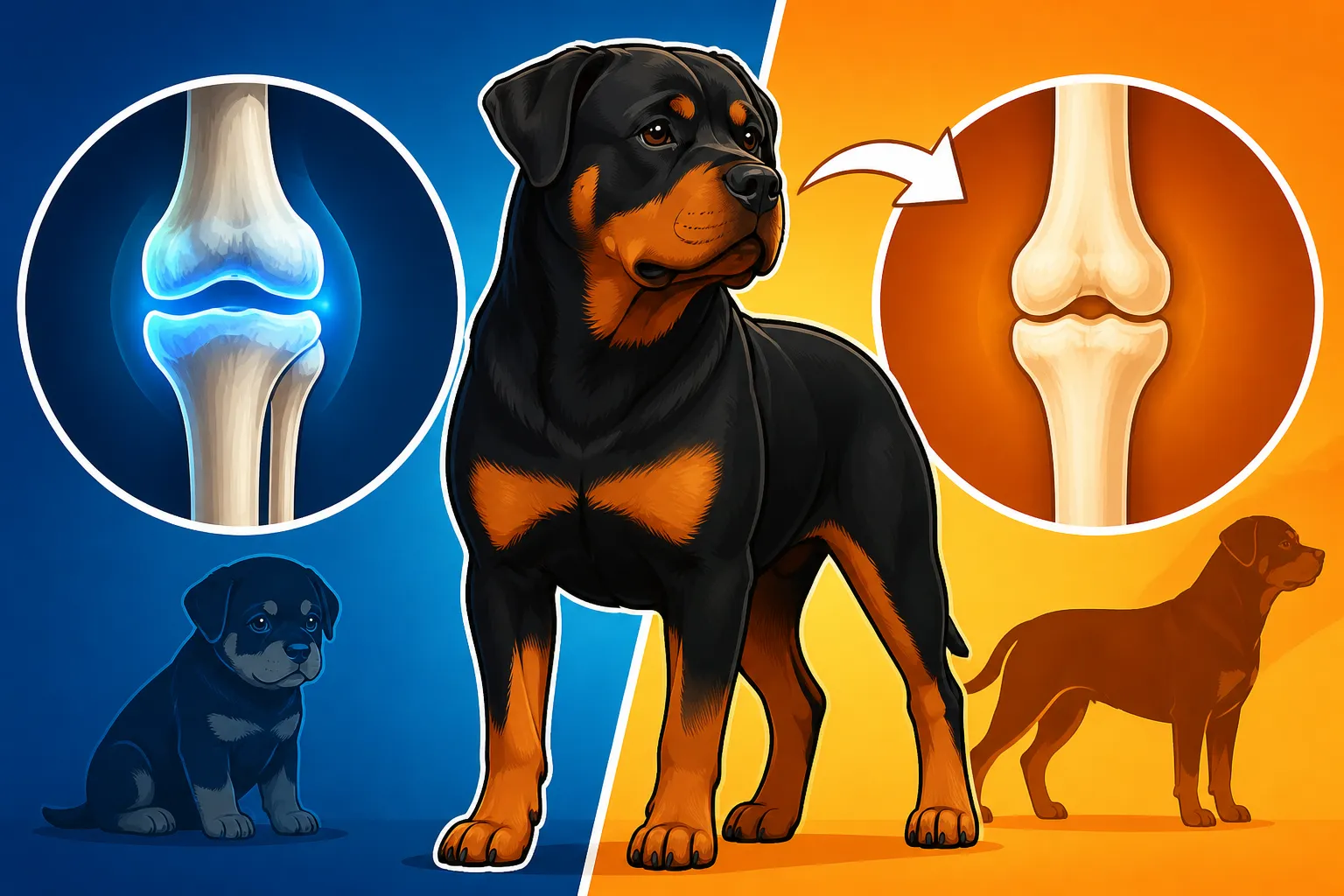
At its core, a growth plate, technically known as an epiphyseal plate, is a cartilaginous area found at the end of long bones in growing animals, including your Rottweiler. These plates are essentially the engines of longitudinal bone growth. They consist of cartilage cells that constantly divide, enlarge, and then are gradually replaced by bone tissue. This process is what allows bones to lengthen, transforming a small puppy leg into the powerful limb of an adult Rottweiler. You'll find these crucial zones at both ends of bones like the femur (thigh bone), tibia (shin bone), radius, and ulna (forearm bones), systematically adding length until the dog reaches its mature size.
The structure is quite fascinating: you have the epiphysis (the rounded end of a long bone), the metaphysis (the widening part of the bone shaft adjacent to the growth plate), and the diaphysis (the main shaft of the bone). The growth plate sits right between the epiphysis and metaphysis. As cartilage cells in the growth plate multiply and ossify (turn into bone), the bone effectively pushes outwards from the center, growing longer. This continuous process is essential for the rapid growth characteristic of a large breed like the Rottweiler, supporting their journey from a small pup to a substantial adult.
Why They Are Vulnerable
Despite their critical role, growth plates are inherently vulnerable precisely because they are made of cartilage, not mature bone. Cartilage is softer, less calcified, and therefore far more susceptible to injury than fully ossified bone. Imagine trying to build a skyscraper with a foundation made of soft clay instead of hardened concrete – any sudden force or repeated stress is much more likely to cause damage. For your Rottweiler puppy, this means that while their bones are actively growing, these cartilaginous plates are the weakest link in their skeletal chain. A minor slip, a too-high jump, or even excessive roughhousing can lead to trauma that mature bones might shrug off.
The blood supply to growth plates is also a delicate network, and injury can disrupt this supply, further complicating healing and potentially leading to abnormal growth. This vulnerability explains why pediatric fractures involving growth plates in humans, and physeal fractures in dogs, are often more serious than simple bone breaks in adults. The consequences of damage can range from pain and temporary lameness to permanent disfigurement, limb length discrepancies, or early onset arthritis. It’s this delicate nature that demands such careful management of a growing Rottweiler's activity and environment.
The Extended Rottweiler Growth Timeline
If you've ever owned a smaller breed, you might be accustomed to puppies reaching their full height and weight relatively quickly. However, Rottweilers operate on a different schedule entirely. Their journey to skeletal maturity is a marathon, not a sprint, and understanding this extended timeline is key to providing them with the best care.
Why Rottweilers Take Longer to Mature
Rottweilers, being a giant breed, have a significantly longer period of skeletal development compared to their smaller canine counterparts. While a Chihuahua might have closed growth plates by 6-8 months, your Rottweiler puppy will continue to grow, and their growth plates will remain open and active, for a much longer time. It's common for a Rottweiler's growth plates to not fully close until they are between 18 and 24 months of age, and sometimes even a little later for very large males. This extended window is primarily due to their sheer size and the immense amount of bone growth required to reach their impressive adult stature.
Think about the sheer volume of bone, muscle, and tissue that needs to be laid down to support a dog that can weigh well over 100 pounds. This process simply takes more time. During this entire period, those vulnerable growth plates are still active. This means that for nearly two full years, your Rottweiler's developing skeletal system is at risk from the kinds of activities that might seem harmless for an adult dog. This lengthy developmental phase emphasizes why you absolutely cannot treat a 6-month-old Rottweiler puppy like an adult dog capable of intense physical activity. It’s a marathon, and rushing it can lead to devastating consequences down the line.
Differences Between Male and Female Closure Rates
While the general 18 to 24-month guideline for growth plate closure holds true for most Rottweilers, there can be subtle differences between males and females. Typically, female Rottweilers tend to mature a little faster than males. This means their growth plates might close slightly earlier, perhaps closer to the 18-month mark, though individual variation is always a factor. Male Rottweilers, often being larger and heavier, might continue to grow and have open growth plates closer to the 24-month mark, or even beyond.
These minor differences aren't dramatic enough to warrant entirely different care protocols, but they are worth noting. It means you should always err on the side of caution, especially with a male Rottweiler, and assume those growth plates are still open and vulnerable until your veterinarian confirms otherwise. Regular check-ups with your vet can help you monitor your individual dog's growth and development, giving you peace of mind that you're supporting their journey to full skeletal maturity in the best way possible. Ultimately, whether male or female, the underlying principle remains the same: treat your growing Rottweiler with immense care and respect for their developing joints.
Risks of Injury and Premature Closure
The extended period of open growth plates in Rottweilers, coupled with their substantial size, unfortunately, exposes them to a higher risk of specific injuries. When a growth plate is damaged, the repercussions can be severe and long-lasting, sometimes altering the very structure of their limbs. Understanding these risks is the first step in preventing them.
Common Ways Growth Plates Get Injured
Growth plates are remarkably resilient under normal, controlled circumstances, but they are not designed to withstand high-impact trauma or repetitive stress while still developing. One of the most common culprits for growth plate injury in a large, rambunctious puppy like a Rottweiler is what seems like innocent, vigorous play. This can include jumping off high surfaces like furniture, beds, or even out of vehicles. The force generated by a heavy puppy landing incorrectly can cause microtrauma or even a full fracture through the soft cartilage of the growth plate.
Another significant risk comes from rough-and-tumble play with other dogs, especially larger, more boisterous ones, or even with humans who aren't mindful of the puppy's delicate state. Sudden stops, twists, falls during running, or quick changes in direction on slippery surfaces can all place immense shearing or compressive forces on the plates. Even repetitive activities like jogging on hard surfaces or extensive fetching can contribute to overuse injuries. For example, a Rottweiler puppy constantly jumping for a frisbee might seem harmless, but the repetitive impact on landing could easily damage the growth plates in their front legs. This is why guidelines like the five-minute rule for walks are so crucial, preventing overexertion during these formative months.
Consequences of Early Closure
The most devastating consequence of a growth plate injury is often premature or asymmetric closure. If a growth plate is damaged, it might fuse (close) earlier than it should, or only a portion of it might fuse. When this happens, the affected bone stops growing, or grows unevenly. Imagine one side of a long bone continuing to lengthen while the other side halts; the result is a limb that becomes bowed or twisted, leading to an angular limb deformity.
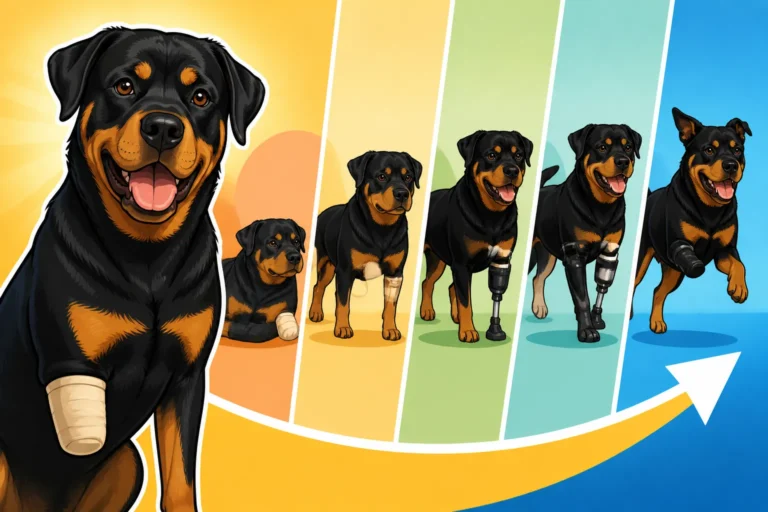
This kind of deformity can range from subtle to severe, but even a slight misalignment can have profound effects on your Rottweiler's mobility and comfort. It places abnormal stress on adjacent joints, accelerating the development of osteoarthritis, and can cause chronic pain. In severe cases, surgical correction might be necessary, which is both complex and costly. Furthermore, premature closure of a growth plate can lead to one leg being shorter than the other, causing a persistent limp and an uneven gait. Such issues, which could have been avoided with careful management during puppyhood, can significantly reduce your Rottweiler's quality of life and lifespan. It's a stark reminder of why understanding the nuances of growth plate development is so critically important for your big, beloved dog.
Practical Strategies for Protecting Growing Joints
Given the vulnerability of a Rottweiler's growth plates, proactive protection is paramount. It’s not about keeping your puppy in a bubble, but rather about making informed choices regarding their exercise, nutrition, and daily environment to foster healthy skeletal development.
Controlled Exercise Regimes
One of the biggest misconceptions new Rottweiler owners have is believing their big puppy needs extensive, strenuous exercise to "burn off energy." In reality, too much, too soon, is far more damaging than too little. For a Rottweiler with active growth plates, controlled exercise is the golden rule. This means avoiding forced running, long hikes, intense agility work, or extended periods of high-impact activity until their growth plates have fully closed, typically around 18-24 months.
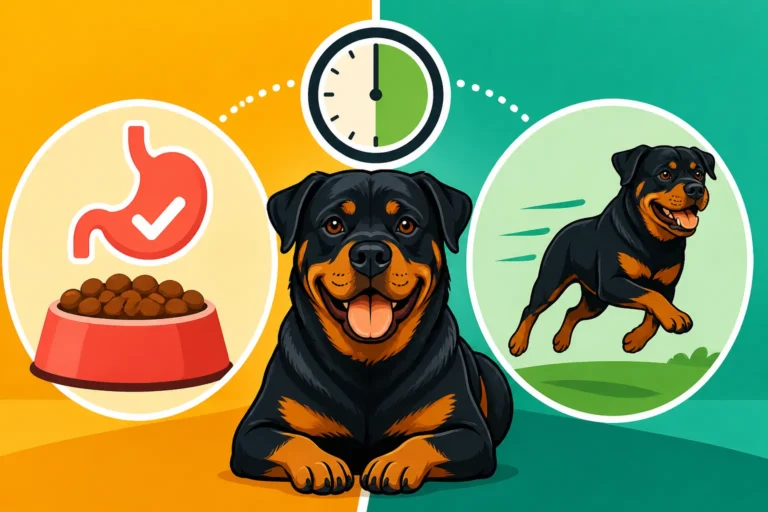
Instead, focus on short, frequent, low-impact activities. Leashed walks of 5-10 minutes, several times a day, are perfect for a young puppy, slowly increasing duration as they get older, but always mindful of their age. The popular "five minute rule for Rottweiler puppy walks" is an excellent guideline: for every month of age, your puppy should get about five minutes of structured exercise, twice a day. So, a four-month-old puppy would get two 20-minute walks. Supervised, free play on soft surfaces like grass is also beneficial, allowing them to self-regulate. Remember, an exhausted puppy isn't necessarily a well-exercised one; they could simply be overtaxed. This careful approach helps avoid injuries like Panosteitis in a growing Rottweiler puppy, which can cause shifting lameness and significant discomfort.
Nutrition Tailored for Large Breed Puppies
Proper nutrition is another cornerstone of healthy growth plate development, yet it's often an area fraught with well-intentioned but misguided efforts. The primary goal for a growing Rottweiler puppy is slow, steady growth, not rapid bulk. Feeding a Rottweiler puppy that grows for two years requires a specific diet. This means choosing a high-quality large breed puppy formula, specifically designed to support the unique growth curve of giant breeds. These formulas are formulated with carefully controlled calcium and phosphorus levels.
It’s tempting to think that more calcium equals stronger bones, but for a growing Rottweiler, this couldn't be further from the truth. Excess calcium, whether from supplements or inappropriate adult foods, can disrupt the delicate balance required for proper bone calcification and maturation of the growth plates, potentially leading to developmental orthopedic diseases. Therefore, you should never supplement a Rottweiler puppy's calcium unless specifically directed by a veterinarian. Brands like Purina Pro Plan Large Breed Puppy or Royal Canin Giant Puppy are examples of commercially available diets that meet these specific nutritional requirements. Focus on maintaining a lean body condition; a chubby puppy might look cute, but excess weight puts undue stress on those vulnerable joints and growth plates, increasing the risk of injury.
Avoiding High-Impact Activities and Stairs
Beyond controlled exercise, you must actively protect your Rottweiler puppy from specific high-impact activities and environmental stressors. This includes preventing them from jumping on and off furniture, jumping out of cars, or engaging in intense, prolonged fetch sessions. The repetitive jarring impact can cause cumulative microtrauma to the growth plates and surrounding soft tissues. Even seemingly innocuous activities like running up and down stairs multiple times a day can be detrimental to a growing Rottweiler's joints. If you live in a multi-story home, consider carrying your puppy up and down stairs until they are too heavy, or restrict their access to stairs with baby gates.
Slippery floors, such as hardwood or tile, also pose a significant risk. A puppy's developing joints and still-forming musculature struggle for traction, leading to slips, falls, and potential growth plate injuries. Lay down rugs or runners in areas where your puppy frequently walks or plays. Encouraging calm, indoor play and providing plenty of mental enrichment through puzzle toys can help manage their energy without putting their fragile growth plates at risk. Remember, the goal is to get your Rottweiler to skeletal maturity without incident, setting them up for a lifetime of healthy mobility.
Recognizing Signs of Growth Plate Problems
Despite the best preventative measures, sometimes injuries happen. Knowing how to recognize the early signs of a growth plate problem is critical for prompt veterinary intervention, which can significantly improve outcomes and minimize long-term damage.
Subtle Lameness and Pain
One of the earliest and most common indicators of a growth plate injury or issue is lameness, which can manifest as a limp. This isn't always a dramatic, three-legged hop. Often, it starts subtly: a slight hesitation when putting weight on a limb, a shortened stride, or a general stiffness, especially after rest or light activity. Your Rottweiler might be reluctant to engage in play they usually enjoy, or show less enthusiasm for walks. They might shift their weight uncomfortably when standing or lying down, or consistently favor one limb over another.
Pay close attention to changes in their gait. Does one leg seem to swing differently? Do they stumble more frequently? Sometimes the pain might not be constant; it could be an "intermittent" lameness, appearing after exercise and then seemingly resolving with rest, only to return. This "on-again, off-again" limp, especially in a large breed puppy, should never be ignored. It's a clear signal that something is amiss with their developing joints. If you notice any form of limping or reluctance to bear weight, even if slight, it warrants immediate attention from your veterinarian.
Visual Cues and Behavioral Changes
Beyond lameness, there are other visual and behavioral cues that can alert you to a potential growth plate problem. Visually inspect your Rottweiler's limbs for any signs of swelling, heat, or tenderness to the touch. Gently palpate their legs, comparing one side to the other. Is there any asymmetry in limb length or angle? This might be harder to spot early on, but in cases of severe or prolonged injury, it can become more apparent. A growth plate injury might also cause your puppy to hold the affected limb in an unusual position, or resist having it touched or moved.
Behaviorally, a puppy in pain might become withdrawn, lethargic, or, conversely, unusually irritable or snappy when approached or handled, especially if you touch the sore spot. A typically playful Rottweiler might suddenly prefer to lie down, show decreased appetite, or appear generally unwell. They might whimper or cry when moving or trying to get up. Remember that Rottweilers, like many dogs, can be stoic about pain, so even subtle changes warrant investigation. If you suspect any issue, it’s always best to consult your veterinarian promptly. Early diagnosis, often through X-rays, is crucial for assessing the extent of the damage and guiding appropriate treatment, potentially preventing severe long-term orthopedic complications.
Long-Term Impact of Puppyhood Care
The care you provide your Rottweiler during their extended puppyhood, especially concerning their growth plates, isn't just about preventing immediate injury. It lays the groundwork for their entire adult life, profoundly influencing their longevity, mobility, and overall quality of life. Think of it as an investment in their future health.
Preventing Future Orthopedic Issues
The careful management of your Rottweiler’s growth period is perhaps the single most important factor in preventing or mitigating the severity of future orthopedic issues. High-impact activities or repeated stress on open growth plates can significantly contribute to the development of common Rottweiler ailments such as Rottweiler Hip Dysplasia and the OFA Grade and Rottweiler Elbow Dysplasia and Front Leg Lameness. These conditions, which have a strong genetic component, can be exacerbated by environmental factors during puppyhood. A puppy genetically predisposed to hip or elbow dysplasia might develop a more severe form of the disease if their growth plates are subjected to undue stress.
By adhering to controlled exercise, appropriate nutrition, and avoiding risky activities until growth plates are closed, you are giving your Rottweiler the best possible chance to develop strong, healthy joints. This isn't a guarantee against all orthopedic problems, as genetics still play a role, but it drastically reduces the environmental stress that can trigger or worsen these conditions. Investing in early joint support with appropriate supplements, as discussed in Joint Supplements Started Before a Rottweiler Turns Two, can also be a valuable part of this preventative strategy, but always under veterinary guidance. This preventive care minimizes the likelihood of your dog experiencing chronic pain, expensive surgeries, and a diminished quality of life in their senior years. Pet insurance providers, such as Healthy Paws, recognize the importance of these preventative measures, as healthy puppyhood often translates to fewer claims later on.
The Role of Early Intervention
When an injury or problem does occur, early intervention is absolutely paramount, especially when growth plates are involved. Because growth plates are still active and developing, swift veterinary attention can mean the difference between a minor setback and a lifelong disability. If you notice any lameness, swelling, or changes in your Rottweiler's behavior related to movement, don't wait. A prompt visit to the vet allows for an accurate diagnosis, often confirmed with X-rays. In some cases, The X-Rays That Confirm Rottweiler Osteosarcoma might reveal a more serious underlying issue, though this is rare in very young puppies and more common as they age.
Early diagnosis allows for immediate implementation of appropriate treatment, whether that’s strict rest, pain management, or, in some severe cases, surgical intervention to stabilize the plate or correct a developing deformity. Delaying treatment can allow an injury to worsen, potentially leading to irreversible damage, malunion of a fracture, or progressive angular limb deformities that are much harder, if not impossible, to correct later. A veterinarian experienced with large breed puppies understands the urgency and nuances of growth plate injuries, providing tailored advice that can preserve your Rottweiler's long-term mobility and comfort. This diligent approach in puppyhood sets the foundation for a much happier, healthier adult dog.
Safe Activities vs. Risky Activities for a Growing Rottweiler
Navigating the world of exercise and play with a large breed puppy like a Rottweiler can feel like a minefield. You want them to be happy and healthy, but you're constantly worried about doing something that could harm their developing joints. This table outlines some common activities and categorizes them as safe or risky during the critical period when their growth plates are still open.
| Activity Type | Safe for Growing Rottweilers (Under 18-24 Months) | Risky for Growing Rottweilers (Under 18-24 Months) |
|---|---|---|
| Walks/Running | – Short, leashed walks (5 minutes per month of age, twice daily) on soft surfaces like grass or dirt. | – Long, forced runs or jogs (especially on pavement/hard surfaces). |
| – Supervised free play in a securely fenced, grassy yard, allowing self-regulation. | – Running alongside bikes, skateboards, or prolonged periods of chasing balls. | |
| Jumping/Impact | – Playing on flat, level ground. | – Jumping off furniture, beds, or out of vehicles. |
| – Very low, controlled jumps over tiny obstacles (e.g., a stick on the ground) for very short durations. | – Repetitive jumping (e.g., agility, high-catch games, frisbee). | |
| Stairs/Surfaces | – Carrying puppy up/down stairs or using ramps. | – Running up and down stairs frequently or unsupervised. |
| – Walking on carpeted floors or surfaces with good traction. | – Prolonged time on slippery surfaces (hardwood, tile, ice) leading to slips and falls. | |
| Play | – Calm, interactive play with humans (e.g., gentle tug, hide-and-seek). | – Rough play with adult dogs, especially those much larger or with a very vigorous play style. |
| – Socialization with other calm, gentle puppies of similar size, on soft surfaces. | – Forced wrestling or high-impact interactions that could lead to accidental tumbles or awkward landings. | |
| Training | – Obedience training on the ground with positive reinforcement. | – Intense agility training, flyball, or other sports requiring quick turns and jumps. |
| – Mental enrichment games and puzzle toys. | – Prolonged repetitive drills that stress specific joints. |
This table serves as a general guide. Always observe your individual Rottweiler puppy for signs of fatigue, discomfort, or lameness. When in doubt, err on the side of caution. Remember, puppyhood is fleeting, but joint damage can last a lifetime. Prioritizing their long-term health over immediate gratification for high-energy activities is one of the most loving decisions you can make.
Disclaimer
This article is intended for informational purposes only and does not constitute veterinary advice. Always consult with a qualified veterinarian for any health concerns or before making any decisions about your Rottweiler's care, diet, or exercise regimen. Individual dogs may have unique needs and conditions.