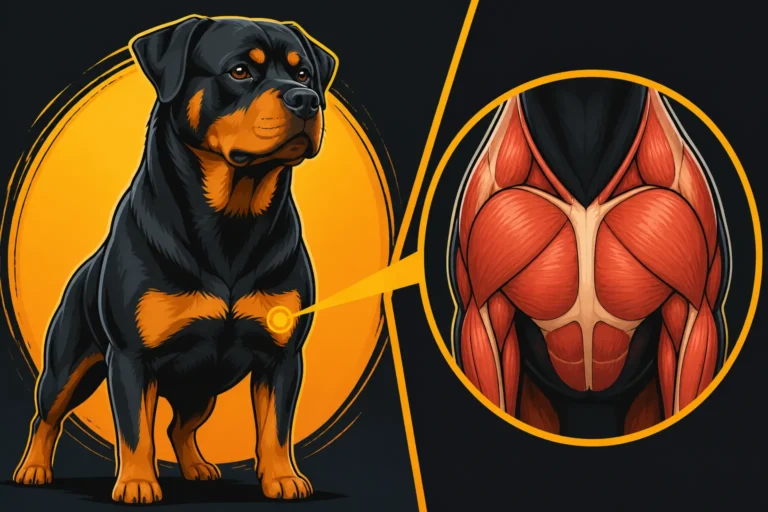
Whether a Red Rottweiler Is Recognized at All
It’s a truly captivating thought, isn’t it? The image of a Rottweiler, with all its power and presence, but instead of the classic black and rust, imagine it cloaked in shades of rich red. You might have seen photos online, or perhaps even heard whispers from someone who claims their friend-of-a-friend has one. It’s enough to make any dog lover pause and wonder. But the reality is, if you’re seeing a dog marketed as a "Red Rottweiler," or wondering if that rust on your own dog is a little more reddish than usual, it’s crucial to understand what the official breed standard actually says and why this particular color variation isn't recognized. This guide is here to clear up the confusion and explain why sticking to the breed standard is so important for the health and integrity of these magnificent dogs.
The Allure of the "Red" Rottweiler and Why It Appears
There's no denying that different colors and patterns can be incredibly attractive, and the idea of a "red" Rottweiler certainly sparks curiosity. People love unique things, and in the world of purebred dogs, sometimes an unusual color variation can command a lot of attention, and often, a hefty price tag. But for the Rottweiler, its color isn't just about aesthetics; it's a deeply ingrained part of its identity, laid out clearly in the breed standard.
What "Red" Actually Means in the Dog World
When we talk about dog coats, "red" can cover a surprising spectrum of shades, from a light, golden red like an Irish Setter to a deep, dark mahogany. For a Rottweiler, the official standard specifies "black with clearly defined markings of a very rich tan to mahogany." Notice that term "tan to mahogany." That's the key. What some people perceive as "red" in a Rottweiler is often simply a particularly vibrant, deep shade of that "rust" or "mahogany" marking.
Think about it from a visual perspective. Under certain lighting conditions, particularly in bright sunlight or against a contrasting background, those rich tan or mahogany markings can absolutely appear to have a reddish hue. It's similar to how a dark brown piece of furniture might look almost black in one room and warm mahogany in another. The individual dog's genetics can also play a role in the intensity of these markings, some naturally presenting with a richer, darker rust that might lean towards what a layperson calls "red."
The Genetics Behind Markings and Their Color
A Rottweiler's coat color is primarily controlled by a specific set of genes. The breed's defining characteristic is its black base coat with distinct tan or rust markings. This is often referred to as "black and tan," though in Rottweilers, the "tan" is always that deep, rich rust or mahogany. This specific pattern comes from the "agouti" series of genes, where the "a^t" allele is responsible for the tan points on a black dog.
For a true "red" dog, you'd typically need different genes at play – often related to the "E" locus (extension) or "K" locus (dominant black). These genes dictate whether a dog can produce red pigment at all, or if the black pigment is "extended" over the whole coat. In Rottweilers, these specific genetic combinations that would result in a solid red or a truly red and tan pattern simply aren't part of the accepted genetic makeup. If a dog appears red, it's either an optical illusion from particularly vivid rust markings, or it's a sign of mixed parentage, or a very rare and non-standard genetic mutation that wouldn't be recognized by any reputable breed club. It's a fundamental aspect of the breed's genetic code.
The Official Rottweiler Breed Standard on Color
When it comes to purebred dogs, the breed standard is like the blueprint, the definitive description of what the ideal dog of that breed should look like, act like, and be structured like. For the Rottweiler, this standard is incredibly specific about coat color, leaving no room for interpretation when it comes to "red."
The Unwavering Black and Rust
Every major kennel club in the world, including the American Kennel Club (AKC), the Fédération Cynologique Internationale (FCI), and the Allgemeiner Deutscher Rottweiler-Klub (ADRK), describes the Rottweiler's coat color in virtually identical terms: "black with clearly defined markings of a very rich tan to mahogany." There's no mention of red, fawn, blue, or any other color variation. The black must be a deep, lustrous black, and the markings must be a rich shade of rust or mahogany, clearly demarcated, not blended or muddy.
These markings aren't just splashed anywhere; they have very specific locations: on the cheeks, over the eyes, on the muzzle, on the throat, a triangular mark on each side of the breastbone, on the forelegs from the carpus (wrist) to the toes, on the inner thighs, and beneath the tail. Sometimes there are also strips on the sides of the muzzle. Any deviation from these precise color and marking descriptions is considered a fault, and some variations are even disqualifying. You can learn more about these specifics by reading about Rottweiler Markings That Fault in the Ring. The uniform appearance of the Rottweiler isn't just for show; it reflects centuries of selective breeding for a specific working purpose, where consistency was key.
What a "Non-Standard" Color Means for Registration and Showing
So, what happens if a Rottweiler is born with markings that are distinctly reddish, or even a full red coat? For a reputable breeder and for the purposes of conformation showing, such a dog would be considered a disqualifying fault. This means it cannot compete in breed conformation events, which judge how well a dog conforms to its breed standard. It's not about being "less of a dog," but about not fitting the established criteria for the breed's physical appearance.
While a dog with non-standard coloring might still be registered as a purebred by some kennel clubs if its parents are registered purebreds, its ability to contribute to the breed's future through showing or ethical breeding would be severely limited. Reputable breeders adhere strictly to the standard precisely because it maintains the integrity, health, and predictable temperament of the breed. They wouldn't intentionally breed for or market a "red" Rottweiler. If you see a breeder doing so, it's a huge red flag that they prioritize novelty over the established health and quality of the dogs. This kind of deviation is often one of The Rottweiler Faults That Disqualify Outright.
The Dangers of Breeding for "Novel" Colors
The excitement around "rare" colors in any breed can lead down a path fraught with potential issues, and the idea of a "red Rottweiler" is no exception. While it might seem harmless to want a uniquely colored dog, the motivations behind breeding for non-standard traits often come at a significant cost to the dogs themselves.
Prioritizing Appearance Over Health and Temperament
The biggest danger when breeders focus on "novel" colors like red is that they often sideline the absolute fundamentals of responsible breeding: health and temperament. Reputable Rottweiler breeders invest heavily in health clearances to screen for genetic conditions common in the breed, such as hip and elbow dysplasia, heart disease, and JLPP. They prioritize sound minds and bodies, knowing that these traits are far more important than a dog's coat color.
When a breeder starts specifically trying to produce a non-standard color, it typically means they are breeding outside of established, health-focused lines. They might be using dogs with questionable pedigrees or making breeding decisions based solely on a single trait (color) rather than the holistic health, temperament, and structure of the dog. This can lead to a higher incidence of genetic health problems, like those affecting Rottweiler Hips and Elbows and the 24-Month Rule or serious conditions like JLPP and the Rottweiler DNA Test and Rottweiler Heart Disease and Subaortic Stenosis. A breeder concerned with the true welfare of the breed will proudly show you The Five Clearances a Rottweiler Breeder Must Have for both parents, something often missing from "rare color" breeders. It's incredibly frustrating for new owners who fall in love with a "rare" color only to face thousands in vet bills later for preventable issues.
The Pitfalls for Prospective Owners
For someone new to the breed, or simply drawn in by the appeal of something different, the marketing of a "red Rottweiler" can be incredibly deceptive. Unscrupulous breeders might charge exorbitant prices for these "rare" dogs, leading owners to believe they are getting something truly special and valuable. In reality, they are often getting a dog from a breeding program that has cut corners.
Imagine you've shelled out a significant amount for a "Red Rottweiler" puppy, thrilled to have such a unique companion. A few years down the line, you might find yourself dealing with severe hip dysplasia because the parents weren't screened, or a temperament issue that makes your dog anxious or unpredictable because the breeder didn't prioritize stable genetics. These are the real, heartbreaking costs that go far beyond the initial purchase price. You end up with a dog you love, but one that might suffer from chronic pain or require extensive behavioral rehabilitation, all because color was prioritized over everything else. This is why it's so critical to ask for Health Papers to Ask a Rottweiler Breeder For from any breeder you consider. If they can't produce them, walk away, no matter how "rare" the color.
Where to Find a Reputable Rottweiler and What to Expect
If you're looking for a Rottweiler, and especially if you've been intrigued by "red" variations, understanding where to find a truly healthy, well-tempered dog is paramount. The journey to finding your ideal companion should prioritize responsible breeding practices, not novelty.
Seeking a Breeder Who Upholds the Standard
The best way to find a Rottweiler that will be a joy to live with for its entire lifespan is to seek out a reputable breeder who adheres strictly to the breed standard. These breeders are passionate about the Rottweiler and dedicated to producing healthy, well-socialized puppies with excellent temperaments. They will be actively involved in breed clubs, participate in conformation shows, obedience trials, or working dog events, and proudly display their dogs' accomplishments.
When you contact such a breeder, expect them to have a waiting list, to ask you many questions about your lifestyle and experience, and to be transparent about their breeding practices. They will willingly share the health clearances for both parent dogs—including OFA or PennHIP certifications for hips and elbows, cardiac clearances, and JLPP DNA test results. You should expect to see parents with rich tan to mahogany markings, fitting the breed's classic look. This rigorous approach is Why Health-Tested Rottweiler Parents Raise the Price, but it's an investment that pays dividends in a healthy, happy dog. They understand that a dog's health and temperament are what truly matter, not a fleeting trend in color.
Understanding the True Beauty of a Standard Rottweiler
The true beauty of a Rottweiler lies not in some imagined "red" variation, but in the iconic, powerful appearance of the classic black and rust. It's a look that commands respect and admiration worldwide. The deep, gleaming black coat, contrasted by the sharp, rich tan to mahogany markings on their chest, muzzle, and legs, is instantly recognizable and has a history rooted in their working heritage. This is a breed celebrated for its robust build, intelligent expression, and unwavering loyalty.
When you choose a Rottweiler from a responsible breeder, you're not just getting a specific color; you're getting a dog bred for generations to embody strength, confidence, and devotion. You're getting a dog whose predictable temperament means it can be a loving family companion, a dedicated working dog, or a loyal guardian. The "wow" factor comes from a well-structured, well-socialized, and healthy Rottweiler, performing its duties or simply being a beloved member of your family. And when it comes to getting them set up, reliable retailers like Chewy offer a wide array of products sized and suited for this magnificent breed, from large breed puppy food to durable toys, ensuring your standard black and rust Rottweiler has everything it needs to thrive.
In conclusion, while the idea of a "red Rottweiler" might sound exotic, it falls outside the recognized breed standard and often points to breeding practices that prioritize novelty over health and temperament. The Rottweiler's beauty is timeless, defined by its classic black and rust, and that's precisely what responsible breeders strive to preserve.
| Characteristic | Standard Rottweiler | "Red" Rottweiler (Non-Standard) |
|---|---|---|
| Primary Color | Deep black | Black, or potentially a full reddish hue |
| Marking Color | Rich tan to mahogany (rust) | Light red, orange-red, or unusually vivid reddish-brown |
| Marking Location | Precise locations (cheeks, muzzle, chest, legs, tail) | May be less defined, or in non-standard areas |
| Breed Recognition | Fully recognized by major kennel clubs (AKC, FCI, ADRK) | Not recognized for conformation by major kennel clubs |
| Show Eligibility | Eligible for conformation showing | Disqualified from conformation showing |
| Breeder Focus | Health, temperament, adherence to standard | Often novelty, appearance; may neglect health/temperament |
| Health Risks | Reputable breeders screen for common issues | Higher risk of genetic health issues due to poor breeding |
| Ethical Breeding | High likelihood of ethical, health-tested lineage | Often from backyard breeders or puppy mills |
Disclaimer
This article is for general informational purposes only and does not constitute professional advice. Laws, prices and regulations vary by location and change over time. Consult a qualified professional for guidance on your specific situation.