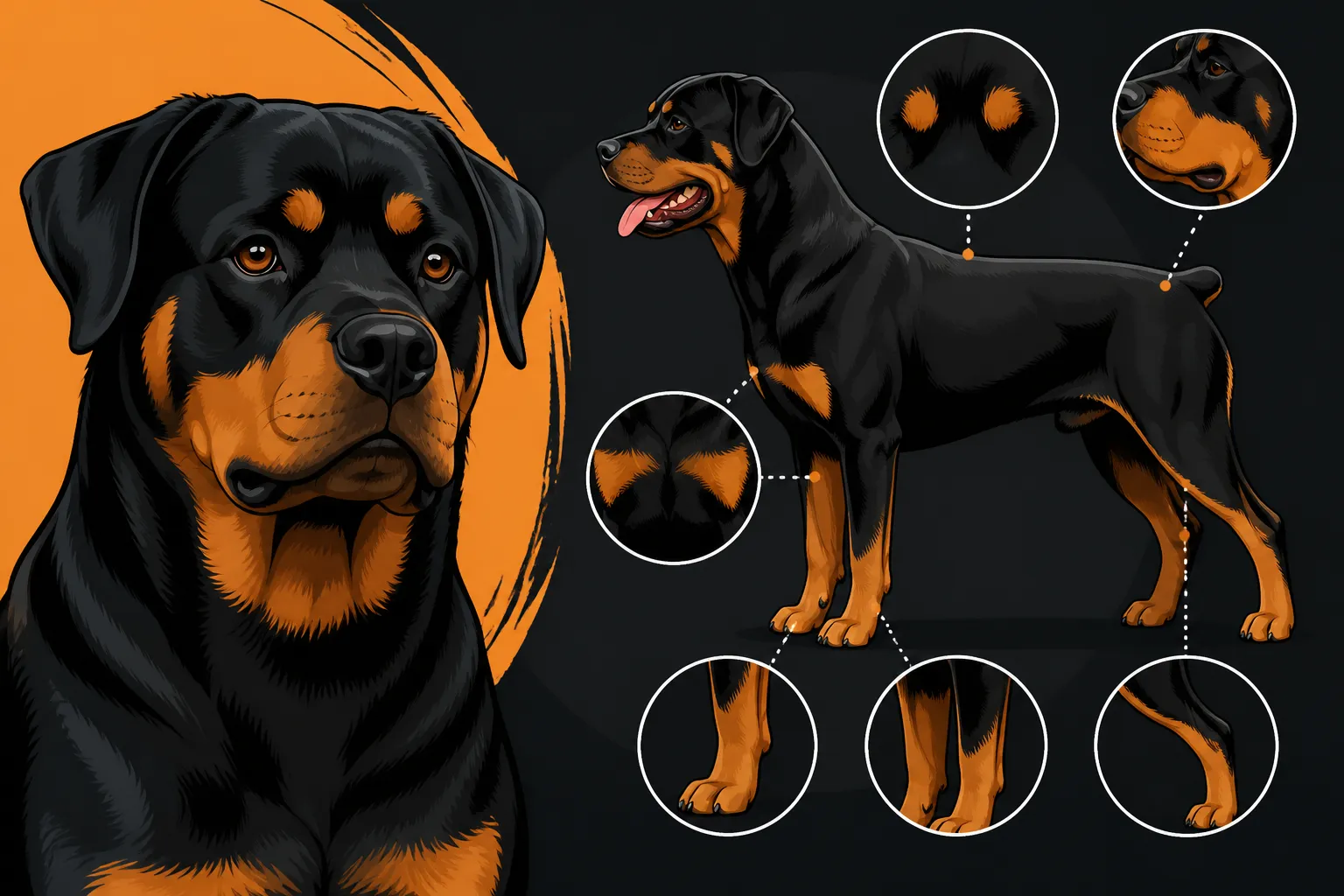
Rottweiler Rust Markings and Exactly Where They Sit
When you first fall in love with a Rottweiler, it's often their striking appearance that catches your eye – that powerful, confident stance, and of course, that beautiful, distinctive black and rust coat. But if you're like many Rottweiler enthusiasts or new owners, you might wonder about the exact placement of those rust markings. Sometimes you see variations, or you're just curious about what the breed standard truly defines. This guide is here to walk you through precisely where those gorgeous rust markings should sit on your Rottweiler, helping you understand the iconic look of this magnificent breed.
Understanding the Rottweiler's Signature Coat and Color
The Rottweiler's coat is one of its most defining characteristics, a bold statement of its heritage and purpose. It's not just black and a little bit of tan; it's a specific, rich combination that speaks to the breed's historical role and distinct aesthetics. Getting to know these details helps you appreciate the breed even more deeply.
The Core Black and Rust Requirement
At its heart, the Rottweiler's coat is meant to be a deep, lustrous black with clearly defined rust-colored markings. Think of it as a meticulously designed suit, where the primary color is a strong, authoritative black, and the accents are those rich rust patches. This isn't a coat with mottled patterns, brindling, or large areas of color other than black and rust. When we talk about "tan," it's really more of a rust or mahogany shade – a reddish-brown that provides a warm contrast to the stark black. The richness of this rust color can vary a bit from one dog to another, but it should always be strong and noticeable, never a washed-out cream or faded yellow.
This specific color combination is so fundamental that a Rottweiler without these distinct black and rust markings isn't considered true to type according to breed standards. It's what makes a Rottweiler, well, a Rottweiler. Any deviation from this, like a completely black dog or one with white patches, moves away from the recognized standard. The goal is a dog that, even from a distance, is unmistakably a Rottweiler because of this bold, classic color scheme. You can learn more about the overall look in The Black and Rust Rottweiler Coat.
Why Markings Are So Important to the Breed Identity
These markings aren't just for show; they're deeply ingrained in the Rottweiler's identity and history. Imagine the original Metzgerhunds, the butcher dogs of Rottweil, working in bustling markets or herding cattle. Their distinct markings might have helped identify individual dogs in a crowd, or simply served as an aesthetic preference that became standardized over centuries. Today, they are a hallmark of the breed, instantly communicating "Rottweiler" to anyone familiar with dogs.
For breeders and enthusiasts, these precise markings are a point of pride and a testament to careful breeding aimed at preserving the breed's authentic characteristics. When a judge evaluates a Rottweiler in the show ring, the clarity, color, and correct placement of these rust markings are critically important. They contribute to the overall picture of a well-bred Rottweiler, embodying the tradition and purpose of the breed. It’s part of that self-assured aloofness, that strong presence that these dogs carry.
Pinpointing the Exact Location of Rottweiler Rust Markings
Now, let's get down to the nitty-gritty: exactly where these rust markings should appear. It’s more precise than just "on the legs" or "on the face." The breed standard specifies distinct locations, and understanding them helps you appreciate the meticulous detail of the Rottweiler's appearance.
Markings on the Face and Head
When you look at a Rottweiler's face, the rust markings are one of the first things to catch your eye, softening the intensity of their dark eyes and powerful muzzle. The most prominent are the distinctive "eyebrows" – a clearly defined rust spot located above each eye. These aren't just smudges; they should be distinct, almost like painted dots, giving the Rottweiler an expressive, intelligent look. They should also be symmetrical, matching in size and intensity above both eyes.
Moving down the face, you’ll find rust markings on the muzzle. This typically presents as a broad band of rust color that runs along the sides of the muzzle, sometimes extending towards the nose, though the nose itself remains black. The cheeks also carry these rust markings, often appearing as distinct patches beneath the eyes and running along the jawline. You'll also notice rust coloring on the flews, which are the prominent folds of skin at the corners of the mouth, giving the dog's mouth a softer, rust-edged appearance against the black. These facial markings contribute significantly to the Rottweiler's unique head, as outlined in the Rottweiler Skull and Stop in the Standard.
Markings on the Chest and Throat
The chest is another key area for rust markings, and here they can vary slightly in pattern but always maintain a consistent presence. Typically, you'll see two distinct, inverted triangular rust patches on the forechest. These triangles are often separate but can sometimes be connected, forming a broader band of rust across the chest. Regardless of whether they touch or remain distinct, they should be clearly defined against the black background.
Beneath the throat, leading down to the chest, you'll also find rust coloring. This isn't just stray hairs but a clear extension of the markings that start on the underside of the jaw. It blends into the chest markings, creating a seamless transition. These chest markings add to the overall impressive front assembly of the Rottweiler, emphasizing its broad, powerful build. It’s a bold statement that complements the deep black of the main body, and any deviation or lack of these can be considered a fault in the show ring. For more on what's considered ideal, check out Rottweiler Markings That Fault in the Ring.
Markings on the Legs and Paws
The legs and paws feature some of the most intricate and recognizable rust markings. On all four legs, you'll find these distinctive patches. On the forelegs, the rust typically runs along the front and inside, extending down over the pasterns (the equivalent of a dog's wrists). These aren't solid sleeves of color, but rather well-defined sections.
On the hind legs, the rust markings are usually found on the inner side of the thighs and extend down the rear of the legs to the hocks (the dog's ankles). All four paws will typically have what are often called "pencil marks" or "boot marks" – small, distinct rust lines on the toes, almost like individual rust stripes on each digit. The bottom of the paws, including the pads, will also show rust coloring, especially between the toes. These markings help define the powerful, sturdy structure of the Rottweiler's legs.
Markings Under the Tail
One area of rust marking that sometimes gets overlooked, but is crucial to the breed standard, is on the underside of the tail. At the very base of the tail, you should find distinct rust-colored patches. These extend slightly up the underside, contrasting with the black hair that covers the rest of the tail's top and sides.
Even in countries where tail docking is still common, these rust markings at the base of what remains of the tail are still expected and visible. For Rottweilers with natural, undocked tails, these markings are equally present on the underside at the point where the tail meets the body. It’s another small but significant detail that completes the picture of a correctly marked Rottweiler, emphasizing the breed's complete and precise pattern.
Variations in Markings and What They Mean
While the breed standard sets a clear blueprint for Rottweiler markings, there's always a bit of natural variation in any living creature. It’s important to understand what falls within acceptable bounds and what might be considered a fault, especially if you’re interested in showing your dog or just want to know more about the breed's ideal appearance.
Acceptable Shades and Intensity of Rust
The "rust" color itself isn't a single, monolithic shade. It can range from a lighter tan to a deep, rich mahogany. The ideal is usually described as a strong, vibrant rust. You might see some Rottweilers with markings that lean more towards a bright tan, while others have a darker, almost reddish-brown hue. Both can be acceptable, as long as the color is clear, distinct, and uniform across the dog. What's crucial is that the color isn't faded, washed out, or so light that it appears cream or yellow, which would be considered undesirable.
The intensity of the rust should also be consistent. You wouldn't want deep mahogany markings on the face and then pale tan markings on the legs. The goal is a uniform richness that complements the deep black of the coat. A beautiful coat, with vibrant colors, is often a sign of good health and nutrition. Making sure your Rottweiler gets quality food, perhaps from a reputable supplier like Chewy, can help ensure a healthy, gleaming coat.
Markings That Are Too Large or Too Small
The definition of "clearly defined" is key here. The rust markings should be distinct patches, not vast, smudged areas or tiny, insignificant dots. Markings that are too large might overwhelm the black coat, making the dog appear less black and more two-toned. For example, if the rust patches on the legs extend too far up the thigh or cover too much of the chest, it can detract from the balanced appearance desired by the standard.
Conversely, markings that are too small or indistinct might make the dog look almost entirely black, lacking the characteristic contrasting color. If the "eyebrows" are mere specks or the muzzle band is barely visible, it doesn't meet the ideal for distinctness. Breeders strive for that perfect balance, where the black and rust work together in harmony. For a deeper dive into what is considered too much, consult Rottweiler Markings That Are Too Large to Pass.
The Presence of White Markings
This is one of the clearest "no-nos" in the Rottweiler breed standard. While some breeds can have small amounts of white, or even "flash" markings, white is generally considered a serious fault, and in some cases, a disqualification, for a Rottweiler. Any significant white patch, especially on the chest, is highly undesirable. Sometimes, a very small, almost invisible thread of white hairs might appear on the chest, which is usually considered a minor fault rather than a disqualification, but it's still not ideal.
It's vital to differentiate between white markings and the correct rust markings. True white patches are a genetic deviation from the expected coat. If you ever see a Rottweiler puppy advertised with white feet or a large white chest blaze, it’s a clear indication that it does not meet the breed standard. This also applies to any other color besides black and rust. For a complete understanding of disqualifying faults, you might want to read The Rottweiler Faults That Disqualify Outright.
Caring for Your Rottweiler's Coat and Markings
Maintaining that stunning black and rust coat isn't just about genetics; it's also about good care. A healthy coat is a vibrant coat, and while you can't change the genetic placement of the markings, you can certainly ensure they look their very best.
General Coat Care to Maintain Vibrancy
A Rottweiler's short, dense double coat is relatively easy to care for, but "easy" doesn't mean "no care." Regular brushing is crucial, especially during shedding seasons. Rottweilers do shed, often more than people expect for a short-haired dog, and they typically "blow their coat" twice a year. Using a good deshedding tool, readily available at places like Chewy, will help remove loose undercoat hairs, which can otherwise dull the appearance of both the black and rust sections. This process stimulates the skin and distributes natural oils, making the coat shine and enhancing the depth of its colors. For more on managing their shedding, see Grooming a Rottweiler That Sheds More Than It Looks.
Beyond brushing, a high-quality diet plays an immense role in coat health. A diet rich in essential fatty acids (like Omega-3 and Omega-6) helps maintain skin health and a lustrous coat, making those rust markings truly pop. Look for reputable dog foods and consider supplements like fish oil if recommended by your vet. Proper nutrition is the foundation of a healthy coat, just as it is for the dog's overall well-being. Keeping a Rottweiler at a healthy weight, as discussed in Feeding an Adult Rottweiler at a Hundred Twenty Pounds, also contributes to a vibrant, healthy coat.
Protecting Markings from Environmental Factors
While Rottweilers have a robust coat, environmental factors can still impact its appearance over time. Prolonged exposure to strong sunlight, for instance, can sometimes cause the black portions of the coat to develop a reddish tinge, or even cause the rust markings to lighten slightly. If your Rottweiler spends a lot of time outdoors, especially in sunny climates, ensuring they have access to shade is important.
Additionally, keeping the coat clean prevents dirt and grime from building up and making the coat appear dull. While Rottweilers don't need frequent bathing, when they do, use a mild, dog-specific shampoo that won't strip their natural oils. Over-bathing can dry out the skin and coat, leading to a less vibrant appearance. When you do bathe your Rottweiler, make sure to rinse thoroughly to avoid residue, which can dull the coat. Products designed for black and dark coats can sometimes enhance shine, but always ensure they are safe and non-irritating for your dog's skin. Getting the right shampoo and conditioner can be as easy as a quick order from Chewy. You can also get more tips on bathing in Bathing a Rottweiler Without Stripping the Coat Oil.
| Marking Location | Description of Rust Markings | Common Variations (Acceptable) | Faults (Not Acceptable) |
|---|---|---|---|
| Face & Head | Above each eye (eyebrows), on muzzle, cheeks, flews. Should be distinct and symmetrical. | Shades from light tan to deep mahogany. | Faded/washed-out color, indistinct patches, missing marks. |
| Chest & Throat | Two distinct triangles on forechest (can be connected), and under throat. | Connected or separate triangles; slight variation in size. | Missing marks, smudged/indistinct, excessive size. |
| Legs & Paws | Front of forelegs, inner/rear of hind legs, on pasterns, and distinct "pencil marks" on toes. | Slight variations in the exact extent of leg markings. | Missing marks, smudged areas instead of distinct. |
| Under Tail | Distinct patch at the base of the underside of the tail. | Size of patch can vary slightly. | Missing marks, indistinct coloring. |
| Overall | Clear, defined, symmetrical rust on a deep black base. | Uniform shade across the dog. | Any white patches, brindle, non-standard colors (e.g., all black, red). |
Disclaimer
This article is for general informational purposes only and does not constitute professional advice. Laws, prices and regulations vary by location and change over time. Consult a qualified professional for guidance on your specific situation.