Rottweilers Pulling Carts Before the Railways
It’s easy to look at our big, goofy Rottweilers today, lounging on the couch, and forget that for centuries, these magnificent dogs were the ultimate working companions. They weren't just pets; they were essential members of the community, literally pulling their weight – and then some. The truth is, their very existence, their purpose, was tied to the arduous, often thankless task of transporting goods, particularly meat, long before the advent of the railway system changed everything. This guide will take you on a journey back in time, exploring the incredible history of Rottweilers as carting dogs, how they shaped the breed we know and love, and what happened when their traditional job disappeared.
The Ancient Roots of Rottweiler Draft Work
Before we even talk about specific carts, it's crucial to understand that the Rottweiler's lineage stretches back to ancient times, directly connected to the Roman Empire's expansion. These weren't dainty lapdogs; they were hardy, robust animals bred for specific, demanding tasks. The Romans relied on large, strong dogs to drive and guard their cattle herds as their legions marched across Europe. Imagine the logistical nightmare of feeding a vast army on the move; you needed mobile meat, and these dogs were the four-legged logistics experts.
Tracing Back to Roman Drover Dogs
The story of the Rottweiler begins with these Roman drover dogs, ancestors who accompanied the legions as they traversed the Alps and eventually settled in what is now southern Germany. These dogs weren't pulling carts yet, not in the way we envision, but their fundamental role was about movement, protection, and endurance. They were selected for their strength, their protective instincts, and their ability to cover long distances with livestock. When the Romans established a settlement in the region that would become the free imperial city of Rottweil, these dogs remained, adapting to the local needs. The genes for strength and a solid work ethic were already deeply ingrained. It's truly fascinating to think about The Roman Drover Dogs Behind the Rottweiler and their incredible journey.
Inherited Strength and Endurance
The sheer physical capabilities required for long cattle drives naturally translated into the traits valued for pulling carts. These dogs possessed powerful shoulders, deep chests, and a robust bone structure – all critical for sustained physical exertion. Their temperament, too, was perfectly suited: they needed to be intelligent enough to follow commands, brave enough to deter threats, and possessing the stamina to work all day. This wasn't just about muscle; it was about a whole package of physical and mental resilience that made them indispensable. Owners relied on this inherent strength, knowing their dogs could handle the heavy loads day in and day out, whether it was guarding cattle or later, hauling a butcher's wares.
The "Butcher's Dog" and Its Indispensable Role
Fast forward many centuries, and the descendants of those Roman drover dogs had become deeply integrated into the fabric of the German town of Rottweil. This town flourished as a cattle trading hub, and with the bustling livestock market came the need for robust dogs. This is where the Rottweiler earned its enduring nickname: "Metzgerhund," or "Butcher's Dog." They weren't just working alongside butchers; they were a central pillar of the butchers' trade, fulfilling multiple, critical roles that kept the local economy moving.
Why Butchers Called Them Metzgerhund
The butchers of Rottweil weren't just slaughtering animals; they were traders, transporters, and guardians of their livelihood. Their dogs were instrumental in every step. First, they helped drive cattle to market, navigating crowded streets and keeping the sometimes-unruly animals in line. Once the cattle were sold and processed, the butchers then needed to transport cuts of meat, often heavy loads, back to their shops or directly to customers in the surrounding villages. This is where the carting really came into play. A butcher's business depended on reliable transport, and the Rottweiler, with its formidable build and calm demeanor, was the perfect solution. They were so fundamental to the trade that the name stuck, a testament to their deep connection to the industry. You can read more about this fascinating history in Why Butchers Called the Rottweiler a Metzgerhund.
Guarding the Day's Takings
Beyond the physical labor of pulling carts, these dogs had another critical job: protecting the butcher's hard-earned profits. After a long day at the market, often having made significant sales, a butcher would typically carry a leather money pouch. This was a valuable target for opportunistic thieves. The ingenious solution? The butcher would often tie this money pouch around the Rottweiler's neck, knowing full well that no one would dare try to snatch it from such a powerful, watchful dog. This wasn't just about deterring theft; it was a clear demonstration of the absolute trust placed in these dogs. The idea of The Money a Rottweiler Was Trusted to Guard highlights not just their protective nature but also the high regard in which they were held by their owners. This level of trust is truly unique and speaks volumes about the breed's intrinsic guarding instinct.
Rottweil as a Cattle Market Hub
The town of Rottweil itself played a pivotal role in shaping the breed. Its strategic location made it a natural center for cattle trading, drawing merchants from across the region. This constant influx of livestock and people created a dynamic environment where the Rottweiler's skills were constantly put to the test and refined. The demands of the market – the need for strong dogs to manage herds, pull carts laden with goods, and protect valuables – naturally favored the development of the Rottweiler's characteristic traits. Without The Rottweiler's Home Town as a Cattle Market, it's hard to imagine the breed evolving in quite the same way. The specific conditions of the trade fostered the very qualities that define the Rottweiler today.
The Mechanics of Rottweiler Carting in Days Gone By
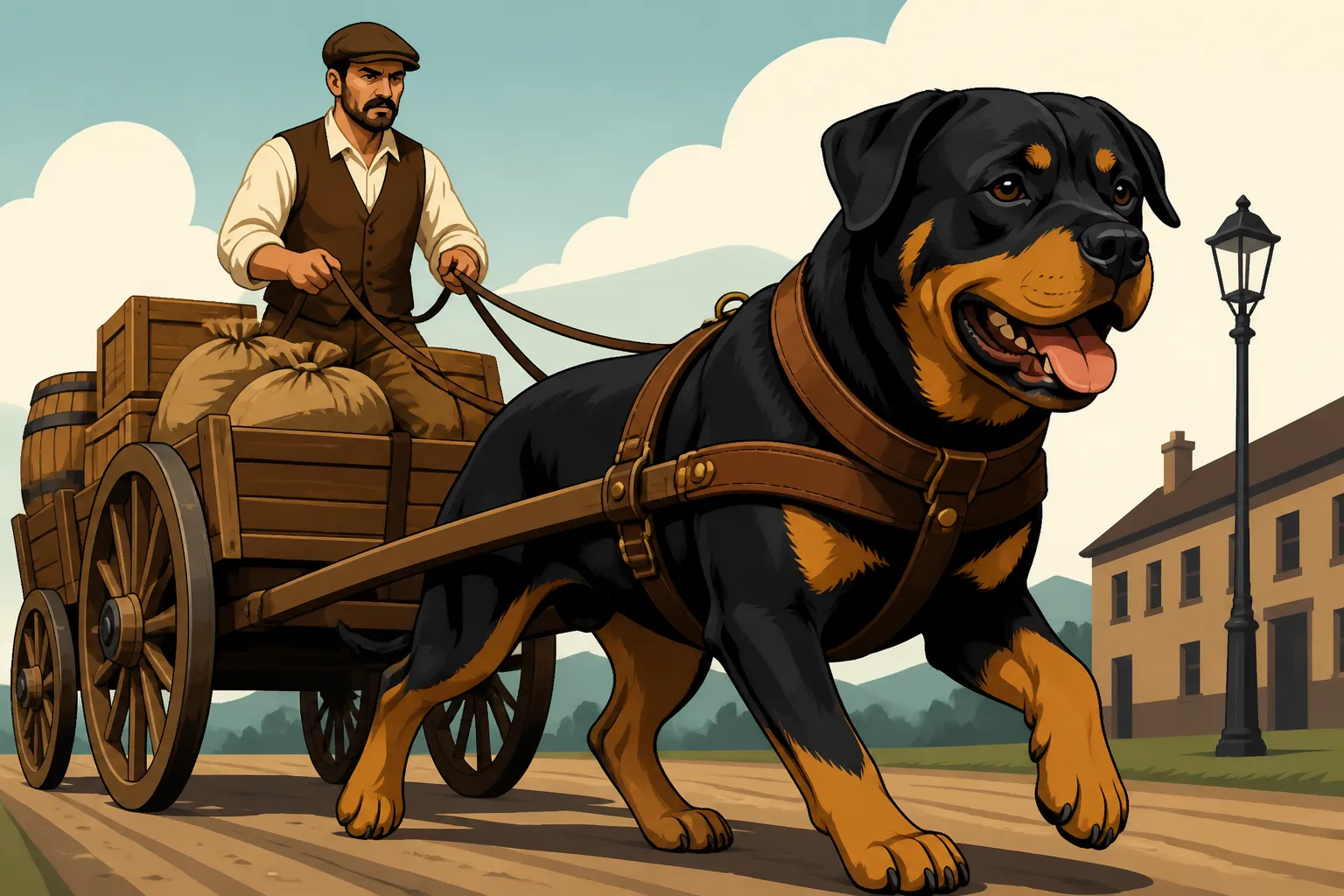
Imagine a bustling marketplace in 18th or 19th-century Germany. The air is filled with the smells of fresh bread, livestock, and woodsmoke. And there, weaving through the crowds, is a sturdy Rottweiler, pulling a cart piled high with goods. This wasn't a casual stroll; it was a serious undertaking, requiring specialized equipment and a well-trained dog. The logistics of this kind of daily labor are often overlooked, but they speak volumes about the ingenuity of both the dogs and their human partners.
Specialized Harnesses and Carts
You couldn't just hook a rope to a dog's collar and expect it to pull a heavy cart for miles. The harnesses used were purpose-built for draft work, designed to distribute the weight evenly across the dog's chest and shoulders, preventing injury and maximizing efficiency. These were typically broad, padded leather harnesses, often custom-fitted to the individual dog, ensuring comfort and power. The carts themselves were robust, two-wheeled affairs, sized appropriately for the dog's strength and the type of goods being transported. They weren't elaborate, but they were practical and durable, built to withstand the rough roads and daily grind. The combination of a strong dog and a well-designed harness and cart made for an incredibly effective, if slow, mode of transport.
Training for Consistent Pulling
A dog isn't born knowing how to pull a cart in a straight line or respond to commands while bearing a heavy load. Extensive training was required, starting from a young age. This wasn't just about physical conditioning; it was about teaching the dog discipline, focus, and responsiveness. They learned to start, stop, turn, and navigate obstacles on command, all while maintaining a steady pace. This training built a powerful bond of trust and understanding between the Rottweiler and its owner. It speaks to the breed's intelligence and desire to work that they could master such a demanding task. This foundational obedience and willingness to cooperate are still hallmarks of a well-trained Rottweiler today, even if their "cart" is now a leash and stroller.
The Scope of Goods Transported
While often associated with butchers, Rottweilers pulling carts weren't exclusively used for meat. Farmers used them to transport produce to market, artisans moved their wares, and other tradespeople relied on them for local deliveries. They were essentially the delivery trucks of their era, providing an accessible and reliable means of moving goods for anyone who couldn't afford a horse or larger draft animal. This versatility further cemented their status as indispensable working dogs in the communities they served. Imagine a potter carefully loading delicate ceramics onto a Rottweiler-drawn cart, trusting the dog's steady pace to ensure his livelihood arrived intact. It underscores their crucial role in the economic fabric of the time.
Why Railways Spelled the End of an Era for Working Rottweilers
The industrial revolution brought with it incredible advancements, and few were as transformative as the railway system. While trains opened up new possibilities for trade and travel, they also rendered many traditional forms of transport obsolete almost overnight. For the working Rottweiler, the railways marked a profound shift, signaling the gradual decline of their primary historical role as carting dogs. It wasn't an immediate disappearance, but rather a slow, inevitable fade as technology progressed.
The Efficiency of Mechanical Transport
The reason for the shift was simple: efficiency. Railways could transport far greater volumes of goods, much faster and over much longer distances, than any dog-drawn cart ever could. A train carrying dozens of tons of meat from a central slaughterhouse to distant cities made the slow, localized deliveries by Rottweiler-pulled cart seem antiquated. The cost-effectiveness of rail transport also meant that butchers and other merchants could expand their reach and reduce their overheads, making the traditional methods less competitive. Suddenly, the dedicated, strong working dog found its job shrinking, eventually becoming uneconomical.
When Cattle Droving Was Finally Made Illegal
The impact of modernization extended beyond just carting. The very practice of cattle droving, which was the Rottweiler's original purpose and where their ancestors truly shone, also faced legal restrictions. As towns and cities grew, and public health and safety concerns became more prominent, driving large herds of cattle through populated areas became increasingly impractical and eventually, in many places, illegal. This meant that even the initial role of getting cattle to market shifted away from dogs and towards rail or other mechanical transport. This double whammy—the end of widespread carting and the prohibition of traditional droving—left the Rottweiler with a significant void in its working life. It's a poignant reminder of how When Cattle Droving Was Finally Made Illegal had a ripple effect on the breeds historically tied to it.
What Replaced the Rottweiler as a Cart Dog
As railways expanded and paved roads became more common, the horse and eventually motorized vehicles took over the roles previously held by carting dogs. A single horse could pull a much heavier load than even the strongest Rottweiler, and later, the internal combustion engine revolutionized transport entirely. The need for a dog to pull a cart simply vanished in most commercial contexts. This left the breed at a crossroads, leading to a dramatic decline in numbers, as without their specific jobs, many questioned their utility. It’s hard to imagine now, but the Rottweiler came perilously close to disappearing during this period. The question of What Replaced the Rottweiler as a Cart Dog is really a story of technological progress and its impact on working animals.
The Legacy of the Cart Dog in the Modern Rottweiler
Even though Rottweilers no longer routinely pull butcher's carts through the streets of Rottweil, the traits that made them exceptional draft animals are still very much present in the breed today. Their history isn't just a quaint story; it's the very foundation of their physical and temperamental makeup. When you see a Rottweiler with its powerful build and self-assured demeanor, you're looking at a direct descendant of those hard-working dogs who shaped the breed's character and capabilities.
Inherent Strength and Build
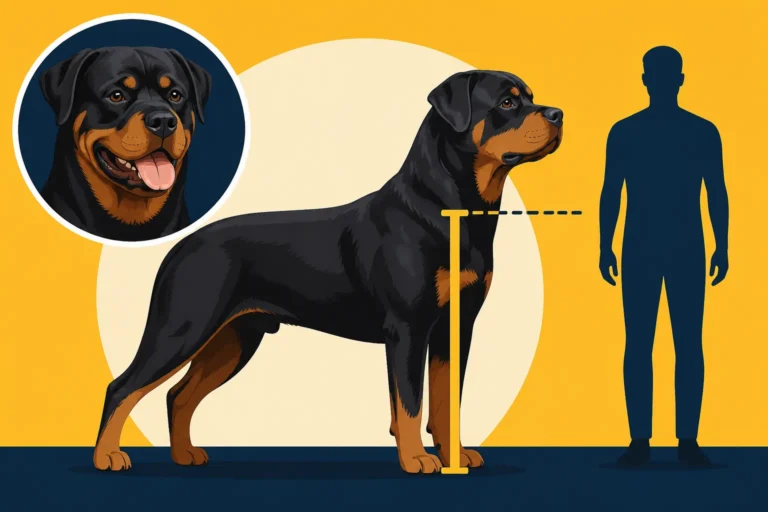
The formidable musculature, broad chest, and robust bone structure that were essential for pulling heavy loads are still iconic features of the Rottweiler. They are a genuinely substantial breed, and this isn't just for show. This physical presence is a direct inheritance from their working ancestors. It's why they are so solid, why they can be so imposing, and why they require careful management, especially during their long growth period. A Rottweiler's size, with males often weighing well over 100 pounds, is a constant reminder of their past as powerful draft animals. Think about Rottweiler Height and Weight for Males – those standards reflect a dog built for enduring physical work.
Temperament for Work and Loyalty
Beyond the physical, the Rottweiler's temperament also bears the indelible stamp of its carting and droving past. The calm confidence, the inherent desire to have a "job" to do, and their deep loyalty to their family (their "herd") are all characteristics refined through centuries of working closely with humans. They needed to be reliable, level-headed, and intelligent enough to understand and execute complex tasks. This is why a bored Rottweiler can be a destructive Rottweiler; they thrive when given purpose and mental stimulation, echoing their historical need for engagement. Their protective instinct, once crucial for guarding money and livestock, now translates into a steadfast guardianship of their human families.
Surviving Near Extinction
It's a testament to these core qualities that the Rottweiler didn't disappear entirely. With the decline of their traditional roles, their numbers dwindled significantly by the late 19th century. There were times when the breed was on the brink of extinction. However, dedicated fanciers, recognizing their inherent value, worked tirelessly to revive them, finding new working roles and preserving their unique characteristics. How Few Rottweilers Were Left by 1900 is a stark reminder of how close we came to losing this magnificent breed. Thankfully, their resilience and the passion of their advocates led to The 1901 Revival of the Rottweiler, ensuring their continued presence in the world.
Keeping the Spirit Alive: Modern Draft Work and Your Rottweiler
While the days of commercial carting are long gone, the spirit of the working Rottweiler lives on! Many enthusiasts today engage their dogs in modern forms of draft work, often called "carting" or "drafting" sports. This isn't just a fun pastime; it's a way to honor the breed's heritage, provide excellent physical and mental stimulation, and deepen the bond between dog and owner. It allows Rottweilers to tap into those ancient instincts and truly shine.
Recreational Carting and Dog Sports
Today, carting for Rottweilers is a recognized dog sport, celebrated by kennel clubs and breed associations. It's a wonderful opportunity for these powerful dogs to use their strength and intelligence in a constructive way. Dogs are trained to pull specially designed carts, often carrying inanimate objects or even children (with appropriate safety measures and supervision). Competitions test a dog's ability to pull, maneuver, and obey commands while harnessed to a cart. It’s not just about brute strength; precision, control, and a good working relationship with the handler are key. This sport truly celebrates the core essence of the historical Rottweiler. If you're looking for gear, many online retailers like Chewy offer robust harnesses and accessories suitable for large breeds getting into draft work.
Benefits for the Modern Rottweiler
Engaging in draft work offers numerous benefits for a Rottweiler, both physically and mentally. Physically, it's a fantastic way to build muscle, improve stamina, and keep them fit in a controlled, low-impact manner, provided they are mature and healthy. Mentally, it provides a "job" that satisfies their innate desire to work and problem-solve. It challenges their focus and obedience, reducing the likelihood of boredom-related behavioral issues at home. Plus, the shared activity strengthens the bond between dog and owner, building mutual respect and understanding. It's a fulfilling outlet for their incredible power and intelligence. For older dogs, it might not be strenuous pulling, but even light carting can be a gentle form of exercise and mental engagement for Senior Rottweiler Mobility Decline.
Getting Started with Draft Work
If you're interested in exploring draft work with your Rottweiler, it's important to start correctly and safely. First, ensure your dog is physically mature (typically at least 18-24 months old, once their growth plates have closed) and has a clean bill of health from your veterinarian. Invest in a proper draft harness, not just a walking harness. Look for local clubs or experienced trainers who offer draft work instruction. They can guide you through the basics, from getting your dog comfortable in the harness to teaching them to pull an empty cart, then gradually adding weight. Many clubs use equipment similar to what you might find on Chewy or other specialty pet supply sites. It’s a process of gradual introduction, positive reinforcement, and building confidence. It's a wonderful way to honor the breed's past and provide a fantastic future for your working Rottweiler. Find out more about how to engage your dog in Rottweiler Carting and Draft Work.
Here’s a look at the historical progression and changes in Rottweiler carting:
| Era | Primary Role | Method of Transport | Key Skills Required | Modern Parallel (if any) | Impact on Breed Traits |
|---|---|---|---|---|---|
| Ancient Roman Times | Driving & guarding cattle for legions | Herding animals on foot | Stamina, protective instinct, obedience | Livestock guardian/herding | Foundation of strength, endurance, guarding instinct |
| Medieval Rottweil | Butcher's dog: cattle drover, cart puller | Dog-pulled carts, herding on foot | Strength, obedience, guarding, reliability | Recreational draft work | Refined physical power, steady temperament, loyalty |
| Industrial Revolution | Decline due to railways & legal restrictions | Largely replaced | Adaptability, resilience | N/A | Breed's survival due to inherent value, shift to other roles |
| Modern Era | Companion, guard, police, therapy, sport | Leash walking, car transport | Trainability, loyalty, athleticism | Canine sports (e.g., draft) | Versatility, continued emphasis on strong build & temperament |
The story of the Rottweiler as a cart dog is a powerful testament to their enduring utility, strength, and loyal nature. It’s a lineage that deserves our respect and understanding, helping us appreciate the incredible animals we share our lives with today.
Disclaimer
This article is for general informational purposes only and does not constitute professional advice. Laws, prices and regulations vary by location and change over time. Consult a qualified professional for guidance on your specific situation.