What Replaced the Rottweiler as a Cart Dog
It’s truly fascinating to look back at the origins of our beloved Rottweilers and how their working lives have evolved. Many people know them as powerful guardians, but few realize their historical role as cart dogs was once so central to their existence that when it ended, the breed almost vanished entirely. This guide delves into the historical forces and technological advancements that ultimately replaced the Rottweiler's indispensable role as a cart dog, saving them from a future of hard physical labor.
The Historical Role of the Rottweiler Cart Dog
Before the roar of engines and the sprawling networks of railways, muscle power was king. And when it came to hauling goods, especially in the historic German town of Rottweil, the powerful, steadfast local dog was unmatched. These dogs weren't just pets; they were integral members of the community's workforce, shouldering responsibilities that directly contributed to the town's economy and daily life.
The Butcher's Dog and Its Many Jobs
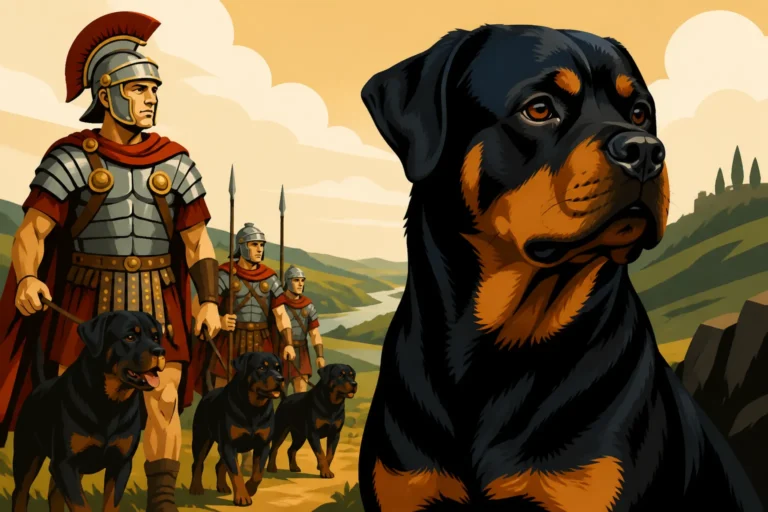
The Rottweiler's ancestors were Roman drover dogs, brought across the Alps with the Roman legions to herd and guard cattle. When the legions retreated, these dogs stayed, eventually settling in Rottweil, a vibrant medieval market town. Here, they became known as "Metzgerhund," or "butcher's dogs," due to their close association with butchers and cattle dealers. Their duties were incredibly diverse and demanding. They didn't just herd the cattle to market; they also protected the drovers and their earnings from bandits along the treacherous routes. Imagine walking for miles with valuable livestock, relying solely on your canine companion's strength and intimidating presence to keep both your herd and your money safe. It was a partnership born of necessity and trust. The very term "Metzgerhund" tells us so much about their specialized, vital role in that community, a role that extended far beyond simply moving livestock.
Pulling Carts: A Daily Reality
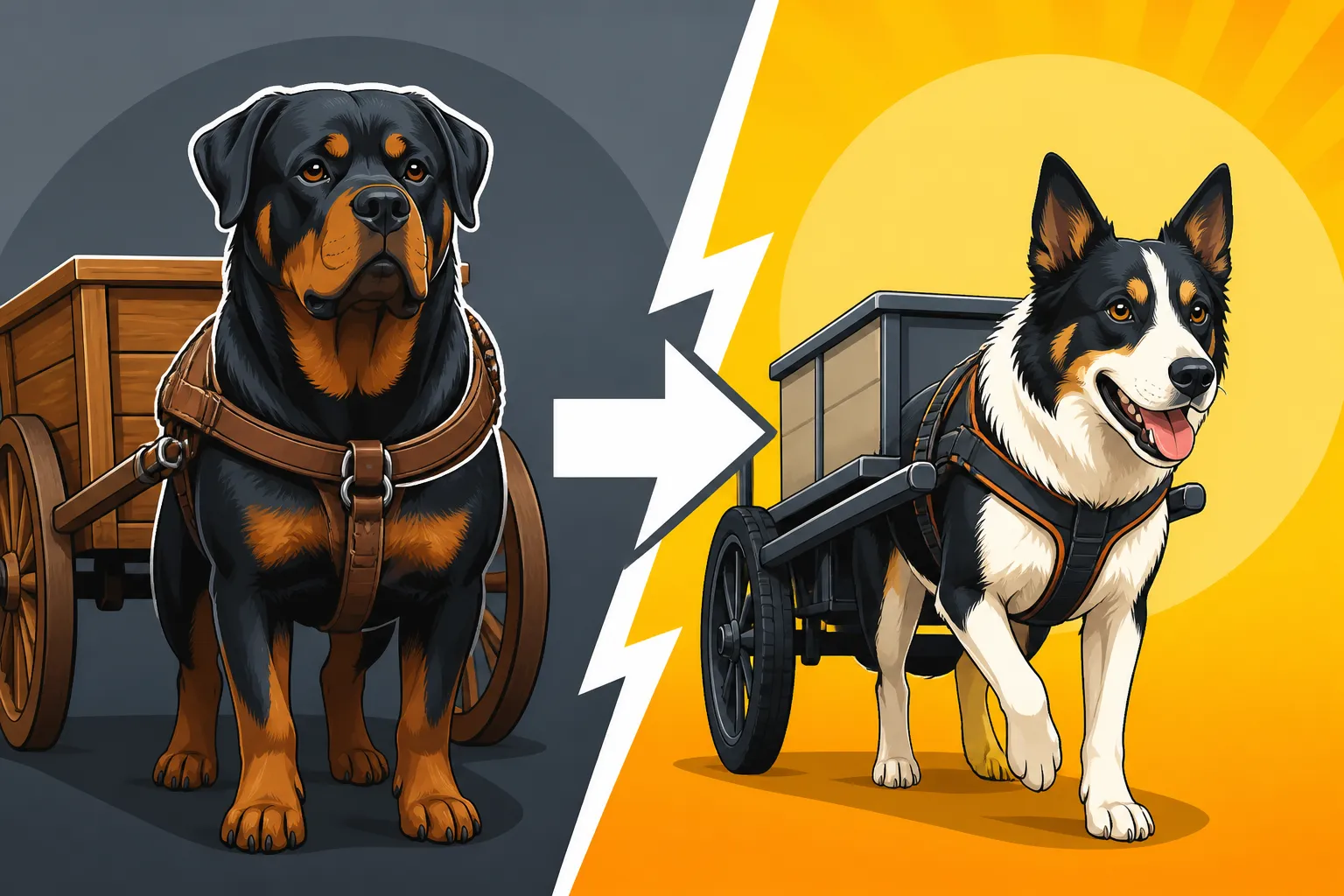
Beyond droving, one of the most physically demanding and crucial tasks these Rottweilers performed was carting. They weren't just guarding; they were pulling. Butchers and other tradespeople relied on these strong dogs to haul heavy carts laden with fresh meat, produce, milk, and other goods from farms to market, and from market to customers' homes. This wasn't a casual stroll; these were often long, arduous journeys over unpaved, sometimes muddy or icy roads. The sheer strength and endurance required for a dog to pull a cart weighing hundreds of pounds, day in and day out, speaks volumes about the Rottweiler's physique and stoic temperament. For centuries, these dogs were the primary form of local freight transport, a truly irreplaceable asset to the working people of Rottweil and surrounding areas. Rottweilers Pulling Meat Carts Through Town offers a vivid picture of this historical reality. Their steadfast nature and immense strength made them perfectly suited for this demanding work.
The Rise of Industrialization and New Technologies
The world changed dramatically with the advent of the Industrial Revolution, and with it, the need for animal labor began to wane. New technologies emerged that offered faster, more efficient, and larger-scale solutions for transportation, rendering the traditional dog cart obsolete. This shift wasn't gradual; it was a profound transformation that reshaped entire industries and, consequently, the lives of working animals like the Rottweiler.
The Steam Engine and the Railway Revolution
The invention of the steam engine was a game-changer. Suddenly, goods could be moved not just faster, but in much larger quantities, across greater distances than any dog or even horse team could manage. Railways began to crisscross the landscape, connecting towns and cities with an efficiency previously unimaginable. A single train could transport the equivalent of hundreds of dog carts, drastically cutting down on travel time and labor costs. This meant that cattle, which Rottweilers had traditionally helped herd, could now be shipped by rail, arriving at markets fresher and with less stress. This innovation effectively The Rottweiler's Job Before the Railways Arrived ended. The clatter of hooves and the panting of a hardworking dog were replaced by the rhythmic chug of a locomotive, a symbol of a new era of transportation.
Mechanized Transport on Roads
While railways tackled long-distance and bulk transport, local transportation also began its transformation. Early motorized vehicles, though rudimentary at first, slowly started to appear on roads. Horse-drawn carriages and wagons began to give way to automobiles and trucks. These vehicles, even in their early iterations, offered significantly more power and speed than any animal-drawn cart. They could navigate the local streets, delivering goods with greater consistency and requiring less direct animal management. As technology advanced, these motorized options became more affordable and widespread, squeezing out animal labor from the local delivery routes that Rottweilers had once dominated. The scale and speed of these new methods simply made dog-powered transport uneconomical and inefficient.
The Decline of Cattle Droving
Concurrently with the rise of railways and motorized transport, the practice of cattle droving itself began to diminish. As industries centralized and towns grew, slaughterhouses and markets became more integrated with modern transport networks. There was less need for large herds to be driven on foot across vast distances, which had been one of The Roman Drover Dogs Behind the Rottweiler's primary functions. Regulations also began to play a role, making traditional droving less feasible in increasingly urbanized areas. When Cattle Droving Was Finally Made Illegal in many regions further sealed the fate of the drover dog. The economic incentives for this work vanished, along with the physical routes and societal norms that supported it. The traditional jobs that had defined the Rottweiler for centuries were rapidly disappearing, leaving the breed in a precarious position.
The Impact on the Rottweiler Breed
The swift and profound changes in transportation and agriculture had a devastating impact on the Rottweiler breed. When their primary purpose vanished, so too did much of the economic incentive to breed and keep them. It was a stark reminder of how deeply connected working breeds are to the societal needs of their time.
A Breed Nearing Extinction
With their jobs gone, the Rottweiler population plummeted. There was simply no longer a widespread practical need for a large, powerful dog to pull carts or herd cattle. Many families, struggling financially in a changing world, couldn't afford to feed a big dog if it wasn't earning its keep. The breed, once so common and vital in its home region, dwindled to dangerously low numbers. It reached a point where Rottweilers were on the verge of disappearing entirely, becoming merely a footnote in canine history. How Few Rottweilers Were Left by 1900 is a sobering testament to this period, illustrating just how close we came to losing this magnificent breed forever. It took the dedication of a few passionate individuals to recognize the inherent value and potential of the Rottweiler beyond its historical occupations.
Re-evaluating the Rottweiler's Purpose
Thankfully, a small group of enthusiasts and breeders saw beyond the obsolete roles and recognized the Rottweiler's intrinsic qualities: their intelligence, loyalty, natural guarding instincts, and remarkable courage. They began to champion the breed, not as cart dogs, but as versatile companions, protectors, and service animals. This re-evaluation was critical for the breed's survival. The focus shifted from sheer physical labor to their keen minds and protective nature. Breeders began to highlight their suitability for police work, search and rescue, and even early forms of therapy assistance, roles that would become their modern calling. This pivotal moment led to The 1901 Revival of the Rottweiler, charting a new course for the breed's future. It was a conscious effort to find new "jobs" that leveraged their strengths in a new era.
Modern Day Echoes: What Replaced Their Labor and How We See Them Now
Today, the idea of a dog pulling a cart full of goods seems almost quaint, a relic of a bygone era. The functions once performed by these powerful dogs have been absorbed and expanded upon by an intricate web of modern systems and technologies. Our Rottweilers, however, have found new, equally important, and often more specialized roles in our lives, moving from labor to companionship and service.
Logistics and Infrastructure
The simple dog cart has been replaced by an incredibly complex global logistics and infrastructure system. Think about it: instead of a single dog pulling a butcher's cart to a few local customers, we now have massive cargo ships, freight trains, fleets of semi-trucks, and a network of delivery vehicles, all coordinated by sophisticated software and satellite systems. These systems move goods not just across a town, but across continents, connecting producers and consumers in ways that would have been unimaginable to a 19th-century butcher. The efficiency and scale are truly astounding, ensuring that goods from around the world can reach a store like Chewy, which then ships them directly to your door. This complex system is the modern successor to the Rottweiler's humble cart.
| Task Category | Old Way (Rottweiler Cart) | New Way (Modern Transport) |
|---|---|---|
| Goods Transport | Local deliveries of meat, produce | Global supply chains, e-commerce delivery |
| Power Source | Canine muscle and endurance | Internal combustion engines, electric motors |
| Speed | Walking pace, limited daily range | High-speed rail, air freight, highway driving |
| Capacity | Small, single cart loads | Multiple tons via truck, train, ship, plane |
| Labor Requirement | Handled by dog and handler | Large-scale logistics teams, automated sorting |
| Environmental Impact | Minimal direct emissions | Significant fossil fuel consumption, emissions |
Rottweilers as Companions and Service Animals
While their historical carting duties have been replaced by machinery, Rottweilers themselves have found new, deeply valued roles. They are no longer primarily beasts of burden but cherished family members, protectors, and dedicated service animals. Their inherent loyalty, intelligence, and protective instincts, which were honed over centuries of working alongside humans, make them exceptional companions. Many Rottweilers excel in modern working dog roles, demonstrating their versatility. You’ll find them as highly skilled police and military dogs, their impressive presence and keen senses making them invaluable in detection and protection tasks. Rottweilers in Police and Military Service is a testament to their enduring work ethic.
They also make incredible therapy dogs, offering comfort and support in hospitals and nursing homes, or even as service animals, assisting individuals with mobility or other challenges. Their stoicism and unwavering focus are perfectly suited to these demanding roles. Owners today buy durable toys and large, comfortable beds for their companions from places like Chewy, recognizing their needs as large, active dogs. The transition from cart dog to beloved family member and specialized service animal showcases the breed's incredible adaptability and the deep bond they form with humans. Their history as hard workers is still evident in their intelligence and willingness to please, even if their "job" now involves chasing a frisbee or guarding the family instead of pulling a cart of meat. Rottweiler Jobs From Police Work to Therapy Visits highlights the diverse and important contributions they continue to make in our world, far removed from the days of yore.
Disclaimer
This article is for general informational purposes only and does not constitute professional advice. Laws, prices and regulations vary by location and change over time. Consult a qualified professional for guidance on your specific situation.