How the Rottweiler’s Ancestors Reached Germany
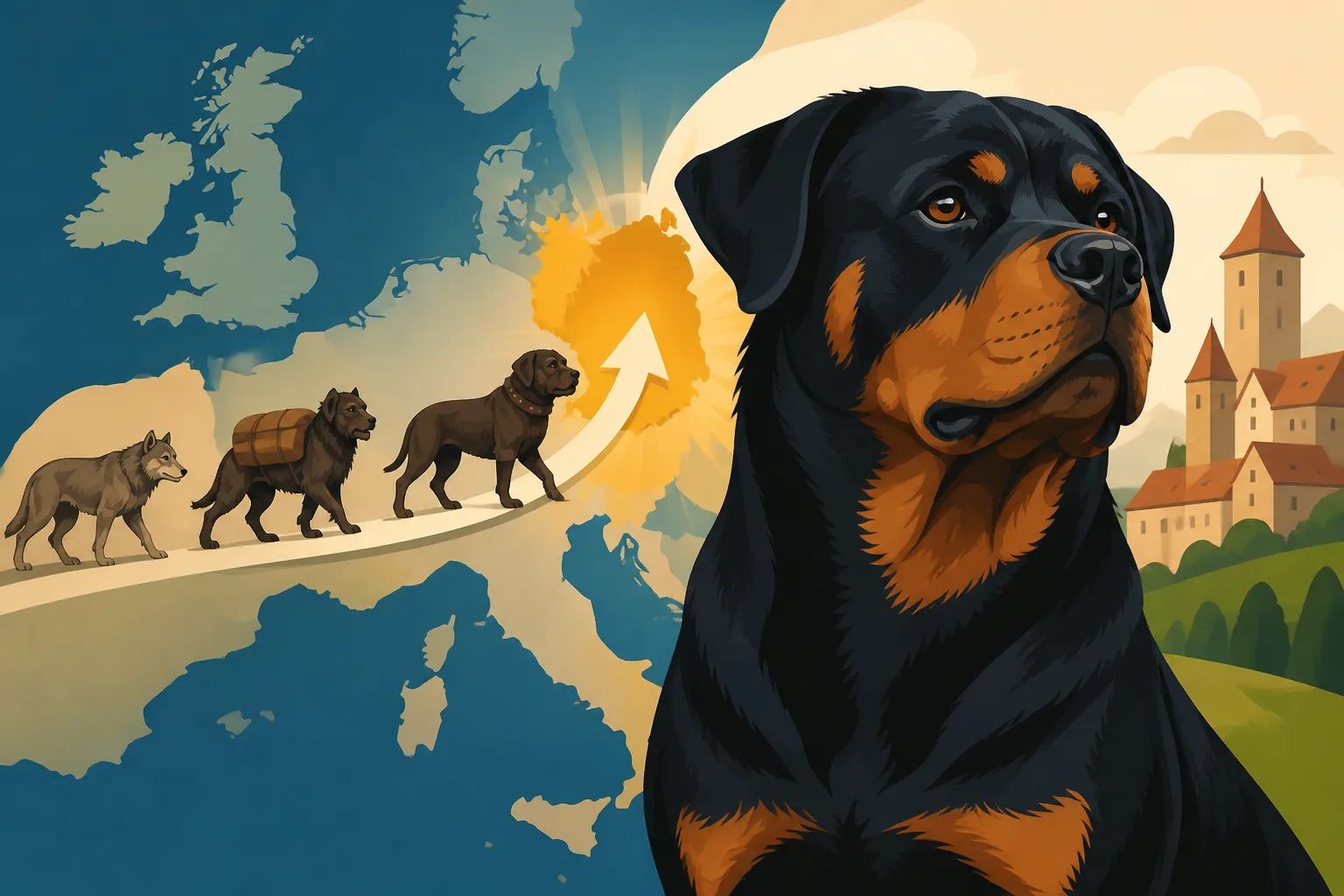
It's easy to look at a majestic Rottweiler today and imagine they simply sprang into existence in Germany, perfectly formed and ready to guard. But the truth is, their lineage stretches back far further, across continents and through tumultuous historical periods, eventually leading these powerful dogs across some of Europe's most challenging terrain to arrive in the region we now know as Rottweil. The journey of the Rottweiler's ancestors is a fascinating tale of survival, utility, and adaptation, deeply intertwined with human migration and the practical needs of an empire.
The Roman Empire's Paw Prints Across Europe
Before there was a "Rottweiler" as we understand it, there were powerful drover dogs, essential companions to the Roman legions. These weren't just camp followers; they were vital working animals, playing a crucial role in the logistical nightmare of moving armies and their supplies across vast distances. Imagine the sheer scale of feeding thousands of soldiers, let alone the laborers and support staff, over months-long campaigns. You couldn't just stop at a drive-thru; you had to bring your food with you, and that food often walked on four legs.
Roman Legions and Their Canine Companions
When the Roman legions marched, they didn't just bring soldiers and weaponry; they brought a mobile food supply: herds of cattle, sheep, and goats. These animals were not only a source of fresh meat but also provided leather for armor and equipment. Managing these vast moving larders required highly capable dogs. These were not dainty pets; they were robust, intelligent, and fiercely loyal animals trained to keep the herd together, move them efficiently, and protect them from predators and thieves alike. It was a tough, demanding job, and only the strongest and most intelligent dogs would have been up to the task. The survival of an entire legion could, at times, depend on the effectiveness of these canine drovers. How Roman Legions Used Their Drover Dogs truly highlights their indispensable role.
Mastiff-Type Ancestors in the Roman Army
The dogs accompanying the Roman legions were predominantly of a mastiff-type lineage. We're talking about large, muscular canines, likely quite intimidating in appearance even then. Their sheer size and strength made them ideal for confronting any threats to the livestock, whether that was a pack of wolves or opportunistic raiders. These dogs weren't just bred for brawn; they also possessed a keen intelligence and a natural protective instinct. While they might not have looked exactly like the Rottweiler we know today, they carried the foundational genetics for strength, courage, and a powerful guarding drive. Learning about The Mastiff-Type Ancestors Behind the Rottweiler gives us a clearer picture of their physical legacy.
The Logistic Challenge of Feeding an Army
Picture a Roman legion of around 5,000 men, plus their horses, pack animals, and the substantial herds of livestock. This entire procession had to be fed, watered, and moved, sometimes across hundreds of miles of unfamiliar and often hostile territory. The drover dogs were invaluable in this monumental task. They could cover many miles a day, tirelessly herding animals, preventing strays, and forming a living barrier against dangers. Without these efficient canine helpers, the logistics of sustaining such a large force would have been exponentially more difficult, if not impossible. The constant demand for vigilance and physical endurance forged a resilient and capable canine lineage, whose traits would carry forward for centuries. For a deeper dive into the challenges, consider What the Romans Fed Their Armies on the March.
The Treacherous Journey Across the Alps
The Roman Empire expanded northward, and with it, the legions pushed into Germanic territories. This meant conquering some of Europe's most formidable natural barriers, not least of which were the Alps. This wasn't a casual stroll; it was a brutal, slow, and dangerous crossing that tested the limits of every soldier, animal, and dog involved.
A Treacherous Journey for Man and Beast
Imagine trying to move thousands of cattle, along with all the attendant people and supplies, over towering mountain passes. The terrain was rugged, the weather unpredictable, and the paths often narrow and perilous. Landslides, rockfalls, blizzards, and unexpected rivers would have been common hazards. The Roman drover dogs, with their stamina and innate ability to navigate difficult landscapes while keeping a herd moving, were absolutely critical here. They had to be agile enough to handle rocky slopes and strong enough to keep a panicked steer from tumbling down a ravine. This environment certainly selected for dogs with exceptional physical and mental fortitude. It was during these arduous treks that When Roman Dogs First Reached the Rottweil Area became possible.
Sustenance and Survival on the March
During these long marches, both the soldiers and their animals needed to be sustained. While the cattle were destined for the cooking pot, the dogs themselves needed to eat and drink. They would have scavenged, hunted small game, and been fed scraps from the army's provisions, just enough to keep them going. Every calorie was precious. The conditions were harsh, and only the most adaptable and hardy dogs survived to continue the lineage. This selective pressure naturally favored dogs that were efficient, resilient, and had a strong will to live and work. Even if it seems far-fetched today, the concept of provisioning a large animal still applies, and we now rely on trusted sources like Chewy for our modern canine companions, a stark contrast to the Roman era's makeshift solutions.
Establishing Garrisons and Supply Routes
As the Roman Empire established its northern frontiers, garrisons were set up along vital trade and supply routes, including those leading into what is now southern Germany. These outposts needed constant provisions, and the drover dogs helped ensure the continuous flow of livestock. It was in these settlements, strategic points along the Neckar River valley, that the Roman drover dogs began to settle. They weren't just passing through; they were becoming part of the local landscape and, more importantly, integrating into the local way of life. These garrisons served as critical junctions, solidifying the presence of the dogs in the region long after the immediate military need had passed.
Integration into Germanic Life: The Dogs Find a New Home
When the Roman Empire eventually began its withdrawal and its influence waned, many of the dogs, or their descendants, remained behind. They didn't just vanish; they became an integral part of the communities that had grown up around the former Roman outposts. This period marked a significant turning point, as the dogs transitioned from purely military utility to serving the needs of the burgeoning local populace.
Roman Outposts and Local Integration
As Roman legions retreated, many dogs were either left behind or bred with local stock. The areas that had previously been Roman strongholds, like the region surrounding the modern-day town of Rottweil, continued to be centers of trade and agriculture. The local Germanic tribes and settlers recognized the immense value of these powerful, capable dogs for managing their own livestock and protecting their homesteads. The dogs seamlessly integrated into these new societies, their ancestral skills proving just as useful to independent farmers and traders as they had been to the Roman army. This integration was slow, organic, and ultimately successful, cementing the dogs' place in the region.
Interbreeding with Indigenous Dogs
It’s natural to assume that over centuries, these Roman drover dogs interbred with various indigenous dog breeds present in the Germanic lands. This mixing of bloodlines would have further adapted them to the specific environment and local challenges. While the foundational mastiff-type characteristics — strength, robust build, and protective instincts — would have persisted, new traits from local dogs might have been incorporated, subtly shaping their appearance and temperament. This genetic exchange helped create a dog uniquely suited to the conditions of the Neckar River valley, a true testament to natural selection and local adaptation. This explains why the "Rottweiler" didn't remain a pure Roman dog but evolved into something new and distinct.
A New Purpose in a New Land
With the decline of Roman influence, these dogs found a renewed purpose within the developing German communities. They continued their work as drovers, moving livestock to markets, but also became indispensable guardians of property, families, and even the merchants' earnings. Their strength and imposing presence made them excellent deterrents to thieves and predators. They were no longer just military assets but became deeply ingrained in the civilian economy and security of the region. This shift from purely military to broadly domestic and commercial roles truly highlighted their versatility and cemented their position as valued members of these nascent communities.
The Town of Rottweil: A Name Forged in Beef and Brass
The story of these ancestral dogs, now thoroughly integrated into Germanic life, really comes into focus in the burgeoning medieval town of Rottweil. This town, with its strategic location and growing cattle trade, became the crucible in which the modern Rottweiler began to take its definitive shape and, ultimately, its name.
The Town's Strategic Location
Rottweil, located in the fertile Neckar River valley, was strategically positioned at the crossroads of several important Roman roads. This made it a natural hub for trade, especially in livestock. Over time, it grew into a significant medieval market town, famous for its cattle trade. Farmers from surrounding regions would bring their herds to Rottweil to sell, and butchers from across the area would congregate there to buy. This constant flow of livestock and the need to manage large, sometimes unruly, herds reinforced the demand for capable drover dogs. Why the Town of Rottweil Carries That Name is fascinating, reflecting the dogs' deep connection to its history.
Cattle Driving and the Need for Strong Dogs
The cattle trade in Rottweil was booming, and with it, the necessity for strong, reliable dogs. These dogs were responsible for driving cattle from pastures to market, often over considerable distances. They needed to be tireless, intelligent enough to work independently, and strong enough to handle large, powerful animals. Imagine a busy market day in medieval Rottweil: hundreds of cattle, bustling crowds, and the constant risk of animals breaking free. The dogs were the unsung heroes, maintaining order and ensuring the safe passage of the valuable livestock. This environment provided a natural breeding ground for the characteristics that would define the Rottweiler. For context on the trade itself, see What Was Traded in Rottweil's Cattle Market.
The "Metzgerhund" Emerges
It was within this vibrant cattle trade that the local butchers, or "Metzgers," found these dogs to be utterly indispensable. These dogs not only drove the cattle to market but also protected the butchers' earnings on the journey home, often carrying money in secure pouches around their necks. This specific role earned them the local moniker "Metzgerhund," or "Butcher's Dog." This wasn't just a casual nickname; it reflected their primary function and the deep trust placed in them. The Metzgerhund was a guardian, a drover, and a loyal companion, embodying the practical virtues of the Roman ancestors, honed by centuries of local adaptation. Delve deeper into their specific role with Why Butchers Called the Rottweiler a Metzgerhund.
The Butcher's Dog: Shaping the Breed Through Utility
The "Metzgerhund" era was crucial in solidifying the Rottweiler's identity. The specific demands of the butchers and cattle drovers in Rottweil further refined the breed's characteristics, emphasizing certain traits while downplaying others. This was less about fancy pedigrees and more about pure, practical utility.
Adapting to Local Demands
The qualities highly valued by the butchers and cattle dealers included immense strength, endurance, a calm demeanor, and an unwavering protective instinct. Dogs that were overly aggressive or flighty wouldn't have been useful; they needed to be brave, yet controllable, capable of intimidating without being reckless. Over generations, dogs exhibiting these traits were naturally favored for breeding, shaping the genetic pool towards what we recognize as the Rottweiler's core characteristics. Their compact, powerful build was perfectly suited for both driving cattle and guarding property. Even today, the modern Rottweiler still carries these ancestral traits, making them excellent working dogs, though their roles have evolved.
Guarding Valuables and Livestock
The Metzgerhund's protective nature was not just about deterring wolves from the herd; it extended to guarding the hard-earned money and valuable livestock from human thieves. After a successful day at the market, a butcher might have a pouch of coins around his dog's neck, knowing that no ordinary bandit would dare approach such a formidable guardian. This role ingrained a deep sense of loyalty and a discerning attitude towards strangers into the breed's psyche. They learned to assess situations, to be watchful without being overtly aggressive unless provoked. This careful balance of protectiveness and discernment is still a hallmark of the breed today. Explore What a Metzgerhund Did in a Day's Work to understand the full scope of their duties.
Early Breeding Practices and Selection
Formal breeding programs as we know them today didn't exist in medieval times. Instead, selection was based purely on performance and utility. The best working dogs — those that were healthy, strong, intelligent, and effective at their jobs — were the ones that reproduced. This informal, yet highly effective, selection process created a robust and functional breed perfectly suited to its environment and purpose. There was no room for weakness or poor temperament; every dog had to earn its keep. This practical approach to breeding laid the foundation for the resilient and capable Rottweiler that would eventually be recognized globally. Even for modern breeders today, choosing parents with excellent health and temperament is paramount, and sites like Chewy offer resources for responsible pet ownership from nutrition to training support.
From Medieval Paths to Modern Pedigrees
The journey of the Rottweiler’s ancestors from Roman drover dogs to the respected "Metzgerhund" of Rottweil wasn't linear or swift. It was a centuries-long process of adaptation, natural selection, and human utility, culminating in the breed we cherish today. This rich history informs every aspect of the modern Rottweiler, from their temperament to their physical prowess, and even explains why they sit in the AKC Working Group.
The Decline and Revival of the Breed
With the advent of railways in the 19th century, the need for cattle droving dogs sharply declined. Suddenly, livestock could be transported efficiently by train, rendering the traditional drover dog's role largely obsolete. The Rottweiler, like many working breeds, faced a period of decline and almost disappeared. Thankfully, a dedicated group of fanciers recognized the incredible value of these dogs – their strength, intelligence, and guarding instincts – and worked to revive the breed in the early 20th century. They shifted the focus from cattle droving to other working roles, such as police and military service, ensuring the breed's survival and its continued legacy. How Close the Rottweiler Came to Disappearing tells this story vividly.
The Rottweiler in Modern Working Roles
Even without cattle to drive, the Rottweiler's inherent working traits found new outlets. Their intelligence, courage, and physical capabilities made them excellent candidates for police work, search and rescue, and even therapy roles. Their deep loyalty and protective nature, inherited from generations of guarding herds and butchers' earnings, make them exceptional personal protection dogs and family guardians when properly trained and socialized. This versatility is a direct result of their long history of being selected for utility and reliability. It's a testament to the strength of their ancestral bloodlines that they continue to excel in so many demanding fields. This is part of Why the Rottweiler Sits in the Working Group in canine classifications.
Recognizing the Ancestral Traits in Today's Rottweiler
When you look at a Rottweiler today, you can still see echoes of those Roman drover dogs and the medieval Metzgerhund. Their muscular build, powerful jaws, and confident, sometimes aloof, demeanor are all legacies of their demanding past. Their natural guarding instinct, their tendency to "lean" into their trusted humans, and their robust health (when bred responsibly) are all rooted in their history as working dogs. Understanding this history isn't just a fun fact; it helps us appreciate their inherent needs for structure, training, and a sense of purpose. Providing for a breed with such a powerful history, ensuring they have appropriate food and mental stimulation, is key. Many owners find quality food for their active Rottweilers through providers like Chewy, acknowledging the nutritional demands of a dog with such a strong working heritage.
Here's a quick overview of the Rottweiler's ancestral journey:
| Era | Primary Role | Key Traits Reinforced | Location/Context |
|---|---|---|---|
| Roman Empire (1-4 AD) | Droving & Guarding | Strength, Endurance, Protectiveness | Alps, Rhine & Danube Frontier |
| Post-Roman (5-11 AD) | Livestock Management | Adaptability, Local Integration | Neckar River Valley |
| Medieval Rottweil (12-19 AD) | Cattle Droving, Guarding Wealth | Intelligence, Calm Courage, Loyalty | Rottweil Market Town |
| Modern Era (20-21 AD) | Police, Military, Therapy | Versatility, Trainability | Global Recognition |
This long, incredible journey illustrates how environment, human need, and natural selection combined to create one of the most remarkable and beloved dog breeds in the world. From Roman battlefields to bustling German market towns, the Rottweiler’s ancestors left an indelible mark on history, shaping a dog that remains a loyal and capable companion today. If you're looking for gear or specific large breed food to support your Rottweiler's powerful build and active lifestyle, resources like Chewy can be incredibly helpful.
Disclaimer
This article is for general informational purposes only and does not constitute professional advice. Laws, prices and regulations vary by location and change over time. Consult a qualified professional for guidance on your specific situation.