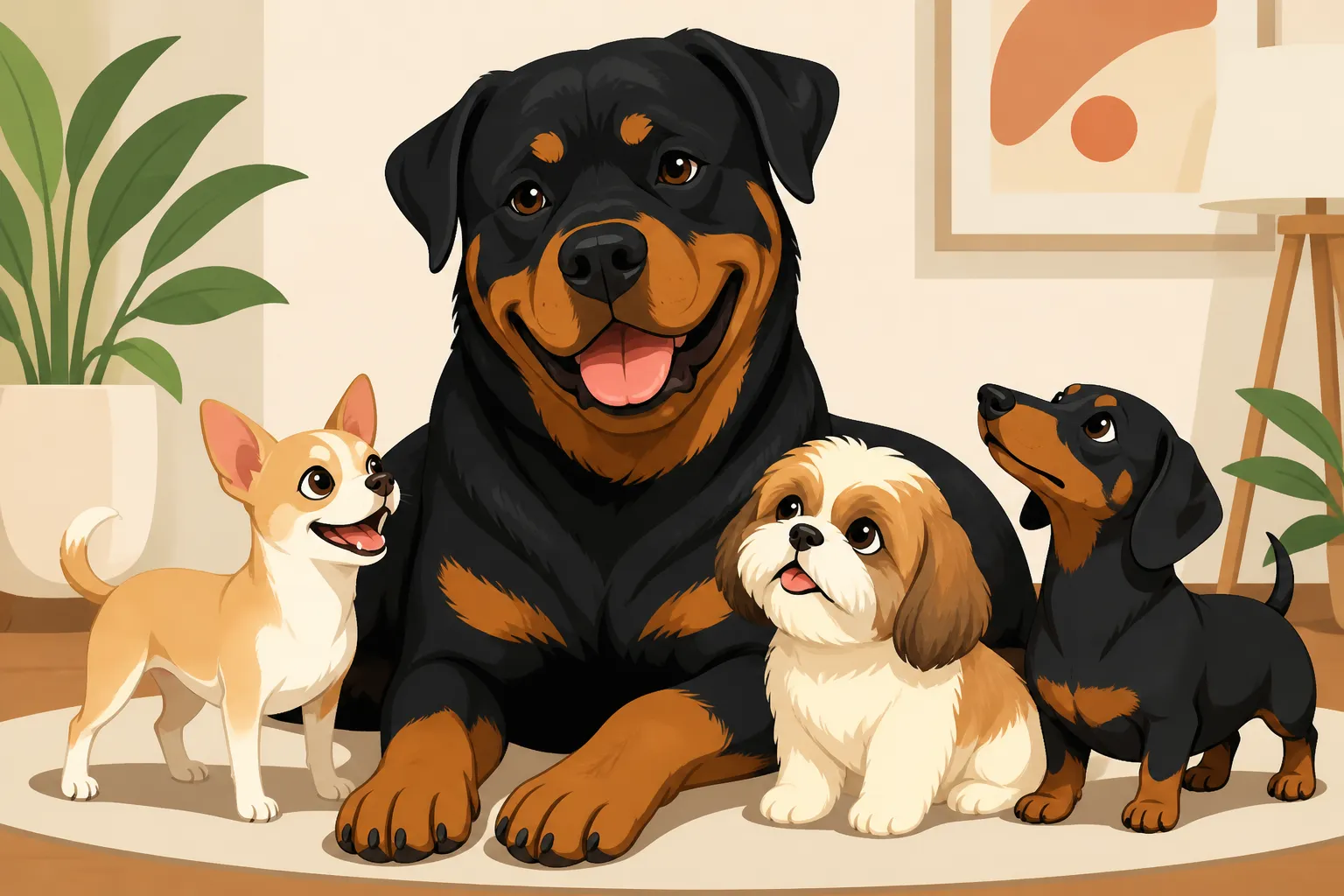
Rottweilers With Much Smaller Dogs at Home
Bringing a magnificent, powerful Rottweiler into a home where much smaller dogs already reside can stir up a lot of emotions, from hopeful excitement to genuine anxiety. You worry about accidental injuries, the sheer size difference, and whether everyone will truly get along. This guide is here to walk you through navigating that size disparity, ensuring a harmonious household where all your furry companions, big and small, can live together safely and happily.
Understanding the Rottweiler's Unique Traits and Play Style
Before you even think about introductions, it’s crucial to truly understand what makes a Rottweiler, well, a Rottweiler. These aren't just big dogs; they come with a specific history and a set of instincts that inform their interactions, especially with creatures much smaller than themselves. Owners often underestimate the impact of these traits when paired with delicate smaller breeds.
The Legacy of the Drover Dog
Rottweilers were originally bred in Germany to drive cattle and guard butcher's money. This lineage has left them with distinct physical and behavioral characteristics that might surprise a new owner. Imagine a 100-plus pound dog pushing a stubborn steer – that's immense power and a strong impulse to move things. This translates into what we often call "body blocking" or "bumping" in a domestic setting. A Rottweiler might casually lean its entire weight into a person or another dog, not out of malice, but as a deeply ingrained way of directing movement or establishing closeness.
Now, picture that lean or bump directed at a ten-pound chihuahua. It’s easy to see how a playful nudge from a Rottweiler could accidentally send a smaller dog tumbling, potentially causing injury. Their inherent confidence means they might not even register the smaller dog's fragility in the heat of the moment, especially if they are feeling boisterous. It's not aggression; it's a lack of awareness of their own scale compared to a tiny housemate. You'll want to understand The Rottweiler Droving Instinct and Bumping deeply to preempt potential issues.
Power, Play, and the Accidental Mishap
Rottweilers are muscular, sturdy dogs. Even their most gentle play can seem like a bulldozer compared to a toy breed. A simple paw swat, meant as a friendly invitation to play with a dog their own size, could inadvertently injure a smaller dog. Their mouths are also incredibly powerful, even when they're just mouthing playfully. While a properly socialized Rottweiler should have good bite inhibition with humans and other large dogs, that natural power needs careful management around delicate smaller animals.
It’s not just about direct physical contact, either. The sheer speed and force of a Rottweiler running through a room can be intimidating or even dangerous for a smaller dog that might get in the way. They can turn corners quickly, launch themselves onto furniture, or suddenly stop, and a little dog in their path could easily become a tripping hazard for both. We're not talking about malicious intent here, but simply the physics of a large animal in a small space interacting with an even smaller one.
Strategic Introductions for Lasting Harmony
Bringing any new dog into a multi-dog household requires careful planning, but when there's a significant size difference, it becomes paramount. Rushing the process is one of the biggest mistakes you can make, as it can set a negative precedent that's hard to overcome. Think of it less as a single event and more as a carefully orchestrated, ongoing process.
The Art of the Controlled First Meeting
Your first introduction should always be in a neutral territory, away from the perceived "ownership" of either dog's home space. A local park (at an off-peak time), a friend's fenced yard, or even a quiet side street works well. Both dogs should be on leashes, handled by separate, confident individuals. The goal isn't immediate friendship, but calm coexistence. Keep the initial meeting very short – just a few minutes of parallel walking, allowing them to sniff the same spots, but not direct, face-to-face interaction right away. Gradually, you can allow brief, supervised greetings. Look for relaxed body language: loose tails, soft eyes, gentle sniffing. Any signs of stiffness, hard stares, growling, or attempts to mount should immediately result in separation and a slower approach next time.
Consider starting introductions with a barrier in between, like a baby gate or a crate. This allows them to see and smell each other without direct physical contact, reducing the stress of a potential confrontation. Feed them on opposite sides of the gate, gradually moving the bowls closer as they show comfort. This positive association with food while in the presence of the other dog is incredibly powerful. Remember, building trust takes time, so patience is your best friend during this phase. Detailed guidance on this can be found in resources like Introducing a Rottweiler to Other Dogs.
Establishing Safe Spaces and Supervised Interactions
Once you bring the Rottweiler home, it's vital that each dog has its own dedicated safe space where they can retreat and feel secure. For your smaller dogs, this might be a crate, a dog bed elevated on furniture they can jump onto but the Rottweiler cannot, or a room sectioned off by baby gates. For the Rottweiler, a sturdy crate or a designated bed in a quiet corner can provide that personal sanctuary. These spaces are non-negotiable and should be respected by all.
All initial interactions within the home must be heavily supervised. We're talking active supervision, where you are engaged and ready to intervene immediately. This means no leaving them alone, even for a moment, until you are absolutely certain of their established, consistent comfort levels – and even then, discretion is often the better part of valor. Utilize leashes inside the home if needed to prevent impulsive chasing or overly boisterous play that could put a smaller dog at risk. Reward calm, gentle interactions lavishly with treats and praise. High-value treats, perhaps some tasty chews from Chewy, can be great for creating positive associations during these controlled interactions. This proactive management helps shape positive relationships rather than waiting for problems to arise.
Managing Daily Life with a Size Disparity
Once initial introductions are (mostly) successful, the real work of integration begins. Day-to-day living with a large Rottweiler and small dogs requires ongoing vigilance and smart management strategies.
Meal Times and Resource Guarding Prevention
Feeding time can be a flashpoint in any multi-dog household, and the size difference only amplifies potential issues. A Rottweiler might finish their meal quickly and then eye the smaller dog's bowl, or the smaller dog might feel threatened by the sheer size of the Rottweiler eating nearby. To prevent resource guarding – where a dog protects its food, toys, or even people – always feed your dogs separately. This means in different rooms, in their crates, or separated by a sturdy barrier.
For your Rottweiler, consider using a slow feeder bowl, available at retailers like Chewy, to prevent them from gulping down their food too quickly. This not only discourages them from looking for more but can also help with digestion and reduce the risk of bloat. The Raised Bowl Argument in Rottweiler Bloat is something to look into. Ensure that all treats and chews are given in separate areas, too, and pick up any high-value items once the dogs are done to avoid lingering temptations or potential conflicts. If your small dogs are food-motivated, teaching them a "place" command on their elevated safe spot during the Rottweiler's mealtime can be incredibly useful.
Playtime: Tailored and Supervised Fun
Uncontrolled play between a Rottweiler and a very small dog is often a recipe for disaster. Even if the Rottweiler is gentle, the sheer difference in weight and jaw power can lead to accidental injuries. Instead of free-for-all play, focus on parallel play or tailored play sessions.
For instance, your Rottweiler might enjoy a vigorous game of fetch with a durable toy, while your smaller dog might prefer a gentle tug-of-war with you. These can happen simultaneously in the same room, but with your active supervision, ensuring each dog gets their specific needs met without directly interacting in a risky way. When they do interact, keep it calm. Reward gentle sniffing and soft body language. If the Rottweiler gets too excited, or the smaller dog shows signs of stress, redirect the Rottweiler's energy to a solo activity or separate them for a cool-down period.
Durable toys are also key. A small, squeaky toy meant for a tiny dog could be a choking hazard for a Rottweiler if they decide it looks fun. Ensure all toys are appropriately sized for each dog, and remove any toys that become damaged. Rottweiler Chew Toys That Survive the Jaw can be a great guide here. You can find a wide variety of sturdy toys for large breeds, and smaller, safer options for your little ones, at places like Chewy.
Walking Dynamics and Shared Space Management
Walking both dogs can be a logistical challenge. If your Rottweiler is a strong puller, managing them alongside a small dog who might be trotting calmly can be tricky. Invest in appropriate walking gear for each dog. A sturdy harness or head halter can give you better control over your Rottweiler. For your smaller dog, a comfortable harness is often preferred over a collar, especially if they're prone to tracheal collapse from pulling. Resources like Harness Hardware That Holds a Pulling Rottweiler can help with selection.
Consider walking them separately if walking them together proves too difficult or stressful for either dog. This ensures each dog gets quality exercise tailored to their needs without the added stress of managing the other. When they are together in shared spaces, like the living room, always be aware of where everyone is. Don't let your Rottweiler jump off the couch near your small dog, or barge through a doorway where a little one might be standing. Consistent training for your Rottweiler, focusing on impulse control (like "wait" at doors), can make a huge difference in these everyday scenarios.
Recognizing and Addressing Potential Issues
Even with the best intentions and careful management, issues can arise. Knowing what to look for and how to respond is critical for maintaining peace and safety.
Reading Body Language: The Silent Conversation
Both your Rottweiler and your smaller dogs communicate constantly through their body language. Learning to read these signals is paramount.
Signs of stress or fear in smaller dogs might include:
- Hiding: Seeking refuge under furniture, in crates, or behind you.
- Trembling or shaking: Not related to cold.
- Tail tucked: Held tightly between the legs.
- Lip licking or yawning: When not tied to hunger or tiredness.
- Flattened ears: Pinned back against the head.
- Cowering or trying to escape.
- Growling or snapping: Often a "leave me alone" warning when they feel trapped or threatened.
Signs of over-excitement, discomfort, or potential dominance in a Rottweiler might include:
- Hard stare: Intense, unwavering eye contact directed at the smaller dog.
- Stiff body posture: Rigid stance, often with a slightly raised hackle (fur along the spine).
- Body blocking: Physically cutting off a smaller dog's access to a person, toy, or doorway.
- Excessive sniffing or nudging: Persistent following and pushing without the small dog reciprocating.
- Low rumble or growl: Can be a warning. The Rottweiler Grumble That Is Not a Growl can help you differentiate.
- Mounting: Can be a display of dominance or over-excitement, even if not sexual.
If you observe any of these stress signals, intervene immediately and calmly separate the dogs. The goal is to prevent situations from escalating. Never punish a growl, as it's a warning signal; instead, address the underlying cause of the growl.
When to Seek Professional Guidance
Sometimes, despite your best efforts, the dynamic between your dogs just isn't working, or you're seeing concerning behaviors that you can't manage on your own. This is not a failure on your part; it's an indication that you need to bring in the big guns. A professional dog trainer or a certified veterinary behaviorist specializing in large breeds and multi-dog households can be an invaluable resource.
They can assess the specific dynamics in your home, help you implement tailored training plans, and address any underlying behavioral issues, such as severe resource guarding or anxiety. They might suggest specific counter-conditioning and desensitization exercises, or even medication in some cases, to help reduce stress and improve interactions. Don't hesitate to reach out for help. An experienced professional can literally save relationships, ensuring everyone's safety and well-being. Finding a trainer who has experience with powerful breeds like the Rottweiler is key, so look for Finding a Rottweiler-Experienced Trainer Near You.
It's also important to be realistic about the possibility that not all dogs are compatible. While rare, sometimes the best solution for everyone involved is to rehome one of the dogs to a family where they can truly thrive without constant stress or danger. This is a last resort, but one that is made out of love and responsibility.
Practical Management Tools for a Multi-Dog Home
To help simplify the daily management of a household with dogs of vastly different sizes, a few practical tools can make a world of difference.
| Tool/Strategy | Purpose | Benefits | Considerations |
|---|---|---|---|
| Separate Feeding Zones | Prevents resource guarding and stress during meals. | Ensures each dog eats peacefully, reduces competition. | Requires dedicated space (crates, separate rooms, baby gates). |
| High-Quality Crates | Provides safe, private den spaces for both sizes of dogs. | Offers retreat, aids in house training, provides containment during supervision breaks. | Must be appropriately sized and comfortable; never used as punishment. |
| Baby Gates/Pens | Creates physical barriers and designated safe zones for smaller dogs. | Allows visual contact without physical interaction, gives small dogs respite from large dogs. | Ensure gates are sturdy and tall enough to contain your Rottweiler. |
| Appropriate Toys | Ensures safe play; prevents choking hazards or destructive tendencies. | Tailored play experiences, reduced risk of accidental ingestion. | Large, durable toys for Rottweilers; smaller, safe toys for small dogs. Inspect regularly for damage. |
| Durable Harnesses | Provides better control for walks and handling, especially for large breeds. | Reduces pulling, distributes pressure, offers secure attachment point. | Must fit properly to prevent chafing or escapes. Consider a front-clip harness for a pulling Rottweiler. |
| Slow Feeder Bowls | Manages a Rottweiler's eating speed. | Reduces gulping, minimizes bloat risk, extends mealtime. | Still requires separate feeding for overall peace. Many options available from Chewy. |
| Elevated Dog Beds | Offers small dogs a raised sanctuary where the Rottweiler cannot easily reach. | Psychological safety for smaller dogs, clear boundaries. | Ensure small dog can safely access it; ensure it's stable. |
Remember, consistency is key when using any of these tools or strategies. Every family member needs to be on board and follow the same rules to provide clear expectations for your dogs.
Disclaimer
This article is for general informational purposes only and does not constitute professional advice. Laws, prices and regulations vary by location and change over time. Consult a qualified professional for guidance on your specific situation.