When Roman Dogs First Reached the Rottweil Area
If you've ever looked at your powerful, self-assured Rottweiler and wondered about their origins, you're not alone. It's easy to see the strength and loyalty and intuitively feel there's a deep history there. This guide is going to take you way back in time, tracing the roots of these incredible dogs to a period even before the name "Rottweiler" existed, exploring how Roman drover dogs became foundational to the breed we cherish today.
The Roman Empire's Canine Companions and Their Journey
It’s truly incredible to think that the ancestors of our modern Rottweilers were, in a sense, global travelers even before there were cars or planes. The Roman Empire, in its vast ambition, stretched across much of Europe, and wherever the legions went, their practical needs dictated what, or rather, who, traveled with them. These were not just soldiers; they were also administrators, builders, and, crucially, feeders of immense armies.
Legions on the March: Bringing Livestock and Dogs
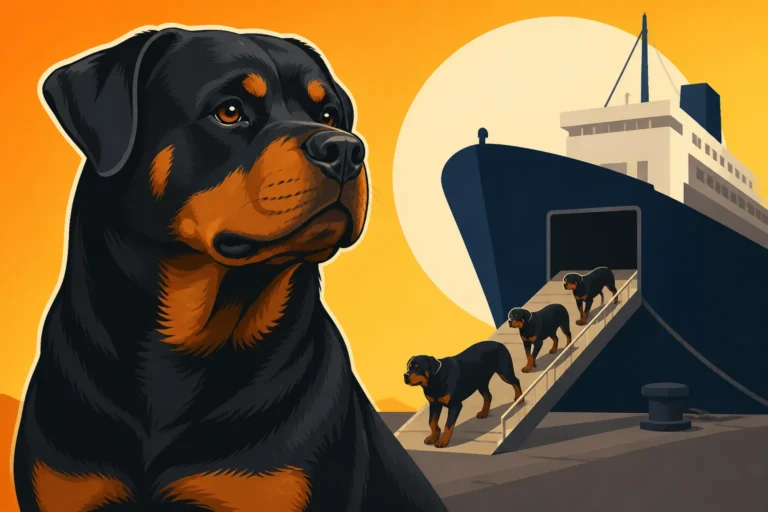
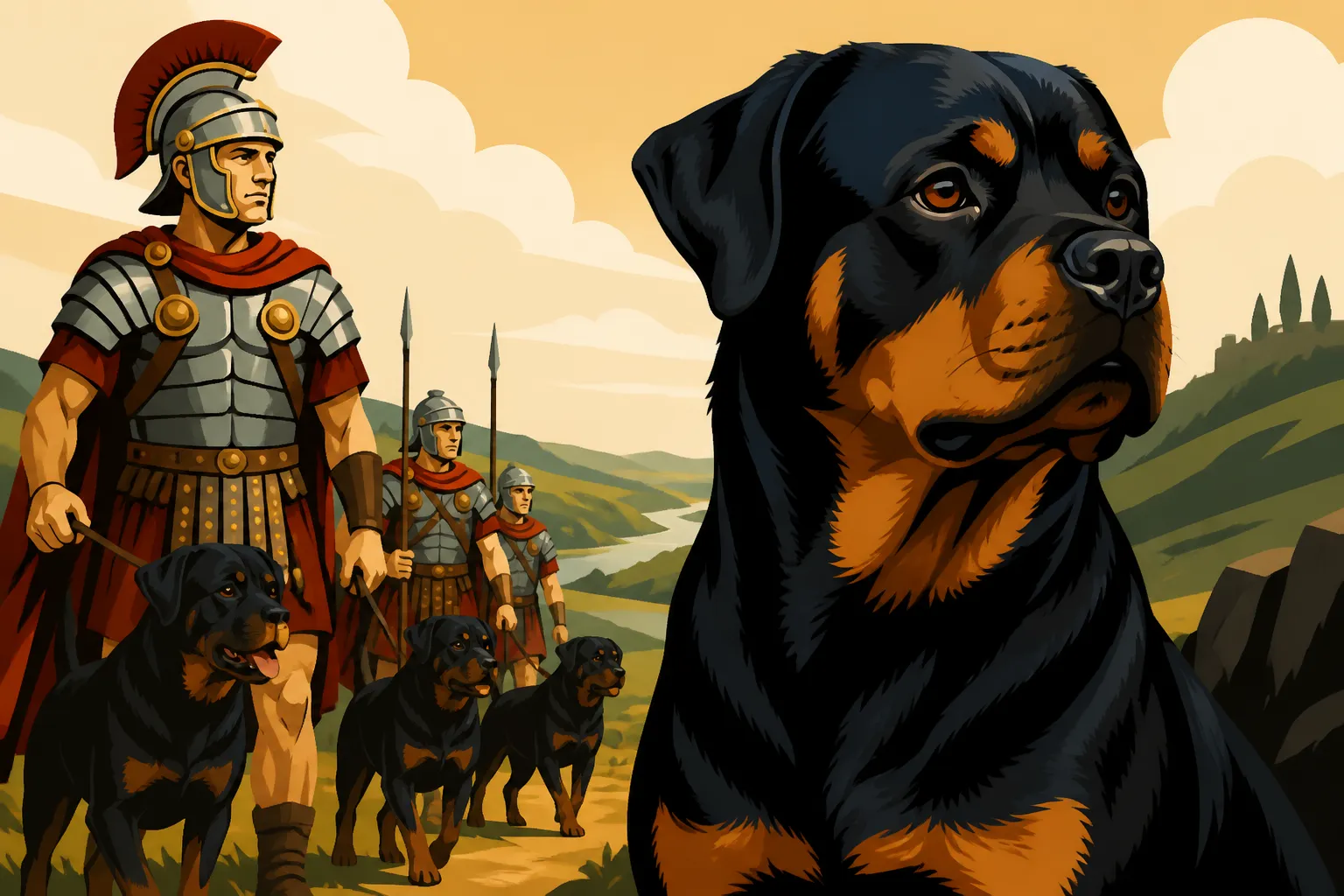
Imagine a Roman legion on the march, moving across vast distances to establish new outposts or expand the empire’s reach. They couldn’t simply forage for all their food; they needed a steady supply of meat. This meant bringing herds of cattle, often numbering in the hundreds, with them. Now, picture trying to move hundreds of cattle across difficult terrain, through forests, and over mountains without a way to control them. This is where the dogs came in. The Romans brought large, sturdy, mastiff-type dogs with them, specifically bred and trained for droving and guarding. These weren’t pampered pets; they were vital working animals, indispensable to the logistics of the Roman military machine.
These dogs were robust, with strong physiques and an innate protective instinct. They had to be capable of intimidating both predators and potential rustlers, and physically strong enough to manage stubborn cattle. Their job was to keep the herd together, move them efficiently, and protect them fiercely, often in challenging and unknown territories. It wasn't just about moving the herd; it was also about safeguarding the valuable food supply for the troops. You can almost visualize them, powerful and focused, keeping the flanks of the herd secure. To learn more about their ancient roles, you might be interested in How Roman Legions Used Their Drover Dogs.
The Alpine Crossings and Germanic Territory
The journey from the heart of the Roman Empire northward was no small feat. The Alps, a formidable natural barrier, had to be crossed. These were treacherous passes, often cold and difficult, making the task of moving livestock even more demanding. The Roman drover dogs, with their thick coats and robust constitutions, were perfectly suited for these harsh conditions. They were the silent, four-legged partners, navigating icy trails and steep inclines alongside their human handlers.
As the legions pushed deeper into what we now know as Germanic territory, they established temporary camps that eventually grew into more permanent settlements. These outposts needed constant supplies, and the cattle and their guardian dogs became a fixture of these burgeoning communities. Over time, these dogs didn't just stay with the military; they became integrated into the civilian populations that sprang up around the Roman garrisons. Their usefulness was undeniable, and their bloodlines began to establish themselves in these new lands, laying the groundwork for what would much later become a distinct regional type.
Establishing a Foothold: The Town of Rottweil's Roman Roots
While Roman influence spread far and wide, certain locations became particularly significant. For the ancestors of the Rottweiler, one specific place stood out: a Roman settlement that would eventually give the breed its enduring name.
The Roman Settlement of Arae Flaviae
Long before it was known as Rottweil, this area in what is now southern Germany was a significant Roman town called Arae Flaviae. This settlement was strategically important, sitting on a key crossroads and acting as an administrative and economic hub for the Roman presence in the region. Think of it as a busy crossroads, a place where people, goods, and, yes, livestock continually moved through. When the Romans established Arae Flaviae, they brought with them not only their architectural styles and governing structures but also their way of life, which, of course, included their working dogs.
These dogs weren't just passing through; they were an integral part of the daily life of the Roman colonists and soldiers stationed there. They guarded the properties, helped manage the local livestock, and became a familiar sight. This continuous presence meant that generations of these Roman drover dogs lived and worked in and around Arae Flaviae, creating a localized population whose traits were consistently reinforced by their environment and their duties. This long-term establishment in one area was crucial for the development of a distinct type of dog. It's fascinating how a place can shape a breed, isn't it? You can read more about this connection in Why the Town of Rottweil Carries That Name.
Integration with Local Canine Populations
It's important to remember that dog breeding as we understand it today, with pedigrees and strict standards, is a relatively modern concept. In ancient times, and even into the Middle Ages, the primary driver for dog pairings was utility. The Roman drover dogs, while formidable, would undoubtedly have encountered and interbred with the local canine populations of Germanic tribes. These indigenous dogs would have possessed their own adaptations to the local climate and working conditions.
However, because the Roman dogs were so effective at their specific tasks—herding and guarding large livestock—their desirable traits would have been consistently selected for, either intentionally or through natural processes. Dogs that excelled at these jobs would be kept and allowed to reproduce, passing on their genes. This wasn't about creating a "purebred" in the modern sense, but rather about maintaining a highly functional working type. Over centuries, this blend and selection process, heavily influenced by the robust Roman drover dogs, led to a localized canine population in the Rottweil area that was exceptionally good at cattle droving and protection.
The Legacy of the Metzgerhund: From Ancient Drover to Butcher's Dog
The history of these dogs didn't end with the Roman Empire. The foundations laid by the legions persisted, adapting and evolving with the changing times and local needs.
The Decline of Roman Influence and the Rise of Rottweil
As the Roman Empire eventually receded from these northern territories, leaving behind its infrastructure and cultural imprints, the settlement of Arae Flaviae didn't simply vanish. It continued to thrive, evolving into the medieval free imperial city of Rottweil. This city gained prominence as a bustling trade center, particularly renowned for its cattle markets. People would bring livestock from miles around to be bought and sold, creating a vibrant, often chaotic, hub of commerce.
And guess who was still there, performing essential duties? The descendants of those Roman drover dogs. They seamlessly transitioned from guarding Roman legions' cattle to serving the butchers and cattle dealers of Rottweil. Their deep-seated instincts for droving and protection proved invaluable in this new context. The continuity of the cattle trade in the region ensured that these dogs maintained their specialized skills and physical attributes, adapting their ancient roles to the evolving needs of the community.
The Specialization of the Rottweiler in the Middle Ages
It was during the Middle Ages that these dogs truly cemented their identity, earning the nickname "Rottweiler Metzgerhund," which translates to "Rottweil Butcher's Dog." Their duties were multifaceted. They would herd the cattle to market, ensuring they stayed together and didn't stray into fields or disrupt town life. Then, once the cattle were sold and the butchers had their earnings, these dogs had another, equally important, job: guarding the money. Imagine a butcher tying their money pouch around their dog's neck, knowing that no thief would dare approach a powerful, vigilant Rottweiler. This speaks volumes about the trust placed in these animals and their reputation for loyalty and protective instinct.
The Rottweiler became synonymous with reliability and strength. They were known for their calm demeanor when working but their readiness to defend their charge with fierce determination. This period really highlights the enduring legacy of the Roman drover dogs; their essential characteristics had been passed down, refined, and perfectly suited to the demands of a thriving medieval market town. If you’re interested in their primary role, you might find What a Metzgerhund Did in a Day's Work quite illuminating. For supplies that support a modern working dog, a store like Chewy offers robust leashes and training gear that would honor that legacy.
Recognizing the Ancient Roots in the Modern Rottweiler
It's truly remarkable how a breed's ancient history can still be seen and felt in its modern form. When you look at a Rottweiler today, you're not just seeing a beautiful dog; you're seeing a living testament to centuries of selective breeding, purpose, and loyalty.
Physical Traits Echoing Their Ancestry
Think about the physical characteristics of a modern Rottweiler. That sturdy, muscular build? That powerful head and jaw? These aren't accidental traits; they are direct echoes of their Roman drover ancestors. A dog tasked with moving and protecting large, often uncooperative, cattle needed to be physically imposing and resilient. They required immense strength to bump and turn stubborn animals, and a powerful bite was a deterrent against predators or aggressors. The Rottweiler’s inherent physical robustness, their deep chest, and well-muscled hindquarters all point back to a life of hard work and endurance.
Even the density of their coat, while not as long as some northern breeds, would have offered good protection against the elements during long days spent outdoors. Their broad skulls and strong necks allowed them to withstand the rigors of their work. These aren’t just pretty features; they are functional adaptations honed over generations. Understanding this helps us appreciate why they need proper nutrition and exercise today – foods available from stores like Chewy, formulated for large, active breeds, are a good way to support these powerful physiques. You can learn more about how their bodies grow in Rottweiler Growth Plates and Why They Close So Late.
Temperamental Echoes: Confidence and Loyalty
Beyond the physical, the modern Rottweiler's temperament also carries strong echoes of its ancient past. That self-assured, sometimes reserved or "aloof" demeanor, especially with strangers, isn't shyness; it's a deeply ingrained trait from dogs that had to be vigilant and discerning. A drover dog couldn't be overly friendly with every passerby; its primary focus was its charge. They needed to assess situations independently and act when necessary, without constant human direction. This is why a Rottweiler often takes a moment to "size up" a new person or situation before deciding how to react.
Their profound loyalty and protective instincts towards their family are also a direct inheritance. These dogs were bred to protect their "flock" – be it cattle or a butcher's earnings – and that instinct now extends to their human families. They form incredibly strong bonds and view their home as their territory to safeguard. This deep-seated protective nature, combined with their calm confidence, is what makes them such exceptional guardians and devoted companions. It's a testament to the fact that while times change, the core essence of a truly great working dog endures. Understanding their inherent guarding nature is key to responsible ownership, and you can delve deeper into this in Rottweiler Aloofness and Why It Reads as Cold.
Here's a quick look at how the ancestral roots shaped the modern Rottweiler:
| Trait Category | Roman Drover Dog Ancestors | Modern Rottweiler (Metzgerhund Descendant) |
|---|---|---|
| Primary Role | Herding/guarding livestock for legions | Herding/guarding livestock for butchers, guarding money |
| Physical Build | Sturdy, muscular, robust | Powerful, deep-chested, athletic |
| Temperament | Vigilant, discerning, protective | Self-assured, loyal, protective of family |
| Social Interaction | Reserved with strangers, focused on task | Aloof with strangers, forms strong family bonds |
| Key Instinct | Droving, guarding, territoriality | Guarding, territoriality, inherent desire to work |
| Evolution Path | Natural selection, utility-driven breeding | Formalized breeding for type and temperament |
It's clear that the path from ancient Roman drover to the Rottweiler we know and love today is a long and fascinating one, a journey shaped by necessity, loyalty, and an enduring working spirit. Owning a Rottweiler is truly like having a piece of living history by your side.
Disclaimer
This article is for general informational purposes only and does not constitute professional advice. Laws, prices and regulations vary by location and change over time. Consult a qualified professional for guidance on your specific situation.