Road Salt on a Rottweiler’s Feet in Winter
Oh, winter walks! There's nothing quite like that crisp, cold air and the joyous bounding of your Rottweiler through a fresh blanket of snow. But then reality sets in, doesn't it? That beautiful winter wonderland often comes with a hidden hazard right under your dog's paws: road salt. It's frustrating to know you're trying to give your big companion exercise and joy, only for them to start limping, licking, and showing signs of discomfort because of the very ground they walk on. This guide is here to walk you through exactly what road salt does to those tough, sensitive Rottweiler paws and, more importantly, how to protect them so you can both enjoy winter to the fullest, without the worry.
The Harsh Reality of Winter Walking for Your Rottweiler
When the snow flies and the ice grips, our communities understandably turn to road salt and ice melt to keep roads and sidewalks safe for us. It’s a necessary evil, but one that presents a real challenge for our dogs, especially a large, heavy-footed breed like the Rottweiler. We want to get them out for their essential walks, for both physical and mental well-being, but we're often unwittingly subjecting their paws to a harsh gauntlet of chemicals.
What Road Salt Actually Does to Paws
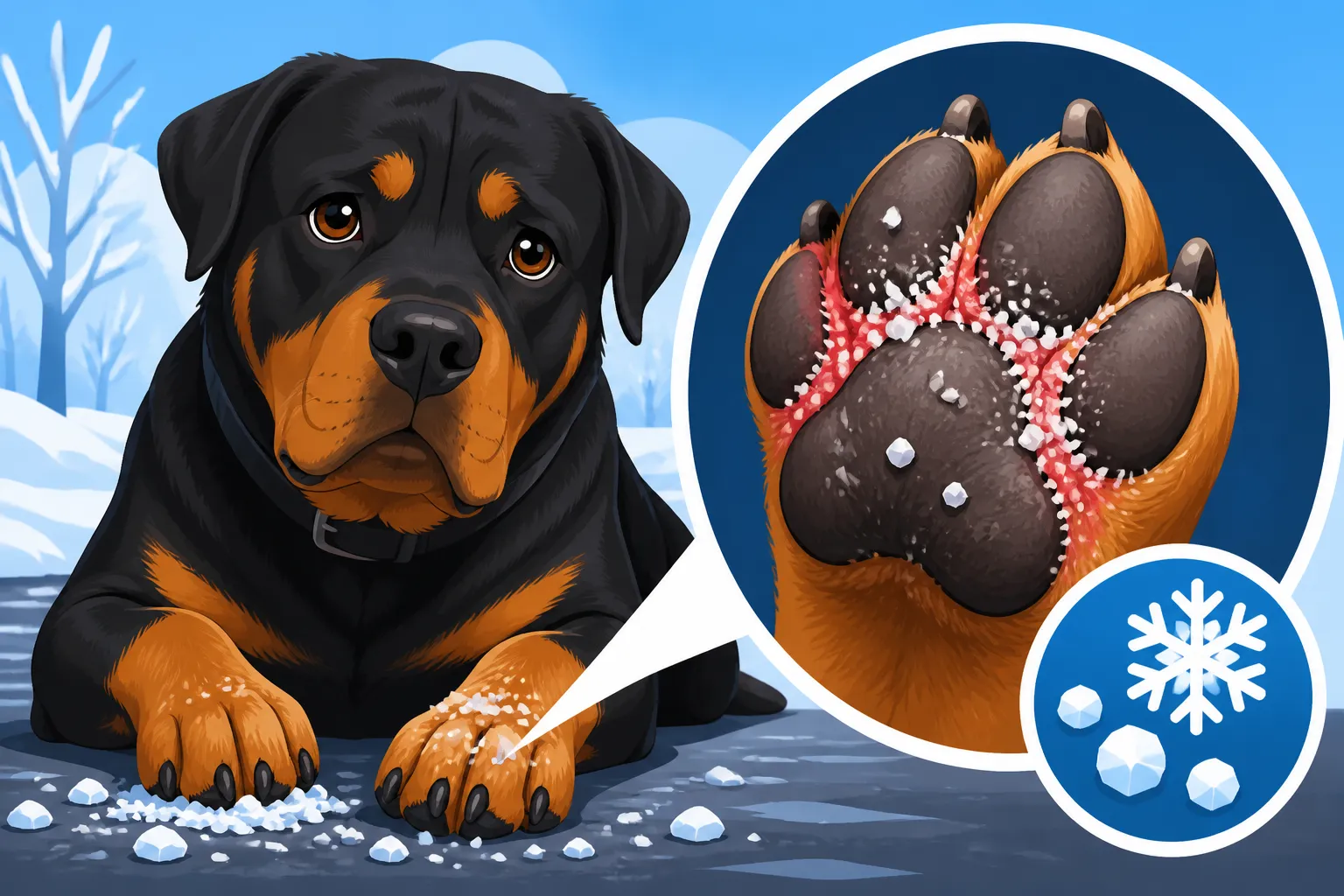
Imagine walking barefoot on a surface that simultaneously dries out your skin and stings it with a chemical burn – that’s pretty close to what road salt can feel like for your Rottweiler. The most common types of road salt, primarily sodium chloride, are hygroscopic, meaning they pull moisture out of anything they touch. For paw pads, which are naturally designed to be supple and resilient, this means severe dehydration. Over time, those pads can become dry, cracked, and brittle. This isn't just uncomfortable; it's painful, creating tiny fissures that can deepen into open sores.
Beyond the dehydrating effects, many commercial ice melts contain more aggressive chemicals like calcium chloride or magnesium chloride. These substances generate heat when they dissolve, which can cause actual chemical burns on the paw pads. The burning sensation is immediate and intense, prompting your Rottweiler to try and alleviate the discomfort. Their natural instinct is to lick their paws, and this is where the problem compounds. By licking, they're not just removing the salt; they're ingesting these chemicals, which can lead to digestive upset, vomiting, or diarrhea. It's a vicious cycle of discomfort and potential internal issues.
Beyond Salt: Other Winter Irritants
While road salt is often the primary culprit, it's not the only hazard lurking on winter walks. The cold itself can be an irritant. Extreme temperatures, especially when combined with moisture, can lead to frostbite on unprotected paw pads, though a Rottweiler's robust build usually offers some natural resilience. However, the skin between their toes is more vulnerable. Moreover, sharp ice fragments and chunks can act like tiny knives, slicing into paw pads, creating open wounds that are then ripe for infection. These small cuts also provide an easy entry point for the chemical irritants we just discussed, making the problem even worse.
And then there's the truly dangerous stuff, like antifreeze. Often leaking from cars in driveways or parking lots, antifreeze has a deceptively sweet taste that can attract dogs. It's highly toxic, even in small amounts, and ingesting it can lead to kidney failure and be fatal. While not directly a paw irritant, residual antifreeze can cling to paws and be ingested when your Rottweiler cleans themselves later. Being aware of these additional threats helps us maintain a comprehensive approach to winter paw safety. For more general advice on keeping your big buddy comfortable in cold weather, you might want to check out Rottweiler Winter Care and Cold Weather.
Recognizing the Signs of Road Salt Damage
Our Rottweilers are known for their stoic nature. They’re tough dogs, and sometimes, they might try to push through discomfort without making a big fuss. This means we, as their guardians, need to be extra vigilant in recognizing the subtle (and not-so-subtle) signs that their paws are suffering from winter hazards. Early detection can prevent minor irritation from escalating into a serious problem that requires extensive veterinary care.
Visible Clues on Paws and in Behavior
The first place to look, naturally, is at their paws themselves. After a walk, take a moment to gently lift and examine each paw. You might notice redness, particularly between the toes or on the pads themselves. The pads might feel unusually rough, dry, or even cracked, similar to extremely chapped lips. In more severe cases, you could see peeling skin, small blisters, or even bleeding from deep fissures. Sometimes, a white, gritty residue of salt is still visible, clinging to the fur or pads.
Beyond the physical examination, pay close attention to your Rottweiler’s behavior during and after walks. Are they limping slightly, perhaps favoring one paw? Do they lift a paw off the ground intermittently, as if testing the surface? Are they refusing to walk as far or as enthusiastically as usual? Once back inside, excessive licking, chewing, or biting at their paws is a huge red flag. This intense self-grooming is their way of trying to soothe the burning or itching sensation, and it often indicates significant discomfort. Remember, a Rottweiler's sheer size and muscle mass mean that even a slight limp can quickly strain other joints if left unaddressed. If you suspect any kind of paw issue, checking for more serious problems like Nail Bed Infections on a Rottweiler Paw might also be a good idea.
When to Seek Veterinary Help
While mild dryness and licking can often be managed at home with diligent care, there are definite signs that warrant an immediate call to your veterinarian. If you observe deep cracks that are bleeding or appear infected (look for pus, swelling, or a strong, foul odor), veterinary intervention is crucial. Persistent lameness, where your Rottweiler continuously holds up a paw or struggles to put weight on it for more than a day, also needs professional attention.
Furthermore, if your Rottweiler exhibits systemic symptoms after a winter walk, such as vomiting, diarrhea, lethargy, or a sudden loss of appetite, it’s imperative to get them to the vet right away. These signs could indicate that they’ve ingested a significant amount of toxic ice melt or antifreeze while licking their paws. Never delay in these situations, as quick action can be life-saving. Your vet can accurately diagnose the problem, rule out other potential issues like a foreign object lodged in the paw, and prescribe appropriate treatments, which might include medicated soaks, antibiotics, or pain relief. Knowing The Emergency Signs That Send a Rottweiler In is essential for any Rottweiler owner.
Practical Steps for Protecting Your Rottweiler's Paws
Now that we understand the dangers, let's talk about solutions! Protecting your Rottweiler's paws from road salt and other winter hazards doesn't have to be complicated. It's mostly about establishing a routine and using the right tools. With a little preparation and consistent care, you can significantly reduce the risk of discomfort and injury, allowing your big dog to enjoy their winter outings.
Pre-Walk Protection Strategies
Before you even step out the door, you can implement several preventative measures. The first is route planning. Whenever possible, try to choose walking paths that are less heavily treated with chemical deicers. This might mean sticking to residential streets where homeowners use pet-friendly options, or opting for trails and parks where natural snow and ice are the main concern, rather than chemical ones. Walking on grassy verges, if available and safe, can also offer a temporary reprieve from paved surfaces.
A fantastic pre-walk strategy is applying a protective paw balm or wax. Products like Musher's Secret, or various paw balms found readily on Amazon or Chewy, create a semi-permeable barrier on your Rottweiler's paw pads. This barrier helps to repel moisture and chemicals, reducing direct contact with salt and preventing dehydration. Apply it generously, making sure to work it into the pads and between the toes. This is often an easier first step for dogs who are resistant to wearing boots. Consistency is key here; make it a part of your routine before every winter walk. Thinking about protecting those tough pads reminds me of the importance of Rottweiler Paw Pad Care on Rough Ground even in other seasons.
Post-Walk Care and Cleaning Rituals
The moment you get back inside, the work isn’t over – in fact, it’s just beginning. The most crucial step is to immediately clean your Rottweiler’s paws. Have a dedicated towel and a shallow bowl of warm water right by the door. Gently dip each paw into the warm water to rinse off any salt, ice melt, or other debris. Use the towel to thoroughly wipe down each paw, paying special attention to the areas between the toes where chemicals and ice balls love to hide. This immediate cleaning prevents your Rottweiler from licking off and ingesting harmful substances.
After cleaning, it's vital to ensure their paws are completely dry. Moisture trapped between the pads can lead to skin irritation, fungal infections, or even exacerbate the drying effect of previous salt exposure. Use a soft, absorbent towel to dry each paw thoroughly. Once dry, take a moment to inspect their paws again. Look for any new cuts, abrasions, or signs of irritation you might have missed before. If the pads look particularly dry, a light application of a soothing, pet-safe paw moisturizer can help restore their natural suppleness. This kind of diligent daily hygiene is a cornerstone of good health, much like understanding Cleaning a Rottweiler's Ears Under the Flap to prevent issues there.
Addressing Existing Irritation and Soreness
Despite our best efforts, sometimes irritation or soreness can still occur. If you notice your Rottweiler's paws are red, tender, or mildly inflamed, start with gentle washing using lukewarm water. If there's visible residue or dirt, a mild, pet-safe soap (such as an oatmeal-based shampoo) can be used, but ensure you rinse extremely thoroughly to remove all soap residue. A shallow, warm water soak for a few minutes can also be incredibly soothing for aching pads.
For mild irritation, some natural remedies can offer relief. Pure aloe vera (ensure it's dog-safe and free of other additives) can be applied to soothe inflamed skin. Similarly, a dilute oatmeal bath, where your Rottweiler can stand in a shallow pool of colloidal oatmeal and water, can help calm itchy or irritated skin, much like how oatmeal is used to alleviate Rottweiler Skin Allergies and Summer Hot Spots. However, if irritation persists, worsens, or if you suspect an infection, it’s time to consult your veterinarian. They may recommend specific medicated ointments, paw wraps, or even oral medications like anti-inflammatories or antibiotics to get your Rottweiler back on their feet comfortably.
Choosing the Right Gear: Boots, Balms, and Beyond
Navigating the winter landscape with your Rottweiler means equipping yourself with the right tools. While personal preference and your dog's tolerance will play a big role, understanding the various options available is the first step to making informed choices for their paw health. It's not a one-size-fits-all situation, and what works for one Rottweiler might not work for another.
The Pros and Cons of Dog Boots for Rottweilers
Dog boots offer the most comprehensive protection against road salt, ice, sharp objects, and extreme cold. For a Rottweiler, with their substantial weight and powerful gait, well-fitting boots can be a game-changer. They provide an impermeable barrier, completely shielding the paw pads from direct contact with harsh chemicals and preventing ice balls from forming between the toes. This means no more licking off toxic residue and significantly reduced risk of cuts or chemical burns. Brands like Muttluks or Ruffwear, available widely on Chewy and Amazon, offer durable options designed for larger breeds.
However, boots aren't without their challenges. Finding the right size for a large Rottweiler's robust paws is crucial; ill-fitting boots can cause rubbing, chafing, or restrict natural movement. It's essential to measure your dog's paws carefully and consult sizing charts. Many dogs, especially those new to boots, will initially object, doing the "high-stepping dance" or trying to shake them off. Introducing boots gradually indoors, with positive reinforcement and short wear times, is key to success. Start with a few minutes, reward heavily, and slowly increase the duration. Some Rottweilers, despite their thick paw pads, simply can't tolerate boots, and that's okay too. The trick is patience and persistence. Even something as routine as Rottweiler Nails Too Thick for Ordinary Clippers can be a challenge; imagine trying to get boots on!
Paw Balms and Waxes: A Barrier Solution
For dogs who simply won't wear boots, or for those days when the conditions aren't quite severe enough for full foot protection, paw balms and waxes are an excellent alternative. These products work by creating a protective layer over the paw pads. This layer, typically made from natural ingredients like beeswax, shea butter, or coconut oil, acts as a barrier against salt, ice melt, and moisture, similar to how a good moisturizer protects your own skin.
The benefits are clear: balms are generally easy to apply, less intrusive than boots, and many formulations also offer moisturizing properties to help prevent or heal dryness and cracking. You can find a wide range of highly-rated balms specifically for dogs on Amazon and Chewy. The limitation, however, is that they need to be reapplied regularly, especially on longer walks or in very wet conditions, as they can wear off. They also don't offer the same level of physical protection against sharp ice or deeply embedded debris that boots do. Nonetheless, they are a vital part of a comprehensive paw care routine, particularly for the areas between the toes where balms can be easily worked in.
Other Winter Care Essentials
Beyond boots and balms, a few other essentials can make a big difference in your Rottweiler's winter paw health. If you manage your own walkways or driveway, consider switching to a pet-safe ice melt. These products are formulated with ingredients that are less irritating to paws and safer if ingested. While they might be a bit more expensive, the peace of mind is often worth it.
Make it a habit to keep a basket of old towels right by the door. This ensures that a paw-cleaning station is always ready the moment you and your Rottweiler step inside. Another often overlooked tip is to keep the hair between your Rottweiler's paw pads trimmed short. Long hair in this area can collect ice balls, road salt, and dirt, which can then melt and cause irritation, or become painful when packed with ice. Using blunt-nosed scissors or a small clipper can safely keep this area tidy, linking back to general grooming practices like those for Rottweiler Grooming and Deshedding Tools. Finally, on days with extremely harsh conditions – think sub-zero temperatures, heavy salting, or freezing rain – sometimes the best course of action is to shorten walks, opt for indoor playtime, or even just a quick supervised potty break. There's no shame in prioritizing your Rottweiler's comfort and safety over a long outing when conditions are truly miserable. Being mindful of Rottweiler Cold Tolerance in Winter will help you make the best call.
Disclaimer
This article is for general informational purposes only and does not constitute professional advice. Laws, prices and regulations vary by location and change over time. Consult a qualified professional for guidance on your specific situation.