Rottweiler Nails Too Thick for Ordinary Clippers
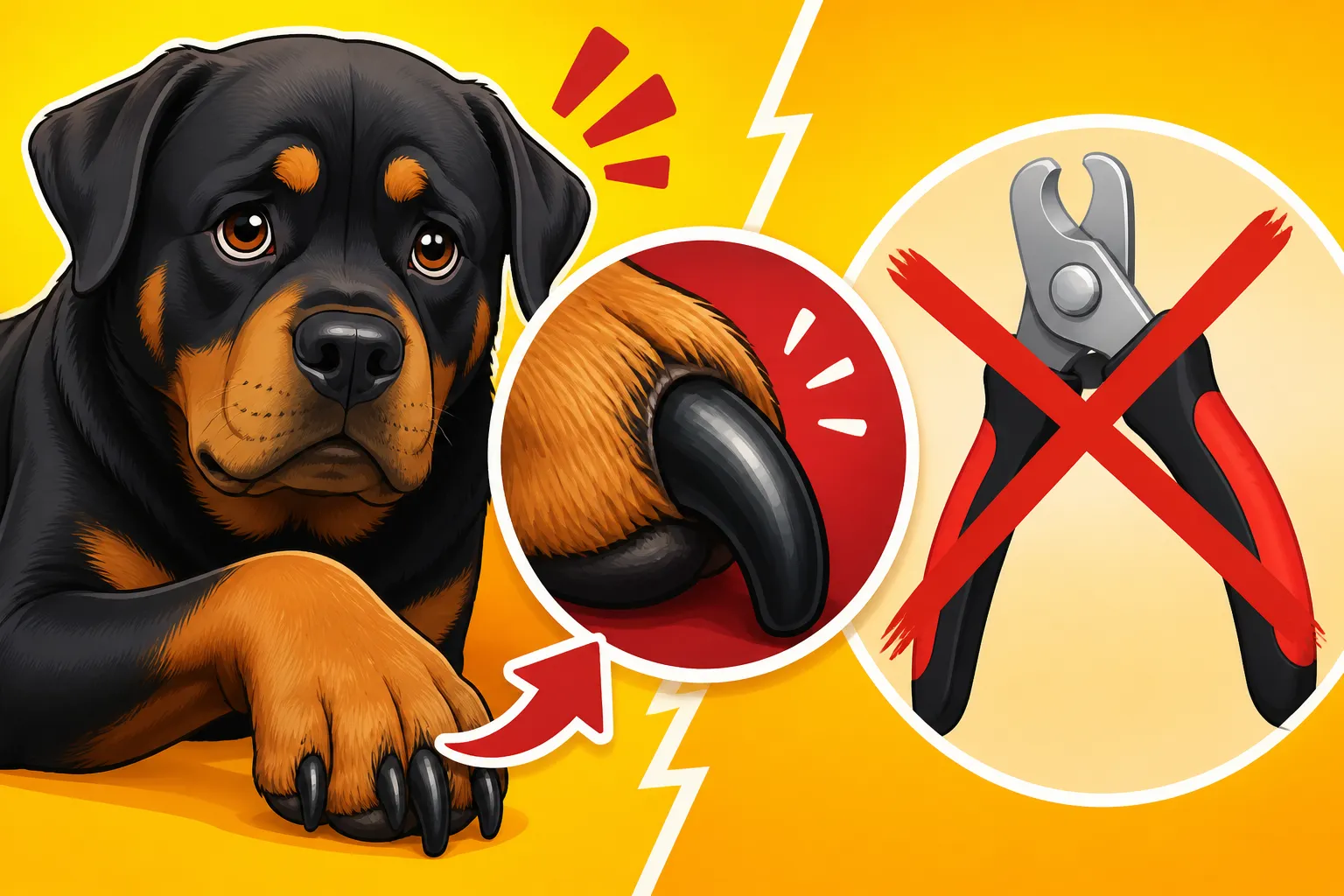
Anyone who has tried to trim a Rottweiler's nails with standard clippers knows the sheer frustration: those thick, hard nails often laugh in the face of flimsy tools. It’s not just about finding the right technique; it's about having the right equipment to safely and effectively manage those formidable claws. This guide is here to walk you through why Rottweiler nails are so challenging and, more importantly, how to conquer them without stress or injury.
The Unique Challenge of Rottweiler Nails
It's easy to feel like you're doing something wrong when your Rottweiler's nails seem impervious to even the sharpest clippers. But rest assured, it's not you; it's often the nature of the breed's impressive structure. Their nails are built for power and support, which translates to a tougher challenge for routine care.
Why Rottweiler Nails Are So Robust
Rottweilers are magnificent, powerful dogs, and every part of their anatomy is designed to support their substantial weight and active lifestyle. Their nails are no exception. Unlike smaller breeds with delicate paws, a Rottweiler's nails are typically thick, dense, and incredibly strong. This robustness is a direct reflection of their heritage as working dogs, bred for herding cattle and pulling carts. Imagine the wear and tear on a dog's paws walking for miles over varied terrain – their nails needed to be tough.
This inherent density means they often don't wear down as easily as you might expect, especially if your Rottweiler spends more time on soft surfaces like grass or carpet than on concrete or asphalt. Their substantial bone structure and late closing growth plates, as discussed in articles like Rottweiler Growth Plates and Why They Close So Late, contribute to a robust overall build, including their formidable nails. A dense nail bed is part of their natural composition, making them much harder to cut through than a typical dog nail.
The Frustration with Standard Nail Clippers
You've probably experienced it: you grab a pair of clippers meant for "large dogs," position it perfectly, squeeze with all your might, and… nothing. Or worse, the clipper struggles, pinches, or only manages to chip a tiny fragment off, leaving a jagged edge. This isn't a fault in your strength or technique; many standard clippers simply aren't designed to handle the sheer thickness and hardness of a Rottweiler's nails. The blades might dull quickly, or the mechanism might bend under the strain, making the task not only ineffective but potentially dangerous.
When clippers aren't up to the job, it can lead to frustration for both you and your dog. A bad experience with inadequate tools can quickly turn nail trims into a dreaded battle, causing your Rottweiler to become resistant or fearful. This makes the next trim even harder. Overgrown nails aren't just an aesthetic issue; they can impact your dog's gait, cause pain, and even lead to long-term joint problems. Just as proper Rottweiler Paw Pad Care on Rough Ground is vital, so is ensuring their nails don't become an impediment to comfortable movement.
Understanding the Quick and the Nail Structure
Every dog's nail contains a blood vessel and nerve called the "quick." In clear or light-colored nails, the quick is easy to spot as a pinkish area. With a Rottweiler's typically dark, black nails, however, the quick is practically invisible, hiding within the thick keratin. This makes trimming particularly nerve-wracking because cutting into the quick is painful for your dog and causes bleeding. The fear of "quicking" your dog often leads owners to trim too little, or to avoid trimming altogether, exacerbating the problem of overgrown nails.
A Rottweiler's nail curves, and as it grows longer, the quick grows with it. This means if nails are left untrimmed for extended periods, the quick becomes longer, making it even harder to trim the nails short enough without hitting it. Regular, small trims are key to encouraging the quick to recede, allowing the nail to be gradually shortened over time. Understanding this anatomy is crucial to successful, stress-free nail maintenance.
Tools That Can Tackle Thick Rottweiler Nails
When standard clippers fail, it's time to upgrade your arsenal. The right tools make all the difference, transforming a wrestling match into a manageable grooming session. You'll find a wide selection of suitable options on major online retailers like Chewy and Amazon.
Heavy-Duty Scissor-Style Clippers
For those who prefer the speed and decisive cut of traditional clippers, a heavy-duty, scissor-style model is essential. These clippers are built with stronger, sharper blades and more robust handles, designed to withstand the pressure required for thick nails. Look for brands specifically advertising "large breed" or "heavy-duty" capabilities. The scissor action provides a clean cut, reducing the risk of crushing the nail, which can happen with dull or weak clippers.
When choosing, examine the blades – they should be made of high-quality stainless steel and stay sharp. Ergonomic handles are also a plus, giving you a firm grip and better leverage, especially when dealing with a powerful dog. Even with heavy-duty clippers, it's important to keep them clean and sharp; dull blades are not only less effective but can also cause discomfort by tearing rather than cutting the nail. Always have styptic powder or a similar clotting agent on hand, just in case you accidentally cut too close to the quick.
Electric Nail Grinders and Dremels
For many Rottweiler owners, an electric nail grinder or Dremel-style tool becomes an absolute game-changer. These devices use a rotating abrasive stone or band to grind down the nail gradually. This method offers a higher degree of control, allowing you to remove tiny amounts of nail at a time, significantly reducing the risk of hitting the quick. Grinders are particularly excellent for dark nails where the quick is hidden, as you can see a small dark dot appear in the center of the nail as you get close to the quick, giving you a clear signal to stop.
The buzzing sound and vibration can be intimidating for some dogs initially, so proper desensitization is key. Introduce the grinder slowly, letting your Rottweiler sniff it, turning it on briefly without touching their paw, and rewarding them with treats. Gradually, touch the vibrating tool to their nail for a second, then remove and reward. Patience and positive reinforcement will help your dog associate the grinder with a pleasant experience. You can find many popular and reliable pet-specific grinders on Amazon or Chewy, often bundled with different grit sizes.
Choosing the Right Grit and Speed
When opting for a grinder, the type of abrasive band or stone and the speed settings are important considerations. Most pet grinders come with various attachments. For thick Rottweiler nails, a medium to coarse grit is usually most effective to remove material efficiently. However, you might want a finer grit for smoothing the edges afterwards.
Many grinders offer multiple speed settings. Starting on a lower speed is generally recommended, especially when your dog is getting used to the tool, as it produces less heat and vibration. As your dog becomes comfortable, you might increase the speed to more effectively grind through the thick nail. However, be mindful of heat buildup. Grinding too long in one spot can generate heat that's uncomfortable or even painful for your dog. Take frequent breaks and move between nails to prevent this. A table outlining the pros and cons of different tools can be quite helpful here:
| Feature | Heavy-Duty Scissor Clippers | Electric Nail Grinder (Dremel) |
|---|---|---|
| Primary Action | Snips a section of the nail | Grinds down the nail surface |
| Ease of Use | Quick for experienced users; requires precision for dark nails | More control for beginners; requires desensitization for sound/vibration |
| Risk of Quicking | Higher, especially with dark nails; quick can be hard to judge | Lower, as material is removed gradually; quick's approach is visible as a dot |
| Finish | Can leave sharp edges | Smooth, rounded edges |
| Noise Level | Minimal (snip sound) | Buzzing/vibrating sound (can be unsettling for some dogs) |
| Maintenance | Keep blades sharp and clean | Clean abrasive bands/stones; replace as they wear down |
| Ideal For | Owners confident with dark nails or those needing quick trims | Anxious dogs, dark-nailed dogs, smoothing rough edges, quick recession |
Techniques for Trimming Tough Rottweiler Nails
Having the right tools is only half the battle; knowing how to use them effectively and, more importantly, how to make the experience positive for your Rottweiler is crucial. Patience and positive reinforcement are your best friends here.
Preparing Your Rottweiler for Nail Care
A Rottweiler is a powerful dog, and trying to force a nail trim can quickly become dangerous for both of you. Preparation starts long before you pick up the clippers or grinder. Start with desensitization from puppyhood, touching and handling your dog's paws frequently. Make it a positive experience with praise and treats. Even an adult Rottweiler can be taught to tolerate, and even enjoy, nail trims. Just as important as training for good behavior, as detailed in Why Rottweiler Training Cannot Wait Until Six Months, is training for calm handling during grooming.
Choose a quiet time when your Rottweiler is relaxed, perhaps after a long walk or a play session. Have high-value treats ready – small, irresistible bits of cheese or cooked chicken work wonders. A helper can be invaluable, offering treats and gentle reassurance while you focus on the nails. Make sure you are in a comfortable position, ideally with your dog lying down or standing steadily, allowing you clear access to their paws. Some owners find a grooming table helpful, but for a large Rottweiler, a sturdy floor or even a low, stable surface can work. Consider Muzzle Training a Rottweiler Before You Need It if your dog is prone to snapping or highly anxious during handling; a muzzle can ensure safety for everyone involved.
Step-by-Step Guide for Clipping
If you're using heavy-duty clippers, technique is paramount, particularly with dark nails.
- Positioning: Gently hold your Rottweiler's paw, extending a single toe. Keep your fingers behind the paw pad to prevent them from getting in the way.
- Identify the Quick's Line: Even with dark nails, you can often visualize the general direction of the quick. Look at the underside of the nail; you might see a slight indentation or a difference in texture where the quick ends. The goal is to trim only the hook or tip of the nail.
- Small Cuts: Make very small, precise cuts. Take off just the tiny tip of the nail, almost "shaving" it, rather than trying to take off a large chunk. After each small cut, look at the exposed end of the nail. If it's still white or grayish, you're safe. As you get closer to the quick, you'll see a small dark, shiny dot appear in the center – that's your cue to stop.
- Reward: After each nail (or even a few nails), praise your dog and give a treat. Keep the atmosphere light and positive.
- Stop if Stressed: If your dog becomes overly stressed or fearful, stop. It's better to do a few nails at a time over several sessions than to traumatize your dog and make future trims impossible.
Remember, consistency is key for Rottweiler Nail Trimming at Size. Regular trims prevent the quick from growing out and make each session easier.
Mastering the Grinder for Smooth Results
Grinders offer a different approach that many find less stressful once their dog is accustomed to the noise and vibration.
- Preparation: As with clippers, ensure your dog is relaxed. Have treats ready.
- Introduce the Sound: Before even touching a nail, turn the grinder on nearby, offering treats. Let your dog get used to the sound.
- Hold the Paw: Gently hold your Rottweiler's paw and extend one toe. Be sure to hold any fur away from the grinding head, as it can easily get caught.
- Grind in Short Bursts: Touch the rotating head to the tip of the nail for just a second or two, then lift it away. This prevents heat buildup and allows you to check your progress. Grind around the tip of the nail, aiming to keep it rounded.
- Watch for the Quick: As you grind, you'll see the white outer layer of the nail. With dark nails, you'll eventually see a small, dark, shiny dot emerge in the center of the cut surface. This signals you are very close to the quick. Stop grinding on that nail when you see it.
- Smooth Edges: Once the nail is shortened, you can use the grinder to gently smooth any rough edges, which helps prevent snagging.
- Reward Consistently: Praise and treat your dog throughout the process. Make it a fun game with rewards.
- Patience: If your Rottweiler is new to grinding, it might take several short sessions over days or weeks to get all nails trimmed. That's perfectly fine. Focus on making it a positive experience.
Dealing with Dark Nails and the Quick
The biggest challenge with Rottweiler nails is their dark color, which conceals the quick. This is where patience and a keen eye come into play. When clipping, always aim for tiny slivers. As you take off small bits, observe the cross-section of the nail. You'll usually see a dry, chalky-white or gray center. As you get closer to the quick, this center will become darker, appearing as a small black or grayish dot. This is your stop sign. Any further, and you'll hit the quick.
With grinding, the process is similar but often less abrupt. You'll grind away the outer layers, and as you approach the quick, the dark center will become visible. The grinder's ability to remove material incrementally gives you more time to react. If you do accidentally nick the quick, don't panic. Apply styptic powder or cornstarch with pressure to stop the bleeding. Offer your dog comfort and a high-value treat, then calmly finish the remaining nails if your dog allows. It happens to the best of us, and while unpleasant, it's not the end of the world. Just like learning to clean their ears, as in Rottweiler Ear Care Under a Drop Ear, consistent practice builds confidence.
When Professional Help is Your Best Bet
Sometimes, despite your best efforts and the right tools, tackling your Rottweiler's thick nails feels overwhelming or is met with extreme resistance. There's absolutely no shame in seeking professional help. In fact, it's often the safest and least stressful option for everyone involved.
Recognizing When You Need a Groomer or Vet
There are several clear signs that professional assistance might be necessary. If your Rottweiler becomes overly aggressive, panics, or tries to bite during nail trims, it's a strong indicator that you need expert intervention. Similarly, if you find yourself constantly hitting the quick, or if the nails are severely overgrown to the point where they are curling under or affecting your dog's gait, a professional can address the issue safely. Long nails can cause serious orthopedic problems over time, contributing to issues like Senior Rottweiler Mobility Decline or exacerbating conditions that might later require Physical Therapy After Rottweiler Joint Surgery.
Groomers and veterinarians have specialized equipment, training, and experience in handling dogs of all temperaments and sizes. They can assess the nail condition, safely trim or grind them, and often teach you techniques to make future at-home sessions easier. Don't let pride get in the way of your Rottweiler's comfort and health. It's a sign of a responsible owner to know your limits and seek help when needed.
The Benefits of Regular Professional Trims
Even if you handle most of your Rottweiler's grooming at home, regular visits to a professional groomer or veterinary technician for nail trims can be incredibly beneficial. Professionals can maintain nails at an ideal length, helping to encourage the quick to recede over time. They also have a fresh, objective perspective and can spot potential paw issues that you might miss, such as infections, foreign objects embedded in paw pads, or early signs of joint discomfort. These consistent, correct trims prevent future problems.
Many groomers offer walk-in nail trim services, which can be more affordable and less time-consuming than a full grooming appointment. This regular exposure to professional handling can also help your Rottweiler become more accustomed to being touched and managed, which is invaluable for vet visits and other necessary procedures. Think of it as specialized maintenance for one of the most hardworking parts of their body, just as you'd ensure proper Rottweiler Dental Disease and Cracked Teeth prevention.
Sedation for Extremely Anxious Rottweilers
In some severe cases, where a Rottweiler is extremely fearful or aggressive about nail trims, and all other desensitization efforts have failed, your veterinarian might recommend sedation. This is typically a last resort, but it's a humane option that ensures your dog's safety and comfort, as well as yours. Under light sedation, the vet can quickly and safely trim all nails without causing trauma or distress.
Sedation is not a permanent solution, but it can be a vital step to get severely overgrown nails back to a manageable length and break the cycle of negative associations. After a sedated trim, you can restart desensitization efforts from a better baseline, working with shorter nails and a less painful quick. Discuss this option thoroughly with your veterinarian, exploring the risks and benefits to determine if it's the right choice for your particular Rottweiler. They can also advise on any underlying health issues, such as Rottweiler Obesity and the Load It Adds, which might make sedation or even just the physical handling more challenging.
Taking on the challenge of thick Rottweiler nails might seem daunting at first, but with the right tools, techniques, and a healthy dose of patience and positive reinforcement, it’s a perfectly manageable part of responsible ownership. Whether you become a master at clipping, a wizard with the grinder, or rely on the steady hands of a professional, ensuring your Rottweiler’s nails are kept at a healthy length is crucial for their comfort, mobility, and overall well-being.
Disclaimer
This article is for general informational purposes only and does not constitute professional advice. Laws, prices and regulations vary by location and change over time. Consult a qualified professional for guidance on your specific situation.