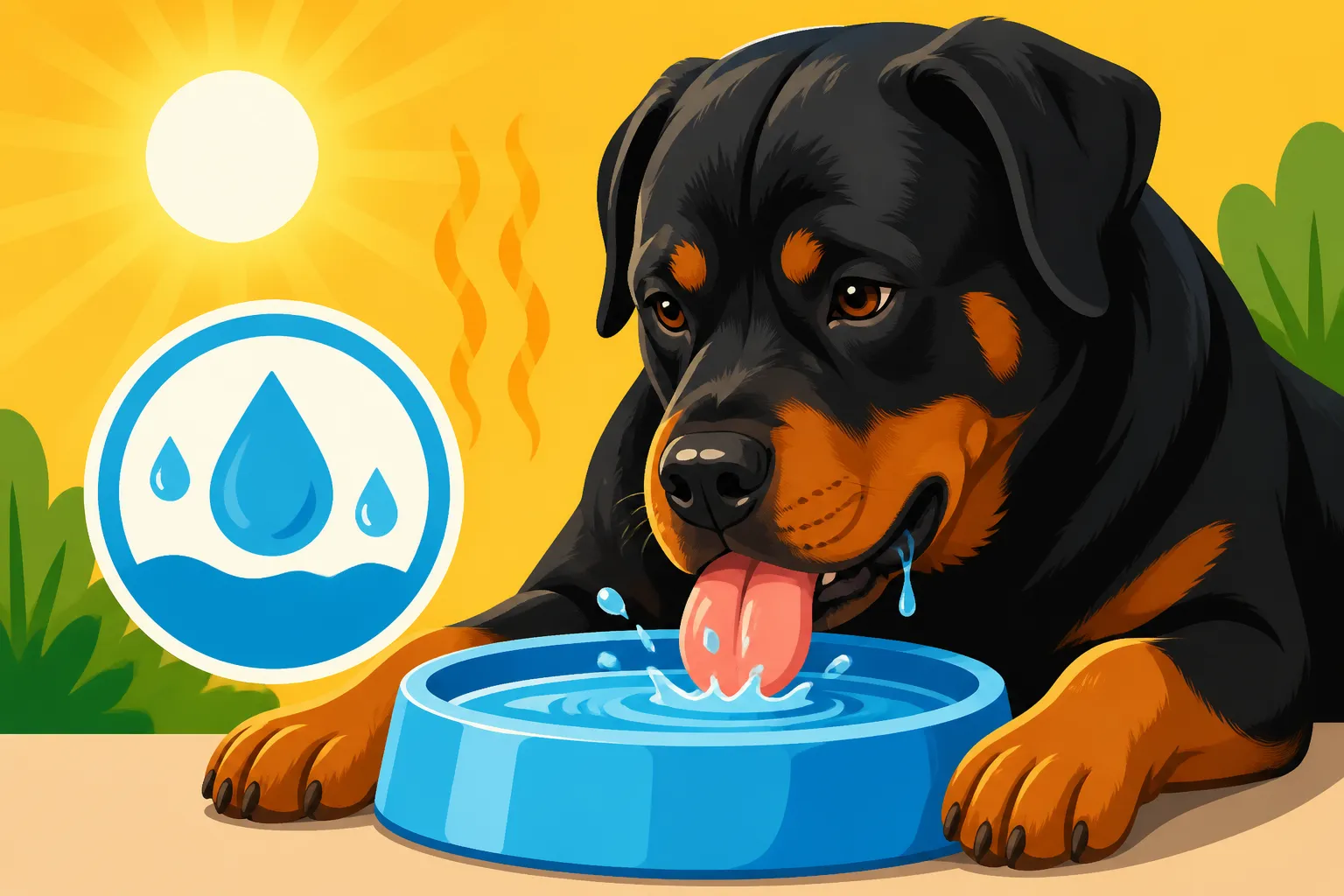
Water Intake for a Rottweiler on a Hot Day
One of the biggest worries we face as Rottweiler guardians, especially when the mercury starts to climb, is making sure our big, black-coated friends stay cool and hydrated. It's not just about comfort; it's a matter of life and death when temperatures soar. This guide is here to walk you through exactly why proper water intake is so crucial for your Rottweiler on a hot day, how to recognize the signs of dehydration, and practical, empathetic ways to ensure they drink enough to stay safe.
Why Water Intake is Critically Important for Rottweilers on Hot Days
Rottweilers are magnificent dogs, but their very physiology puts them at a higher risk for overheating and dehydration compared to many other breeds. Understanding these underlying factors is the first step in keeping them safe and happy when the sun beats down. It’s not just a little discomfort for them; it’s a serious health concern that can escalate rapidly.
The Dangers of Dehydration and Overheating in Large, Dark-Coated Breeds
Imagine walking around in a fur coat on a hot summer day. That's essentially what our Rottweilers are doing, even on days that feel merely warm to us. Their dense, dark coats, while beautiful, absorb and retain heat much more efficiently than lighter-colored or thinner coats. This means they heat up faster and struggle to dissipate that heat, making them incredibly vulnerable to overheating. When a dog overheats, its body starts to shut down. Dehydration is both a symptom and a cause of this cycle. If they don't have enough fluid in their system, their blood thickens, making it harder for their heart to pump it around and cool their core.
Beyond the coat, Rottweilers are a brachycephalic-adjacent breed, meaning their muzzles aren't as long as some others, which can impact their ability to efficiently pant and cool themselves. Panting is a dog's primary way of regulating body temperature, as they don't sweat like humans do across their skin. If they can't pant effectively, or if they're dehydrated, they can't cool down. This is why Keeping a Black-Coated Rottweiler Cool is such a vital topic for all owners. The sheer size and muscle mass of a Rottweiler also contribute to their heat production during activity, meaning they generate more internal heat to begin with. This combination of factors — dark coat, large body mass, and relatively less efficient panting compared to some breeds — makes vigilant hydration an absolute necessity.
How a Rottweiler's Metabolism and Activity Level Affect Hydration Needs
Even a relaxed Rottweiler lying in the shade on a hot day has higher hydration needs than a smaller, less muscular dog. Their larger body mass means more cells are performing metabolic functions, which in turn generates heat and requires water for optimal function. Think of it like a big engine running – it needs more coolant. When you add activity into the mix, their water requirements skyrocket. A brisk walk that might barely make a smaller dog pant can turn into a serious workout for a Rottweiler, pushing their core temperature up quickly.
If your Rottweiler is active, even for short bursts, their need for water becomes even more pronounced. A game of fetch, a training session, or even just enthusiastic sniffing around the yard can quickly deplete their fluid reserves. It's not just about replacing lost water; it's about providing enough to keep their internal cooling systems running efficiently. Without adequate water, their blood volume drops, their kidneys struggle, and their overall organ function is compromised. This is also why we need to be mindful of Exercising a Rottweiler in Summer Heat. Remember, a tired Rottweiler is one thing, but a dehydrated, overheated one is facing a medical emergency.
How Much Water Your Rottweiler Needs When Temperatures Soar
It’s easy to assume our dogs will just drink when they’re thirsty, but sometimes, especially when they're distracted or feeling the heat's lethargy, they might not. Knowing how much water your Rottweiler should be drinking and recognizing when they're falling short is key to preventing serious health issues.
Calculating Baseline Needs and Adjusting for Heat and Exercise
A general rule of thumb for dogs is they need about one ounce of water per pound of body weight per day. So, for a 100-pound Rottweiler, that's roughly 100 ounces, or about 12.5 cups, on a normal day. Now, when temperatures are high, or if your Rottweiler is active, that amount needs to increase significantly – sometimes by 50% or even double. If it's 90 degrees outside and your Rottweiler has been out for even a short walk, their needs can easily jump to 150-200 ounces. That's a lot of water!
It’s not an exact science you can measure precisely every day, but it gives you a benchmark. Pay attention to their Rottweiler Water Intake at Size and how it changes with conditions. A good indicator is their urine. If it's dark yellow and concentrated, they're likely not getting enough water. Clear to pale yellow urine indicates good hydration. Another factor is their diet; dogs on a dry kibble diet will naturally need more water than those on a moisture-rich diet like fresh food from services like Ollie, which can contribute significantly to their daily fluid intake through the food itself.
Signs Your Rottweiler Isn't Drinking Enough Water
Recognizing the subtle signs of dehydration can save your Rottweiler from a dangerous situation. It's not always obvious until it's critical. One of the simplest tests is the skin turgor test: gently pull up the skin on your Rottweiler's back or shoulder. If it snaps back quickly, they're likely well-hydrated. If it's slow to return or stays tented, they're dehydrated.
Another tell-tale sign is their gums. Healthy gums are pink and moist. If they're tacky, dry, or pale, it's a red flag. Capillary refill time is also useful: press your finger firmly on their gum until the spot turns white, then release. The color should return within 1-2 seconds. Longer than that indicates dehydration. Other signs include lethargy, sunken eyes, loss of appetite, and reduced elasticity in their skin. If you notice any of these, especially on a hot day, it's time to take immediate action. Pay close attention to Rottweiler Heat Exhaustion Warning Signs as they often go hand-in-hand with dehydration.
Here's a quick reference table for estimating water needs:
| Rottweiler Weight | Normal Day (approx.) | Hot Day / Active Day (approx.) | Equivalents (Cups) |
|---|---|---|---|
| 80 lbs | 80 oz | 120-160 oz | 10 to 20 cups |
| 100 lbs | 100 oz | 150-200 oz | 12.5 to 25 cups |
| 120 lbs | 120 oz | 180-240 oz | 15 to 30 cups |
Note: These are estimates. Individual needs vary based on age, health, activity, and exact temperature/humidity.
Practical Strategies to Encourage Your Rottweiler to Drink More
It’s one thing to know they should drink more, and another to actually get them to do it. Our Rottweilers can be stubborn, or simply not realize how much they need. We need to be proactive and make hydration easy, accessible, and even fun for them.
Making Water Readily Available and Appealing
The most basic step is ensuring fresh, clean water is always available in multiple locations, both inside and outside the house. Don't rely on just one bowl. Have a bowl in the kitchen, another in the living room, and at least one outside in the shade. For outdoor bowls, consider heavy, ceramic crocks or stainless steel bowls that won't tip over easily and can hold a substantial amount. Plastic bowls can harbor bacteria and might give the water a taste some dogs dislike. Using a large, durable water bowl from a pet supply store like Chewy ensures it won't be easily knocked over by a large, enthusiastic Rottweiler.
Another great trick is adding ice cubes to their water. Many Rottweilers find cold water more appealing, and the ice cubes can also be a fun, cooling treat. You can even make large ice blocks by freezing water in a Bundt pan or a large container, then placing them in their outdoor water bowl to keep it cool for longer. Changing the water frequently, at least twice a day, is also crucial. Stagnant, warm water isn't enticing to anyone, especially a dog trying to cool down. Consider an automatic waterer or a pet fountain; the circulating, filtered water can be more enticing and stays fresher.
Creative Ways to Increase Fluid Intake Beyond the Bowl
Sometimes, even with fresh water, our Rottweilers need a little extra nudge. This is where getting creative comes in. Adding a splash of low-sodium chicken or beef broth (make sure it's onion and garlic-free!) to their water can instantly make it more appealing. You can also freeze this diluted broth into ice cubes for a hydrating treat. Another option is to offer fruit and vegetable slices high in water content, like watermelon (seedless, please!), cucumber, or apple slices (no core or seeds). These can be a tasty and hydrating snack.
Integrating moisture-rich foods into their diet is another excellent strategy. If your Rottweiler eats kibble, you can try soaking it with water or broth before serving. This adds significant moisture to their meal. Some pet food brands, like Ollie, offer fresh food options that naturally have a much higher moisture content than dry kibble, which contributes directly to their daily hydration. You can find specialized feeding accessories or even collapsible travel bowls on Amazon that make it easier to offer water on the go, ensuring they get fluid even when away from home. Remember, Splitting a Rottweiler's Ration Across the Day can also help manage digestion, and if those meals are moistened, it helps with hydration too.
When to Worry: Recognizing and Responding to Heatstroke
No matter how vigilant we are, sometimes the heat can get the better of our Rottweilers. Knowing the signs of heatstroke and how to react quickly can be the difference between a close call and a devastating loss. This isn't just about making them drink; it's about being ready for an emergency.
Early Warning Signs of Heat Exhaustion and Heatstroke
It's crucial to understand that heatstroke is a progressive condition. It often starts as heat exhaustion, which is a warning sign that shouldn't be ignored. Early signs include excessive panting, often louder and more frantic than usual, and heavy drooling. Their gums might appear very red, almost brick-like, or conversely, very pale in more severe cases. They may become lethargic, weak, and start stumbling or showing signs of disorientation. Vomiting and diarrhea can also occur.
As it progresses to full-blown heatstroke, these symptoms intensify. The dog might collapse, have seizures, or lose consciousness. Their body temperature will climb dangerously high, often over 104°F (40°C). Their breathing becomes extremely labored, and their heart rate will be rapid. Muscle tremors are also common. Never ignore these signs; they are a clear indication that your Rottweiler needs immediate intervention. Paying attention to Safe Outdoor Temperature for a Rottweiler and Yard Shade a Black-Coated Rottweiler Needs can help prevent reaching this critical point.
Emergency Measures to Take if Your Rottweiler Overheats
If you suspect your Rottweiler is suffering from heat exhaustion or heatstroke, every second counts. Your first priority is to cool them down gradually. Do not use ice-cold water, as this can cause blood vessels to constrict, trapping heat inside their core. Instead, use cool (not cold) water to wet their fur, focusing on their belly, armpits, and groin – areas where large blood vessels are close to the surface. You can use towels soaked in cool water or even a garden hose with a gentle spray. Place them in the coolest available spot, ideally with a fan directed at them to aid evaporative cooling.
Offer small amounts of cool water to drink, but don't force it if they're struggling. If they collapse or lose consciousness, do not try to make them drink. Get them to a veterinary emergency clinic immediately. Even if they seem to recover, a vet visit is essential because internal organ damage can occur even after external cooling. On the way to the vet, continue cooling efforts by keeping a damp towel over them or running the car's AC. Remember, Whether a Rottweiler Should Drink After Exercise is important, but if they're already exhibiting heatstroke signs, professional medical intervention is paramount. This isn't a situation to wait out at home.
Disclaimer
This article is for general informational purposes only and does not constitute professional advice. Laws, prices and regulations vary by location and change over time. Consult a qualified professional for guidance on your specific situation.