How Fast a Hundred Thirty Pound Rottweiler Can Lose
It's incredibly frustrating, isn't it? You look at your magnificent Rottweiler, this powerful, loving companion, and you realize they've put on a few (or more than a few) extra pounds. Suddenly, that playful bounce is a bit slower, getting up seems harder, and you worry about the long-term impact on their health. This guide is here to cut through the confusion and give you a realistic, empathetic roadmap for safely and effectively helping your 130-pound Rottweiler shed that excess weight, focusing on sustainable practices that protect their joints and well-being.
Understanding Healthy Weight Loss for a Rottweiler
When your Rottweiler tips the scales at 130 pounds, it's natural to feel a sense of urgency about getting that weight off. However, it's crucial to remember that a Rottweiler's large, muscular frame means that weight loss needs to be approached carefully and gradually. Their joints are already under significant strain, and rapid, uncontrolled weight loss can lead to other health complications or even muscle wasting, which is the last thing you want for your powerful companion. We're aiming for a marathon, not a sprint, here.
The Dangers of Rapid Weight Loss
Imagine putting your large, powerful Rottweiler on a crash diet. It sounds like a quick fix, doesn't it? The truth is, rapid weight loss can be incredibly detrimental for dogs, especially a large breed like a Rottweiler. When a dog loses weight too quickly, they're not just shedding fat; they're often losing precious muscle mass. Muscle is vital for supporting their heavy skeletal structure, protecting their joints, and maintaining overall strength and mobility. Losing muscle quickly can make them feel weak, lead to lethargy, and actually worsen joint issues in the long run.
Beyond muscle loss, an overly restrictive diet can strip your dog of essential nutrients, leading to deficiencies that can impact their coat, immune system, and organ function. It can also create an unhealthy relationship with food, potentially making them more prone to begging or scavenging, which can undermine your weight loss efforts. Our goal is to foster a healthy, strong Rottweiler, not just a lighter one. This means focusing on fat loss while preserving muscle, and that takes time and a well-thought-out nutritional plan.
Think about the psychological impact too. A hungry dog is an unhappy dog, and an unhappy Rottweiler is going to make the journey harder for both of you. They might become more anxious around food, vocalize more, or even exhibit undesirable behaviors because their basic needs aren't being met appropriately. We want them to feel satisfied and healthy on their journey, not deprived.
Setting Realistic Goals for Your Heavy Rottweiler
Okay, so if rapid weight loss is out, what's a good target? For a large breed like a Rottweiler, a safe and sustainable weight loss rate is generally between 1% and 3% of their current body weight per month. If your Rottweiler weighs 130 pounds, this means aiming for a loss of roughly 1.3 to 3.9 pounds each month. This might not sound like a lot when you're looking at what feels like a mountain of weight to lose, but those small, consistent reductions add up significantly over time.
For example, losing even 2 pounds a month means 24 pounds in a year. That’s a substantial amount, and it's much more likely to be fat loss rather than muscle. This slower pace allows your dog's body to adjust, prevents nutrient deficiencies, and helps them maintain energy levels. It also gives you time to establish new, healthy habits around feeding and exercise that can be sustained long-term, preventing a rebound. Remember, this isn't just about reaching a number on the scale; it's about establishing a healthier lifestyle for your beloved companion.
Patience is truly a virtue here. You didn't gain the weight overnight, and they won't lose it overnight. Celebrate the small victories, like a pant leg that feels a bit looser or a bit more enthusiasm on their walk. These gradual changes are the most effective and healthiest path for your Rottweiler.
Why a Chubby Rottweiler Puppy Is a Problem
While we're discussing adult weight loss, it's important to touch on how crucial proper weight management is from puppyhood. Many people adore a roly-poly puppy, but for a large, fast-growing breed like a Rottweiler, carrying extra weight as a youngster can set the stage for a lifetime of orthopedic problems. Why a Chubby Rottweiler Puppy Is a Problem outlines this in detail. Their bones and joints are developing rapidly, and excess weight places undue stress on delicate growth plates and developing cartilage.
A Rottweiler puppy needs to grow at a controlled, steady pace, not as fast as possible. Overfeeding or allowing them to become overweight as a puppy drastically increases their risk for developmental orthopedic diseases like hip and elbow dysplasia. These conditions can cause pain, arthritis, and mobility issues much earlier in life, leading to expensive veterinary bills and a diminished quality of life. The temptation to let a puppy "fill out" too much can have devastating consequences that you'll both live with for years.
Therefore, whether your Rottweiler is an adult battling obesity or you're raising a pup, maintaining a lean body condition is paramount. It’s an investment in their long-term health and mobility. A lean Rottweiler puppy might look a little lanky, but that gangly stage is often a sign that their bones and joints are developing under less stress. Early intervention and consistent healthy habits are key to avoiding needing significant weight loss interventions later on.
Calculating Your Rottweiler's Ideal Weight and Calorie Needs
The first step in any effective weight loss plan is knowing where you are and where you want to go. For your 130-pound Rottweiler, this means understanding their current body condition and determining a realistic target weight. It's not just about a number; it's about their overall physique and health.
Assessing Your Rottweiler's Body Condition Score
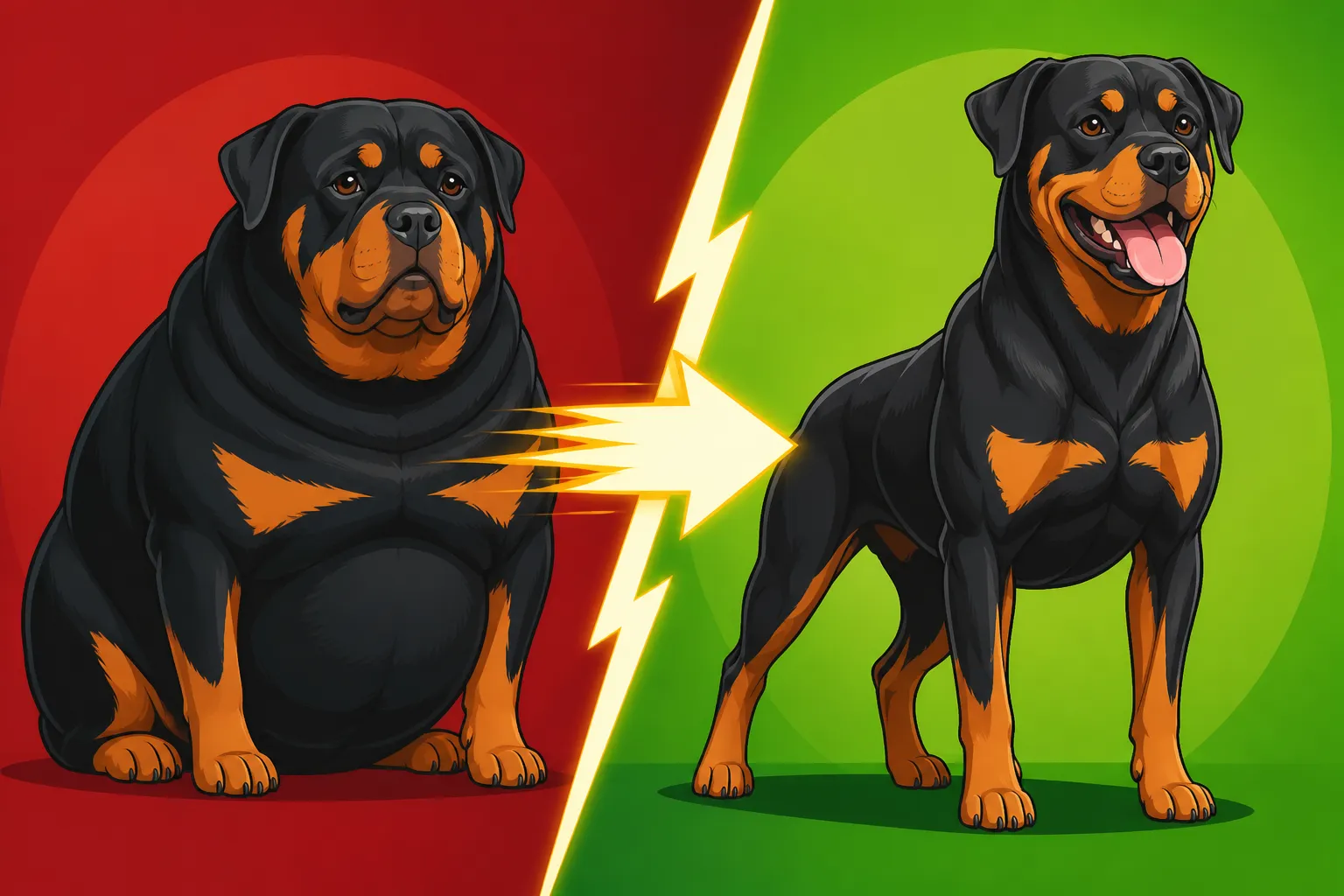
The Body Condition Score (BCS) is a more accurate way to assess your dog's weight than just looking at the scale. It's a hands-on and visual assessment, typically on a scale of 1 to 9, where 1 is emaciated, 5 is ideal, and 9 is morbidly obese. A 130-pound Rottweiler is likely scoring somewhere in the 7-9 range.
Here’s how you can do a quick check:
- Ribs: Can you easily feel their ribs when you run your hands along their sides? You should be able to feel them without pressing hard, like feeling the knuckles on the back of your hand. If you have to press firmly to feel them, or can't feel them at all, they're overweight.
- Waist: Does your Rottweiler have an hourglass shape when viewed from above? There should be a noticeable tuck behind their ribs. If they look like a solid cylinder or bulge outward, they're carrying too much weight.
- Abdominal Tuck: When viewed from the side, does their belly tuck up behind their rib cage, or does it hang low and flat? An ideal weight will show a definite tuck.
Aim for a BCS of 4 or 5. This means you can easily feel their ribs, they have a clear waist, and an abdominal tuck. If your Rottweiler is 130 pounds, they likely have no visible waist, and their ribs are well-padded, indicating a BCS of 7 or higher. Being honest about their current condition is the most critical first step.
Estimating a Safe Target Weight
Once you've assessed their BCS, you can start to estimate a healthy target weight. For many male Rottweilers, a healthy weight typically falls in the range of 95 to 135 pounds, and females typically 80 to 100 pounds. However, this is a broad range, and individual conformation plays a huge role. A lean, athletic male Rottweiler might be 105 pounds and look fantastic, while a more heavily built male could carry 120 pounds perfectly.
The best way to estimate a target weight is to consult with your veterinarian. They can help you determine what a healthy weight would be for your individual Rottweiler based on their frame, muscle mass, and age. They might suggest aiming for an initial loss of 10-15 pounds and then re-evaluating, rather than setting an ultimate goal right away. This incremental approach can feel less daunting and allows for adjustments as your dog progresses.
Remember, the goal isn't necessarily to get them to the lowest end of the breed standard, but to a weight where they are lean, healthy, and mobile, scoring a 4 or 5 on the BCS. This might mean a 130-pound Rottweiler could comfortably reach 115-120 pounds, or even less, depending on their individual structure.
Adjusting Daily Calorie Intake for Weight Loss
This is where the rubber meets the road. Weight loss, at its core, is about consuming fewer calories than are expended. For a 130-pound Rottweiler, their current daily calorie intake is likely too high for their activity level. The general rule of thumb for weight loss in dogs is to reduce their current intake by about 20-30%. However, blindly cutting calories can be dangerous without knowing their current baseline.
A good starting point is to calculate what your Rottweiler should be eating at their ideal weight. While I can't give specific numbers, a good resource for Daily Calories for a Hundred Twenty Pound Rottweiler offers insight into the caloric needs of a Rottweiler. Your vet can provide a precise recommendation, taking into account your dog's target weight, age, activity level, and any underlying health conditions. Many veterinarians use specific formulas to calculate resting energy requirements (RER) and then adjust for activity and weight loss goals.
Let’s say, hypothetically, your vet determines your Rottweiler, at a target healthy weight, needs around 1800-2000 calories a day to maintain that weight. For weight loss, they might recommend starting with 1500-1600 calories. This isn't a hard and fast number, but an example of the kind of reduction that might be needed. The crucial part is getting this number from a professional, as too little can be harmful, and too much won't yield results.
Implementing Dietary Changes for a 130-Pound Rottweiler
Now that you have your target calories, it's time to put that plan into action. This involves selecting the right food, portioning it precisely, and being mindful of those sneaky extra calories from treats and table scraps. Consistency is your best friend here.
Choosing the Right Food for Weight Management
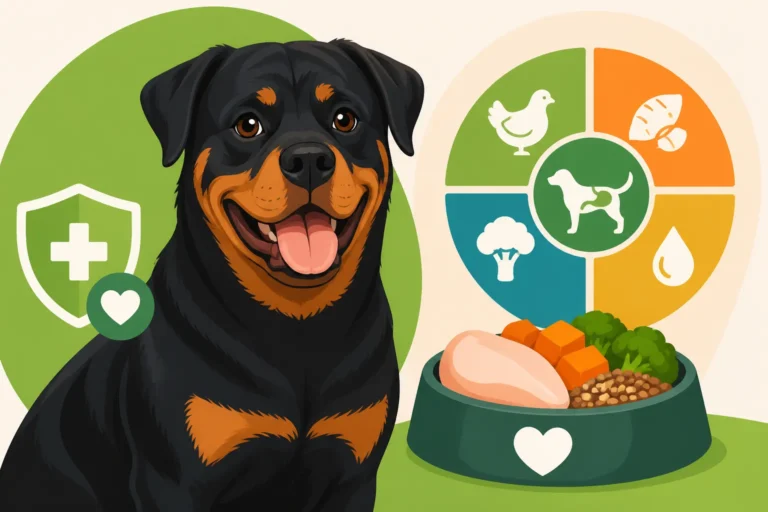
Not all dog foods are created equal, especially when it comes to weight loss. For your 130-pound Rottweiler, a "diet" or "weight management" formula can be incredibly helpful. These foods are typically formulated with lower fat content and increased fiber, which helps your dog feel fuller without consuming as many calories. They also tend to have a higher protein content to help preserve muscle mass during weight loss.
When you're looking at food labels, focus on the caloric density (calories per cup or per gram). Some brands like Royal Canin or Hill's Science Diet offer specific large breed weight management formulas that are designed for larger dogs. Don't be swayed by marketing; always check the guaranteed analysis and caloric information. If you're considering a fresh food option, services like Ollie can sometimes customize meal plans to precise caloric needs, but always verify with your vet that the specific macronutrient ratios are appropriate for weight loss in a large breed.
It's also worth thinking about how the food is presented. Wet food, while often higher in moisture and lower in calories by volume, can be expensive for a Rottweiler's large appetite. A high-fiber dry kibble can be very effective at promoting satiety. Speak with your veterinarian about what type of food would be most beneficial for your Rottweiler's specific needs and preferences.
Measuring Portions Accurately
This step cannot be overstated. Eyeballing portions with a standard measuring cup is one of the biggest culprits of accidental overfeeding, especially with dense kibbles. A quarter-cup difference per meal can add up to hundreds of extra calories over a day or week. For your 130-pound Rottweiler, precision is key.
Invest in a digital kitchen scale. This is truly the most accurate way to measure your dog's food. Food bags list the caloric content by weight (e.g., calories per 100 grams) as well as by cup, and weight is far more precise. You can find reliable kitchen scales on Amazon or Chewy that are perfect for this task. Simply place your dog's bowl on the scale, zero it out, and scoop until you hit the precise gram or ounce measurement recommended by your vet. For detailed guidance, check out Measuring Rottweiler Food by Weight Not Cups.
Splitting their daily ration into two or even three smaller meals can also help. This can keep their metabolism humming and prevent long stretches of hunger. It's also a crucial part of managing bloat risk in Rottweilers, as discussed in Feeding Rules That Lower Rottweiler Bloat Risk.
Controlling Treats and Table Scraps
This is often the sneakiest source of extra calories. Those little bits of cheese, a piece of chicken, or even a few extra dental chews add up incredibly fast, especially for a large dog. When your Rottweiler is giving you those soulful eyes, it's hard to resist, but every single calorie counts on a weight loss journey.
Eliminate all table scraps. Period. Human food, even seemingly healthy options, can be very calorie-dense and often contains ingredients that are not suitable for dogs. For treats, switch to very low-calorie options like plain green beans, baby carrots, or small pieces of apple (without seeds). Many dog treat brands now offer "diet" or "low-calorie" training treats that are excellent for rewarding without derailing progress. Cut these treats into even smaller pieces to maximize their perceived value during training sessions.
Factor in all caloric intake. If you're using a dental chew, count its calories towards their daily total. If your dog gets medication hidden in a dollop of peanut butter, that's also calories. It might feel nitpicky, but for a 130-pound Rottweiler needing to lose weight, meticulous tracking is what makes the difference. This teaches you to be mindful of every morsel that goes into your dog's mouth.
| Item Type | High-Calorie Example | Low-Calorie Swap | Why It Matters |
|---|---|---|---|
| Treats | Large biscuit, Cheese, Hot Dog | Green Beans, Baby Carrots, Air-popped Popcorn (plain) | Treats are often calorie bombs; small swaps save hundreds of calories. |
| Chews | Full-size bully stick, Pigs ear | Small dental chew (counted), Frozen marrow bone (brief) | Even "healthy" chews are calories. Duration matters. |
| Table Scraps | Anything off your plate | Nothing (or plain veggies) | Unpredictable calories, often high fat, potential toxins. |
| Medication | Peanut butter, Cheese | Pill pockets (counted), Plain yogurt (small dab) | Don't forget these hidden calories, they add up. |
Safe Exercise Strategies for an Overweight Rottweiler
Diet is paramount, but exercise is the crucial complement to any weight loss plan. However, with a 130-pound Rottweiler, you can't just throw them into an intense workout routine. Their excess weight puts tremendous stress on their joints, and rushing into high-impact activities can do more harm than good. Rottweiler Growth Plates and Why They Close So Late reminds us how delicate their skeletal structure can be even into young adulthood. We need to be smart and build fitness gradually.
Low-Impact Activities to Protect Joints
The key word here is "low-impact." Forget long runs, intense fetching sessions, or agility jumps for now. Your overweight Rottweiler needs activities that build muscle and cardiovascular fitness without jarring their already strained joints.
- Leashed Walks on Soft Surfaces: Start with short, frequent walks on grass, dirt trails, or even sand (if available). Avoid pavement initially, as it's hard on joints. Gradually increase the duration and distance of these walks. What might start as two 10-minute walks a day could slowly become two 20-minute walks.
- Swimming: This is often the holy grail of low-impact exercise for large, heavy dogs. Water provides buoyancy, supporting their weight and reducing stress on their joints, while still offering excellent resistance for muscle building. If you have access to a safe pool or a calm, clean lake, Swimming as Low-Impact Rottweiler Exercise is an excellent way to get them moving without pain. Always supervise your dog closely around water.
- Gentle Play: Engage in short, controlled play sessions in the yard, like rolling a soft ball or gentle tug-of-war (ensure they are moving, not just standing). Avoid sudden stops, starts, or jumps. The goal is movement, not intensity.
Remember, even small amounts of consistent movement are better than bursts of activity followed by long periods of rest. The goal is to get their metabolism working and build stamina slowly.
Gradually Increasing Activity Levels
Once your Rottweiler has shown improvement in stamina and perhaps lost a few pounds, you can start to gradually increase the duration and intensity of their exercise. This is a very slow progression. Instead of adding speed, add distance or time.
If they're comfortable with 20-minute walks, try extending to 25 or 30 minutes. If swimming, add an extra lap. Always pay close attention to their breathing, panting, and overall demeanor. Are they lagging behind? Are they excessively winded? These are signs to back off. Building adult fitness is a process that takes months, even years, for a large dog. Building Adult Rottweiler Fitness Safely emphasizes this slow, steady approach.
As they become fitter and shed more weight, you might introduce very short bursts of controlled trotting during walks, but only on soft ground and with veterinary clearance. The priority always remains joint health. Overexerting an overweight Rottweiler can lead to injuries like cruciate tears, which are incredibly painful and expensive to treat.
Monitoring for Overexertion and Heat
Exercising a 130-pound Rottweiler, especially one that's not accustomed to much activity, requires constant vigilance. They might be eager to please, but their bodies might not be ready for what their spirit wants to do.
Watch for signs of overexertion:
- Excessive panting or drooling.
- Lagging behind or refusing to move.
- Stumbling or uncoordinated movement.
- Bright red gums (a sign of overheating).
- Seeking shade repeatedly or trying to lie down.
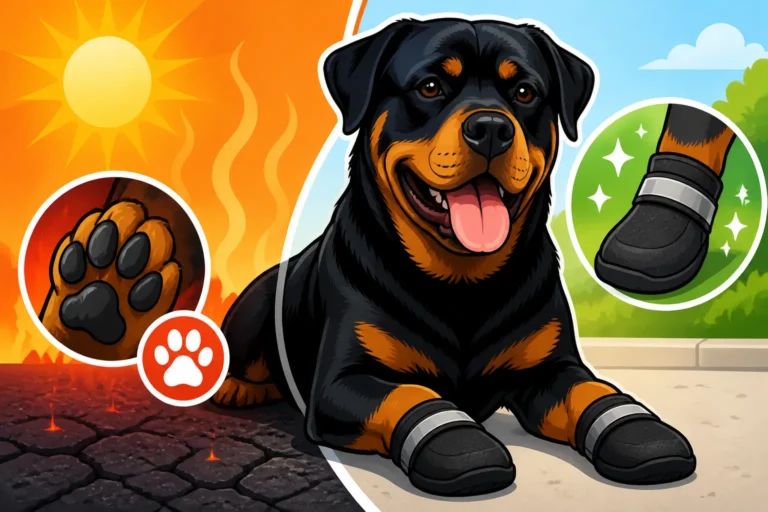
Rottweilers, with their dense black coats, are particularly susceptible to overheating, especially in warmer climates or during summer months. Heat Tolerance in a Black-Coated Rottweiler provides critical information on this topic. Always carry water for your dog on walks, go out during the coolest parts of the day (early morning or late evening), and avoid exercising on hot pavement that can burn their paw pads. If you notice any signs of heat stress, stop immediately, find shade, offer water, and cool them down with wet cloths if necessary. Their well-being is always the top priority.
Monitoring Progress and Adjusting the Plan
Weight loss is rarely a straight line down. There will be good weeks and weeks where the scale doesn't budge. This is normal! The key is to stay consistent, track your progress, and be ready to adjust your plan with your veterinarian's guidance.
Weekly Weigh-Ins and Body Condition Checks
Make weigh-ins a regular, non-negotiable part of your routine. Ideally, weigh your Rottweiler once a week, at the same time of day (e.g., before breakfast), using the same scale. For a 130-pound dog, you'll need a large, accurate dog scale, often found at your vet's office or some larger pet supply stores. If you can't weigh them at home, aim for a consistent weekly visit to a local vet clinic that offers walk-in weigh-ins.
Keep a log of their weight. Seeing the numbers, even small drops, can be incredibly motivating. Alongside the weigh-ins, continue to perform your weekly body condition score checks. Sometimes the scale won't show a huge drop, but you might notice their waist is a little more defined, or you can feel their ribs more easily. This indicates you're making progress in the right direction, even if the absolute weight change is minimal.
Don't get discouraged by plateaus. They are a natural part of any weight loss journey, canine or human. If you've hit a plateau for two or three weeks, it's time to re-evaluate your strategy.
Troubleshooting Plateaus and Sticking Points
A plateau means your Rottweiler's body has adapted to the current calorie intake and exercise level. It's time to make a small adjustment.
- Re-evaluate Calories: Double-check your food measurements with the digital scale. Are you being precise? Sometimes a tiny error compounded over a week makes a difference. Then, discuss with your vet if a further 5-10% calorie reduction is appropriate. For example, if they were on 1600 calories, you might drop to 1500. Never make drastic cuts without professional guidance.
- Increase Exercise Slowly: Can you add another 5-10 minutes to a walk, or an extra short swimming session? Just a slight increase in activity can sometimes kickstart weight loss again.
- Hidden Calories: Are there any hidden calories? Are other family members sneaking treats? Have you forgotten to account for a Kong filled with peanut butter? Review everything that goes into their mouth.
- Underlying Health Issues: If your Rottweiler is genuinely sticking to the diet and exercise plan and still not losing weight, it's crucial to consult your veterinarian. Sometimes, an underlying medical condition, such as Rottweiler Hypothyroidism and Unexplained Weight Gain, can hinder weight loss. A simple blood test can often rule these out.
Consistency is really the biggest challenge, and it requires commitment from everyone in the household. Communication is key to ensuring everyone is on the same page about feeding and treating your Rottweiler.
The Role of Your Veterinarian in the Weight Loss Journey
While this guide gives you plenty of actionable steps, your veterinarian is your most important partner in your Rottweiler's weight loss journey. They can do much more than just provide advice; they offer medical expertise crucial for the health of a large breed like a Rottweiler.
Your vet can:
- Confirm their ideal weight range: Based on their specific frame and health.
- Recommend a safe, precise calorie target: Using professional formulas and considering any pre-existing conditions.
- Rule out underlying medical conditions: As mentioned, conditions like hypothyroidism can make weight loss incredibly difficult.
- Recommend prescription weight loss diets: These foods are often even more effective than over-the-counter options due to their specific formulations.
- Monitor progress: Regular check-ups allow them to track weight loss, assess muscle mass, and address any concerns.
- Adjust the plan: They can help you fine-tune calorie intake and exercise as your Rottweiler loses weight and their needs change.
- Address joint pain: If your overweight Rottweiler is struggling with mobility, your vet can prescribe pain relief or joint supplements like those mentioned in Managing Arthritis in an Older Rottweiler to make exercise more comfortable.
Never embark on a significant weight loss journey for your 130-pound Rottweiler without close veterinary supervision. Their professional guidance ensures your beloved companion loses weight safely, effectively, and in a way that truly enhances their quality of life. The time and effort you put into this now will lead to a healthier, happier Rottweiler who can enjoy more years of active, comfortable life by your side.
Disclaimer
This article is for general informational purposes only and does not constitute professional advice. Laws, prices and regulations vary by location and change over time. Consult a qualified professional for guidance on your specific situation.