Daily Calories for a Hundred Twenty Pound Rottweiler
One of the biggest head-scratchers for us Rottweiler owners is figuring out exactly how much to feed our magnificent dogs. It’s not just a simple matter of looking at the bag; a 120-pound Rottweiler isn't just a number on a scale. Their daily calorie needs are a dynamic puzzle influenced by so many things beyond just their weight. This guide is here to untangle that puzzle, helping you understand the nuances of feeding your large, powerful companion and ensuring they get precisely what they need to thrive, without falling prey to common feeding mistakes.
Understanding Your 120-Pound Rottweiler's Calorie Baseline
When you have a Rottweiler tipping the scales at 120 pounds, it's natural to assume that there's a magic number of calories they should be getting every single day. The truth, however, is a little more complex and a lot more personal to your dog. While 120 pounds is a substantial weight, it doesn't automatically dictate a fixed calorie intake. It's merely one piece of the puzzle, and a starting point at best.
Why 120 Pounds Isn't a Universal Number
Imagine two Rottweilers, both exactly 120 pounds. One is a sleek, muscular working dog who spends hours training for Rottweiler Carting and Draft Work and running in the yard, burning through energy like a furnace. The other is a beloved family companion, perhaps a bit of a couch potato, whose primary exercise involves a leisurely walk around the block and then settling down for a long nap. Do you think their calorie needs would be the same? Absolutely not!
A lean, active 120-pound Rottweiler requires significantly more calories to fuel their muscles and maintain their energy levels than a more sedentary one. On the flip side, a 120-pound Rottweiler who is perhaps carrying a little too much weight needs fewer calories to help them reach a healthier body condition. It's not just about the number on the scale; it's about what that weight looks like on your dog. This is why we focus on concepts like Body Condition Score (BCS) rather than just a static weight. Your veterinarian can help you assess your dog's BCS, which is a much more accurate measure of their overall health and ideal weight. The goal isn't just to maintain 120 pounds, but to maintain a healthy 120 pounds, whatever that looks like for your individual dog.
Calculating the Basal Metabolic Rate (BMR) and Resting Energy Requirement (RER)
Before we even start thinking about adding in all the fun stuff like walks and play, we need to understand the absolute minimum calories your Rottweiler needs just to exist. This is where concepts like Basal Metabolic Rate (BMR) and Resting Energy Requirement (RER) come into play. Think of RER as the number of calories your dog burns simply by lying still in a room at a comfortable temperature – the energy needed for basic bodily functions like breathing, maintaining body temperature, and circulating blood. It’s the energy expenditure of an utterly still, fasted dog.
While your vet might use a specific formula (like 70 x (body weight in kilograms)^0.75) to get a precise RER, for us everyday owners, it’s more about understanding the concept. This RER forms the bedrock of your dog's daily calorie needs. Everything else – every walk, every game of fetch, every trot to the mailbox – adds on top of this baseline. It's a critical starting point because without meeting this minimum, your dog's body can't even perform its most essential tasks. Your vet will take this RER and then multiply it by an "activity factor" to get a more accurate daily calorie target. This factor can range from 1.0 for an inactive, neutered dog prone to weight gain, up to 1.8 or even 2.0 for a highly active working dog. It's a complex calculation best done with professional guidance, but knowing that your dog has this fundamental caloric requirement helps you appreciate the science behind their diet.
Factors That Influence Your Rottweiler's Daily Calorie Needs
It's clear that a 120-pound Rottweiler's calorie requirements aren't set in stone. Beyond their baseline metabolism, a multitude of factors play a significant role in determining how much food they truly need each day. These elements combine to create a unique energetic fingerprint for your individual dog.
Activity Level and Lifestyle
This is perhaps the biggest variable in your Rottweiler's caloric equation. A dog that is truly a "couch potato" – perhaps an older dog who prefers short strolls and long naps – will need considerably fewer calories than a Rottweiler who is actively engaged in regular, vigorous exercise. Think about the difference between a dog that gets a twenty-minute leash walk twice a day and a dog that joins you for daily jogs, spends an hour at the dog park, or trains for advanced obedience. The energy output is drastically different.
A highly active 120-pound Rottweiler might be involved in activities like hiking, swimming, or even participating in canine sports. These dogs are burning through calories at an accelerated rate, requiring more fuel to maintain their muscle mass and stamina. Even if your Rottweiler isn't a competitive athlete, regular vigorous play in the backyard, chasing balls, or romping with other dogs can add up to significant caloric expenditure. Failing to provide enough calories for an active dog can lead to weight loss, decreased energy, and poor performance. Conversely, overfeeding a less active Rottweiler can quickly lead to unwanted weight gain, placing undue stress on their large frame and joints. It's a delicate balance, and requires you to honestly assess your dog's daily routine, not just what you wish it was.
Age, Metabolism, and Health Status
A Rottweiler's age profoundly impacts their metabolic rate. A young, vibrant adult Rottweiler, typically between two and six years old, often has a robust metabolism that can handle a good amount of calories, especially if they're active. As Rottweilers age and approach their senior years, usually around seven or eight, their metabolism naturally slows down. They often become less active, preferring comfort over intense exercise. This reduction in activity and metabolic slowdown means their caloric needs decrease. Failing to adjust food portions for a senior Rottweiler can lead to weight gain, which can exacerbate age-related issues like arthritis or mobility problems. We cover this more extensively in Senior Rottweiler Feeding and Mobility.
Beyond age, underlying health conditions can drastically alter caloric requirements. For instance, a Rottweiler suffering from Rottweiler Hypothyroidism and Unexplained Weight Gain might need a carefully managed diet to prevent excessive weight gain, even with medication. Conversely, a dog recovering from a major surgery, like Feeding a Rottweiler After Bloat Surgery, might temporarily need increased calories to aid in healing and tissue repair, although this would be under strict veterinary guidance. Chronic illnesses, dental problems that make eating difficult, or even certain medications can all influence how many calories your dog needs and how efficiently they use them. Regular veterinary check-ups are essential to monitor these changes and ensure your dog's diet is adjusted accordingly.
Spay/Neuter Status and Weight Management
One often-overlooked factor in a Rottweiler's calorie needs is their spay or neuter status. While these procedures are vital for population control and often for preventing certain health issues, they almost universally lead to a decrease in a dog's metabolic rate. Studies have shown that a spayed or neutered dog can require 20-30% fewer calories than an intact dog of the same size and activity level. This metabolic shift means that if you continue to feed your Rottweiler the same amount of food post-surgery, they are very likely to gain weight.
The risk of Rottweiler Weight Gain After Neutering is significant, and for a large breed like a Rottweiler, carrying extra weight can have severe consequences. Rottweiler Obesity and the Load It Adds on their joints, heart, and other organs is no laughing matter. It can worsen conditions like hip and elbow dysplasia, contribute to heart disease, and shorten their overall lifespan. This is why it's crucial to proactively adjust your Rottweiler's diet after spaying or neutering. It might mean a slight reduction in their daily food intake, or switching to a formula designed for weight management. Monitoring their body condition closely during the months following the procedure is vital to catch any creeping weight gain early and make necessary adjustments to prevent long-term health problems. Prevention is always easier than trying to get a hundred-pound dog to shed pounds once they've packed them on.
Practical Tips for Feeding Your 120-Pound Rottweiler
Knowing the theory behind calorie needs is one thing, but putting it into practice in your daily routine is where the real work happens. Effectively feeding a large, powerful dog like a 120-pound Rottweiler requires careful attention to food choice, portion control, and mealtime habits.
Choosing the Right Food and Reading Labels
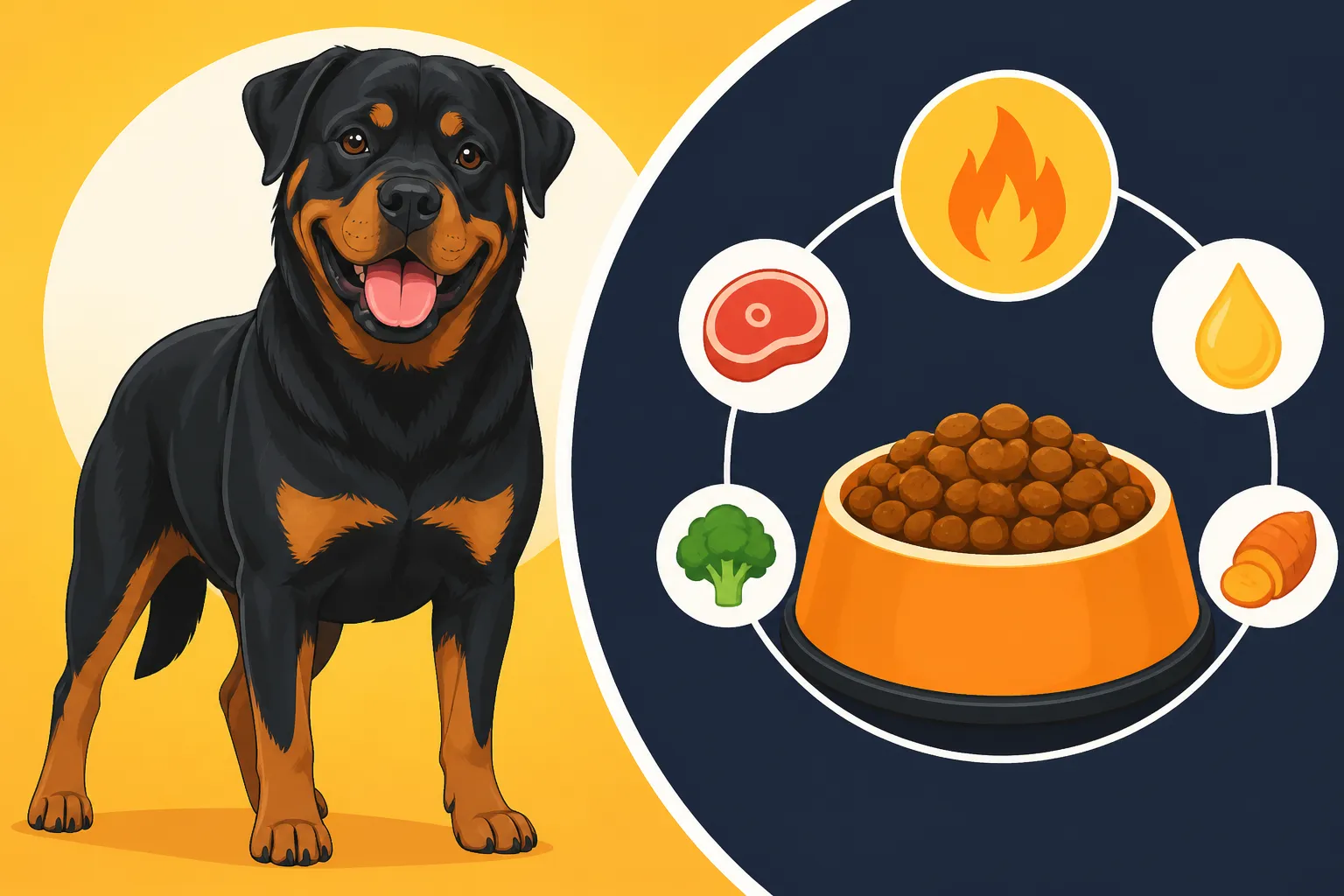
Selecting a high-quality dog food specifically formulated for large breeds is paramount for your Rottweiler. These formulas are generally designed with appropriate protein, fat, and mineral ratios that support the unique needs of bigger dogs, often including ingredients for joint health. But simply picking a "large breed" bag isn't enough; you need to become a label detective.
The most important number to look for on any dog food bag is the calorie content, usually listed as "kcal/kg" (kilocalories per kilogram) or "kcal/cup" (kilocalories per standard measuring cup). This tells you the energy density of the food. A food with 350 kcal/cup will require a different portion size than one with 450 kcal/cup, even if they're both large breed formulas. The "feeding guidelines" printed on the bag are just that – guidelines. They are averages based on a theoretical dog and should never be followed blindly. Your dog is an individual, not an average. Always start with the manufacturer's recommendation for a dog of your Rottweiler's ideal weight and activity level, then be prepared to adjust. You can find many excellent options on retailers like Chewy or Amazon, and some specialized services like Ollie even offer customized fresh food plans that detail calorie content for your specific dog, although it's always wise to double-check their recommendations against your dog's actual condition.
Monitoring Body Condition Score (BCS) and Adjusting Portions
This is where the rubber meets the road. Your Rottweiler's Body Condition Score (BCS) is a far more accurate gauge of their health than their weight alone. It's a hands-on assessment that helps you determine if they are too thin, too fat, or just right. Ideally, you want your Rottweiler to be a healthy lean, not chunky.
To assess your Rottweiler's BCS:
- Feel for Ribs: You should be able to easily feel their ribs under a thin layer of fat without pressing hard. They shouldn't be visibly protruding, but you shouldn't have to search for them either.
- Observe the Waist: When looking down at your Rottweiler from above, you should see a noticeable "waist" or tuck-in behind their ribs. It shouldn't be a straight line from chest to hips, and certainly not bulging out.
- Check for an Abdominal Tuck-Up: When looking at your Rottweiler from the side, their abdomen should tuck up slightly from their chest, not hang low or be parallel to the ground.
Here's a simplified table to guide you:
| BCS Score (1-9 Scale) | Description | What to Look/Feel For |
|---|---|---|
| 1-3 (Underweight) | Ribs, spine, pelvic bones easily visible; no fat. | Bones very prominent. Severe muscle loss. |
| 4-5 (Ideal) | Ribs easily felt with minimal fat; waist visible; abdominal tuck. | Well-proportioned; can feel ribs without pressing. |
| 6-7 (Overweight) | Ribs felt with difficulty; minimal waist; abdomen rounded. | Ribs hard to feel; waist barely discernible or absent. |
| 8-9 (Obese) | Ribs covered by heavy fat; no waist; distended abdomen. | Heavy fat deposits; no waist or tuck; difficulty moving. |
If your 120-pound Rottweiler is looking a bit too robust (BCS 6 or higher), you'll need to slightly reduce their daily calorie intake. Start with small adjustments, perhaps cutting their daily ration by 1/4 to 1/2 cup, and monitor for a couple of weeks. If they are looking too thin (BCS 3 or lower), gradually increase their food by similar small increments. Remember, consistency is key, and using a kitchen scale to accurately measure food by weight, not just cups, is far more precise. Learn more about Measuring Rottweiler Food by Weight Not Cups for better accuracy.
The Importance of Meal Timing and Avoiding Bloat
For Rottweilers, how and when they eat can be as crucial as what they eat. Due to their deep chests, Rottweilers are predisposed to Bloat, or Gastric Dilatation-Volvulus (GDV), a life-threatening condition where the stomach fills with gas and can twist. Proper meal timing and practices are essential to minimize this risk.
Firstly, absolutely avoid "free feeding," where food is left out all day. This encourages gorging and doesn't allow you to monitor intake. Instead, you must feed your 120-pound Rottweiler at least two distinct meals a day, ideally three if your schedule allows. Splitting a Rottweiler's Ration Across the Day is not just good practice, it's a vital safety measure. This reduces the amount of food and air ingested at any one time, lessening stomach distension.
Secondly, and critically, ensure your Rottweiler has a period of calm rest before and after eating. Intense exercise, running, or rough play directly before or after a meal significantly increases the risk of bloat. A good rule of thumb is to wait at least an hour before and two hours after a meal before engaging in strenuous activity. This is covered in more detail in Rest Before and After a Rottweiler Meal. Consider using slow feeder bowls if your Rottweiler tends to gulp down their food too quickly. These bowls are designed with ridges or obstacles that force them to eat more slowly, reducing air intake. Lastly, be aware that Rottweiler Bloat Risk Rising With Age, so these practices become even more critical as your dog gets older.
Common Pitfalls and How to Avoid Them
Even with the best intentions, feeding a Rottweiler can come with its own set of challenges. Understanding the common mistakes owners make can help you navigate these waters successfully and keep your 120-pound companion in prime condition.
Overfeeding and Its Consequences
One of the most insidious problems in modern dog ownership is overfeeding, especially in large breeds like Rottweilers. It's often done out of love, with owners wanting to ensure their dog never goes hungry or showering them with extra treats. However, for a 120-pound Rottweiler, even a small amount of excess food each day adds up quickly. The consequences are far-reaching and severe.
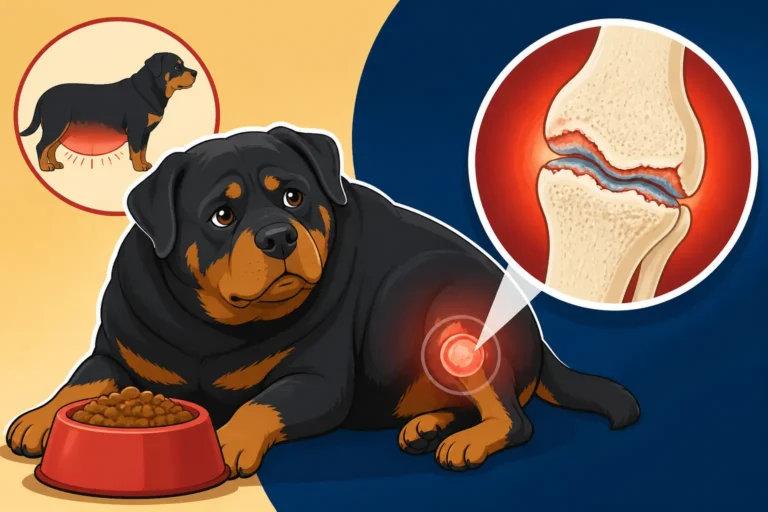
Obesity places immense strain on a Rottweiler's already heavily loaded joints, exacerbating conditions like hip and elbow dysplasia and leading to premature arthritis. We explore this in How Rottweiler Weight Multiplies the Load on Its Hips. Beyond musculoskeletal issues, being overweight increases the risk of heart disease, diabetes, certain types of cancer, and reduces overall stamina and quality of life. An obese Rottweiler struggles with mobility, can overheat more easily, and often experiences a significantly shortened lifespan. The extra pounds also make them more vulnerable to complications during surgery or anesthesia. It's a tough truth, but a pudgy Rottweiler is not a healthy Rottweiler. Preventing obesity through diligent portion control and regular exercise is far easier, and kinder, than trying to manage the health crises it can trigger later in life.
Underfeeding and Performance Decline
While overfeeding grabs a lot of attention, underfeeding a 120-pound Rottweiler, especially an active one, can also be detrimental. An adult Rottweiler requires a substantial amount of energy to maintain their impressive musculature and engage in daily activities. If they aren't receiving enough calories, their body will start to break down muscle mass for energy.
Signs of underfeeding might include noticeable weight loss, a dull and brittle coat, lack of energy or lethargy, and a general decline in their physical performance. An underfed Rottweiler might not have the stamina for their usual walks or play sessions, and their immune system could become compromised. For working Rottweilers or those regularly participating in intense exercise, sufficient caloric intake is non-negotiable for recovery and peak performance. It’s a delicate balance: you want your Rottweiler lean, but never starved of the vital nutrients and energy they need to thrive. If you notice your Rottweiler looking too thin despite regular meals, it's worth a vet visit to rule out any underlying health issues that might be preventing nutrient absorption or increasing metabolic demands.
Treats, Table Scraps, and Hidden Calories
This is where many well-intentioned owners unknowingly sabotage their Rottweiler's diet. Those little bits of cheese, extra cookies, or "just a taste" from your dinner plate can rapidly accumulate, adding hundreds of hidden calories to your 120-pound Rottweiler's daily intake. What seems insignificant to us can be a substantial portion of their daily allowance.
For instance, a single slice of cheese can contain as many calories as a small meal for a much smaller dog. If you're using treats for training, which is great, remember to factor them into the overall daily calorie count. Treat Allowance for a Rottweiler in Daily Training should be a conscious part of your planning. Choose low-calorie, healthy treats, or break larger treats into smaller pieces to maximize their use without overfeeding. When it comes to table scraps, it's generally best to avoid them entirely. Not only do they add unnecessary calories, but many human foods are unsuitable or even toxic for dogs. This includes ingredients like onions, garlic, grapes, chocolate, and avocados, among others. Always be mindful of Foods and Plants a Rottweiler Must Not Reach. Consistency from all family members is crucial; make sure everyone understands the household rules about feeding your Rottweiler. Keeping a food log for a week can be an eye-opening exercise, revealing just how many "extra" calories might be sneaking into your dog's diet.
Figuring out the exact daily calorie needs for a 120-pound Rottweiler isn't a one-and-done calculation; it's an ongoing process of observation, adjustment, and collaboration with your veterinarian. Every Rottweiler is unique, and their dietary requirements will ebb and flow with their age, activity level, health, and life stage. By carefully monitoring their body condition, choosing high-quality food, and being mindful of all sources of calories, you can ensure your powerful companion enjoys a long, healthy, and vibrant life by your side.
Disclaimer
This article is for general informational purposes only and does not constitute professional advice. Laws, prices and regulations vary by location and change over time. Consult a qualified professional for guidance on your specific situation.