Signs a Rottweiler Has Been Overworked
We all want our Rottweilers to be strong, healthy, and happy, and that often means providing plenty of exercise. But there's a fine line between a well-exercised dog and one who's being pushed too hard. Many well-meaning owners, myself included at times, can miss the subtle cues our powerful dogs give us when they're actually overworked, leading to discomfort, stress, or even injury. This guide will walk you through the often-missed signs that your Rottweiler has been overexerted, helping you ensure their activity level is always just right for them.
The Physical Red Flags of Over-Exertion in Your Rottweiler
It's easy to assume a big, muscular Rottweiler can go all day, every day. They have incredible stamina, absolutely, but that doesn't mean they're immune to overdoing it. Their stoic nature can sometimes mask discomfort, making it even more crucial for us to be observant. When your Rottweiler is physically overworked, their body will tell you in a myriad of ways, from subtle shifts to more obvious signs.
Persistent Fatigue and Lethargy Beyond Normal Rest
We all know the sight of a happily tired Rottweiler, sprawled out for a long nap after a good walk or play session. That's normal, healthy fatigue. But when your Rottweiler is overworked, their fatigue goes beyond that. You'll notice a profound lethargy that lingers long after they should have recovered. Instead of being ready to greet you with a wagging tail or a soft nudge after a few hours of rest, they might still seem sluggish, uninterested in typical interactions, or even difficult to rouse.
Imagine you've taken your energetic three-year-old Rottweiler for an extra-long hike – say, five miles on a warm day – thinking they'd love the challenge. The next day, instead of their usual morning bounce, they're slow to get out of bed, take an unusually long time to finish their breakfast, and then immediately collapse back into a deep sleep. They might even skip their usual mid-morning potty break, preferring to stay curled up. This isn't just "tired"; it's a sign their body is struggling to recover, possibly due to muscle strain, dehydration, or just general systemic exhaustion. It's especially critical to watch for this in warmer weather, as black-coated breeds like Rottweilers can overheat more easily. Heat Tolerance in a Black-Coated Rottweiler provides more context on managing exercise in challenging temperatures.
Obvious Stiffness, Limping, or Changes in Gait
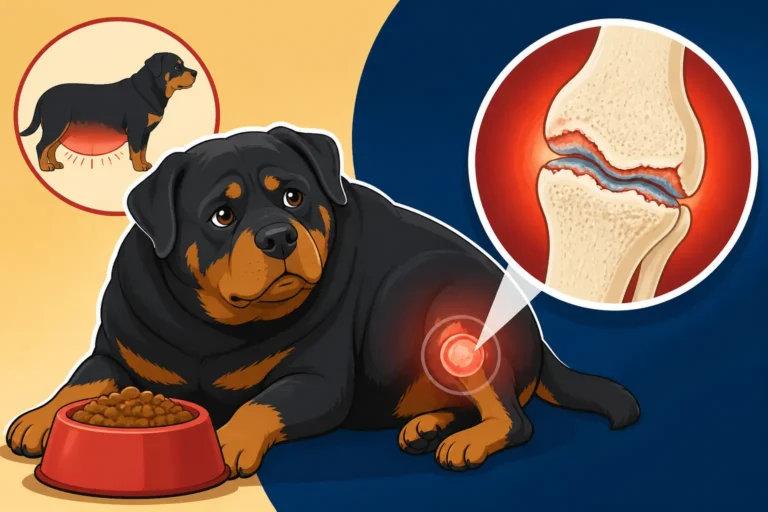
This is perhaps one of the most visible and concerning signs of overwork. A Rottweiler that's been pushed too hard will often exhibit stiffness, particularly after resting, or even a noticeable limp. This could manifest as difficulty standing up from a lying position, a hesitant or uneven stride, or a reluctance to put full weight on one or more limbs. Remember, Rottweilers are prone to joint issues like hip and elbow dysplasia, so any lameness should be taken seriously, and over-exertion can certainly exacerbate these underlying conditions.
Consider a scenario where your young Rottweiler, still under two years old, has been enthusiastically playing fetch in the park for an hour straight – far exceeding the recommended activity levels for a dog whose Rottweiler Growth Plates and Why They Close So Late are still open. The next morning, as they try to get off their orthopedic dog bed (maybe one you picked up from Amazon for its support), you notice them favouring a front leg, or perhaps their hindquarters seem stiff and slow. They might even whine softly when they stretch or try to climb a single step. This isn't just a minor ache; it's a warning that their joints or muscles have been strained beyond their current capacity. Even if the limp seems to improve with a bit of movement, recurring stiffness or lameness means you're pushing them past their limits. It's far better to err on the side of caution, especially when they're still developing, as discussed in A Growing Rottweiler's Joints and Overexercise.
Decreased Appetite or Increased Thirst
Physical overwork can throw a dog's entire system off balance, and that includes their appetite and thirst regulation. While a hard workout might make us hungry, some dogs, when truly over-exerted, might actually show a temporary decrease in appetite. Their body is so focused on recovery and repairing muscle tissue that their digestive system might take a back seat. On the flip side, excessive exercise, especially in warm weather, often leads to increased thirst and potential dehydration.
Let's say your Rottweiler has spent a rigorous day at a training seminar, involving many repetitions of high-impact exercises and long periods of focus. You get home, put down their regular meal of a quality large-breed kibble (perhaps from Chewy), and they sniff it, walk away, or only pick at a small portion. This is unusual for a Rottweiler, who generally loves their food! At the same time, you might notice them guzzling water excessively or, conversely, seeming too tired to even drink. Always pay attention to these changes in their usual eating and drinking patterns. Ensuring proper hydration and nutrition, like considering high-quality, easily digestible options from brands like Ollie after intense activity, can be crucial for recovery.
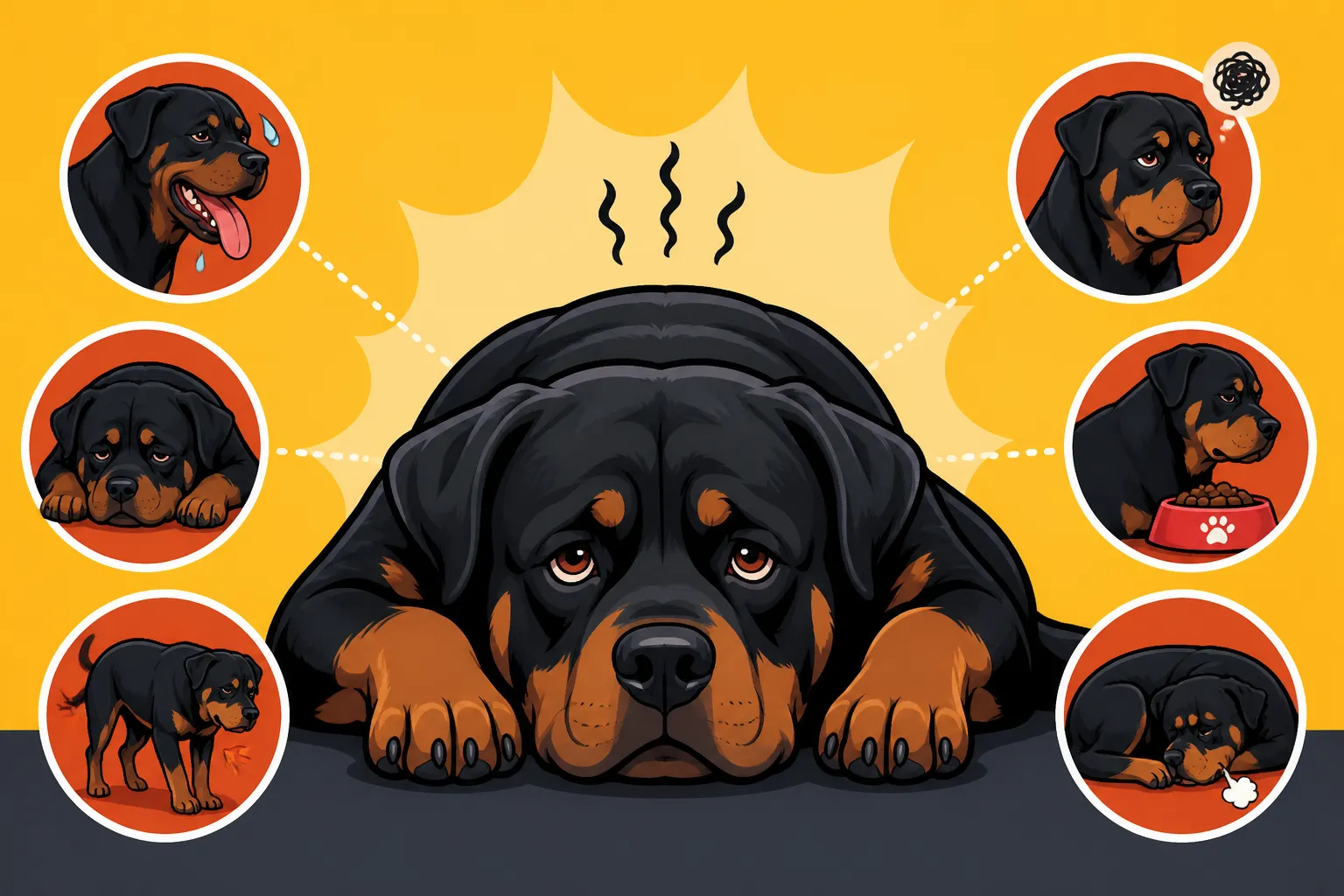
Here's a quick overview of some common physical signs and what they might suggest:
| Sign of Over-Exertion | What It Looks Like | Potential Underlying Issue |
|---|---|---|
| Lethargy | Excessive sleeping, reluctance to move, disinterest | Muscle fatigue, systemic exhaustion, dehydration |
| Stiffness/Lameness | Limping, difficulty rising, favoring a limb, uneven gait | Muscle strain, joint inflammation, minor injury |
| Decreased Appetite | Sniffing food but not eating, eating very slowly/little | Stress, digestive upset, body prioritizing recovery |
| Excessive Thirst | Guzzling water, frequent urination, dry gums | Dehydration, electrolyte imbalance |
| Heavy Panting | Prolonged, deep, rapid breathing after activity | Overheating, respiratory strain, exhaustion |
| Muscle Tremors | Shaking or twitching muscles, especially in legs | Muscle fatigue, electrolyte imbalance |
| Dragging Paws | Scuffing nails on the ground, especially hind feet | Exhaustion, neurological fatigue |
Behavioral Indicators Your Rottweiler Needs a Break
Beyond the physical, our Rottweilers communicate their discomfort and stress through their behavior. These behavioral shifts can be just as important as physical signs, sometimes even more so, because they can indicate mental as well as physical fatigue. Ignoring these can lead to persistent behavioral issues down the line, which is something no Rottweiler owner wants.
Increased Irritability or Grumpiness
A tired, achy dog can become a grumpy dog, just like a tired, achy human. When a Rottweiler is pushed beyond their comfort zone, you might notice an increase in irritability. This could manifest as a shorter fuse with other household pets, a snap at a family member for an innocent touch, or even growling or retreating when approached for affection. This isn't necessarily "aggression" in the malicious sense, but rather a warning sign that they're uncomfortable and need space.
Imagine your normally tolerant Rottweiler, who usually loves a good cuddle on the couch, suddenly tensing up and giving a low grumble when your child tries to pet them. Or perhaps they nip at your other dog during a playful wrestling match, something they'd never do normally. This shift in demeanor is a clear indicator of discomfort or stress. It's their way of saying, "I'm not feeling myself, please give me some room." Punishing this grumpiness won't solve the underlying issue; it will only teach them to suppress their warning signs, making them potentially more dangerous. Instead, respect their boundaries and reduce their physical demands.
Reluctance or Loss of Interest in Usual Activities
Rottweilers are generally enthusiastic participants in family life and enjoy their routines. If your dog suddenly shows a marked reluctance or complete loss of interest in activities they normally adore, it's a huge red flag that something is off. This isn't just them being a bit lazy; it's a deep-seated lack of drive often stemming from physical exhaustion or pain.
Think about your Rottweiler who usually goes absolutely wild for their morning walk. They bounce at the door, grab their leash (or try to!), and practically drag you out. But after an overly strenuous weekend at a dog show, you offer the leash, and they just stare at you, perhaps even turning their head away and walking back to their bed. Or maybe they ignore their favorite tough chew toy, the one you bought on Chewy because it actually lasts, when normally they'd be ecstatic. This indifference to things that usually bring them joy is a strong sign of being overworked. It means their body is screaming for rest, and their mental state is reflecting that fatigue. For older Rottweilers, a similar reluctance can indicate joint pain or Senior Rottweiler Mobility Decline, so always consider age-appropriate exercise.
Increased Anxiety, Restlessness, or Destructive Behavior
Paradoxically, an overworked dog might sometimes appear more restless rather than simply tired. This can happen when their body is physically exhausted but their adrenaline and stress hormones are still running high, making it difficult for them to truly relax. This overstimulation, combined with physical discomfort, can manifest as anxiety, pacing, an inability to settle, or even destructive behaviors.
Consider a younger Rottweiler, perhaps around ten months old, who has been engaging in very high-impact play with other large dogs at the park for several days in a row, far beyond what their still-developing Rottweiler Growth Plates Closing at Eighteen to Twenty-Four Months should handle. You might find them pacing around the house, unable to lie down comfortably, constantly shifting positions, or even panting lightly indoors when it's not hot. Some dogs might revert to destructive chewing, gnawing on furniture or inappropriate items, not out of boredom, but out of stress and an inability to self-regulate. These behaviors are often a cry for help, indicating they need more downtime and less intense activity. Focusing on mental enrichment with puzzle toys from Amazon, for instance, can provide a great alternative to purely physical exertion when your dog needs to decompress.
Preventing Overwork and Promoting Healthy Recovery
Understanding the signs of overwork is crucial, but prevention is always better than cure. Tailoring your Rottweiler's exercise routine to their age, physical condition, and individual temperament is key to a long, healthy, and happy life. It's about finding that sweet spot where they're challenged and engaged, but never pushed to the point of pain or exhaustion.
Gradual Progression and Adequate Rest Days
Just like human athletes, Rottweilers need a proper conditioning program and, perhaps most importantly, rest days. You can't take a dog from being a couch potato to a marathon runner overnight. Any increase in activity level, whether it's longer walks, more intense play, or new training exercises, should be introduced gradually.
If you're planning to take your Rottweiler on a long hike, start with shorter walks and slowly increase the distance and difficulty over several weeks. Always incorporate active recovery days, where exercise is light and low-impact, or even full rest days. This allows their muscles to repair and adapt, preventing injuries and chronic soreness. For example, if you have a high-energy adult Rottweiler, you might do a vigorous walk on Monday, a training session with mental work on Tuesday, a light sniffy walk on Wednesday, and then a full rest day on Thursday, before repeating the cycle. Remember that a Rottweiler's body is still maturing well past their first birthday, so Exercise Limits for a Rottweiler Under Six Months and Building Adult Rottweiler Fitness Safely are vital reads to ensure you're not pushing them too hard too soon.
Age-Appropriate Exercise and Activities
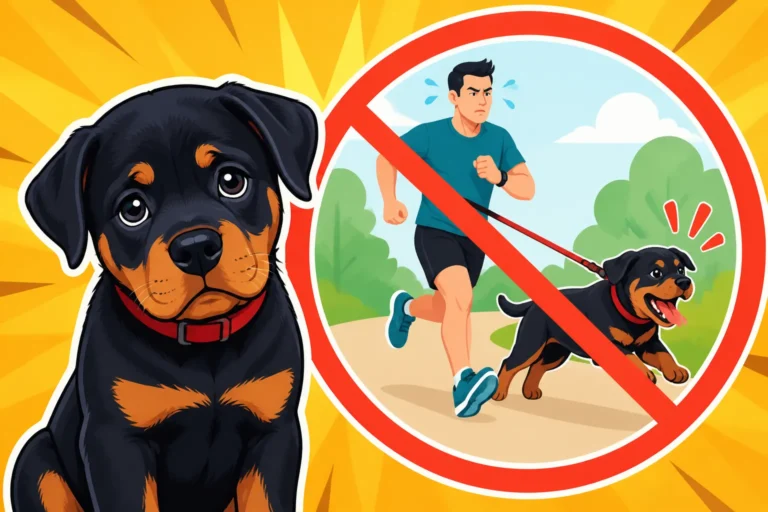
A Rottweiler puppy simply cannot handle the same type or duration of exercise as a fully mature adult. Young Rottweilers have vulnerable growth plates that can be permanently damaged by high-impact activities like jumping, long-distance running on hard surfaces, or excessive stair climbing. The Five Minute Rule for Rottweiler Puppy Walks is a fantastic guideline, suggesting five minutes of structured exercise per month of age, twice a day, until they reach maturity.
As your Rottweiler enters its senior years, their needs will shift again. While they still need activity to maintain muscle mass and joint health, the intensity and duration should decrease. Swimming is an excellent low-impact exercise for older Rottweilers, as is gentle walking on soft surfaces. A senior Rottweiler might still enjoy a short game of fetch, but chasing a ball for 20 minutes straight will likely cause more harm than good. Exercising a Rottweiler Past the Age of Eight covers this in more detail, highlighting how to keep them moving comfortably. Consider joint supplements as well, which are readily available through retailers like Chewy, to support their aging joints.
Prioritizing Mental Stimulation and Quality Nutrition
Sometimes, what looks like boundless energy is actually a need for mental engagement. A Rottweiler who isn't getting enough mental stimulation can become restless and destructive, and owners might mistakenly try to "tire them out" with more physical exercise, exacerbating the problem. Incorporate puzzle toys, training sessions, scent work, or even just teaching new tricks to challenge their brilliant minds. These activities don't put the same strain on their bodies but can be just as exhausting in a good way.
Furthermore, proper nutrition plays a massive role in recovery and overall stamina. Feeding a high-quality, balanced diet provides the fuel and building blocks for strong muscles and healthy joints. If your Rottweiler is particularly active, discussing their caloric and nutrient needs with your vet can be helpful. Some owners even explore fresh food options, like those offered by Ollie, to ensure optimal nutrient absorption and digestibility, which can aid in faster recovery after intense activity. Always ensure they have access to fresh water, especially during and after exercise, and consider a portable water bottle or collapsible bowl you can easily carry on walks, available on Amazon.
Disclaimer
This article is for general informational purposes only and does not constitute professional advice. Laws, prices and regulations vary by location and change over time. Consult a qualified professional for guidance on your specific situation.