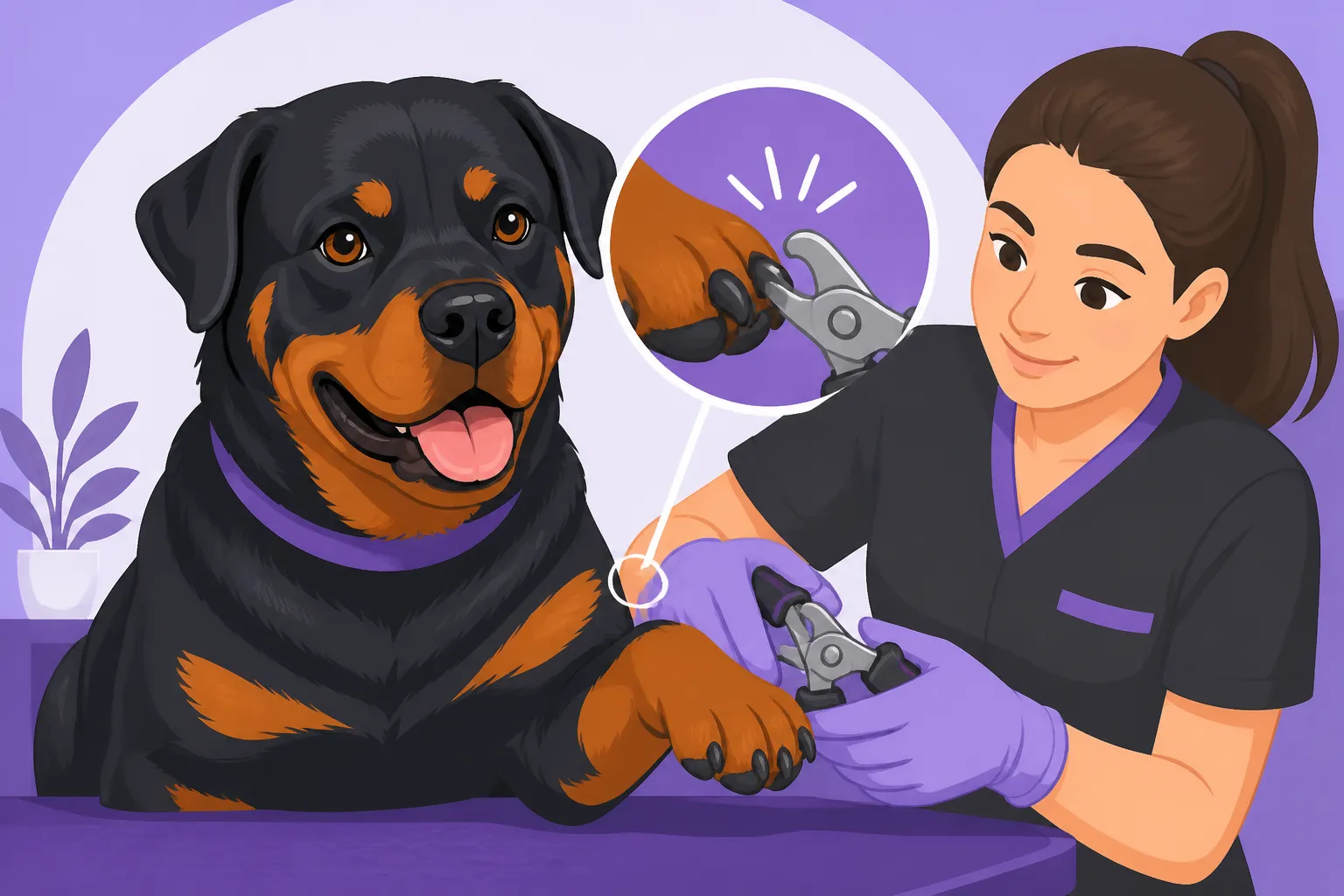
Rottweiler Nail Trims at a Groomer
The thought of trimming your Rottweiler's nails can send shivers down many an owner's spine. Those thick, dark claws, the sheer strength of your dog, and the dreaded fear of hitting the quick can make a simple grooming task feel like an impossible feat. This guide is here to alleviate that stress by exploring why entrusting your Rottweiler's nail care to a professional groomer is often the safest and most stress-free solution for both of you.
The Unique Challenges of Trimming a Rottweiler's Nails at Home
Let's be honest: taking on a Rottweiler's nails at home is not for the faint of heart, or for the ill-prepared. These magnificent dogs come with a set of physical traits that make DIY nail care particularly challenging, leading many owners to feel frustrated, anxious, and even guilty when they just can't get it right.
Thick, Black Nails and the Elusive Quick
The primary hurdle for many Rottweiler owners is the nature of their nails. Unlike breeds with clear, light-colored nails where the quick (the sensitive part containing blood vessels and nerves) is visible, most Rottweilers have thick, black nails. This makes identifying the quick a complete guessing game. You're essentially trimming blind, hoping you don't cut too deep. Even a tiny nick can cause pain, bleeding, and immediately create a negative association for your dog, making the next attempt even harder.
Imagine your 100-pound Rottweiler, Brutus, lying on his side, perhaps a bit grudgingly, while you attempt to clip his back paw. You're holding a massive, heavy-duty clipper, trying to get a good angle, and all you see is solid black. The anxiety is palpable. You snip cautiously, maybe only taking off the very tip, knowing that if you hear a yelp or see even a drop of blood, the whole operation will be off for weeks, and Brutus will remember the discomfort. This isn't like clipping a poodle's dainty white nails where you can hold it up to the light. The sheer density of a Rottweiler's nail also means you need substantial leverage, and sometimes even the best home clippers struggle to make a clean cut without crushing the nail, which is uncomfortable in itself.
Managing a Powerful, Anxious Dog
Even the most well-behaved Rottweiler can become a wriggly, uncooperative mass of muscle and intent when facing something they dislike. A Rottweiler can weigh upwards of 120 pounds, and their strength is immense. If your dog decides they're done with the nail trim, trying to restrain them, even gently, can quickly escalate into a wrestling match. This isn't just difficult; it can be dangerous for both you and your dog. You could be scratched or bitten (even accidentally), and your dog could injure themselves trying to escape.
Consider Maggie, your otherwise calm and affectionate Rottweiler. But the moment the nail clippers appear, she becomes rigid, perhaps even starts to low-growl or pull her paws away with surprising force. Trying to hold her securely enough to safely clip her nails, while simultaneously trying to be quick and precise, can be an overwhelming task. This is where topics like Rottweiler Behavior at the Groomer become so critical; understanding how to manage their reactions and build positive associations is paramount, but even then, a professional often has an advantage in terms of setup and technique. The battle of wills often means nails get trimmed less frequently than they should, leading to overgrown nails that are even harder to manage and can cause discomfort for your dog.
The Right Tools for the Job and Their Cost
While you can purchase heavy-duty nail clippers or dremel-style grinders for home use, the initial investment can be significant, and the tools themselves require proper technique. You'll need sturdy, sharp clippers designed for large breeds, styptic powder on hand for emergencies, and possibly a grinder. Many owners buy these tools with good intentions, only to find them gathering dust because the task remains too daunting or stressful.
You can certainly browse platforms like Chewy for a wide array of durable clippers and rotary tools designed for large, tough nails. However, simply owning the tool doesn't grant you the skill or the confidence to use it effectively on a powerful, potentially anxious dog. The cost isn't just monetary; it's the cost of your time, your emotional energy, and the potential negative impact on your dog's trust if the experience is consistently unpleasant. For some, even with the best tools, the fear of hitting the quick or causing pain is enough to deter them from consistent at-home trims.
What to Expect When Your Rottweiler Visits the Groomer
Turning to a professional groomer for your Rottweiler's nail trims can transform a dreaded chore into a manageable routine. These experts bring a combination of specialized knowledge, equipment, and a calm demeanor that can make all the difference for your big dog.
The Professional Approach
Professional groomers are equipped with more than just heavy-duty clippers; they have experience, specialized setups, and a systematic approach to handling large, powerful breeds like Rottweilers. They often work on hydraulic tables that can be raised or lowered to a comfortable height, eliminating the need for awkward bending or struggling on the floor. Many facilities have non-slip surfaces and sturdy restraints (used humanely and appropriately) to ensure both the dog's and the groomer's safety.
Imagine a groomer, perhaps with an assistant, calmly guiding your Rottweiler, Rocky, onto a grooming table. They know how to secure a paw gently but firmly, how to hold the dog's leg to prevent sudden movements, and how to work quickly and efficiently. Their movements are confident, not hesitant, which can help instill a sense of calm in your dog. They are adept at reading subtle cues in a dog's body language, recognizing stress signals before they escalate, and adjusting their approach accordingly. This expertise minimizes the time your Rottweiler needs to be handled and reduces overall stress.
Clipper vs. Grinder – The Choice of Tool
A significant advantage of professional groomers is their access to and proficiency with various tools, including both traditional clippers and modern grinders. For Rottweilers, the choice of tool can heavily influence the dog's comfort and the outcome of the trim.
- Clippers: These are fast and efficient when used correctly. A skilled groomer can make quick, clean cuts, which is often preferable for dogs who just want the process over with. However, the "snapping" sound and the feeling of pressure can be alarming for some sensitive dogs.
- Grinders (Dremels): Many groomers prefer grinders for Rottweilers, especially if the dog is anxious about clippers or if their nails are particularly thick. Grinders allow the groomer to remove small layers of nail at a time, slowly working back towards the quick without the sudden impact of a clipper. This method also allows for a smoother, more rounded nail, which can be more comfortable for your dog and less likely to snag or cause damage. Grinding can also help to gradually recede the quick over time, enabling shorter, healthier nails in the long run.
Minimizing Stress and Building Positive Associations
Professional groomers understand that a nail trim can be a stressful event. They often employ various techniques to minimize anxiety and create a more positive experience for your Rottweiler. This includes using high-value treats, plenty of calm praise, and strategically placed breaks. For safety, and depending on the dog's temperament, they might also use a soft muzzle, which, if introduced positively, can reduce stress by preventing the dog from biting while allowing the groomer to work without fear of injury.
Learning about Muzzle Training a Rottweiler Before You Need It is an excellent way to prepare your dog for grooming appointments, ensuring that if a muzzle is necessary, it's not another source of fear. Groomers aim to make the experience as swift and positive as possible. They might even recommend bringing your Rottweiler in for "happy visits" where they just get treats and positive reinforcement without a trim, helping to build a positive association with the salon itself. Offering a truly delicious, high-value treat, perhaps a specialized one from a brand like Ollie, after a successful session can significantly reinforce this positive feeling, making future visits less daunting for your beloved companion.
Choosing the Right Groomer for Your Large Breed
Finding the right groomer for your Rottweiler isn't just about convenience; it's about finding someone who understands and respects the unique needs of a large, powerful dog. A positive grooming experience starts with a skilled and knowledgeable professional.
Experience with Giant Breeds
This is perhaps the most crucial factor. You wouldn't take a sports car to a mechanic who only works on scooters, and similarly, you shouldn't entrust your Rottweiler to a groomer who primarily handles small lapdogs. A groomer experienced with giant breeds like Rottweilers understands their physical strength, their typical temperament, and the specific considerations for their thick nails and dense coats. They know how to position them safely, how to use leverage effectively, and how to read their body language to de-escalate anxiety.
When you're calling around, don't be shy about asking direct questions: "Do you have experience with Rottweilers specifically?" "How do you handle a dog that is nervous about nail trims?" "What tools do you typically use for their nails?" An experienced groomer will be confident in their answers and might even share stories or techniques. They'll also understand the physical demands of managing a dog that might try to use its full weight, knowing the importance of solid Rottweiler Leash Manners at a Hundred Pounds even before they get on the table. If they seem hesitant or vague, it's a clear sign to look elsewhere.
Facility and Safety Protocols
The physical environment of the grooming salon is just as important as the groomer's skill. Look for a clean, well-maintained facility that appears organized and professional. Ask about their safety protocols, especially for larger dogs. Do they have non-slip surfaces? Are their grooming tables sturdy and capable of handling your Rottweiler's weight? What is their policy if a dog becomes overly stressed or aggressive during a session?
A reputable groomer will have clear procedures in place. They should be able to tell you about their handling techniques, how they prioritize a dog's comfort, and what measures they take to prevent accidents. For instance, some may insist on a "two-person job" for large, anxious dogs, ensuring one person handles while the other grooms. A good facility will be calm, avoiding overly stimulating environments that could heighten a Rottweiler's anxiety. Ask if they practice Rottweiler Handling Practice for Grooming regularly as part of their training or daily routine to ensure all staff are competent and confident.
Communication and Trust
A strong relationship with your groomer is built on clear communication and mutual trust. Before you even book an appointment, pay attention to how they communicate with you. Are they attentive to your concerns? Do they ask questions about your Rottweiler's temperament and past experiences? After the grooming session, a good groomer will provide feedback on how your dog handled the trim, whether there were any challenges, and what they recommend for ongoing care.
This transparency is invaluable. If your Rottweiler was particularly stressed or if a specific paw was difficult, knowing this helps you work on those areas at home (with positive reinforcement!) or adjust future appointments. It demonstrates that the groomer sees your dog as an individual and is invested in their well-being, not just rushing through the service. This open dialogue allows you to build a long-term relationship with a professional who genuinely cares for your Rottweiler, understanding their personality and responding to their needs over time.
Cost Considerations and Ongoing Nail Care
When you weigh the benefits of professional nail trims against the potential stress and risk of doing it yourself, the cost often becomes a reasonable investment in your Rottweiler's health and your own peace of mind.
Pricing Structure for Large Breed Nail Trims
The cost for professional nail trims can vary based on your location, the specific groomer's experience, and whether it's a standalone service or part of a larger grooming package. Generally, you can expect to pay more for a large breed like a Rottweiler due to the increased time, effort, and specialized equipment required. Some groomers might charge extra for difficult or anxious dogs.
It's always best to call ahead and get a clear quote. Many groomers offer discounts if you book nail trims as a regular, recurring service, which is often beneficial for maintaining nail health. While I cannot give specific price points as they fluctuate, the investment is typically a modest recurring fee that saves you from the struggle, potential injury, and stress of at-home trims.
Here's a simple comparison to help you visualize the choices:
| Service Type | DIY at Home | Professional Groomer | Vet Clinic (Routine) | Vet Clinic (Sedated) |
|---|---|---|---|---|
| Cost | Low (tools once) | Moderate (per visit) | Moderate (per visit) | High (per visit) |
| Convenience | High (at home) | Moderate (appointment) | Low (appointment) | Low (appointment, prep) |
| Expertise | Your own | High | High | Very High |
| Stress Level | Varies (often high for dog) | Moderate to Low (for dog) | Moderate to Low (for dog) | Low (for dog, after sedation) |
| Risk of Injury | High (quicking) | Low | Low | Very Low |
Frequency of Trims and Long-Term Nail Health
Regularity is key when it comes to nail health, especially for a heavy breed like a Rottweiler. Nails should typically be trimmed every 3-4 weeks, though some dogs might need them more or less frequently. Leaving nails too long can lead to several problems:
- Discomfort and Pain: Overgrown nails can push back into the nail bed, causing pain and making walking uncomfortable.
- Altered Gait: Long nails can force your Rottweiler to walk differently, putting unnatural pressure on their paws and joints. This can exacerbate existing issues or contribute to new ones, particularly with a breed already prone to orthopedic problems.
- Joint Issues: The continuous strain from long nails can contribute to long-term joint problems, which is particularly concerning for a breed that needs careful management of Rottweiler Hips and Elbows and the 24-Month Rule. Regular, short trims allow the quick to recede over time, making it possible to keep the nails much shorter and healthier.
- Increased Risk of Breaks: Long nails are more prone to snagging and breaking, which can be extremely painful and often requires a vet visit.
Beyond the Trim: Addressing Accidents and Anxiety
Even with the most skilled groomer, sometimes accidents happen, or a dog's anxiety is so profound that a routine trim becomes a more complex situation. If a quick is accidentally hit, a professional groomer is prepared with styptic powder to quickly stop the bleeding and minimize discomfort. In rare cases where a Rottweiler's anxiety is extreme or they become aggressive, a vet might need to step in to sedate the dog for a trim.
While routine nail trims aren't typically covered by pet insurance, any complications that arise from a trim, such as a severe quicking requiring veterinary attention or the need for sedation, might fall under accident or illness coverage, depending on your specific plan. It's always a good idea to check with your provider, such as Healthy Paws, to understand what is and isn't covered. If sedation is ever on the table, it's vital to have a thorough discussion with your vet about Anesthesia Risk for a Dog a Rottweiler's Size to ensure your Rottweiler's safety. Proactive and consistent professional grooming can often prevent these more serious and costly interventions by keeping nails in good shape and building a more positive experience for your dog.
Entrusting your Rottweiler's nail trims to a professional groomer is often the most humane, effective, and stress-free option for everyone involved. It saves you from anxiety and potential injury, and it ensures your powerful companion receives consistent, high-quality care that supports their overall health and comfort.
Disclaimer
This article is for general informational purposes only and does not constitute professional advice. Laws, prices and regulations vary by location and change over time. Consult a qualified professional for guidance on your specific situation.