Making End-of-Life Decisions for a Rottweiler
End-of-life decisions for a Rottweiler involve recognizing behavioral changes, chronic pain signs, and diminishing treatment effectiveness.
Know what to watch for.
Breed-specific conditions, screening and DNA tests, what surgery actually costs, and the daily habits that stretch a healthy lifespan.
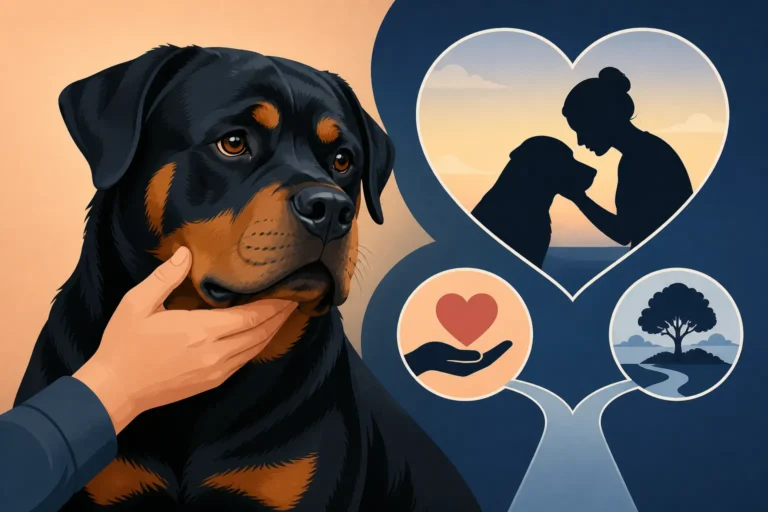
End-of-life decisions for a Rottweiler involve recognizing behavioral changes, chronic pain signs, and diminishing treatment effectiveness.
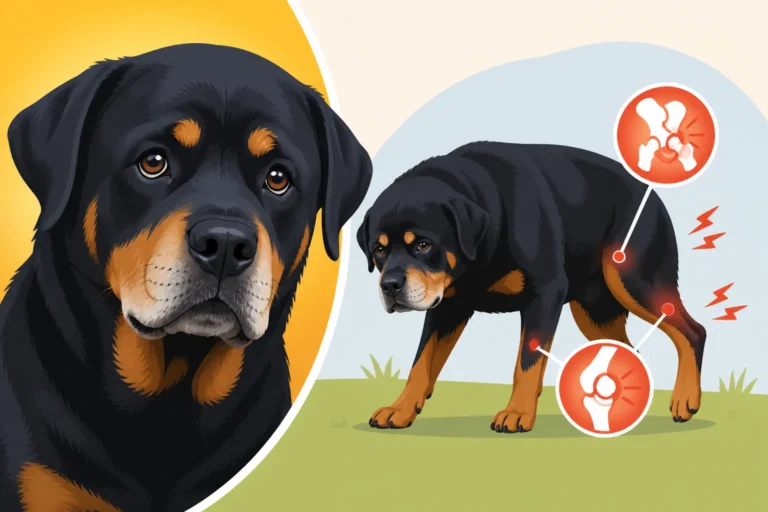
Senior Rottweiler mobility decline involves normal aging and medical red flags, explaining when to call the veterinarian for help.
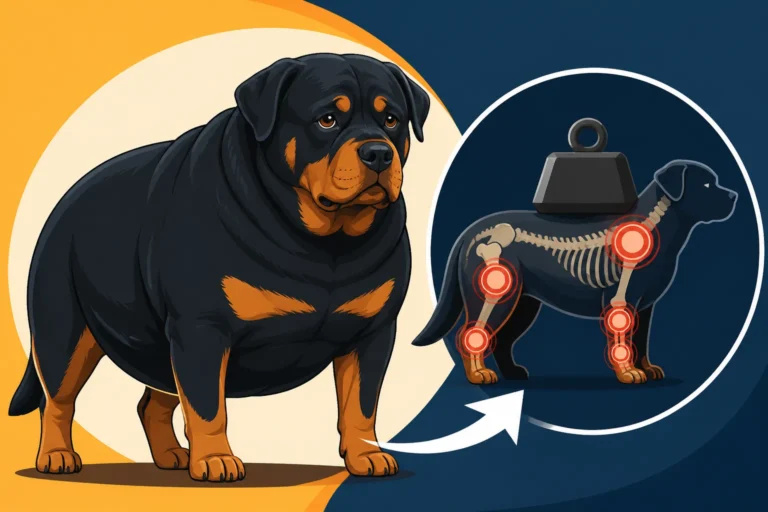
Rottweiler obesity adds dangerous physical strain and chronic inflammation, shortening lifespan and damaging joints and internal organs.
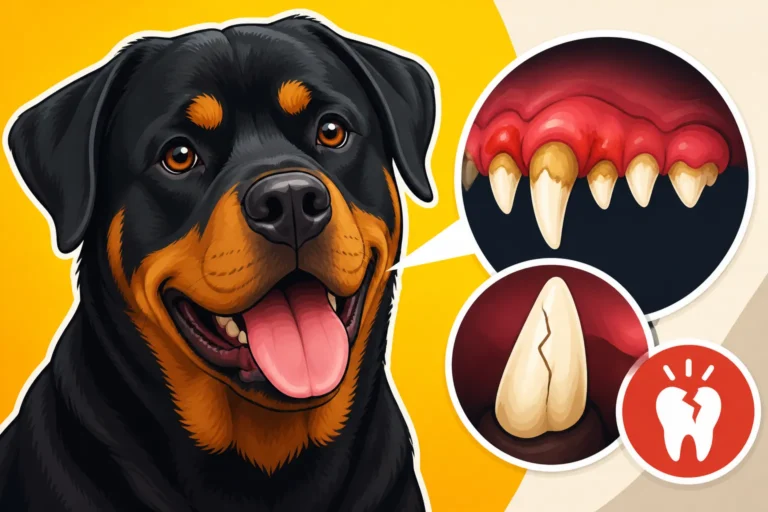
Rottweiler dental disease and cracked teeth stem from a three hundred pound bite force, heavy plaque buildup, and hard chewing items.
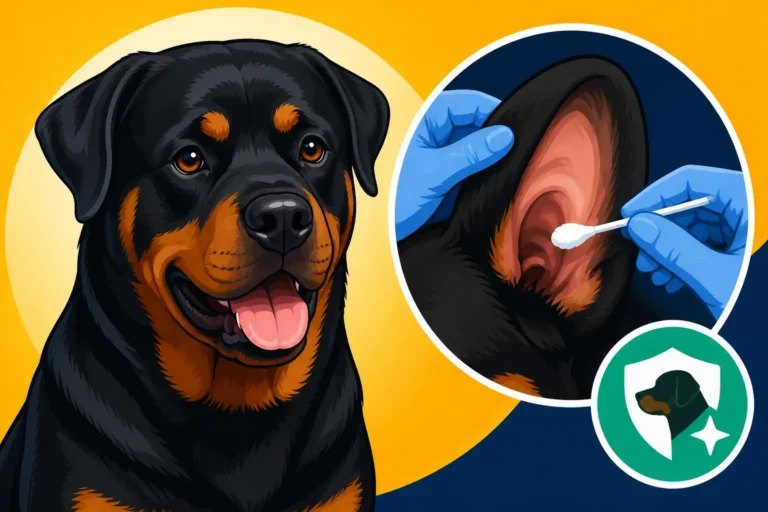
Rottweiler drop ears trap moisture and debris because pendulous ear flaps restrict airflow, leading to painful infections.
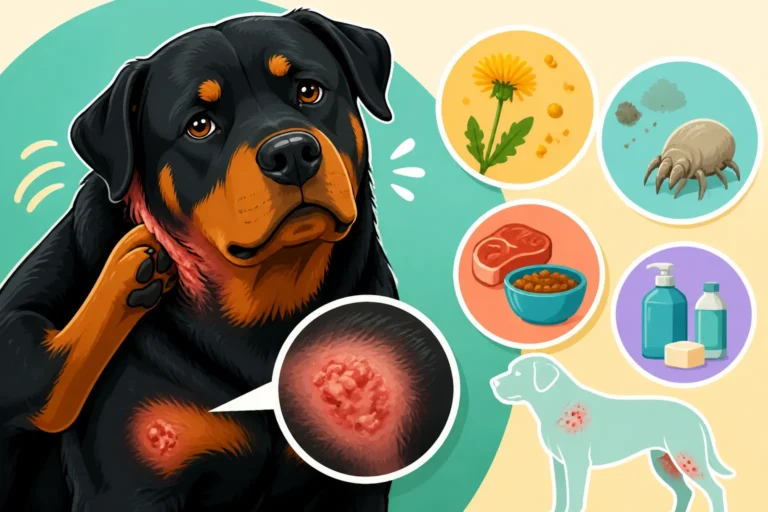
Rottweiler allergies and recurring skin infections stem from genetic traits and environmental triggers like pollen, mold, and dust mites.
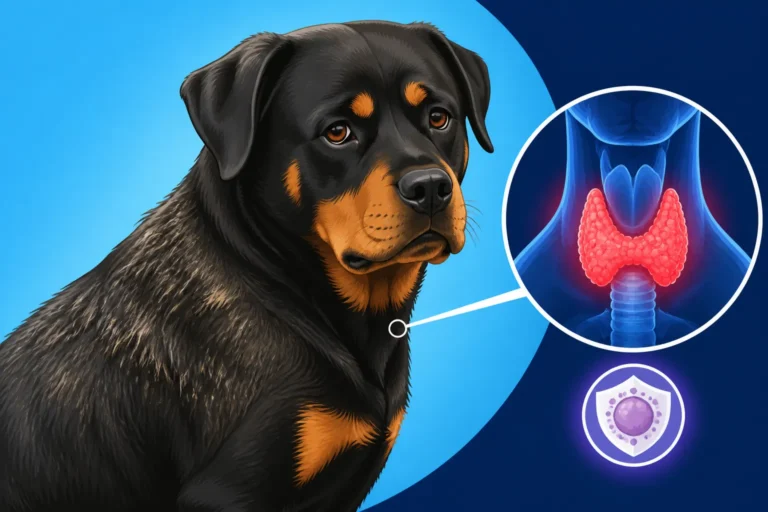
Hypothyroidism in Rottweilers causes a dull, thin coat, hair loss, sluggishness, and dry skin due to low hormone production.
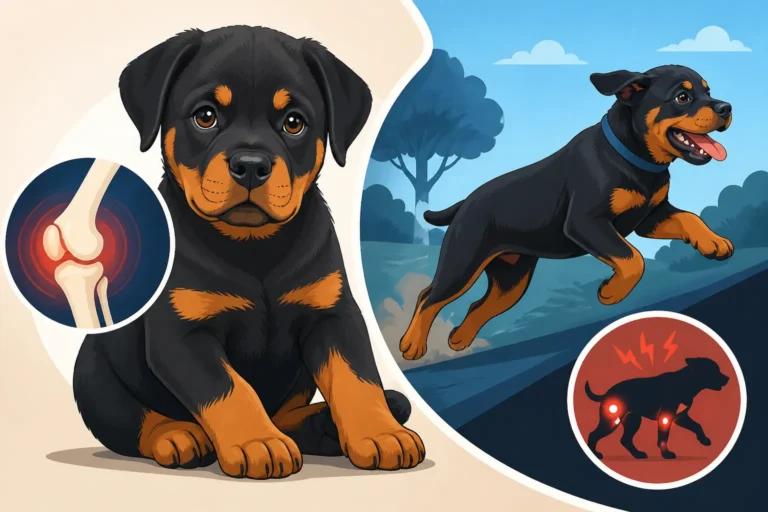
Rottweiler puppy joint vulnerability, open growth plates, and rapid weight gain explain why overexercise causes permanent joint damage.
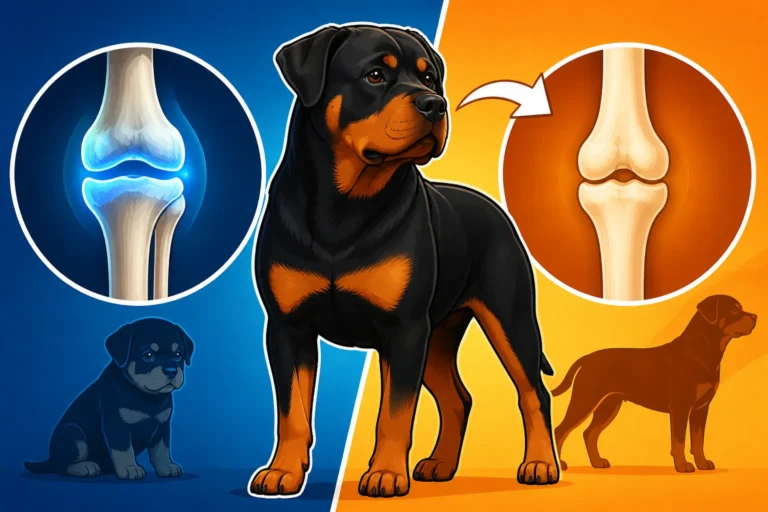
Rottweiler growth plates close at eighteen to twenty-four months, requiring activity protection to prevent lifelong joint issues.
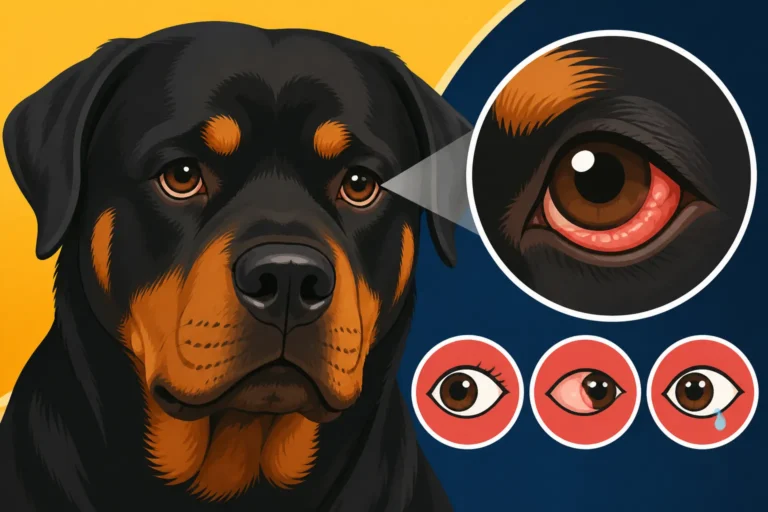
Rottweiler entropion and eyelid problems cause painful inward rolling, leading to chronic irritation and corneal ulcers.