Whether Neuter Age Changes Rottweiler Cancer Risk
Neuter age and its effects on cancer risk in Rottweilers helps owners make informed choices about large breed surgery timing.
Know what to watch for.
Breed-specific conditions, screening and DNA tests, what surgery actually costs, and the daily habits that stretch a healthy lifespan.

Neuter age and its effects on cancer risk in Rottweilers helps owners make informed choices about large breed surgery timing.
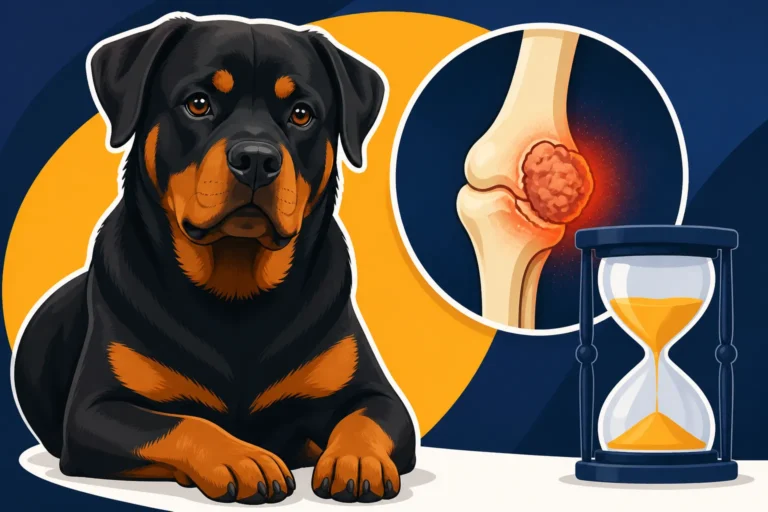
Rottweiler osteosarcoma survival times depend on aggressive bone cancer progression, early symptoms, and available treatment options.

Osteosarcoma pain management strategies help Rottweiler owners recognize bone cancer signs and provide effective veterinary medication options.

Chemotherapy protocols for Rottweilers, including options for osteosarcoma and lymphoma, explain treatment goals and side effect management.

A hundred-pound Rottweiler navigating life on three legs faces severe physical strain, joint stress, and balance challenges.
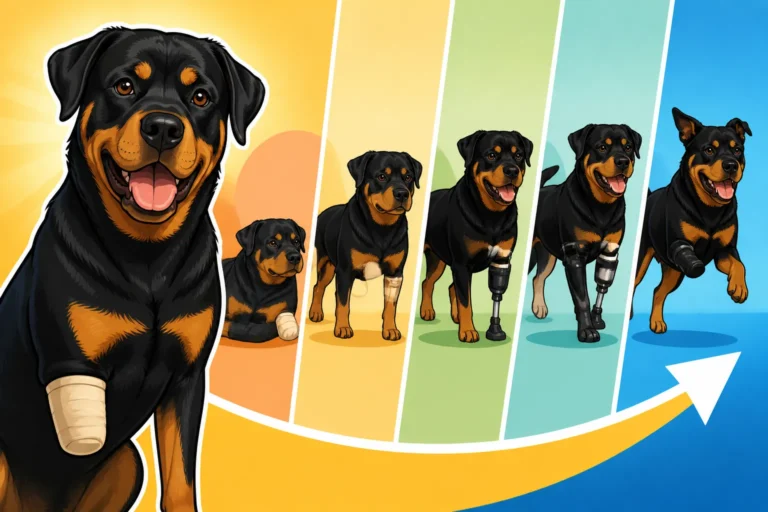
Rottweiler amputation recovery involves managing pain medication, preventing complications, and creating a safe, non-slip home space for your dog.
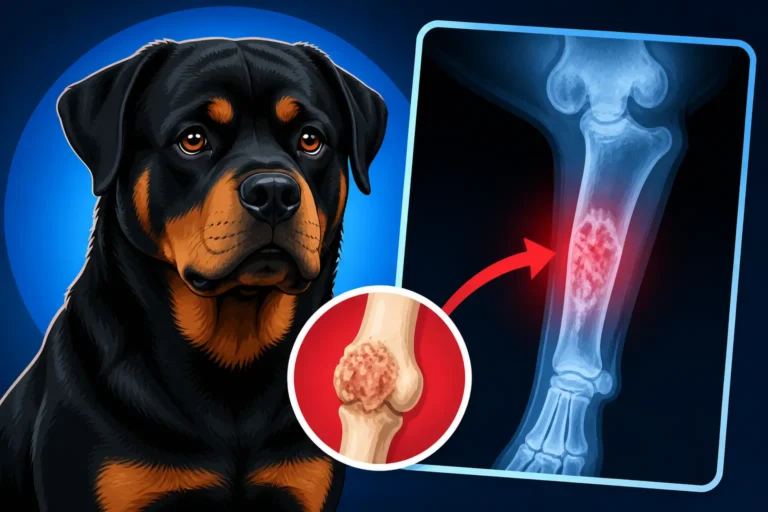
Rottweiler osteosarcoma diagnosis using X-rays to examine the radius, ulna, tibia, and femur bones after a dog develops a limp.
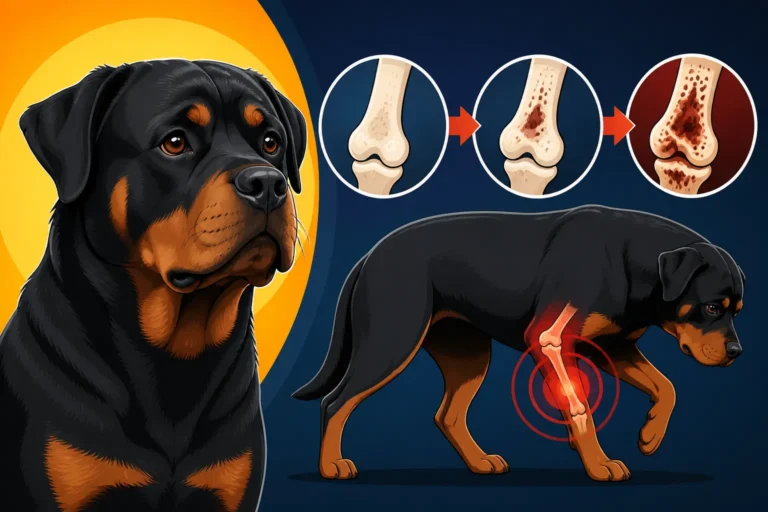
Rottweiler osteosarcoma progression details how fast this aggressive bone cancer advances and explains early signs of lameness.
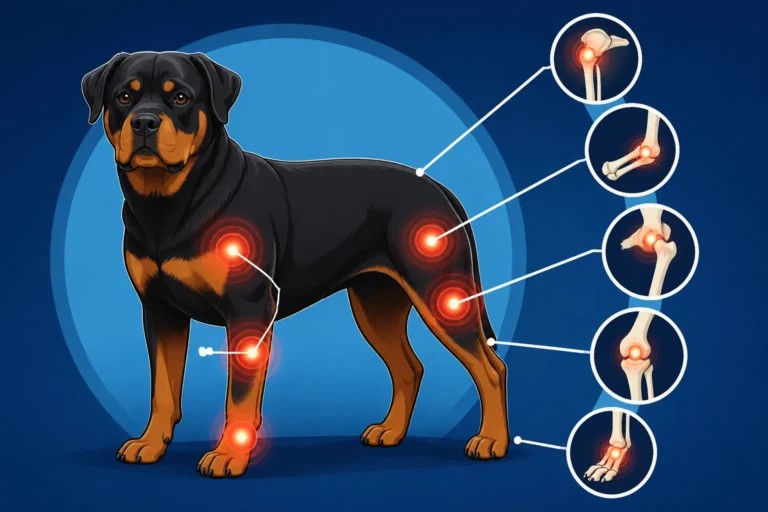
Osteosarcoma in Rottweilers most frequently strikes the long bones of the limbs, typically affecting middle-aged to senior dogs.
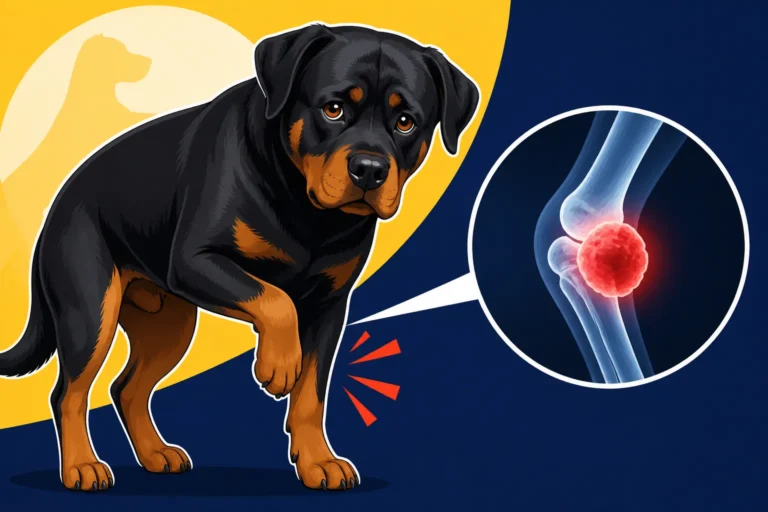
Early Rottweiler bone cancer signs, such as subtle leg limping and behavioral shifts, help owners identify osteosarcoma.