A Rottweiler That Blocks the Bedroom Door
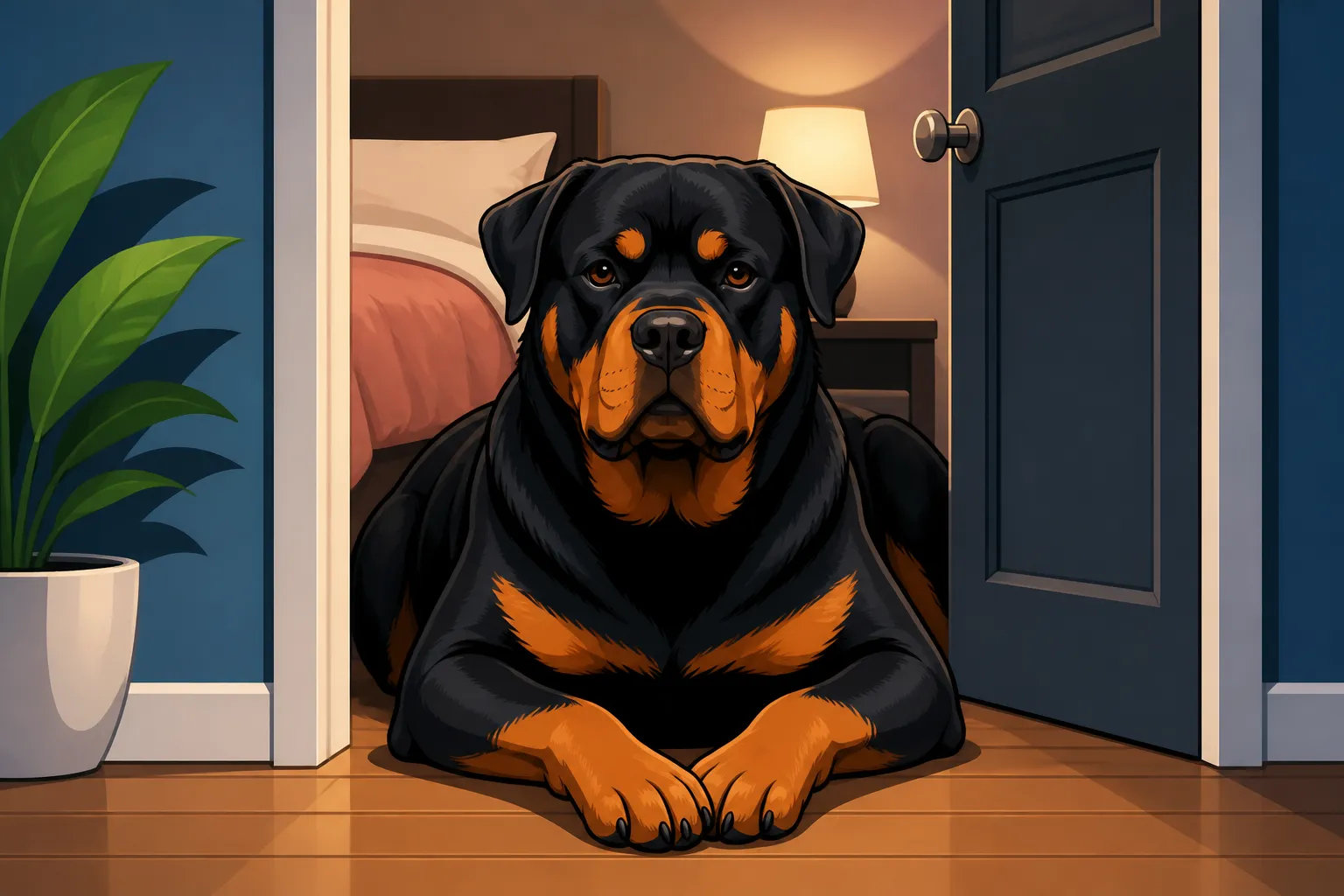
It's a familiar scene for many Rottweiler owners: you're trying to get into your bedroom, but your big, beautiful companion is sprawled across the threshold, looking utterly immovable. This isn't just an inconvenience; a hundred-pound dog blocking a doorway can be a real safety issue and a sign of deeper behavioral patterns. This guide will walk you through understanding why your Rottweiler might be doing this and offer practical, empathetic strategies to regain your space and foster respectful boundaries.
Understanding Why Your Rottweiler Blocks Doorways
When your Rottweiler parks itself in a doorway, it's easy to assume they're just being stubborn or oblivious to their size. But often, there's more to it than simple obstruction. This behavior can stem from various motivations, from the utterly benign to something that requires a bit more thoughtful management. Knowing the root cause is the first step toward finding a lasting solution.
The Instinct to Guard Space
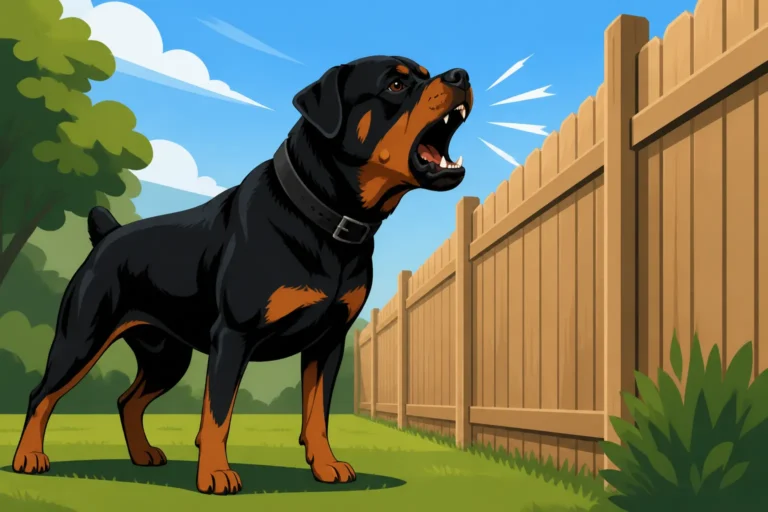
Rottweilers were historically bred as drover dogs, accompanying cattle to market and guarding the butcher's money. This lineage means they inherently possess a strong guarding instinct. While you might not be herding cattle, that innate desire to control and protect resources – which can include spaces like doorways, or even people – is still very much alive. A doorway, for a Rottweiler, can be a strategic point to oversee their territory and the movements within it. It's a prime spot to observe, and, from their perspective, protect their family. This behavior isn't necessarily aggressive; it's often rooted in their protective nature. It’s their way of saying, "I've got this covered." Understanding The Rottweiler Guarding Instinct and How to Shape It is crucial here, as it helps you reframe the behavior from an annoyance into a trait that can be channeled.
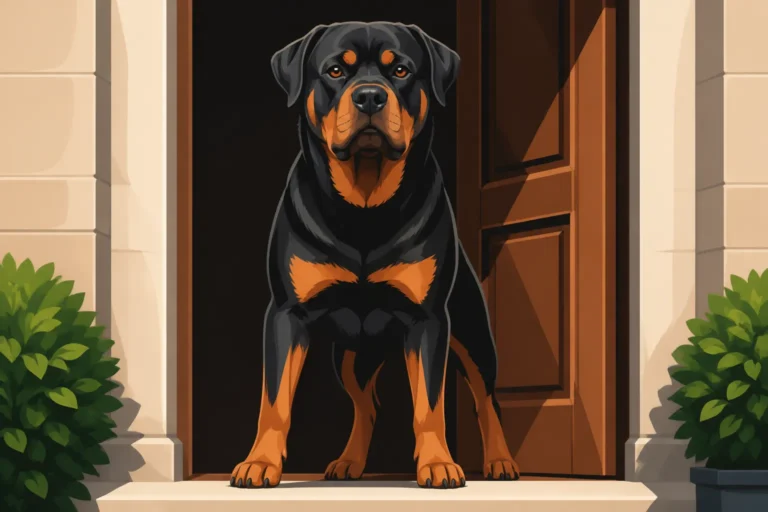
This territorial inclination means they might view the doorway as a choke point they need to control. They might be trying to manage who enters and exits, or simply asserting their presence in a high-traffic area. It’s less about being naughty and more about their ancestral programming kicking in. Sometimes, it’s a subtle way of declaring, "This is my space, and I'm aware of everything happening around it." They aren't trying to be defiant; they're operating on instincts refined over centuries.
Attention-Seeking and Learned Behaviors
Beyond guarding, sometimes a Rottweiler learns that blocking a doorway gets them exactly what they want: your undivided attention. Think about it: when you encounter a massive dog in your path, you can't just step over them. You have to engage. You might talk to them, try to coax them, or physically move them. Every one of these interactions, even if it's a frustrated sigh and a gentle nudge, reinforces the behavior. Your Rottweiler, being a smart and observant breed, quickly picks up on this. They learn that being an obstacle guarantees interaction.
This becomes a learned behavior, especially if they’ve been successful in the past. If, even once or twice, you've offered a treat to get them to move, or engaged in a game of "move the dog," they've made a mental note. They might be bored, seeking comfort, or just want a good head scratch, and blocking the door becomes their go-to strategy. It's important to differentiate this from a true guarding posture. A Rottweiler seeking attention might have a loose, wiggly body, perhaps even a soft gaze, whereas a guarding Rottweiler might be still, alert, and watchful. This subtle distinction, and recognizing Why a Rottweiler Body Blocks a Doorway, helps you decide on the appropriate training response.
Comfort and Proximity
Let's be honest, Rottweilers are big, cuddly creatures beneath their imposing exterior. They often crave proximity to their family members. A doorway might simply be a comfortable, cool spot where they can be near you without being right underfoot in the middle of the room. They might enjoy the draft, the sunlight, or simply the ability to keep tabs on everyone passing through. It's a strategic spot to be part of the action, even if it means inadvertently becoming a giant, furry speed bump.
Sometimes, this behavior is just an extension of their desire to be near you. If you're frequently in the bedroom, they want to be close to where you are, even if they're not in the room. They might sprawl there, enjoying the warmth of your presence, not realizing they've turned a functional entryway into a formidable barrier. It’s a sign of their devotion and desire for connection, albeit one that needs some gentle redirection for the sake of household harmony and safety. They might shift positions slightly when you approach, almost inviting interaction, which is a key difference from a truly guarding dog.
Managing Door-Blocking Behavior Effectively
Dealing with a large dog sprawled across a doorway requires a calm, consistent approach that focuses on teaching alternative behaviors rather than punishment. Confrontation can escalate guarding behaviors, especially with a breed as powerful as a Rottweiler. Instead, we want to gently guide them toward making better choices.
Teaching a "Place" or "Settle" Command
One of the most effective strategies is to teach your Rottweiler a strong "place" or "settle" command. This gives them an alternative, appropriate spot to be, away from the doorway, and rewards them for choosing that spot. Start by identifying a designated "place" – a comfortable dog bed, mat, or even a crate – in the room, but away from the immediate path of the door. Use high-value treats to lure them to their spot. Say "Place" or "Settle," guide them onto it, and immediately reward them. Repeat this many, many times in short, positive sessions.
Once they understand the command, begin to practice it when you approach the bedroom door. Before you even get close enough for them to block it, give the "Place" command. If they move to their spot, reward them generously. The goal is to make "Place" a highly rewarding alternative to doorway blocking. If you're struggling to teach this, a comprehensive online program like BAXTER & Bella can provide structured lessons that break down these complex commands into manageable steps, offering a great foundation for impulse control. You can also incorporate Rottweiler Impulse Control Games into your daily routine to strengthen this skill.
Consistent Doorway Manners
Consistency is absolutely key when it comes to managing doorway behavior. Every member of the household needs to be on the same page. If one person allows the Rottweiler to block the door and another corrects it, you're sending mixed signals, which is unfair and confusing for your dog. Establish a clear rule: no dog in the immediate doorway. This doesn't mean they can't be in the room, but the threshold itself needs to remain clear.
When approaching the door, if your Rottweiler is blocking it, avoid stepping over them or trying to force them to move with your feet. Instead, calmly walk a few steps back, give the "Place" command, and wait for them to move. If they don't respond, you might gently lure them with a treat or a leash if necessary, but avoid any physical pushing or scolding. The moment they clear the path, even slightly, offer praise. This teaches them that cooperation leads to good things, and blocking the door doesn't. Remember, Rottweilers are smart, and they will test boundaries, so your unwavering consistency is their clearest signal.
Using Physical Barriers and Management Tools
Sometimes, direct training isn't enough, or you need an immediate solution while you're working on the "Place" command. This is where physical barriers come in handy. A baby gate can be your best friend. Install a sturdy gate in the doorway you want to keep clear. This physically prevents your Rottweiler from blocking the entrance without any need for confrontation. It creates a clear boundary for them.
For longer periods, or if the door blocking is happening at night, crating can be an excellent management tool. A properly crate-trained Rottweiler views their crate as a safe, comfortable den. Ensure the crate is appropriately sized; a The Crate Size a Hundred Twenty Pound Rottweiler Needs is substantial. When you need the doorway clear, direct them to their crate with a calm, happy tone. This isn't a punishment; it's providing them with a secure place while you move freely. You can even leave a special chew toy in the crate to make it an even more positive experience. Products available on Amazon can help you find suitable gates or crates that can withstand the size and strength of a Rottweiler.
Long-Term Strategies for a Well-Behaved Rottweiler
Addressing doorway blocking isn't a one-time fix; it's part of an ongoing commitment to training and understanding your Rottweiler's natural tendencies. Building a strong foundation of trust and clear communication will prevent this and many other behavioral challenges.
Early Socialization and Training
The best defense against problematic behaviors is a good offense: early and consistent training. A well-socialized Rottweiler puppy, exposed to various people, places, and sounds in a positive way, is less likely to develop intense guarding behaviors or anxiety that could manifest as door blocking. Puppy classes are invaluable for this. They teach your Rottweiler puppy foundational manners and expose them to other dogs and people in a controlled environment. Think of it as shaping their worldview from a young age.
Continue with basic obedience classes throughout their first year. Commands like "stay," "come," and "off" are not just tricks; they are essential for communication and safety, especially with a powerful breed. A good training program, whether it’s in-person or an online one like BAXTER & Bella, emphasizes positive reinforcement, which builds confidence and a desire to please. This proactive approach during Rottweiler Puppy Training Through the First Year can prevent many issues before they ever take root, fostering a dog that respects boundaries naturally.
Recognizing and Redirecting Guarding Instincts
As we discussed, Rottweilers have a natural guarding instinct. It's not something you can, or should, train out of them entirely. Instead, the goal is to shape and channel that instinct in appropriate ways. If your Rottweiler is truly guarding the doorway – showing stiffness, a low growl, or a hard stare – it’s important not to punish the growl. A growl is a warning, a valuable communication tool. Punishing it can teach a dog to bite without warning. Instead, refer to resources like Why You Should Never Punish a Rottweiler Growl to understand how to respond appropriately.
When you notice signs of guarding, the best approach is often redirection. Instead of confronting them in the doorway, use a strong recall command to call them away to a different area. Once they move, reward them. This teaches them that moving away from the guarded spot leads to good things. You're effectively saying, "Thank you for alerting me, but I've got it from here. Now, come get your treat!" Over time, they learn to trust you to handle "threats" and relax their guarding posture. If the guarding is severe or escalates, don't hesitate to consult a professional behaviorist or a trainer experienced with Rottweilers. Finding a Rottweiler-Experienced Trainer Near You is a vital step in these situations.
Enrichment and Mental Stimulation
Sometimes, door blocking can be a symptom of boredom or insufficient mental stimulation. A Rottweiler is an intelligent working breed that needs more than just physical exercise. Their minds need to be engaged. Providing ample enrichment can reduce the likelihood of them seeking "jobs" like door guarding. Puzzle toys, interactive feeders, and scent work games are fantastic ways to tire out their brains. Consider rotating toys to keep things fresh and interesting.
Daily training sessions, even short ones, can also serve as mental stimulation. Teaching new tricks, practicing advanced obedience, or engaging in canine sports like obedience or rally can give your Rottweiler a purpose and a constructive outlet for their energy. A mentally satisfied Rottweiler is a less bored Rottweiler, and a less bored Rottweiler is often a less troublesome Rottweiler. It’s about fulfilling their inherent need for work and engagement, shifting their focus from guarding pathways to more acceptable activities.
Here's a quick reference for interpreting your Rottweiler's doorway behavior:
| Behavior Aspect | Signs of Attention Seeking/Comfort | Signs of Guarding/Control | Recommended Action |
|---|---|---|---|
| Body Language | Relaxed, loose, perhaps wagging tail, soft eyes, leaning into you. | Stiff, rigid, ears forward, hard stare, possibly low growl, tail stiff or tucked. | Redirect with "Place" or lure. |
| Vocalization | Whines, soft nudges, playful grumbles. | Low growl, sometimes a bark if someone approaches. | Avoid confrontation; redirect. |
| Response to Cue | Easily lured with treats or toys, responds to "come" or "move." | Reluctant to move, tenses up, might ignore commands. | Use barriers; consult a professional if persistent. |
| Motivation | Wants petting, play, to be near you. | Desires to control access, protect space or person. | Consistent "Place" training and boundary setting. |
Ultimately, a Rottweiler that blocks the bedroom door is communicating something. By taking the time to understand their motivations, whether it's their natural guarding instinct, a learned behavior for attention, or simply a desire for proximity, you can implement effective, positive strategies. With patience, consistency, and a little help from internal links like A Rottweiler That Blocks the Bedroom Door, you can ensure your Rottweiler is a well-behaved, integrated member of your family who understands and respects household boundaries, leaving your doorways clear and your home harmonious.
Disclaimer
This article is for general informational purposes only and does not constitute professional advice. Laws, prices and regulations vary by location and change over time. Consult a qualified professional for guidance on your specific situation.