Trading Up to Take Something From a Rottweiler
The fear of needing to retrieve something from your beloved Rottweiler, especially if it's something dangerous or precious to you, is a very real and understandable concern. That moment when your big, powerful companion clamps down on something they shouldn't have can send a jolt of panic through you, leaving you wondering how to get it back without conflict. This guide is here to help you navigate those tricky situations using a proven, trust-building method called "trading up," turning a potentially tense standoff into a cooperative exchange that strengthens your bond.
Understanding Why Your Rottweiler Might Resource Guard
Before we dive into the solution, it's important to understand why your Rottweiler might be inclined to guard items. It’s rarely about malice or defiance; it's often rooted in natural canine instincts.
The Natural Instinct to Protect Valuables
Rottweilers, like all dogs, possess an inherent instinct to guard resources. This isn't necessarily aggression in the human sense, but a deep-seated survival mechanism. Think about their wild ancestors: in a pack, the individual who successfully guards a piece of food or a safe den site enhances their chances of survival. For your Rottweiler, "resources" can be incredibly varied. It might be their prized chew, a dropped food morsel, a stolen sock, a comfy bed, or even a particular spot on the couch. This instinct isn't unique to the breed, but given a Rottweiler's impressive size, strength, and the power of their jaws, any guarding behavior becomes a significant safety concern that needs careful management. Feeling intimidated when your powerful dog snarls over a coveted item is a perfectly natural reaction.
When your Rottweiler suddenly freezes over a discarded chicken bone in the park or confidently strolls away with your expensive sunglasses, they're not trying to be disobedient or spiteful. They are communicating, in their own canine way, "This is mine, and I don't want to lose it." It’s crucial to recognize this primitive, instinctual drive rather than perceiving it as a personal challenge. Punishing a growl, for instance, often suppresses this vital warning sign, meaning that in future, your dog might bypass the growl and go straight to a bite without giving you any forewarning. We’ve covered this in more detail in our article Why You Should Never Punish a Rottweiler Growl, emphasizing the importance of understanding rather than suppressing these signals.
This protective instinct can actually begin manifesting in subtle ways during early puppyhood. A Rottweiler puppy might guard a favored chew from their littermates or even from you. If these initial, mild displays are not gently managed, understood, and redirected through positive methods, they can unfortunately escalate as the dog matures. As your Rottweiler grows into a confident adult, they may become more assertive in enforcing their perceived ownership of items, making early intervention critical. Addressing Rottweiler Behavior Problems That Start Small is always easier and safer than waiting until they become deeply ingrained habits.
Early Warning Signs of Resource Guarding
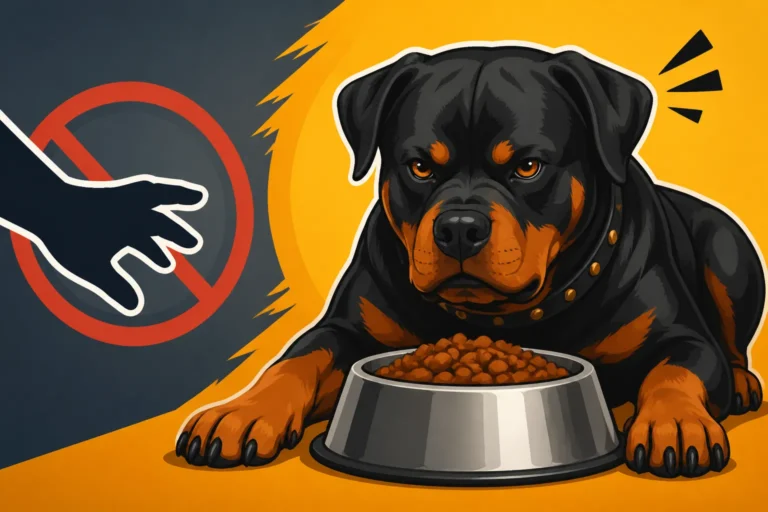
Resource guarding seldom appears as a sudden, full-blown aggressive display. More often, it develops gradually, starting with subtle cues that many owners, especially those new to the breed, might misinterpret or overlook entirely. Keep a watchful eye for signs such as a stiffening of your Rottweiler's body when you approach an item they possess, a rapid gulping down of food or a treat as you draw near, or an intense, hard stare. Sometimes, they might even quickly grab the item and relocate, trying to create physical distance between themselves and you, signaling, "Please don't come closer; this is mine."
As the behavior progresses or if early warnings are ignored, the signs can become much more overt and concerning. You might start to hear a low growl, witness a quick baring of teeth, see a swift snap in the air, or even experience a lunge towards you if you intrude too closely into their personal space around the guarded item. It is absolutely vital to recognize these increasingly clear signals as communication, rather than merely pure aggression. Your Rottweiler is telling you, unequivocally, that they feel threatened that you will take their valuable item away, and they are preparing to defend it. Ignoring these escalating signals or attempting to confront them directly will unfortunately only reinforce their belief that they must guard, potentially intensifying the behavior.
Catching and addressing these behaviors early, ideally during Rottweiler Puppy Training Through the First Year, is paramount. If you notice your young Rottweiler puppy tensing up when you reach for their toy, or giving even a tiny, almost imperceptible growl over a favored chew, consider that your immediate cue to begin practicing "trade up" games. Do not delay until they are a 100-pound adult with a deeply ingrained and potentially dangerous guarding issue. The longer the behavior is allowed to be practiced and reinforced (even if inadvertently, by you backing off), the more challenging and time-consuming it becomes to modify. Early intervention not only ensures safety but also builds a foundation of trust.
The "Trade Up" Strategy Explained
Now that we understand the roots of resource guarding, let's talk about the solution: the "trade up" strategy. This method is all about cooperation and positive reinforcement.
What "Trading Up" Really Means
"Trading up" is a highly effective positive reinforcement technique designed to teach your Rottweiler that voluntarily relinquishing an item they possess is a profoundly rewarding experience, rather than a frustrating loss. Instead of attempting to forcibly remove something from them, you actively choose to offer them something even more desirable and valuable in exchange. The fundamental goal here is to establish a strong, positive association in your dog's mind: "When I willingly give this item to my human, I consistently receive something truly awesome, exciting, or delicious in return!" This strategy fundamentally shifts the dynamic away from a potential conflict over perceived ownership and transforms it into a positive, voluntary exchange that actively strengthens the bond and trust between you and your Rottweiler.
Imagine a common scenario: your Rottweiler has managed to snatch your expensive wireless earbuds from the coffee table. Your immediate, instinctive reaction might be to rush over, grab them back, and perhaps scold your dog. But what message does this convey from your dog's perspective? It inadvertently teaches them that you are a threat to their possessions, and that next time, they should probably run away, hide the item, or even guard it more aggressively to prevent you from taking it. With the "trading up" approach, the scenario changes dramatically. You would calmly approach your Rottweiler, perhaps with a cheerful, inviting tone, and immediately present a mouth-watering, high-value treat – like a piece of cooked chicken, a cube of cheese, or a piece of hot dog. As they naturally open their mouth to eagerly take the irresistible treat you've offered, you gently and smoothly take the earbuds. Simple, isn't it? The critical element here is to consistently offer something that your Rottweiler perceives as genuinely more valuable than the item they currently hold.
This compassionate method effectively bypasses direct conflict and significantly minimizes stress for both you and your loyal companion. It actively teaches your Rottweiler that your hands are not solely instruments for taking cherished items away, but rather a source of wonderful, desirable things. Over time, through consistent positive experiences, your Rottweiler will learn that surrendering an item on cue is always worth their while, leading to a truly rewarding outcome. This approach is particularly vital for a powerful breed like the Rottweiler, where attempting to use force or intimidation can easily backfire, potentially escalating aggression due to their inherent strength and guarding instincts. Instead, it fosters a relationship built on cooperation, mutual respect, and trust, making your life together much safer and more harmonious.
The Golden Rules for Successful Trading
Implementing the "trade up" strategy successfully hinges on adherence to a few critical "golden rules." These principles ensure that the process is positive, effective, and trust-building for your Rottweiler.
- Always have something better: This rule is non-negotiable for success. If your Rottweiler has a regular piece of kibble, you need a genuinely high-value treat—think boiled chicken, savory hot dogs, or delicious cheese. If they're holding onto a treasured and durable chew, such as those discussed in Rottweiler Chew Toys That Survive the Jaw, you might need not just one but several small, equally exciting treats, or perhaps a different, novel, and equally robust chew. The item you offer in exchange must be perceived as more valuable by them, not just by you. This often means diligently carrying a pouch filled with irresistible goodies on your person, especially during your Rottweiler's puppy and adolescent phases when they are actively learning boundaries and building associations.
- Make it a relentlessly positive experience: Your tone of voice, your body language, and your overall demeanor are paramount. Always approach your Rottweiler calmly, speak with an upbeat, cheerful, and inviting voice, and present the trade with genuine enthusiasm. This interaction should never feel like a tense negotiation or a confrontational challenge; instead, it should come across as an exciting and rewarding opportunity for your dog. If you are tense, hesitant, or project anxiety, your Rottweiler will instinctively pick up on those subtle cues and may become wary or defensive. Our goal is for them to associate your approach with good things, not with feeling cornered or threatened.
- Practice, practice, practice (proactively!): Do not, under any circumstances, wait until your Rottweiler has something dangerous or highly valuable to you before you start practicing "trading up." Make this a regular, fun, and proactive game. Begin by offering a trade for a low-value toy they already possess, or even for their empty food bowl after they've finished eating. The more frequently you practice this positive exchange, the more fluent and willing they will become in the "drop it, get a fantastic treat" routine. This consistent practice builds a robust history of successful, positive trades, so that when a genuine emergency or high-stakes situation inevitably arises, your Rottweiler is already well-primed and willing to cooperate. Think of it like conducting fire drills—you practice them calmly when there's no actual fire, so everyone knows exactly what to do when a real emergency occurs.
- Return the original item (sometimes): This is an incredibly powerful trust-building technique. If your Rottweiler trades you a low-value item that isn't dangerous or forbidden, sometimes (not always!) give it back to them after they have happily enjoyed the high-value treat. This subtle act teaches them a profound lesson: "trade" doesn't necessarily equate to a permanent loss. They learn that you are not merely a taker, but also a generous giver, and occasionally, even a returner of their possessions. This reinforces their trust in you and significantly encourages them to relinquish items more readily in future interactions, solidifying your role as a benevolent leader.
Step-by-Step Guide to Implementing the Trade-Up
Let's get down to the practical application. We'll start with the easiest scenarios and gradually work our way up to more challenging situations.
Starting Small with Low-Value Items
When you first introduce the fundamental concept of "trading up" to your Rottweiler, it is absolutely essential that you begin this training journey with items that your dog does not perceive as highly valuable. This might be an old, ignored chew toy, an empty food bowl once they’ve finished their meal, or even a crumpled piece of paper that they've simply sniffed and shown minimal interest in. The primary objective at this initial stage is to create a perfectly predictable and overwhelmingly positive experience for them, completely devoid of any pressure, conflict, or perceived threat. You are essentially setting your Rottweiler up for guaranteed success right from the very beginning, ensuring that their first few "trades" are easy, confidence-building wins that foster trust.
To kickstart this process, gather a generous supply of truly irresistible, high-value treats – we're talking about tiny, pea-sized pieces of cooked chicken, delectable cheese, or savory hot dogs. Approach your Rottweiler calmly while they are in possession of one of these predetermined low-value items. With an overtly cheerful, inviting, and encouraging tone, utter your chosen "trade!" or "drop it!" cue, and immediately extend your hand to present the high-value treat directly to their nose. As their mouth naturally opens to eagerly accept this much more appealing treat, gently and smoothly take the low-value item. Lavish them with enthusiastic praise, allow them to thoroughly enjoy their delicious reward, and then, depending on the item, simply put the original item away, or occasionally, immediately give it back to them to further build trust. Repeat this entire process several times a day in short, engaging, and fun-filled sessions.
Consistency in this practice is the absolute key to its success. Every single time you wish to take something from your Rottweiler, especially during these formative early stages, make it an intentional trade. Actively resist the urge to simply grab items away from them. This consistent application of positive reinforcement will very quickly build a powerful association in their intelligent minds: "My human approaching me when I have something always means a super yummy treat is coming!" This foundational understanding is critically important for effectively teaching a young Rottweiler, particularly during Rottweiler Puppy Training Through the First Year, how to willingly and happily relinquish items upon request. Remember, you're not just training a simple behavior; you are meticulously building a robust framework of trust, clear communication, and willing cooperation with your powerful companion.
Progressing to Higher-Value Possessions
Once your Rottweiler is demonstrating consistent and reliable willingness to trade low-value items, you can, very gradually and thoughtfully, increase the perceived value of the items they possess during your training sessions. This progression must be slow, deliberate, and never rushed. Do not make the mistake of jumping directly from an old, ignored rag to their absolute most cherished bone in one giant leap. Instead, transition by moving to slightly more interesting toys, then perhaps a half-eaten but still desirable dental chew, and continue this incremental increase in item value. For each step, always be meticulously prepared with an even higher value treat than the item your Rottweiler currently has. This means if they are holding their second-favorite toy, you need to offer their absolute most favorite treat, or perhaps a brand-new, incredibly exciting toy, something perhaps you ordered specifically for this purpose from a major online retailer like Amazon.
During these intermediate stages, continue to diligently use your chosen "trade" cue, offer the irresistible treat, and gently take the item. As mentioned before, if the item is not dangerous or forbidden, occasionally return it after they have enjoyed their reward. This crucial step powerfully reinforces the idea that giving something up doesn't automatically mean it's gone forever, which is a massive trust-builder. This entire phase is dedicated to solidifying the "trade-up" concept across a broader and more varied range of objects. Throughout this process, pay extremely close attention to your Rottweiler's body language. If you observe any stiffness, hesitation, a hard stare, or any other signs indicative of Reading a Still Rottweiler That Is Not Relaxed, it's a clear indication that you might be progressing too quickly, or that the "trade" you're offering isn't perceived as sufficiently high-value by your dog. Adjust accordingly, and consider taking a step back to an easier item.
This is also an excellent opportunity to introduce and practice a "give" or "drop it" command as a standalone instruction. Begin by practicing this command without an item in their mouth, then move to items that hold little to no value for them. The ultimate goal is for them to learn to willingly release an item even when an immediate, tangible trade isn't visibly presented, though you should always reward them for compliance. This represents a subtle but significant progression, moving beyond a simple trade to actively obeying a command to release an object. For comprehensive guidance on foundational obedience commands like these, many dog owners find resources like BAXTER & Bella's online puppy training programs incredibly helpful, as they break down these complex behaviors into manageable, easy-to-follow steps suitable for Rottweilers.
When to Seek Professional Help
While the "trading up" strategy is remarkably effective and empowering for both dog and owner, there are specific situations where a Rottweiler's resource guarding behavior may have become too deeply entrenched, too severe, or too dangerous for an individual owner to manage safely on their own. If your Rottweiler is growling aggressively, snapping, or actually biting when you attempt a trade, or if the guarding behavior is escalating rapidly and unpredictably, this is a clear signal that it is time to immediately enlist the expertise of a qualified professional. This decision should never be viewed as a personal failure on your part; rather, it is a highly responsible and mature recognition that some behavioral challenges, particularly with a powerful breed like a Rottweiler, demand expert intervention and guidance for the safety of everyone involved.
A certified professional dog trainer with specialized experience in behavior modification, or ideally, a veterinary behaviorist, possesses the necessary skills and knowledge to accurately assess the exact severity of the guarding behavior. They can help identify any underlying causes or triggers that might be contributing to the problem, and then meticulously develop a tailored, safe, and effective training and management plan. These professionals can teach you advanced techniques, observe your interactions for subtle cues you might be unknowingly missing, and safely guide you through the intricate process of behavior modification. In severe cases, they may also recommend crucial safety measures, such as implementing Muzzle Training a Rottweiler Before You Need It, to ensure safety during all training sessions and interactions. Never feel ashamed or embarrassed to seek professional help; ensuring the safety and well-being of all members of your household, human and canine, is always the paramount priority.
When choosing a professional, it is critically important to find someone who exclusively utilizes positive reinforcement and force-free training methods and possesses demonstrable experience working with large, powerful breeds like Rottweilers. Actively avoid any trainers who advocate for harsh corrections, intimidation, or punishment-based techniques, as these methods are not only inhumane and damaging to your relationship but can also tragically exacerbate resource guarding behaviors, making them more dangerous, and utterly destroy the trust you're striving to build with your dog. A truly competent and ethical trainer will work collaboratively with you, helping you to understand your Rottweiler's motivations and empowering you to build a stronger, safer, and more harmonious relationship. Understanding What a Private Rottweiler Trainer Charges can also help you budget for this invaluable and often life-changing investment in your dog's well-being and your family's safety.
Essential Tools and Training Aids
Having the right resources and implementing smart management strategies are crucial for ensuring the success of your trade-up training.
High-Value Treats and Toys
The absolute cornerstone of the "trade up" strategy’s effectiveness hinges entirely on the perceived value of what you are offering your Rottweiler in exchange. Your dog must genuinely believe that what you are presenting to them is significantly and unequivocally better than the item they currently possess. This necessitates moving far beyond everyday dry kibble or standard dog biscuits. For the vast majority of Rottweilers, highly palatable cooked meats—such as small, enticing pieces of chicken breast, savory hot dogs, or tender steak—are incredibly motivating. Additionally, small cheese cubes, freeze-dried liver treats, or specialized soft, aromatic training treats are also excellent choices for commanding their attention. You can often find a wide variety of these crucial high-value options at your local pet supply store or conveniently through online retailers like Amazon.
It's a very smart practice to regularly rotate your selection of high-value treats to maintain an element of excitement and unpredictability. Avoid using the exact same treat every single time, as even the most delicious offering can lose some of its motivational power if it becomes too routine. Some days, offer chicken; on others, cheese; and perhaps on another, a tiny dollop of xylitol-free peanut butter. The novelty and surprise often significantly enhance the perceived value and eagerness of your Rottweiler to participate. Furthermore, it's highly recommended to reserve these truly high-value treats exclusively for special training scenarios, particularly for trade-up exercises. This exclusivity helps these treats retain their "special status," ensuring they remain maximally motivating when you truly need them.
Beyond food, certain specific toys can also serve as effective high-value trades, especially if your Rottweiler exhibits a stronger toy drive than food motivation in particular contexts. This might include a brand-new, exciting squeaky toy, a durable rubber chew toy liberally stuffed with peanut butter or another delectable spread, or a specific tug toy that they rarely get to play with, making it a coveted item. The key characteristics are novelty, excitement, and durability, as Rottweilers possess powerful jaws. Always thoughtfully consider what your individual Rottweiler finds genuinely irresistible and tailor your trade-up items accordingly.
| Item Category | Examples of Lower-Value Items (for practice) | Examples of High-Value Trade Items (for real trades) |
|---|---|---|
| Food | Dry kibble, plain biscuits | Cooked chicken, hot dogs, cheese, freeze-dried liver |
| Chews | Old dental stick, worn-out rawhide | Bully stick, stuffed Kong, novel long-lasting chew |
| Toys | Ignored plush toy, old tennis ball, empty cardboard roll | New squeaky toy, favorite interactive tug toy, puzzle toy with treats |
| Stolen Household Items | Sock, napkin, remote control (often low-value for them) | Cooked meats, high-value chews, favorite interactive toy |
Management Strategies to Prevent Problems
When it comes to addressing resource guarding, prevention is always, without exception, better than attempting to cure an entrenched behavior. Implementing robust and proactive management strategies is crucial to minimize or entirely eliminate opportunities for your Rottweiler to engage in guarding valuable items in the first place. This means diligently "puppy-proofing" your entire home, much more rigorously than you might initially think, similar to how you would childproof for a curious toddler. Keep all tempting "stolen items" – such as shoes, TV remote controls, food scraps, or any other household objects they might find appealing – securely out of their reach. Utilize baby gates or exercise pens to restrict access to certain rooms or areas of your home, and consider keeping your Rottweiler on a leash attached to you when you cannot actively supervise them, particularly during critical learning phases when they are still developing appropriate behaviors.
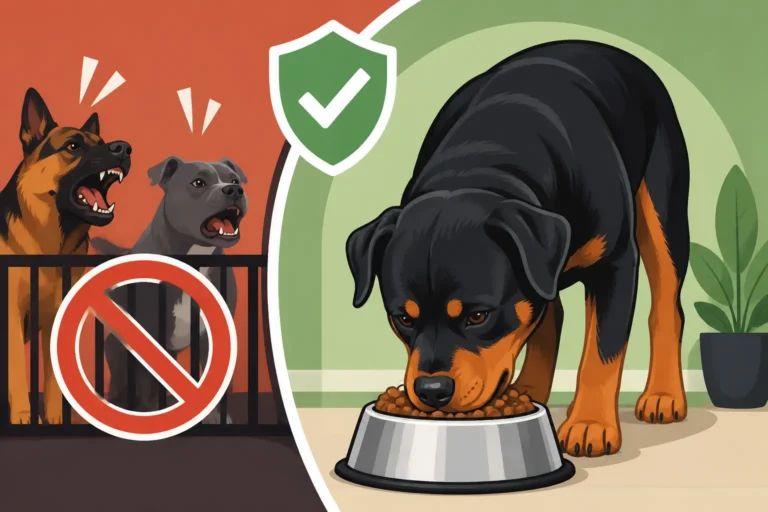
It's also essential to supervise all chewing and eating sessions. If your Rottweiler is enjoying a high-value chew, ensure they are in a safe, quiet, and comfortable space where they will not feel any perceived need to guard it from you or from other pets in the household. If you anticipate needing to take the chew away for any reason (e.g., they're nearly finished, or it's becoming too small to be safe), always, always employ the "trade up" method. This proactive and consistent supervision is key to preventing problematic guarding behaviors from even beginning to manifest, or from inadvertently being reinforced. In multi-dog households, feeding dogs in separate rooms or individual crates is not just a recommendation but often a non-negotiable management strategy to prevent food guarding between animals.
Furthermore, provide your Rottweiler with abundant appropriate and engaging enrichment to significantly reduce the likelihood of them seeking out and guarding inappropriate household items due to boredom or lack of stimulation. Rottweiler Enrichment Beyond Walks is a vital component of their overall well-being. This includes providing sturdy, durable chew toys that can withstand the immense strength of a Rottweiler's jaw, as discussed in Rottweiler Chew Toys That Survive the Jaw, engaging puzzle feeders that challenge their minds, and consistent, regular training sessions that provide mental stimulation. A Rottweiler who is mentally stimulated and physically satisfied is far less likely to engage in undesirable or problematic behaviors like resource guarding. Consider exploring robust toy options from reputable brands like Kong or West Paw, which are readily available on Amazon and designed specifically for powerful chewers. Ultimately, a tired, happy, and well-exercised Rottweiler is a cooperative, less anxious, and more harmonious companion.
Disclaimer
This article is for general informational purposes only and does not constitute professional advice. Laws, prices and regulations vary by location and change over time. Consult a qualified professional for guidance on your specific situation.