Rottweiler Whale Eye and Other Warning Signs
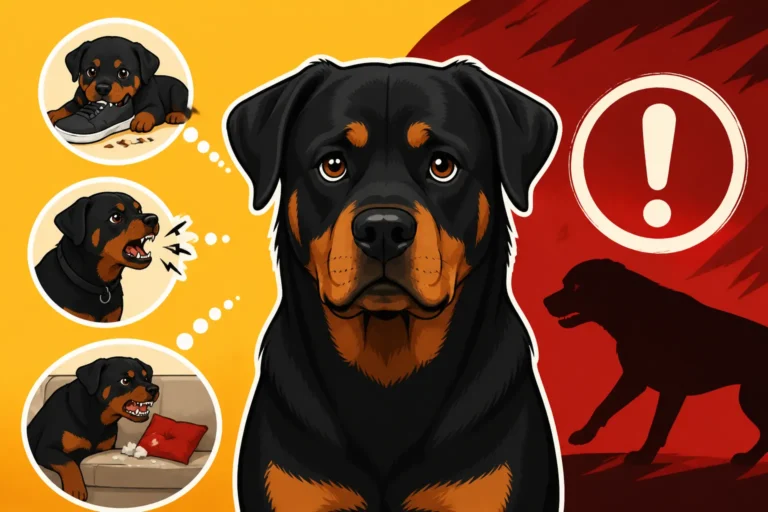
It's a common misconception that reading a dog, especially a powerful breed like a Rottweiler, is easy. We often miss the subtle cues, the quiet warnings that our dogs give us long before they might escalate to something more overt. That slight stiffening of the body, the shift in gaze, or the almost imperceptible tensing of the jaw can all be profound signals that your Rottweiler is uncomfortable, fearful, or on the verge of reacting. This guide is here to help you decipher those crucial, often-missed messages, specifically focusing on "whale eye" and other vital warning signs so you can understand and respond to your Rottweiler more effectively and prevent unwanted situations.
Understanding "Whale Eye" in Your Rottweiler
When we talk about "whale eye," it's one of those vivid terms that dog trainers use to describe a very specific, and often concerning, visual cue. It's not about your Rottweiler actually seeing whales, of course, but rather the way their eyes look when they're feeling stressed, fearful, or even a little bit threatened. Recognizing this sign is critical for any Rottweiler owner, because it's an early indicator that your dog is experiencing significant discomfort.
What "Whale Eye" Looks Like
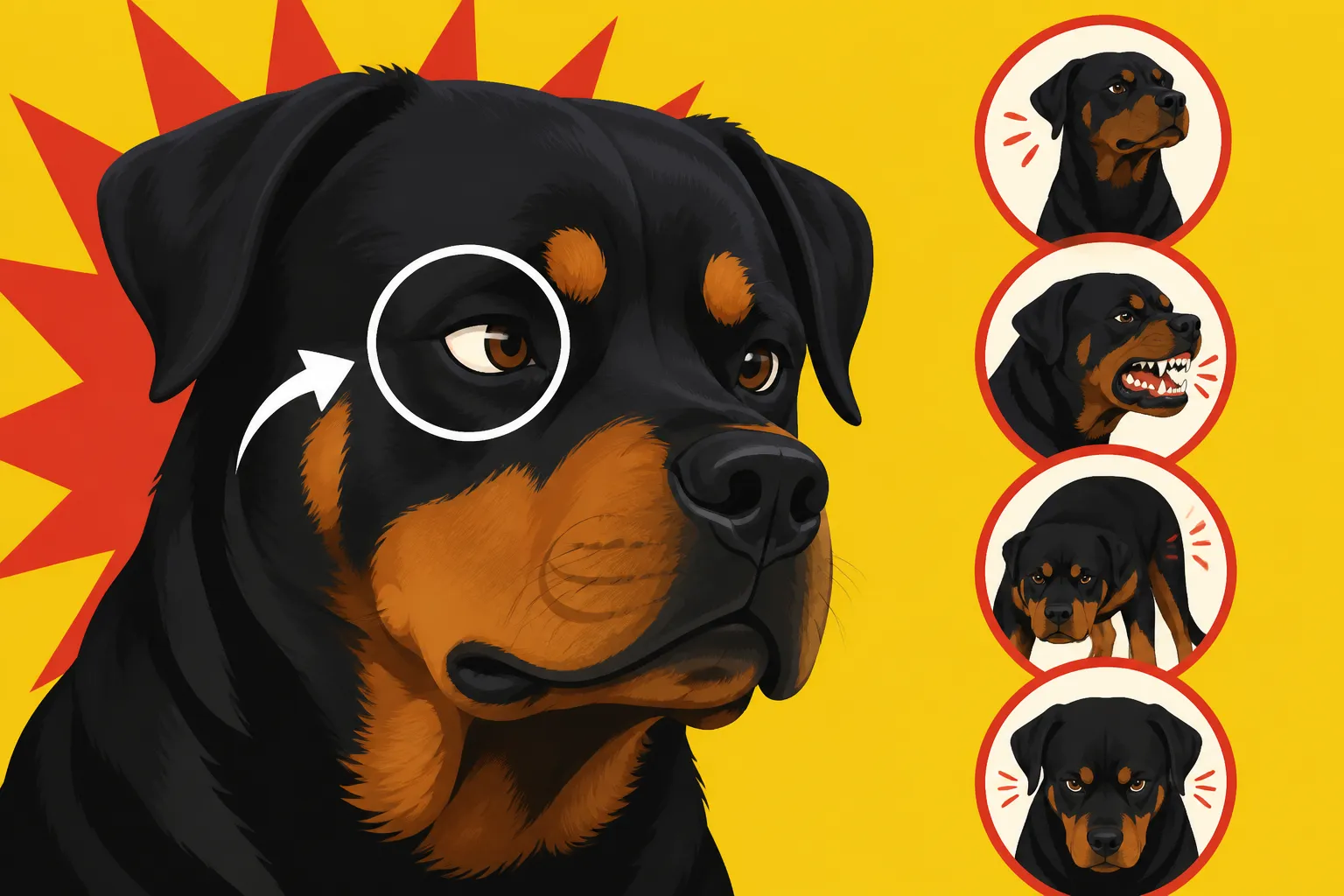
Imagine your Rottweiler is looking directly at something, but then you notice the whites of their eyes showing prominently on either side of their iris, particularly at the inner or outer corners. Their head might be turned slightly away, but their eyes are still tracking the source of their anxiety. It's like their eyes are bulging or widening just enough for that white rim to become visible, giving them a strained, almost shocked expression. This isn't just a casual glance sideways; it's a specific tension in the facial muscles around the eyes that reveals an underlying unease.
This isn't to be confused with a Rottweiler just naturally looking to the side, where the whites might show briefly. The key is the tension in the face, the stillness of the head combined with the fixed, wide-eyed stare, and the overall body posture that usually accompanies it. It’s a very particular look, and once you learn to spot it, it becomes unmistakable. If you see this, it’s a big red flag that your dog is feeling cornered or worried about something in their environment.
Why "Whale Eye" is a Warning Sign
The presence of "whale eye" signals that your Rottweiler is feeling stressed, anxious, or uncomfortable with a situation, person, or other animal. It's often a precursor to further escalation if the stressor isn't removed or the situation isn't de-escalated. Think of it as your dog's way of saying, "I'm not okay with this, and I feel like I can't escape." It suggests an internal conflict: they might want to move away, but feel unable to, so their eyes become a window to their internal state.
For a powerful breed like a Rottweiler, understanding these subtle cues is paramount. Because of their size and strength, any signs of discomfort need to be taken seriously and addressed immediately. Ignoring "whale eye" can lead to a dog feeling unheard and, eventually, resorting to more explicit warnings like growling, lunging, or even snapping. It's a call for help from your dog, a plea for you to intervene and make them feel safe again. Early recognition can prevent a potentially dangerous situation from developing, keeping both your dog and those around them safe.
Beyond the Eye: Other Subtle Visual Cues
While "whale eye" is a powerful indicator, it's just one piece of the puzzle when it comes to reading your Rottweiler's body language. Dogs communicate constantly through their entire body, from the tips of their ears to the wag of their tail. Understanding these comprehensive signals is crucial, especially for a breed known for its Rottweiler Aloofness and Why It Reads as Cold. A truly observant owner learns to see the whole picture, not just one isolated sign.
Body Posture and Muscle Tension
A Rottweiler's overall body posture can tell you a great deal about their emotional state. A stiff body, often described as "frozen," is a clear warning sign. This is when your dog stops moving, tenses their muscles, and holds their breath for a moment. They might lower their head slightly, or their weight might shift, giving them a heavy, anchored appearance. This freezing behavior often occurs just before a reactive outburst, signaling that the dog is making a decision about how to respond to a perceived threat. You might see their hackles, the hair along their spine, subtly rise, even if just for an instant. This piloerection is an involuntary stress response and signals heightened arousal or fear.
Conversely, a dog that is trying to appear smaller, with a tucked tail and rounded back, is likely fearful or appeasing. If their body is rigid and leaning forward, with a direct stare, that's often a sign of challenge or intent to guard. Pay attention to how they carry their weight, whether it's shifted back in avoidance or forward in an assertive stance. A relaxed Rottweiler will have a soft, fluid posture, with muscles that aren't visibly tensed, which is a stark contrast to the rigidity of a dog under stress. Learning to spot these differences is key to Reading a Calm Rottweiler That Is Actually Alert.
Ear Set, Mouth, and Tail Carriage
The position of your Rottweiler's ears can be incredibly expressive. Pinned-back ears, held tightly against their head, usually indicate fear or submission. Ears that are held stiffly forward or to the side can signal intense focus, alertness, or even aggression, depending on other accompanying cues. It’s about the tension in the ears, not just their direction. A relaxed Rottweiler will have ears that move naturally with their environment, often slightly to the side in a neutral position.
The mouth is another critical area. A tightly closed mouth, where the lips are pulled back tautly, can show stress. Repeated lip licking, especially when no food is present, or out-of-context yawning (when not tired) are common calming signals dogs use to try and de-escalate a situation or express their discomfort. If you see teeth bared, that's an obvious and late-stage warning, but pay attention even before that: a "hard mouth" with a tight muzzle and visible tension around the jowls indicates a dog on edge.
And let's not forget the tail. Many people think a wagging tail always means a happy dog, but that's a dangerous oversimplification. A high, stiff tail wagging quickly can indicate excitement or arousal, but also tension or dominance. A low, slow wag, sometimes just the tip moving, can signal insecurity or even a warning. A tucked tail, clamped firmly between the legs, is a clear sign of fear or extreme submission. The height, speed, and stiffness of the tail are all important. For a Rottweiler, whose tail might be docked, you need to pay even closer attention to the stump, as the tiny movements still convey emotion. Rottweiler Tail Language After Docking discusses this in more detail.
| Warning Sign | Appearance | Interpretation |
|---|---|---|
| Whale Eye | Whites of eyes visible around the iris, strained look | Stress, fear, discomfort, feeling trapped |
| Stiff Body | Frozen posture, tense muscles, shallow breathing | High arousal, preparing to react, internal conflict |
| Pinned Ears | Held tightly back against the head | Fear, submission, anxiety |
| Hackles Raised | Hair standing up along the spine (piloerection) | Fear, arousal, perceived threat |
| Lip Licking | Repeated licking of lips when no food is present | Stress, appeasement, trying to calm self/others |
| Tight Mouth/Lips | Lips pulled back tautly, sometimes with visible gums | Tension, discomfort, impending aggression |
| Tail Tuck | Tail held low, often between the legs | Fear, insecurity, submission |
| Stiff, High Tail | Tail held rigid and high, fast or slow wag | High arousal, confidence, dominance, potential threat |
| Out-of-Context Yawn | Yawning when not tired or just waking up | Stress, appeasement, attempting to calm |
Vocalizations and Auditory Warnings
Beyond the visual, our Rottweilers also use their voices to communicate their feelings and intentions. While a bark or a growl might seem obvious, the context, pitch, intensity, and duration of these sounds provide layers of information. Learning to interpret these auditory warnings can be just as important as understanding their body language, helping you respond appropriately before a situation escalates.
The Nuances of a Growl
A growl is one of the most primal and often misunderstood dog vocalizations. Many owners panic when they hear their Rottweiler growl, and sometimes, tragically, punish it. However, a growl is first and foremost a warning—a signal that your dog is uncomfortable, fearful, or possessive, and they want the perceived threat to back off. It's a dog's way of saying, "I really don't want to have to do more than this, so please listen to me now." Punishing a growl can suppress this crucial warning, meaning a dog might go straight to a bite without any prior notice, which is far more dangerous. This is why Why You Should Never Punish a Rottweiler Growl is such a critical piece of advice.
The nature of the growl itself can also vary. A low, rumbling growl emanating from deep in the chest often signifies a serious warning, often associated with resource guarding or territorial defense. A higher-pitched, more frantic growl might indicate fear or pain. Sometimes, a growl can even be part of play, but in that context, the dog's body language will be loose and bouncy, clearly differentiating it from a warning. The key is to understand the context and the accompanying body language. If your Rottweiler is growling while stiff and showing whale eye, that's a very different message than a playful growl during a tug-of-war game.
Grumbles, Barks, and Whines
Rottweilers are known for their distinctive "Rottie rumble" or grumble. This is a low, throaty sound, often accompanied by a wagging tail and a relaxed posture. It's not a growl, but rather a vocalization of contentment or greeting, like a dog's version of purring. It means "I'm happy to see you" or "I'm enjoying this belly rub." The Rottweiler Grumble That Is Not a Growl is a valuable distinction to learn, as misinterpreting this as aggression would be a shame.
Barks, too, have a wide range of meanings. A sharp, insistent bark might be an alarm call, alerting you to someone at the door. A repetitive, high-pitched bark could signify excitement or frustration. A low, sustained bark often means "stay away" or "I'm guarding this." Pay attention to the frequency, pitch, and duration. A Rottweiler that barks continuously at something outside the fence might be frustrated, but a sudden, deep, single bark at a stranger who approaches too quickly is a direct warning. Understanding what your dog is trying to communicate through their barks is essential for maintaining control and addressing their needs.
Whines usually indicate a need or a desire: "I need to go outside," "I want that toy," or "I'm bored." However, a high-pitched, distressed whine, especially when coupled with other stress signals, can indicate pain, fear, or extreme anxiety. If your Rottweiler is whining and pacing, or whining while trying to hide, it’s a sign that something is seriously wrong and requires your immediate attention and investigation.
Actionable Steps: Responding to Rottweiler Warning Signs
Recognizing your Rottweiler's warning signs is only half the battle; knowing how to respond effectively is equally crucial. Your reaction in those critical moments can either de-escalate a potentially problematic situation or inadvertently make it worse. The goal is always to create a safe and predictable environment for your dog, where they feel understood and trust you to manage their discomfort.
De-escalation Techniques and Safe Spaces
When you spot warning signs like whale eye, stiffness, or a growl, the very first thing to do is not to panic or confront your dog. Instead, create distance from the stressor. If your dog is showing discomfort with a person, politely ask the person to step back or move yourself and your dog away. If it's another dog, smoothly change direction or put a barrier between them. Your immediate goal is to remove the pressure your dog is feeling.
Avoid direct eye contact, which can be interpreted as a challenge by a dog under stress. Keep your body language open and non-threatening. Speak in a calm, low voice, or, even better, remain silent and focus on your actions. Luring your dog away with a high-value treat can be incredibly effective. Consider having a designated "safe space" for your Rottweiler at home—a crate, a dog bed in a quiet room, or a specific corner—where they can retreat and feel secure. This is especially important if they exhibit Rottweiler Resource Guarding at Home or tend to become overwhelmed. Teaching your dog a "place" command, where they go to their safe spot, can be a lifesaver in stressful situations. Many online training programs, like those offered by BAXTER & Bella, emphasize creating a strong foundation of obedience that includes a reliable "place" command, helping your dog learn to self-regulate in stressful moments.
Consistent Training and Proactive Socialization
The best response to warning signs is prevention through consistent training and appropriate socialization from puppyhood. A well-socialized Rottweiler is better equipped to handle novel situations without becoming overly stressed. This means exposing your Socializing a Rottweiler Puppy Properly to a variety of sights, sounds, people, and appropriate dogs in a positive and controlled manner during their critical socialization window (before 16 weeks). Don't just expose them; ensure positive experiences so they learn that new things are generally safe and good.
Ongoing obedience training is also paramount. A Rottweiler that understands and respects commands like "leave it," "come," and "stay" is a safer and happier dog. Training should be positive reinforcement-based, building a strong bond of trust between you and your dog. Basic obedience helps you guide your dog out of stressful situations and gives them a job to do, which many Rottweilers thrive on. Resources found on platforms like Amazon, from books on positive dog training to puzzle toys that provide mental enrichment, can support this ongoing education. Remember, training doesn't stop at six months; it's a lifelong journey, especially for a breed that needs to be Training a Rottweiler Before It Outweighs You.
Consulting a Professional
If you find yourself consistently seeing warning signs, or if your Rottweiler's reactions are intensifying despite your best efforts, it's time to seek professional help. A certified professional dog trainer or a veterinary behaviorist can help you understand the root cause of your dog's anxiety or reactivity and develop a tailored behavior modification plan. They can observe your dog's body language in real-time, identify specific triggers, and teach you advanced de-escalation techniques.
Ignoring persistent warning signs is never an option, especially with a Rottweiler. Behavior problems, if left unaddressed, tend to worsen over time. Sometimes, underlying medical conditions can contribute to behavioral changes, so a vet visit is always a good starting point to rule out pain or illness. Whether it's Rottweiler Behavior Problems That Start Small or a more ingrained issue, investing in professional guidance is an investment in your dog's well-being and the safety of everyone around them. Your Rottweiler deserves to feel secure, and you deserve to understand their language.
Disclaimer
This article is for general informational purposes only and does not constitute professional advice. Laws, prices and regulations vary by location and change over time. Consult a qualified professional for guidance on your specific situation.