The Rottweiler Bite Force and What It Means in Practice
The sheer power of a Rottweiler is undeniable, and often, discussions quickly turn to their infamous 'bite force.' It's a number that can spark fear and misunderstanding, leading to unfair judgments about the breed and unnecessary anxiety for owners. But what does a statistic like "328 pounds of bite pressure" actually mean in the real world, beyond the headlines? This guide aims to cut through the sensationalism, exploring the true implications of a Rottweiler's powerful jaw, from puppy nipping to responsible adult ownership, so you can raise a well-mannered, safe companion.
What "Bite Force" Actually Means for a Rottweiler
When people talk about a Rottweiler's bite force, they're often referring to a singular, dramatic number, usually expressed in pounds per square inch (PSI). This figure tends to stick in the public consciousness, creating a perception of extreme danger. However, understanding what bite force truly entails requires a look beyond just a number, into the science of how it's measured and the biology of the Rottweiler's powerful jaw.
Understanding PSI and the Measurements
Bite force, measured in PSI, is essentially the pressure exerted by a dog's jaws. It’s a fascinating metric, but it’s notoriously difficult to measure accurately and consistently across different breeds and individual dogs. These measurements typically involve specialized equipment, often a force transducer, which is a device designed to measure physical force. The dog is encouraged to bite down on this transducer, and the peak pressure is recorded.
However, these measurements are rarely taken in a natural, uncontrolled environment. They usually happen in a laboratory setting, often with dogs specifically trained for the task, or under very specific conditions that might not reflect a dog's maximum potential force. This makes direct comparisons between studies or breeds incredibly tricky, and the numbers often cited can vary wildly depending on the methodology and the individual dog's motivation on the day of testing. It's not like comparing the horsepower of two identical car models; it's far more nuanced.
The Anatomy Behind the Power
A Rottweiler's impressive jaw strength isn't just a random occurrence; it's a testament to centuries of selective breeding for a specific purpose. These dogs were originally bred as "Metzgerhunds" or "butcher dogs" in Germany, driving cattle and protecting their owners' money. This work required a strong, broad head, powerful neck muscles, and a jaw capable of holding onto large, unruly animals.
Their skull structure provides significant surface area for muscle attachment. The temporalis muscle, running from the top of the skull to the lower jaw, and the masseter muscle, located on the side of the face, are particularly well-developed in Rottweilers. These muscles, combined with a strong, wide mandible (lower jaw) and robust teeth, create a formidable biting apparatus. This isn't just about aggression; it's about the physical tools needed for their historical working roles, designed for gripping and holding with immense strength.
Dispelling Myths Around Rottweiler Bite Force Numbers
The internet, unfortunately, is a breeding ground for sensationalized statistics, and Rottweiler bite force is often at the top of that list. While it's true they have powerful jaws, the way these numbers are presented frequently contributes to fear and misunderstanding rather than genuine insight.
The Problem with Viral Statistics
You've probably seen articles or social media posts proclaiming a Rottweiler's bite force to be exactly 328 PSI, or sometimes even higher, placing it far above other breeds. The problem is, these figures often lack credible scientific backing or context. Many widely circulated numbers originate from outdated studies, anecdotal evidence, or tests performed under inconsistent conditions. It's difficult to verify the methodology, the number of dogs tested, or even the exact breed of dog involved in some of these viral claims.
This isn't to say Rottweilers don't have a strong bite; they absolutely do. But pinning it down to a single, universally accepted PSI number is misleading. The reality is that bite force varies not just by breed, but by individual dog, their age, their health, their emotional state, and even the angle and object they are biting. Relying on a single, often unverifiable, number does a disservice to understanding canine behavior and breeds like the Rottweiler.
Why Context is King, Not Just Raw Numbers
Focusing solely on a PSI number misses the bigger picture entirely. A dog's bite force is only one factor in the overall risk assessment of a breed. Far more important than the maximum force a jaw could exert is the dog's temperament, its training, its socialization, and the owner's ability to manage and understand their pet. A well-trained Rottweiler with excellent bite inhibition and a calm demeanor is infinitely safer than a smaller dog with an "average" bite force but severe behavioral issues and a history of snapping.
Think about it this way: a car can travel at 150 miles per hour, but that doesn't mean it will if the driver is responsible and obeys traffic laws. Similarly, a Rottweiler's potential bite force is a biological capability, not a guarantee of how it will behave. Responsible ownership, diligent training, and thorough socialization are the true predictors of a dog's safety, not just a measurement of its jaw power.
Why a Rottweiler Puppy's Bite Matters So Much
The sheer strength of an adult Rottweiler's jaw makes it imperative that their mouth manners are established early and consistently. It's not just about stopping them from hurting you; it's about teaching them control over that immense power they will one day possess. What starts as cute puppy nipping can become a serious problem if not addressed.
Teaching Bite Inhibition to a Rottweiler Puppy
One of the most crucial lessons a Rottweiler puppy needs to learn is bite inhibition – understanding how much pressure they can exert with their mouths without causing harm. Puppies naturally learn this from their littermates and mother, as sharp nips during play result in yelps and a temporary halt to the game. When a puppy is playing with humans, we need to replicate this lesson.
The classic "ouch!" method is effective: when your Rottweiler puppy nips too hard, immediately say "ouch!" in a high-pitched voice, then withdraw your hand or yourself from play for a few seconds. This mimics the feedback they'd get from another puppy. Consistency is key here. Every time those teeth connect too hard, the game stops. Over time, the puppy learns that gentle mouthing is okay, but hard biting means the fun ends. This is a foundational step in their training and crucial for their development into a well-mannered adult. Teaching Bite Inhibition to a Rottweiler Puppy goes into even more detail on how to achieve this.
When Rottweiler Mouthing Stops Being Cute
Ah, the adorable, sharp little puppy teeth! They can certainly hurt, but there's a certain tolerance we have for them because they're so small. However, as your Rottweiler puppy grows, those tiny needles give way to larger, more powerful adult teeth, and the playful mouthing that was "cute" at eight weeks becomes genuinely painful and potentially dangerous at four or five months. This is when the lesson of bite inhibition becomes even more critical.
A large, enthusiastic Rottweiler puppy that hasn't learned to control its mouth can easily injure a person, even accidentally. A nip that might have just been a pinch at two months could break skin or cause a bruise at six months. It’s essential to continue the bite inhibition training well past the adorable puppy stage, reinforcing gentle mouth manners as they mature. Ignoring it or hoping they'll "grow out of it" is a risky gamble given their future size and strength. We explore more on this in When Rottweiler Mouthing Stops Being Cute.
Rottweiler Chew Toys That Survive the Jaw
With a powerful jaw comes an incredible need to chew, especially during puppyhood and adolescence. This isn't just for fun; chewing helps relieve teething pain, provides mental stimulation, and helps keep teeth clean. However, finding chew toys that can stand up to a Rottweiler's powerful jaws is a challenge many owners face. Flimsy toys are shredded in minutes, becoming choking hazards or simply a waste of money.
You need robust, durable options specifically designed for power chewers. Brands known for their tough rubber toys, reinforced nylon, or natural options like antlers or very dense bully sticks are often good choices. Always supervise your dog with new toys to ensure they are safe and don't splinter or break off into ingestible pieces. A quick search on Amazon for "Rottweiler tough chew toys" will bring up many options that have been tried and tested by other owners of strong-jawed breeds. Investing in these sturdy options is far better than risking your dog ingesting plastic or ripping apart your furniture.
Practical Implications of a Strong Jaw
Understanding the potential power behind a Rottweiler's jaw isn't meant to instill fear, but to foster respect and promote responsible ownership. This strength has very real practical implications, even in situations that are not aggressive by nature.
Accidental Injuries Even in Play
A large, powerful dog like a Rottweiler, especially one that hasn't fully grasped the concept of a "soft mouth," can cause accidental injuries during enthusiastic play. Imagine a rambunctious adolescent Rottweiler, full of energy and weighing 80 pounds, jumping up to grab a toy you're holding, or body-slamming into you during a game of chase. If their mouth connects with skin during one of these playful interactions, even without malicious intent, the sheer force and size of their teeth can easily cause deep scrapes, bruises, or even punctures.
This isn't aggression; it's simply physics combined with a lack of fine motor control in their mouth and body. This is why consistent training and teaching impulse control are paramount. A dog that learns to play gently, to take treats softly, and to not "mug" you for attention is a safer dog, regardless of its bite force potential. Owners must recognize that "just playing" can still have consequences when dealing with such a physically imposing animal.
The Damage in a Real-World Scenario
While we always hope to prevent any instances of a Rottweiler biting in anger or fear, it's a responsible owner's duty to understand the potential damage if such an event were to occur. The structure of their jaw, designed for gripping and holding, means that a bite isn't just a quick snap; it can involve crushing pressure and a tearing motion. The depth of their canine teeth and the strength behind their molars mean that serious tissue damage, broken bones, and extensive lacerations are all potential outcomes.
This stark reality underscores the importance of every aspect of responsible Rottweiler ownership: early and consistent socialization, thorough and ongoing obedience training, clear boundaries, and immediate intervention at the first sign of behavioral issues. It also highlights why public perception often focuses on their bite, and why owners bear a heavier burden of proof in demonstrating their dog's good character. It's not about fearing your dog, but respecting its physical capabilities and ensuring it never has a reason to use them defensively or aggressively.
Training for a Safe Mouth: More Than Just Bite Inhibition
While teaching a puppy not to bite too hard is crucial, training for a "safe mouth" in a Rottweiler goes far beyond simple bite inhibition. It encompasses impulse control, responsiveness to commands, and a deep understanding between dog and owner. This is an ongoing process that evolves as your dog matures.
Developing a Soft Mouth for a Rottweiler
Developing a truly "soft mouth" means your Rottweiler understands not only to control the pressure of their bite, but also when it is appropriate to put their mouth on a person or object. This includes learning not to grab at clothing, not to jump up and mouth hands for attention, and to retrieve items gently without clamping down. This is particularly important for a dog that will eventually weigh over a hundred pounds.
This training requires consistency and patience. It involves rewarding gentle interactions, teaching alternative behaviors (like sitting for attention instead of jumping and nipping), and carefully managing play to ensure it remains controlled. For example, when playing fetch, teach a solid "drop it" command so they release the toy without a tug-of-war. For a comprehensive guide on adult mouth manners, refer to Rottweiler Bite Inhibition and the Adult Mouth. This helps your dog internalize the idea that their mouth is a tool, not a weapon, and that it should only be used gently around people.
Management and Prevention Strategies
Even the best-trained dog can have an off day, or be put in a situation that overwhelms them. This is where proactive management and prevention strategies come into play, especially for a powerful breed like the Rottweiler. It’s about setting your dog up for success and minimizing opportunities for unwanted behaviors. This might include:
- Supervised Interactions: Always supervise interactions with children, strangers, or other animals, especially if your dog is still learning or prone to over-excitement.
- Safe Spaces: Providing a quiet, secure retreat (like a crate) where your dog can decompress without interruption.
- Leash Management: Using appropriate leashes and harnesses to maintain control in public.
- Muzzle Training: Desensitizing your Rottweiler to wearing a muzzle from an early age, not as a punishment, but as a neutral tool for safety in specific situations (vet visits, busy public places, emergencies). Learn more about this crucial skill in Muzzle Training a Rottweiler Before You Need It.
- Environmental Control: Securing your home and yard to prevent escapes or access to tempting, chewable items.
These strategies are not a sign of a bad dog, but rather a hallmark of a responsible owner who understands the breed's capabilities and is committed to public safety.
Professional Help When You Need It
Sometimes, despite your best efforts, you might encounter behavioral challenges that are beyond your skill set. This is not a failure on your part, but an opportunity to seek expert guidance. When dealing with a powerful breed like a Rottweiler, addressing behavioral issues promptly and effectively is paramount. A certified professional dog trainer, ideally one experienced with large guardian breeds, or a veterinary behaviorist, can provide invaluable support.
They can help identify the root cause of a problem, develop a tailored training plan, and teach you the necessary techniques to manage and modify your dog's behavior safely. Services like BAXTER & Bella, which offer online training programs and support, can be a great resource for consistent guidance from the comfort of your home, though for severe issues, in-person, hands-on help is often best. Don't wait until a small issue becomes a big problem. Early intervention with professional help can make all the difference in ensuring your Rottweiler remains a safe and cherished member of your family and community.
Living Responsibly with a Powerful Rottweiler
Owning a Rottweiler is a commitment that extends beyond daily walks and meals; it involves a deep understanding of their breed traits, proactive training, and a strong sense of responsibility to your community. Given their strength and public perception, Rottweiler owners often face extra scrutiny, making responsible living even more critical.
Socialization Beyond Puppyhood
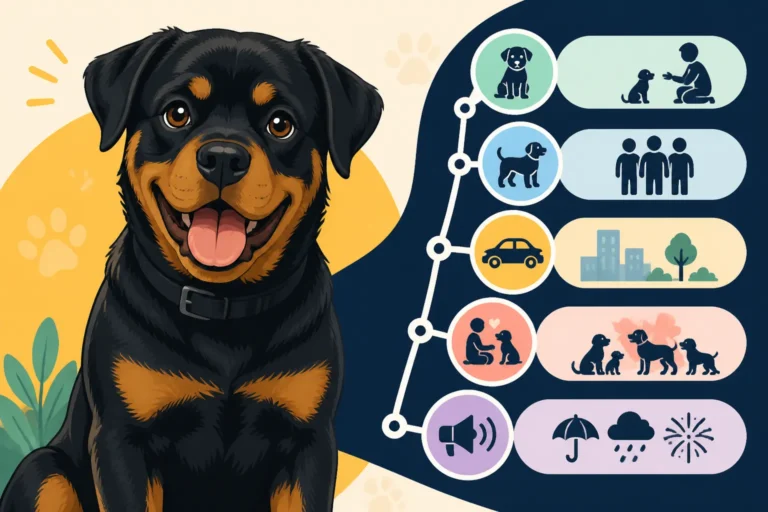
Everyone talks about socializing puppies, and rightly so. Exposing your young Rottweiler to a variety of sights, sounds, people, and friendly dogs before 16 weeks is crucial for developing a confident, well-adjusted adult. Socializing a Rottweiler Puppy Properly offers a great starting point. However, socialization isn't a one-and-done event; it's an ongoing process throughout your dog's life. An adult Rottweiler still needs positive exposures to maintain their calm and confident demeanor.
This means continuing to take them to dog-friendly places, ensuring they meet new, respectful people, and reinforcing positive interactions. A properly socialized adult Rottweiler should be able to calmly observe new situations and people without reacting with fear or aggression. Without ongoing socialization, even a well-started puppy can become anxious, fearful, or reactive as an adult, which is a dangerous combination with their physical power.
Ongoing Training and Consistency
Training a Rottweiler isn't just about teaching commands; it's about building a language of understanding and respect. And it certainly isn't a task you can postpone. Why a Rottweiler Must Be Trained Before It Grows highlights just how vital early intervention is. By the time they hit adolescence, their strength can be overwhelming if not properly managed, as detailed in Training a Rottweiler Before It Outweighs You.
Ongoing training means regularly practicing known commands, introducing new challenges, and reinforcing good behavior. This helps keep their minds engaged and strengthens the bond between you. A Rottweiler thrives on having a job to do and clear guidance. Consistency from all family members is also crucial. If one person allows a behavior and another corrects it, it creates confusion and can undermine the dog's understanding of rules. Regular training sessions, even short ones, help maintain mental sharpness and reinforce appropriate conduct, ensuring their powerful presence is always under your calm, confident direction.
Public Perception and Owner Responsibility
The Rottweiler's powerful build and bite force are often at the center of public discourse, sometimes leading to breed-specific legislation and negative stereotypes. As a Rottweiler owner, you are an ambassador for the breed. Your dog's behavior reflects not only on you but on all Rottweilers. This places an increased burden of responsibility on owners to ensure their dogs are impeccably behaved and never contribute to these negative perceptions.
This responsibility includes:
- Impeccable Leash Manners: No pulling, lunging, or reacting to distractions.
- Obedience in Public: Responding reliably to commands like "sit," "stay," and "come."
- Respect for Space: Ensuring your dog doesn't invade others' personal space, especially those who may be wary.
- Proper Identification: Your dog should always wear appropriate tags and be microchipped.
- Cleanliness: Always pick up after your dog.
By consistently demonstrating responsible ownership and having a well-behaved Rottweiler, you can help change minds and challenge misconceptions, making the world a more welcoming place for this magnificent breed.
Summary of Rottweiler Bite-Related Training Priorities
| Age/Stage | Training Focus (Bite-Related) | Key Methods | Why it Matters for a Rottweiler |
|---|---|---|---|
| Puppy (8-16 weeks) | Bite Inhibition, Gentle Mouthing | "Ouch!" game, redirection with appropriate toys, consistent feedback, short play sessions | Establishes a "soft mouth" before adult teeth arrive; critical foundation for safety. |
| Adolescent (4-18 months) | Impulse Control, Appropriate Chewing, "Drop It" | Structured play, puzzle toys, highly durable chew items, teaching polite greetings, consistent "drop it" command | Manages increasing jaw strength and exploration; prevents accidental injury during exuberant play. |
| Adult (18+ months) | Reinforce Control, Confidence Building, Proofing | Continued obedience training, advanced impulse control games, ongoing positive socialization, desensitization | Ensures reliable behavior in all situations; prevents reactivity-based biting; maintains public trust. |
Disclaimer
This article is for general informational purposes only and does not constitute professional advice. Laws, prices and regulations vary by location and change over time. Consult a qualified professional for guidance on your specific situation.