Ground Transport for a Rottweiler Puppy Too Big to Fly
Bringing home a new Rottweiler puppy is an incredibly exciting time, but for many families, the logistics of actually getting that big, beautiful pup from the breeder to their home can quickly turn into a stressful puzzle. Airlines often impose strict size and age restrictions that many Rottweiler puppies outgrow before they're even ready to leave their litter, leaving prospective owners scrambling to figure out how to safely transport their furry family member. This guide will walk you through the ins and outs of ground transport, ensuring your Rottweiler puppy arrives home happy and healthy.
The Harsh Reality of Air Travel Restrictions for Large Breed Puppies
It’s a common misconception that all puppies can simply hop on a plane and arrive at their new homes. The truth, especially for robust, fast-growing breeds like the Rottweiler, is far more complicated, and often, quite heartbreaking if you haven't planned ahead. Many airlines have evolved their policies significantly over the years, often due to tragic incidents or simply to ensure the welfare of animals traveling in cargo.
Why Airlines Limit Puppy Size and Age
Airlines aren't trying to be difficult; their restrictions are generally in place for safety. For puppies traveling in the cargo hold, there's a delicate balance of age, size, and even temperature to consider. Very young puppies (under 8-10 weeks) might not be strong enough to handle the stress, temperature fluctuations, or changes in cabin pressure. On the flip side, larger puppies rapidly hit weight and size limits for crates that can fit safely within an aircraft's cargo area. Imagine a full-grown Rottweiler needing a massive crate; that's simply not feasible for most commercial planes. The space is limited, and the handling equipment has weight thresholds. A Rottweiler puppy that is already substantial at 10-12 weeks old, often weighing 20-30 pounds and possessing a sturdy frame, can easily exceed these limits, especially if its ultimate adult weight is projected to be well over a hundred pounds, as discussed in Rottweiler Growth Plates and Why They Close So Late.
The Risks of Air Cargo Travel for Larger Breeds
While Rottweilers aren't a brachycephalic (short-nosed) breed like pugs or bulldogs, who face severe respiratory risks in cargo due to temperature and stress, they still face unique challenges. The stress of being in an unfamiliar, noisy, and often cold cargo hold, away from human comfort, can be significant for any puppy. For a large breed puppy accustomed to playing with its littermates and being handled, this can be particularly jarring. Furthermore, Rottweilers are prone to conditions like bloat, and the stress of travel, combined with eating or drinking too quickly once they arrive, could potentially trigger an episode. While airlines do their best, the environment of a cargo hold is simply not ideal for a young, impressionable pup who needs constant reassurance and monitoring. You can learn more about general health and safety considerations in Rottweiler Lifespan and the Eight to Ten Year Average.
The Exact Age and Weight Limits That Disqualify a Rottweiler Puppy Quickly
This is where many aspiring Rottweiler owners hit a wall. Most airlines have a maximum weight for an animal plus its carrier, often capping out around 100-150 pounds for the cargo hold. While a tiny Chihuahua can easily travel in-cabin for much of its life, a Rottweiler puppy can blast past the in-cabin limits (usually for pets under 20 pounds, carrier included) in a matter of weeks. By the time a Rottweiler puppy is 12-16 weeks old, which is often a common age for puppies to travel, it can easily weigh 30-50 pounds. Add the weight of a sturdy, airline-approved crate—which itself can weigh 20-30 pounds or more for a large breed pup—and you're swiftly approaching, if not exceeding, the maximum weight allowed. Moreover, many airlines will not accept animals in cargo during extreme temperatures (too hot or too cold), which can further restrict travel windows, especially for a puppy waiting to join its new family across different climate zones.
Why Ground Transport Becomes Your Best (and Often Only) Option
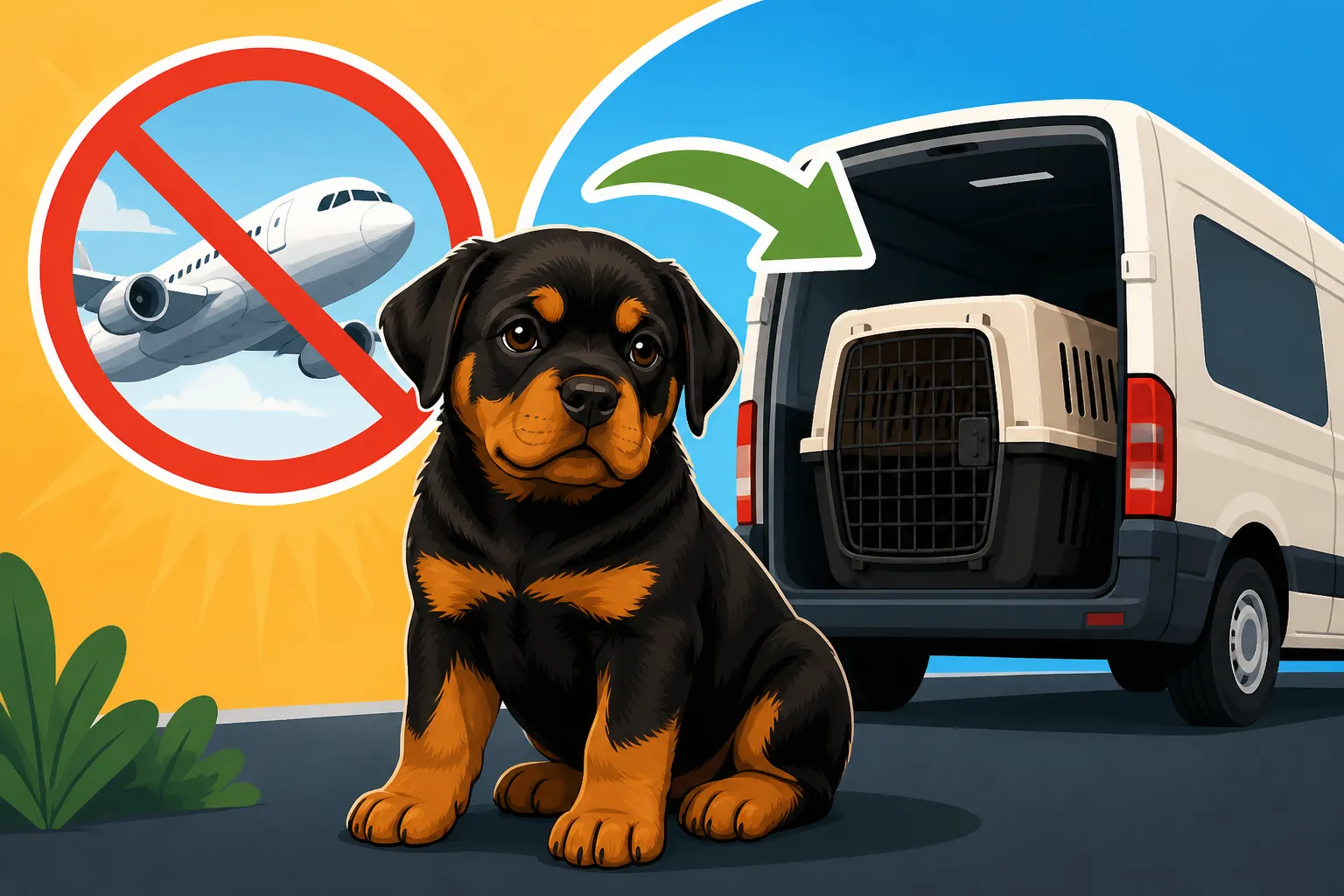
Given the complexities and risks of air travel, ground transport often emerges as the superior choice for bringing home a Rottweiler puppy. It offers a level of safety, personal attention, and flexibility that air travel simply cannot match for such a rapidly growing, robust breed.
Safety and Reduced Stress for the Puppy
Imagine being a tiny puppy, suddenly separated from your littermates and familiar smells, then being placed in a loud, vibrating cargo hold. It's a terrifying scenario. Ground transport, by contrast, allows for a much calmer, more controlled environment. The puppy remains on solid ground, often within a temperature-regulated vehicle, usually with a human driver or handler close by. This proximity and consistent care significantly reduce stress levels. Instead of being jostled and exposed to extreme conditions, the puppy experiences a smoother journey, often stopping for potty breaks, food, and water at regular intervals, mirroring the kind of routine it would have if you were driving it yourself. This kind of thoughtful care can make a huge difference in how well your new family member adjusts upon arrival.
Direct Care and Supervision During Transit
With ground transport, your puppy isn't just a piece of cargo. It's an individual passenger receiving direct, personal care throughout its journey. Professional ground transporters understand the needs of young puppies, especially large breeds. They ensure:
- Regular feeding and watering: Essential for a growing Rottweiler puppy, whose caloric needs are high. You can even discuss with the transporter if specific food, perhaps from a brand like Ollie (if using fresh food), needs to be maintained.
- Frequent potty breaks: Crucial for puppies who can't hold it for long periods and a great way to reinforce good habits as you're starting Rottweiler Puppy Training Through the First Year.
- Comfort and cleanliness: Crates are usually cleaned regularly, bedding is kept fresh, and the puppy is checked for any signs of discomfort or illness.
- Human interaction: A kind word, a gentle pet, or even just the presence of a person can be incredibly reassuring to a puppy during a long journey. This continued positive human interaction is vital for early socialization, a topic explored further in Rottweiler Socialization Before Sixteen Weeks.
This constant supervision is a huge comfort to new owners, knowing their precious cargo is being looked after every mile of the way.
Flexibility and Personalized Service
Another massive advantage of ground transport is its inherent flexibility. Unlike rigid airline schedules, ground transporters can often adapt to your needs and the breeder's schedule. Need a specific pick-up or drop-off time? Want to avoid travel during extreme weather? Ground transport allows for these kinds of adjustments. Many services offer door-to-door delivery, meaning your puppy is picked up directly from the breeder and brought right to your doorstep, minimizing transitions and potential stress. This personalized approach often means better communication too, with updates on your puppy's progress as they travel.
Navigating the World of Professional Ground Transport Services
Once you've decided on ground transport, the next step is finding a reputable service. This isn't a decision to take lightly; you're entrusting a valuable, vulnerable life to them.
Finding Reputable Transport Companies
This is paramount. Just like with anything important, you want to do your homework. Here’s how to find the best:
- Breeder recommendations: Your Rottweiler breeder will likely have experience with ground transport and can often recommend trusted companies they've used before. This is often the most reliable source.
- Online reviews and reputation: Look for companies with consistent positive reviews on platforms like Google, Facebook, or specialized pet transport review sites. Pay attention to comments about communication, care, and timeliness.
- Licensing and insurance: Ensure the company is properly licensed (e.g., USDA-registered for interstate transport) and carries adequate insurance. This protects your puppy and gives you peace of mind.
- Specific large breed experience: Ask if they have experience transporting Rottweilers or similar large breeds. Their understanding of a Rottweiler's specific needs, like space in their crate (consider Rottweiler Crate Size and What It Costs) or the frequency of potty breaks, is crucial.
Don't just pick the first company you find; gather several quotes and vet each one thoroughly.
What to Expect From a Professional Service
A good professional ground transport service should offer transparency and excellent care. Here's what you should typically expect:
- Communication: Expect clear communication from the moment you inquire until your puppy is safely in your arms. This includes estimated pick-up and drop-off times, regular updates during transit (e.g., "just stopped for a potty break and a drink"), and immediate notification of any concerns.
- Safe and comfortable vehicles: Transporters should use climate-controlled vehicles designed for animal transport. Crates should be secure, appropriately sized for your growing puppy, and kept clean.
- Health and safety protocols: Ask about their protocols for sanitization, preventing illness spread, and what they do in a medical emergency. While your puppy should arrive with all its initial vaccinations, accidents can happen, and you want to know they're prepared. It's also wise to have Rottweiler Insurance at Two Hundred Dollars a Month in place before transport. Some providers like Healthy Paws can start coverage early, protecting against unforeseen emergencies.
- Feeding and hydration: They should follow your instructions regarding your puppy's specific food and feeding schedule. You might send a small bag of your puppy's current food (perhaps from Chewy if that's where you order from) to avoid dietary upset.
Example Transport Schedule (Hypothetical Cross-Country Trip – 3 Days)
| Day | Activity | Notes |
|---|---|---|
| 1 | Morning Pick-up, Drive 8-10 Hours | Multiple potty breaks, feeding, water, photo update sent to owner. |
| Overnight Stop | Puppy rests in a clean, secure, climate-controlled environment. | |
| 2 | Morning Departure, Drive 8-10 Hours | Same routine: breaks, food, water, continued communication. |
| Overnight Stop | Another comfortable, safe overnight rest. | |
| 3 | Morning Departure, Drive to Drop-off | Final leg of the journey, often arrives by early to mid-afternoon. |
| Puppy Handover | Thorough check of puppy's condition, paperwork exchange. |
This table illustrates a typical multi-day trip. Shorter distances would, of course, be less involved.
Questions to Ask Potential Transporters
Before committing to a service, arm yourself with a comprehensive list of questions:
- What is your experience specifically with large breed puppies like Rottweilers?
- Are you USDA-registered and insured? Can I see proof?
- What is your typical route and timeline for my puppy's journey?
- How often do you stop for potty breaks, food, and water?
- What kind of crates do you use? Are they appropriately sized for a growing Rottweiler?
- What are your emergency protocols? Do you have vet contacts along your route?
- How will you communicate updates to me during the trip? (e.g., texts, photos, calls)
- What is your policy regarding payment and cancellations?
- Can you provide references from recent clients?
Asking these detailed questions helps ensure you're making an informed decision and finding the best possible care for your new family member.
DIY Ground Transport: The Road Trip Option for Your Rottweiler
For many, the idea of picking up their Rottweiler puppy themselves is an appealing one. A road trip allows you to bond immediately with your new companion and offers complete control over their journey. However, it also requires significant planning and commitment.
Planning the Journey: Vehicle, Supplies, Comfort
Embarking on a road trip with a puppy, especially a large breed like a Rottweiler, isn't something you can just wing. It requires careful preparation:
- Vehicle suitability: Ensure your vehicle is large enough to comfortably accommodate a sizable crate and all necessary supplies. Space will be important for your puppy to stretch and stand, even for short trips.
- Crate or secure restraint: A sturdy crate (appropriate for its size as detailed in Rottweiler Crate Size and What It Costs) is essential for safety. It prevents the puppy from distracting you while driving and protects them in case of a sudden stop. If not crated, a crash-tested safety harness and seatbelt attachment are crucial.
- Comfort items: Bring a soft blanket or towel that smells like the breeder's home or littermates to provide comfort. Familiar toys can also help.
- Food and water: Pack plenty of your puppy's current food (again, Chewy is a great source for stocking up beforehand), water, and bowls. Don't forget treats for positive reinforcement during potty breaks.
- Cleaning supplies: Accidents happen, especially with puppies. Have paper towels, enzymatic cleaner, and waste bags readily available.
- Leash and collar: Essential for potty breaks. Make sure they fit securely.
- First aid kit: A basic pet first aid kit for minor scrapes or upsets.
Consider the length of your trip. If it's a multi-day journey, research pet-friendly accommodations along your route well in advance. Many hotels, even chains, have specific rules and fees for pets, especially large breeds.
Ensuring Your Puppy's Safety and Well-being on the Road
Your puppy's health and comfort are the top priorities during your DIY road trip:
- Frequent stops: Plan to stop every 2-3 hours for potty breaks, water, and a chance for your puppy to stretch its legs. This also gives you a chance to check on their general well-being. Remember The Five Minute Rule for Rottweiler Puppy Walks for very young puppies to protect their developing joints.
- Supervised potty breaks: Always keep your puppy on a leash during stops. Unfamiliar environments can be overwhelming, and a scared puppy might bolt.
- Hydration: Offer water frequently, especially if it's warm. Dehydration can happen quickly.
- Temperature control: Never leave your puppy unattended in a car, especially in extreme heat or cold. The car's interior temperature can rise or fall dangerously fast.
- Limit food portions: While keeping your puppy fed is important, avoid overfeeding right before or during long stretches of driving, as this can lead to car sickness. A light meal a few hours before departure is usually best.
- Vet visit prep: Before you even leave, ensure you have all your puppy's health records from the breeder, including vaccination history and any relevant health clearances like those for JLPP and the Rottweiler DNA Test. Knowing the paperwork that comes with a Rottweiler is critical for your first vet visit.
Benefits and Challenges of Personal Transport
Benefits:
- Immediate bonding: The car ride home is often the first real one-on-one time you get with your new puppy, a precious opportunity for bonding.
- Complete control: You decide the schedule, the stops, the care, and the environment. This means less stress about how your puppy is being treated.
- Cost savings (sometimes): While you'll incur gas, food, and potentially accommodation costs, it might be less than a professional transport service for shorter distances.
Challenges:
- Time commitment: A long road trip can take several days out of your schedule.
- Stress on you: Driving long distances with a crying or car-sick puppy can be exhausting and stressful.
- Potential for accidents: You're solely responsible for cleaning up any messes and managing any unexpected situations.
- Lack of experience: If you're a first-time puppy owner, navigating a new puppy's needs on a long trip can be overwhelming. Puppies might try to chew on everything, including car interiors, so knowing about Rottweiler Chew Toys That Survive the Jaw can be helpful.
Ultimately, whether you choose professional ground transport or embark on a DIY road trip, careful planning and prioritizing your Rottweiler puppy's safety and comfort are key to a smooth arrival.
Disclaimer
The information provided in this article is for general informational purposes only and does not constitute veterinary advice. Always consult with a qualified veterinarian for any health concerns or before making any decisions about your pet's health or medical care.