Subaortic Stenosis Heard as a Rottweiler Puppy Murmur
Hearing that your sweet, energetic Rottweiler puppy has a heart murmur can send a wave of panic through any devoted owner. It's an unnerving piece of news that immediately conjures worst-case scenarios and countless questions about their future. This comprehensive guide aims to demystify what a heart murmur means in a young Rottweiler, specifically focusing on Subaortic Stenosis (SAS), how it's diagnosed, and what steps you can take.
Understanding What a Heart Murmur Means in a Rottweiler Puppy
When your new Rottweiler puppy has their very first veterinary check-up, often around 8 weeks old, one of the routine examinations involves listening to their heart. If your vet mentions a heart murmur, it's completely normal to feel a surge of worry. However, it’s crucial to understand that not all murmurs are cause for immediate alarm, especially in young puppies.
The Initial Vet Visit and Puppy Murmurs
Imagine bringing home that fluffy bundle of joy, full of puppy breath and wobbly paws. The first vet visit is usually a flurry of excitement and essential health checks. The veterinarian will listen intently to your puppy's chest with a stethoscope, checking for normal heart sounds. If they detect a swishing or whooshing sound that accompanies the regular lub-dub, that's a heart murmur.
Many puppies, particularly large and fast-growing breeds like Rottweilers, can exhibit what are known as "innocent" or "physiologic" murmurs. These aren't indicative of a structural heart defect but rather occur due to the rapid growth and changes in blood volume and flow dynamics in a young, developing body. Think of it like a temporary turbulence in the blood flow as their cardiovascular system is still maturing. These innocent murmurs are typically soft, disappear by 4-6 months of age, and are often located on the left side of the chest at the base of the heart. They resolve completely without intervention and pose no long-term health risk. However, distinguishing an innocent murmur from one that signals a deeper problem isn't always straightforward at that initial appointment, which is why your vet will recommend follow-up checks.
A responsible breeder, who has invested in the health of their lines, will often mention if any puppies in the litter had a murmur at their initial health check. They understand the significance of early detection and transparency, helping new owners prepare for potential follow-up care.
When a Murmur Becomes a Concern
While many puppy murmurs are innocent, some are not. The veterinarian uses several criteria to assess a murmur's significance. They’ll note its location on the chest, its intensity (graded on a scale of I to VI, with I being very faint and VI being very loud and palpable), and its timing within the heart cycle. A low-grade (I-II/VI) murmur heard over the left heart base in a young puppy might simply be physiologic.
However, a murmur that is louder (Grade III/VI or higher), persists beyond 4-6 months of age, or is accompanied by other clinical signs such as difficulty breathing, coughing, poor growth, or exercise intolerance, raises a red flag. In Rottweilers, a murmur that is heard strongly over the left side of the chest, particularly over the aortic valve area, immediately brings Subaortic Stenosis (SAS) to mind, given the breed's known predisposition to this condition.
Your vet will typically recommend rechecking the murmur in a few weeks or months to see if it has resolved. If it hasn't, or if its characteristics worsen, they will likely advise a referral to a veterinary cardiologist for a more definitive diagnosis. This proactive approach is crucial, as early identification of serious conditions allows for appropriate management strategies to be put in place, potentially improving your Rottweiler's quality of life.
Unpacking Subaortic Stenosis: The Rottweiler Connection
Subaortic Stenosis (SAS) is a serious, inherited congenital heart defect that disproportionately affects certain large breeds, and the Rottweiler is unfortunately high on that list. Understanding what it is and how it develops is key to comprehending its impact.
How Subaortic Stenosis Develops
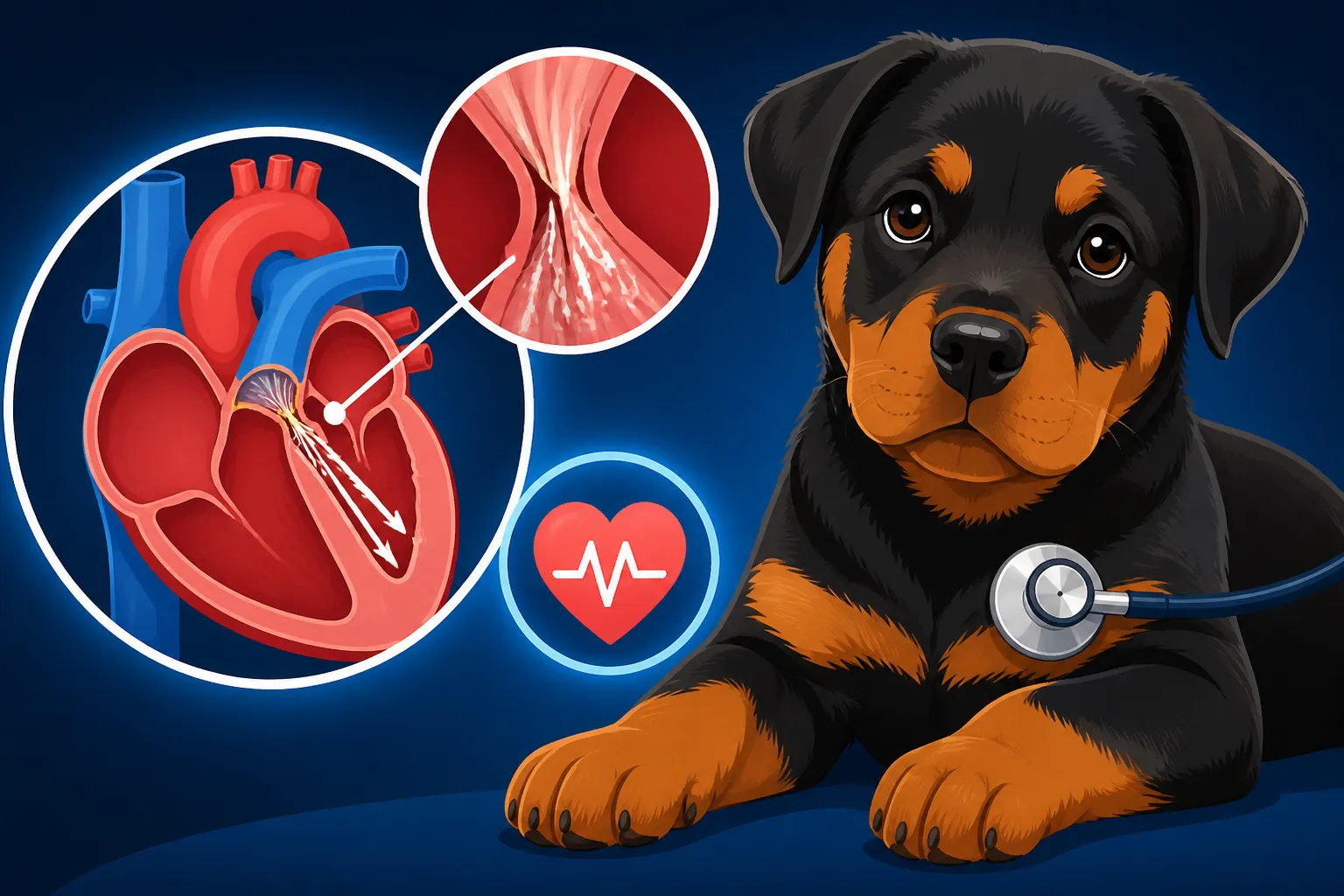
At its core, Subaortic Stenosis is a narrowing (stenosis) of the outflow tract of the left ventricle, just below the aortic valve (subaortic). The left ventricle is the powerful chamber of the heart responsible for pumping oxygen-rich blood to the entire body via the aorta. In a dog with SAS, this narrowing is typically caused by a fibrous ring or ridge of tissue that forms abnormally in the subaortic region during fetal development.
This fibrous obstruction acts like a partial dam in the river of blood flowing out of the heart. To push blood past this resistance, the left ventricle has to work much harder. Over time, this increased workload leads to compensatory thickening of the heart muscle walls, a condition known as left ventricular hypertrophy. While this initially helps maintain normal blood flow, it's not a sustainable solution. The thickened muscle can become stiff, less efficient, and more prone to arrhythmias (irregular heartbeats), and eventually, the heart can struggle to pump enough blood to the body, leading to heart failure. The turbulent blood flow across this narrowed area is what creates the characteristic heart murmur that a veterinarian can hear.
Since this is a congenital condition, meaning it's present at birth, it highlights the importance of thorough health screening of breeding animals to reduce the incidence in future generations.
Why Rottweilers Are Prone to SAS
Rottweilers have a well-documented genetic predisposition to Subaortic Stenosis. This isn't just bad luck; it's a trait that has unfortunately become concentrated within the breed's gene pool. The exact mode of inheritance is still being researched, but it's generally considered to be polygenic, meaning multiple genes contribute to its development, making eradication challenging.
Because of this breed-specific vulnerability, responsible Rottweiler breeders adhere to strict health testing protocols, including cardiac evaluations. They understand the gravity of Rottweiler Heart Disease and Subaortic Stenosis and strive to breed only from dogs that have been screened clear of SAS. This usually involves an echocardiogram by a board-certified veterinary cardiologist to ensure that the breeding pair does not carry or express the condition. Even with careful breeding, a small risk can remain, which is why early detection through puppy checks is so vital.
This genetic link means that any murmur heard in a Rottweiler puppy, particularly one characteristic of SAS, should be taken very seriously and warrants further investigation by a specialist. It transforms what might be an "innocent murmur" in another breed into a potential early warning sign for a condition that can significantly impact a Rottweiler's lifespan and quality of life.
Diagnosing Subaortic Stenosis Beyond the Murmur
While a heart murmur is the first clue, it's merely a sound. To definitively diagnose Subaortic Stenosis and understand its severity, advanced diagnostic tools are absolutely essential. A simple stethoscope can't tell you the structural details of the heart or the precise degree of obstruction.
The Importance of a Specialist Echocardiogram
When your primary veterinarian suspects SAS based on a persistent or prominent heart murmur, the next crucial step is a referral to a board-certified veterinary cardiologist for an echocardiogram. An echocardiogram, often simply called an "echo," is a non-invasive ultrasound of the heart. It provides real-time images of the heart's structure, allowing the specialist to visualize the heart chambers, valves, and blood flow patterns.
During an echo, the cardiologist will specifically look for the fibrous ring or ridge below the aortic valve that characterizes SAS. They can also assess the thickness of the left ventricular wall, identify any turbulent blood flow, and measure the velocity of blood as it passes through the narrowed area. This velocity measurement is paramount for determining the severity of the condition. For a Rottweiler, this kind of in-depth evaluation is non-negotiable for accurate diagnosis and prognosis. The expertise of a cardiologist ensures that subtle abnormalities are identified and correctly interpreted, distinguishing SAS from other less common congenital heart defects. You can learn more about The Rottweiler Echocardiogram at Two Years Old to understand the process.
This specialized diagnostic step is vital because the visible manifestation of SAS—the murmur—can sometimes appear similar to other less severe conditions. Without an echo, misdiagnosis or underestimation of the condition's severity is a real risk. It’s an investment in your Rottweiler’s health that provides concrete answers, allowing for appropriate management plans to be formulated.
Grading the Severity of SAS
One of the most critical aspects of the echocardiogram is the ability to grade the severity of the Subaortic Stenosis. This grading is not arbitrary; it's based on objective measurements, primarily the peak velocity of blood flowing across the obstruction, expressed in meters per second (m/s). This velocity directly correlates with the pressure gradient across the stenotic area – the higher the velocity, the greater the obstruction and the more severe the SAS.
Here's a general breakdown of how SAS is typically graded:
| SAS Severity Grade | Peak Velocity (m/s) | Pressure Gradient (mmHg) | Prognosis Implication |
|---|---|---|---|
| Mild | < 3.0 | < 36 | Generally good, near-normal lifespan with minimal risk. |
| Moderate | 3.0 – 4.5 | 36 – 81 | Guarded, increased risk of complications, shorter lifespan. |
| Severe | > 4.5 | > 81 | Poor, high risk of sudden death or heart failure, significantly shortened lifespan. |
This grading system provides veterinarians and owners with a clear understanding of the disease's progression and potential impact. A Rottweiler with mild SAS might live a relatively normal life, perhaps with minimal medication or lifestyle adjustments. However, a dog with moderate or severe SAS faces a much higher risk of complications, including arrhythmias and sudden cardiac death, even at a young age. This information empowers owners to make informed decisions regarding their dog's care, activity levels, and potential treatments. This detailed assessment is especially important for a breed like the Rottweiler, where the consequences of severe SAS can be profound and life-limiting.
Living with a Rottweiler Diagnosed with SAS
Receiving a diagnosis of Subaortic Stenosis for your Rottweiler is tough news, but it's not the end of the road. While there's no cure, effective management and careful lifestyle adjustments can significantly improve your dog's quality of life and potentially extend their time with you.
Management and Lifestyle Adjustments
The primary goal of managing SAS is to reduce the workload on the heart, minimize the risk of complications like arrhythmias, and prevent the progression of heart failure. For Rottweilers diagnosed with SAS, medical management typically involves medications, most commonly beta-blockers such as atenolol. These drugs work by slowing the heart rate and reducing the force of the heart's contractions, which in turn decreases the heart's oxygen demand and helps to stabilize electrical activity, making the heart less prone to dangerous arrhythmias. The specific dosage and type of medication will be determined by your veterinary cardiologist based on the severity of the SAS and your dog's individual response.
Beyond medication, significant lifestyle adjustments are crucial. This means limiting strenuous exercise and avoiding situations that cause excessive excitement or stress, as these can dramatically increase heart rate and put additional strain on an already compromised heart. While it's tough to tell an energetic Rottweiler puppy they can't engage in vigorous play or long runs, it's vital for their health. Instead, focus on calm, controlled walks and mental stimulation. Regular, but not intense, exercise is often still encouraged for overall well-being. Keeping your Rottweiler lean is also paramount, as obesity adds extra burden to the cardiovascular system.
Ongoing, regular follow-up appointments with your veterinary cardiologist are essential. These check-ups typically involve repeated echocardiograms to monitor the progression of the disease, assess the effectiveness of medication, and adjust treatment plans as needed. The cost of these specialist visits and long-term medications can be substantial. Many owners find that pet insurance, such as a policy from Healthy Paws, can be invaluable in mitigating these expenses, allowing them to prioritize the best possible care for their beloved companion without undue financial stress.
Prognosis and Lifespan Considerations
The prognosis for a Rottweiler with Subaortic Stenosis varies dramatically depending on the severity of the condition, as determined by the initial echocardiogram and subsequent monitoring.
- Mild SAS: Rottweilers with mild SAS often have an excellent prognosis and can live a near-normal lifespan, sometimes without needing medication, though regular monitoring is still advised. Their risk of complications is low.
- Moderate SAS: The prognosis for moderate SAS is guarded. These dogs are at a higher risk of developing arrhythmias, experiencing syncope (fainting episodes), or sudden cardiac death. With appropriate medication and careful lifestyle management, some can live for several years, but their lifespan is typically shorter than unaffected dogs.
- Severe SAS: Rottweilers with severe SAS face a poor prognosis. The risk of sudden cardiac death, even at a young age, is significantly elevated. These dogs often struggle with exercise intolerance and are prone to heart failure. Despite aggressive medical management, their lifespan can be severely curtailed, sometimes to only a few years. It's a heartbreaking reality for owners, but understanding the severity helps prepare for the challenges ahead. This condition is one of the factors that can contribute to What Shortens a Rottweiler's Eight to Ten Years.
It's also important to be vigilant for any signs of worsening heart disease, such as increased coughing, difficulty breathing, weakness, or collapse. These could indicate the onset of heart failure or a severe arrhythmia and warrant immediate veterinary attention. While facing a diagnosis of SAS can be overwhelming, a commitment to consistent veterinary care, careful management, and a deep understanding of the condition can help provide your Rottweiler with the best possible quality of life for as long as possible. Pet insurance providers like Healthy Paws often cover congenital conditions like SAS, provided the policy was in place before symptoms appeared, offering vital support for ongoing care.
Disclaimer
This article is intended for informational purposes only and does not constitute medical advice. Always consult with a qualified veterinary professional for any health concerns or before making any decisions about your Rottweiler's care.