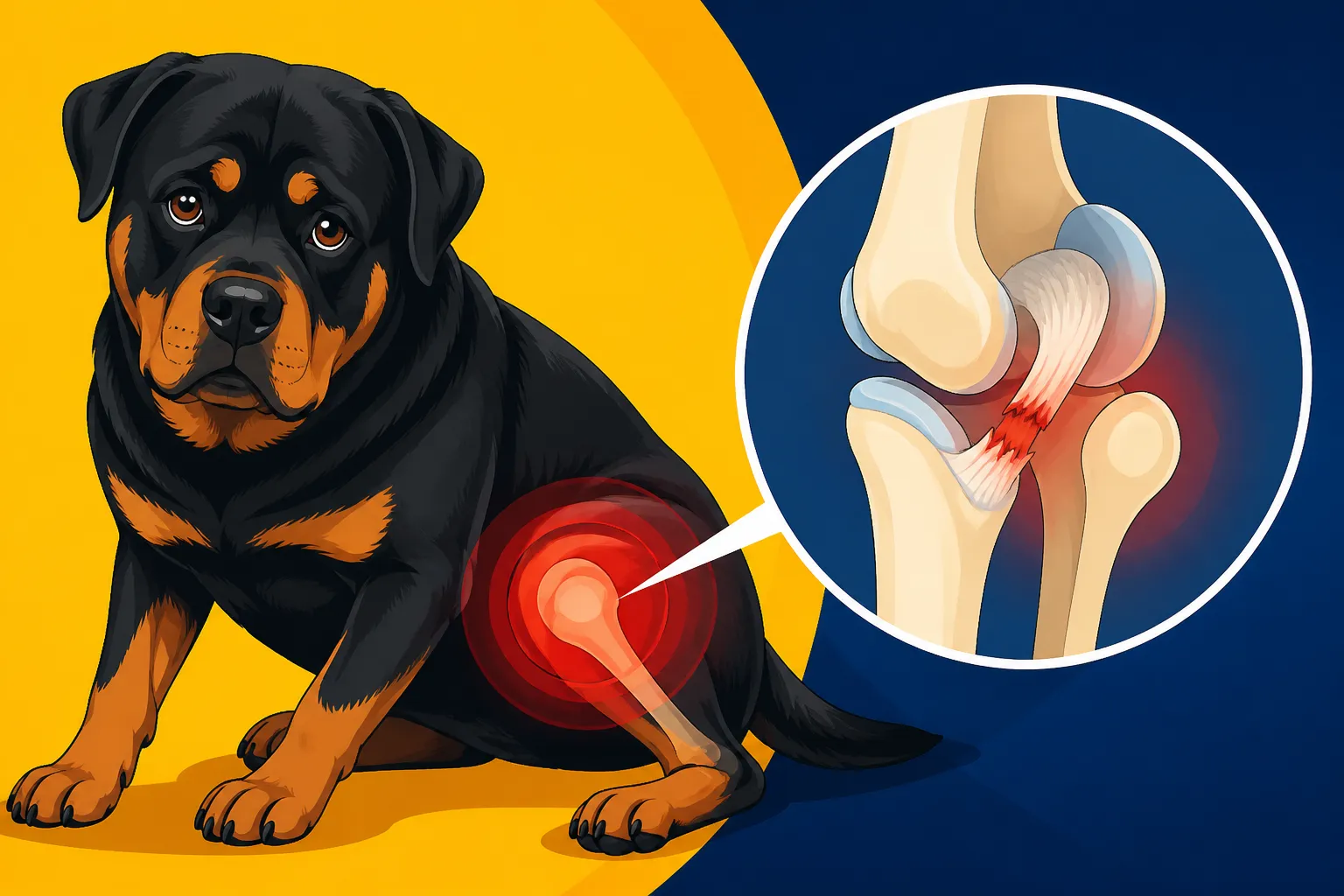
Cruciate Ligament Tears in a Hundred Pound Rottweiler
Few things are as heart-stopping for a Rottweiler owner as watching your powerful, active dog suddenly yelp and come up lame, holding a back leg. Cruciate ligament tears in a hundred-pound Rottweiler are a devastating, common injury that can leave you feeling helpless and worried about their future mobility. This comprehensive guide will walk you through everything you need to know about these challenging knee injuries, from recognizing the subtle signs to understanding treatment options and long-term care.
Understanding Cruciate Ligament Tears in a Rottweiler
Cruciate ligament injuries, often referred to as ACL tears (though technically called CCL in dogs for cranial cruciate ligament), are unfortunately very common in large and giant breeds like our beloved Rottweilers. This isn't just a minor sprain; it's a significant orthopedic problem that requires serious attention to ensure your dog can regain comfort and function.
What is the Cranial Cruciate Ligament?
Imagine your dog's knee, or "stifle" joint, as a sophisticated hinge designed to allow fluid, stable movement. Inside this joint are two crucial ligaments that cross over each other – hence "cruciate" – connecting the thigh bone (femur) to the shin bone (tibia). The cranial cruciate ligament (CCL) is the one running from the back of the femur to the front of the tibia. Its primary job is to prevent the tibia from sliding forward excessively relative to the femur and to limit internal rotation of the joint.
For a Rottweiler, with its impressive muscle mass and powerful movements, this ligament is under immense strain with every jump, turn, and run. When this ligament is intact, it ensures the knee functions smoothly. When it tears, even partially, that crucial stability is lost, leading to pain, inflammation, and abnormal joint mechanics.
Why Rottweilers Are Prone to CCL Injuries
It's a frustrating reality that Rottweilers, like many large breeds, are simply predisposed to CCL injuries. It's not usually a dramatic football-field type injury where they suddenly snap it due to extreme trauma. More often, it's a degenerative process, meaning the ligament weakens over time. Think of it like a fraying rope. This chronic degeneration can be influenced by several factors:
Genetics play a significant role. Some Rottweiler lines are unfortunately more prone to weaker ligaments or abnormal knee conformation that puts extra stress on the CCL. Their sheer size and weight also contribute. A hundred-pound Rottweiler puts tremendous force through its knee joints. Even a seemingly innocuous stumble or a quick pivot during play can be the "final straw" for an already weakened ligament, leading to a partial or complete tear. This underlying issue is why you might hear of dogs tearing the "other" cruciate ligament within a year or two of the first – the same degenerative process is often at work in both knees.
Recognizing the Signs of a Cruciate Ligament Tear
Spotting a cruciate ligament tear in its early stages can sometimes be tricky, especially with partial tears, but recognizing the signs quickly is essential for a better outcome. Your Rottweiler might try to hide discomfort, but their massive size makes lameness hard to ignore.
The Sudden Onset Limp and Pain
The most classic scenario of a full CCL tear is a sudden, non-weight-bearing lameness in a hind leg. Your Rottweiler might have been running or playing, perhaps chasing a ball or roughhousing with another dog, and then suddenly lets out a yelp and holds the affected leg up completely. They might refuse to put any weight on it at all, preferring to hop on three legs. The pain is acute, and you'll likely see signs of distress.
While the initial severe lameness can sometimes improve slightly after a few days of rest, it rarely resolves completely without intervention. Don't be fooled by this temporary improvement; the underlying instability remains, and trying to "walk it off" will only cause more damage and lead to chronic pain and arthritis. The initial pain is intense due to the torn ligament and immediate joint inflammation.
Chronic Lameness and Joint Swelling
Many cruciate tears, particularly in large breeds, begin as partial tears, which can present as intermittent lameness. Your Rottweiler might limp after strenuous exercise but seem fine after a night's rest. This "on-again, off-again" lameness usually worsens over time as the partial tear progresses to a full tear, or as arthritis sets in due to the joint instability. You might notice that your dog struggles more after a long walk, or after getting up from a nap.
Over time, you might also observe swelling around the knee joint. This isn't always obvious under a thick coat, but if you gently palpate the area, you might feel a "thickening" or increased fluid compared to the healthy knee. Furthermore, because the dog is favoring the injured leg, the muscles in that thigh will start to atrophy, becoming noticeably smaller and softer than the muscles in the healthy leg. This muscle loss is a clear indicator of chronic disuse and joint instability. Keeping up with regular vet visits, and having a good pet insurance policy like Healthy Paws, can help ensure these subtle changes are caught and addressed promptly before they escalate.
"Sitting Sideways" and Other Postural Changes
A very telling sign specific to CCL tears is what we call the "sitting sideways" posture. A dog with a healthy knee will tuck both hind legs neatly underneath them when they sit, bending at the stifle. A Rottweiler with a torn CCL will often try to avoid bending the painful, unstable knee. Instead, they will extend the affected leg out to the side, maintaining a straight position to minimize discomfort and instability. This awkward sit is a strong indicator of a problem.
Beyond sitting, you might notice other changes in their movement. They might struggle significantly with climbing stairs, jumping into the car, or even getting up from a lying position on a slick floor. You might also observe increased stiffness, especially after periods of rest or in the morning. They may be hesitant to put full weight on the leg, sometimes just tip-toeing on it. These changes reflect their attempt to compensate for the painful and unstable knee.
Diagnosis and Initial Management
Once you suspect a cruciate ligament tear, getting a proper veterinary diagnosis is the crucial next step. Don't delay, as early diagnosis can influence treatment options and long-term outcomes for your Rottweiler.
Veterinary Examination and Palpation
Your veterinarian will perform a thorough physical examination, focusing on the affected limb. The key diagnostic tests for a torn CCL are the "cranial drawer test" and the "tibial compression test." These tests are designed to manually assess the stability of the knee joint. In a healthy knee, there should be no "drawer movement" (the tibia should not slide forward relative to the femur when manipulated) and no abnormal forward movement during tibial compression.
However, performing these tests on a large, muscular, and potentially painful Rottweiler can be challenging. Their strong thigh muscles can involuntarily "guard" the joint, making it difficult for the vet to feel any instability. In many cases, especially with larger dogs, sedation might be necessary to relax the muscles sufficiently to get an accurate assessment. Your vet will also likely recommend X-rays of the knee. While X-rays don't show the ligament itself, they can reveal signs of fluid in the joint, early arthritis, and rule out other potential causes of lameness, such as Osteosarcoma Signs in a Rottweiler Leg or other bone pathologies.
Non-Surgical Options and Their Limitations
For smaller, lighter dogs with very minor partial tears, or in situations where surgery is not an option due to other health concerns or financial constraints, a course of strict rest, anti-inflammatory medications (NSAIDs), and potentially a knee brace might be considered. However, for a powerful, large breed like a Rottweiler, non-surgical management of a complete or significant partial CCL tear typically has very limited long-term success.
The sheer body weight of a Rottweiler puts too much stress on the knee. Without surgical stabilization, the joint will remain unstable, leading to progressive arthritis, chronic pain, and a significantly reduced quality of life. Strict rest, which is essential for non-surgical healing, is also notoriously difficult to enforce in an active Rottweiler for the many weeks or months required. While non-surgical treatments can reduce initial pain, they often don't address the underlying instability, meaning your dog will likely continue to experience discomfort and develop debilitating arthritis. Costs for ongoing medications, supplements, and physical therapy sessions can also add up, and a comprehensive pet insurance plan from providers like Healthy Paws can help manage these expenses, even for non-surgical routes.
Preparing for Surgical Consultation
Given the limitations of non-surgical approaches for a large dog, surgery is almost always the recommended treatment for a torn CCL in a Rottweiler. If your primary vet confirms a tear, they will likely refer you to a board-certified veterinary surgeon. It's wise to take this referral seriously. These specialists have advanced training and experience in complex orthopedic procedures.
Before your consultation, it's a good idea to research the different surgical techniques available. Understanding the basics will help you engage in a more informed discussion with the surgeon. Be prepared to discuss your dog's age, activity level, general health, and your expectations for recovery. Don't shy away from asking about costs – Rottweiler Surgery Costs From Bloat to Bone Cancer can be substantial for orthopedic procedures, but many owners find the investment worthwhile for their dog's long-term comfort and mobility. This is where pet insurance, such as a plan from Healthy Paws, often proves its value, potentially covering a significant portion of these expenses.
Surgical Solutions for a Rottweiler's Torn CCL
When it comes to fixing a torn cruciate ligament in a Rottweiler, surgery is typically the most effective course of action. The goal isn't just to "fix" the torn ligament (which usually isn't possible as the ligament degenerates), but rather to stabilize the knee joint so your dog can walk without pain and progressive arthritis.
Tibial Plateau Leveling Osteotomy TPLO Surgery on a Rottweiler Knee
For large breeds like Rottweilers, the Tibial Plateau Leveling Osteotomy (TPLO) is one of the most common and highly recommended surgical procedures. It's a bit more involved than older techniques, but it offers excellent long-term results by fundamentally changing the biomechanics of the knee. Instead of trying to replace the torn ligament, TPLO eliminates the need for it.
Here's how it generally works: the surgeon makes a semi-circular cut in the top of the tibia (shin bone), rotates the top section (the tibial plateau) to change its angle, and then fixes it in its new position with a bone plate and screws. This new angle effectively prevents the femur from sliding backward down the sloped tibial plateau when your dog puts weight on the leg. The knee becomes stable even without a functional cranial cruciate ligament. Rottweilers typically respond very well to TPLO because it addresses the immense forces their size puts on the joint. While recovery is still a process, dogs can often start putting weight on the leg very soon after surgery. We have a more detailed article on TPLO Surgery on a Rottweiler Knee if you want to dive deeper into the specifics of this procedure.
Tibial Tuberosity Advancement (TTA) and Other Techniques
Another popular surgical option for CCL tears, particularly in large breeds, is the Tibial Tuberosity Advancement (TTA). Similar to TPLO, TTA is also a bone-cutting (osteotomy) procedure that aims to neutralize the forces causing instability in the knee. In TTA, the front part of the tibia, called the tibial tuberosity, is cut and advanced forward, then secured with a plate and screws. This changes the angle of pull of the quadriceps muscle, which in turn helps to stabilize the knee.
While TPLO and TTA are the most prevalent for Rottweilers, other techniques exist. One older method is the lateral fabellar suture, also known as extracapsular repair. This involves placing strong fishing line-like sutures outside the joint to mimic the function of the torn CCL. While less invasive and less expensive, it tends to be less durable for very large, active breeds like Rottweilers, as the sutures can stretch or break under the immense forces, potentially leading to instability down the road. Your veterinary surgeon will consider factors like your dog's age, weight, activity level, and the specific characteristics of the tear when recommending the best surgical approach.
Post-Operative Care and Rehabilitation
Surgery is only half the battle; the post-operative care and rehabilitation are just as critical for a successful outcome. This phase requires significant commitment from you, the owner. Immediately after surgery, your Rottweiler will need strict confinement and limited activity for several weeks, often 8-12 weeks. This means short, controlled leash walks for potty breaks only, and absolutely no running, jumping, or rough play. Keeping a large, active Rottweiler calm and confined can be a real challenge, but it's vital for bone healing and preventing complications.
Pain management is a high priority, and your vet will prescribe appropriate medications. You'll also need to monitor the incision site for any signs of infection or swelling. After the initial healing period, a structured rehabilitation program is typically recommended. This often includes physical therapy exercises like gentle range of motion, controlled weight-bearing exercises, and sometimes even hydrotherapy (underwater treadmill) to build muscle strength and improve joint function without excessive impact. A dedicated rehabilitation program can significantly improve the speed and quality of recovery. You can learn more about this process in our guide on Physical Therapy After Rottweiler Joint Surgery.
| Surgical Technique | Typical Cost Range (USD) | Recovery Time (Full Return to Activity) | Suitability for Rottweilers | Key Principle |
|---|---|---|---|---|
| TPLO (Tibial Plateau Leveling Osteotomy) | $3,500 – $7,000+ | 4-6 months, gradual | Excellent | Changes bone geometry to neutralize forces |
| TTA (Tibial Tuberosity Advancement) | $3,000 – $6,000+ | 4-6 months, gradual | Excellent | Advances tibial tuberosity to neutralize forces |
| Lateral Fabellar Suture (Extracapsular) | $1,500 – $3,500 | 6-12 months, gradual | Fair (better for smaller/less active dogs) | Uses artificial suture to stabilize joint |
Note: Costs are estimates and can vary widely based on location, specific clinic, and complications.
Long-Term Outlook and Preventing Future Issues
Even with successful surgery, a torn cruciate ligament is a significant event in your Rottweiler's life. It's not a "fix it and forget it" situation. Long-term management and preventive care become essential to ensure their continued comfort and mobility.
Managing Arthritis in an Older Rottweiler
Unfortunately, regardless of the surgical technique used, some degree of arthritis is almost inevitable in a knee that has experienced a CCL tear. The initial injury and the subsequent inflammation and changes in joint mechanics set the stage for degenerative joint disease. As your Rottweiler ages, this arthritis can progress, leading to stiffness, reduced mobility, and chronic pain, especially in cold or damp weather. Our article on Managing Arthritis in an Older Rottweiler delves into this topic further.
Long-term management typically involves a multi-modal approach. Joint supplements containing glucosamine, chondroitin, and MSM can help support cartilage health. Your vet might recommend prescription anti-inflammatory medications (NSAIDs) for flare-ups, and in some cases, other pain medications. Regular, moderate exercise is crucial to keep the joint mobile and muscles strong, but overexertion must be avoided. Alternative therapies like acupuncture, laser therapy, or even therapeutic massage can also provide significant relief for arthritic joints, helping to maintain a good quality of life for your aging companion.
Weight Management and Its Impact
One of the single most impactful things you can do for a Rottweiler with a history of CCL injury, or indeed any joint issue, is to maintain a lean body weight. Every extra pound your Rottweiler carries puts exponential strain on their joints, particularly the knees. Think about it: How Rottweiler Weight Multiplies the Load on Its Hips and knees is a fundamental principle of biomechanics. A dog carrying just 5-10 extra pounds experiences forces equivalent to much more than that on their joints with every step, jump, or run.
Obesity not only exacerbates arthritis and pain but also increases the risk of tearing the cruciate ligament in the other knee, which is unfortunately common after the first tear. Work closely with your veterinarian to determine your Rottweiler's ideal body condition score. This might involve carefully measuring food portions, switching to a lower-calorie or weight-management dog food, and ensuring consistent, appropriate exercise. It’s an ongoing commitment, but it pays huge dividends in terms of joint health and overall longevity. We cover this in more detail in our guide on Rottweiler Obesity and the Load It Adds.
Proactive Joint Health for Your Rottweiler
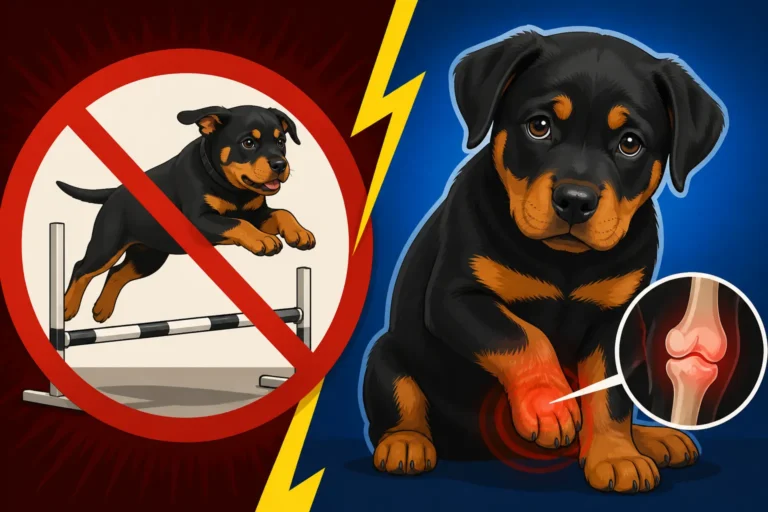
Beyond addressing existing injuries, proactive joint health measures are vital for all Rottweilers, especially those that are predisposed to joint problems. During puppyhood, it's crucial to be mindful of Rottweiler Growth Plates and Why They Close So Late. Over-exercising a growing Rottweiler puppy with forced runs, excessive jumping, or long, strenuous hikes can put undue stress on their developing joints and growth plates, potentially leading to problems down the road. Instead, focus on controlled play and short, frequent walks.
Choosing a high-quality large-breed specific puppy food and then an adult formula is also important, as these diets are formulated with appropriate calcium and phosphorus levels to support proper bone development. Many owners also consider starting joint supplements early even before issues arise, sometimes as early as two years old. While not a cure-all, they can provide building blocks for joint health. Regular veterinary check-ups are key to catching any subtle lameness or joint changes early. Remember that once one CCL is torn, the other knee has a significantly higher chance of tearing as well, often within 1-2 years. Being proactive can help you prepare and potentially mitigate future risks.
Disclaimer
The information provided in this article is for educational purposes only and should not be considered a substitute for professional veterinary advice. Always consult with a qualified veterinarian for any health concerns or before making any decisions related to your Rottweiler's medical care.