The Rottweiler Echocardiogram at Two Years Old
The journey of owning a Rottweiler is filled with immense joy, but it also comes with a unique set of responsibilities and anxieties, especially when it comes to their health. One of the biggest worries for many Rottie parents is the specter of heart disease, specifically a condition called Subaortic Stenosis (SAS). This guide is here to walk you through why a specialized heart ultrasound, known as an echocardiogram, at two years old isn't just a recommendation but a vital step in ensuring your beloved Rottweiler lives the healthiest, happiest life possible.
Why a Rottweiler Echocardiogram at Two Years Old is Critical
It's completely normal to feel a bit overwhelmed when thinking about all the health screenings recommended for a large breed like a Rottweiler. But for their hearts, specifically, the two-year-old echocardiogram is a cornerstone, often marking the definitive point for assessing cardiac health, particularly concerning Subaortic Stenosis.
Understanding Subaortic Stenosis (SAS) in Rottweilers
Subaortic Stenosis is a condition where a fibrous ring or ridge develops just below the aortic valve, making it harder for the heart to pump blood out to the body. Imagine trying to push water through a hose that has a kink in it – the pump (your dog's heart) has to work much harder. Over time, this increased workload causes the heart muscle to thicken, a condition called hypertrophy, which ultimately reduces the heart's efficiency and can lead to heart failure.
What makes SAS particularly concerning for Rottweilers is their genetic predisposition to this condition. It's not just a random occurrence; it runs in families. This inherited trait means that even if your Rottie seems perfectly healthy and robust, they could be silently developing this issue. Without proper screening, it can progress undetected, sometimes only revealing itself dramatically when the heart is already significantly strained. This is why understanding Rottweiler Heart Disease and Subaortic Stenosis is so important for owners of this incredible breed. We're not talking about a small, easily managed issue; severe SAS can drastically shorten a Rottweiler's lifespan and diminish their quality of life.
The Limitations of a Puppy Heart Murmur Check
Many of us remember our puppies getting their first vet checks, and hearing the vet mention a "heart murmur" can be incredibly alarming. The truth is, heart murmurs in puppies are actually quite common, and often, they're completely benign—what veterinarians call "innocent murmurs." These typically resolve as the puppy grows and their cardiovascular system matures. A vet listening with a stethoscope can detect the sound of turbulent blood flow, which is what a murmur is, but they can't see why that turbulence is happening or assess the heart's structure.
The challenge with SAS, specifically, is that the murmur it causes can be subtle in a young puppy, or it might even develop and worsen as the dog grows. A seemingly innocent murmur at eight weeks might be an early sign of trouble, or a dog with no murmur as a puppy could develop one that becomes audible later. This means that a clean bill of health based on a stethoscope check at puppyhood simply isn't enough to rule out SAS in a Rottweiler. By the age of two, a Rottweiler's heart has typically reached its adult size and structure. This timing is critical because any fibrous ring associated with SAS will generally have developed to its full extent by then, making an echocardiogram at this age a much more reliable diagnostic tool. It moves beyond just hearing a sound to actually visualizing the heart's internal architecture and function, providing a definitive answer that a simple stethoscope cannot. It's a significant upgrade from merely listening for Subaortic Stenosis in Rottweiler Puppies.
Preparing Your Rottweiler for the Echocardiogram
Hearing the word "echocardiogram" might conjure images of complex medical procedures, but for your Rottweiler, it's a surprisingly non-invasive and generally stress-free experience. Knowing what to expect can greatly ease your own mind and help you keep your dog calm.
What to Expect During the Appointment
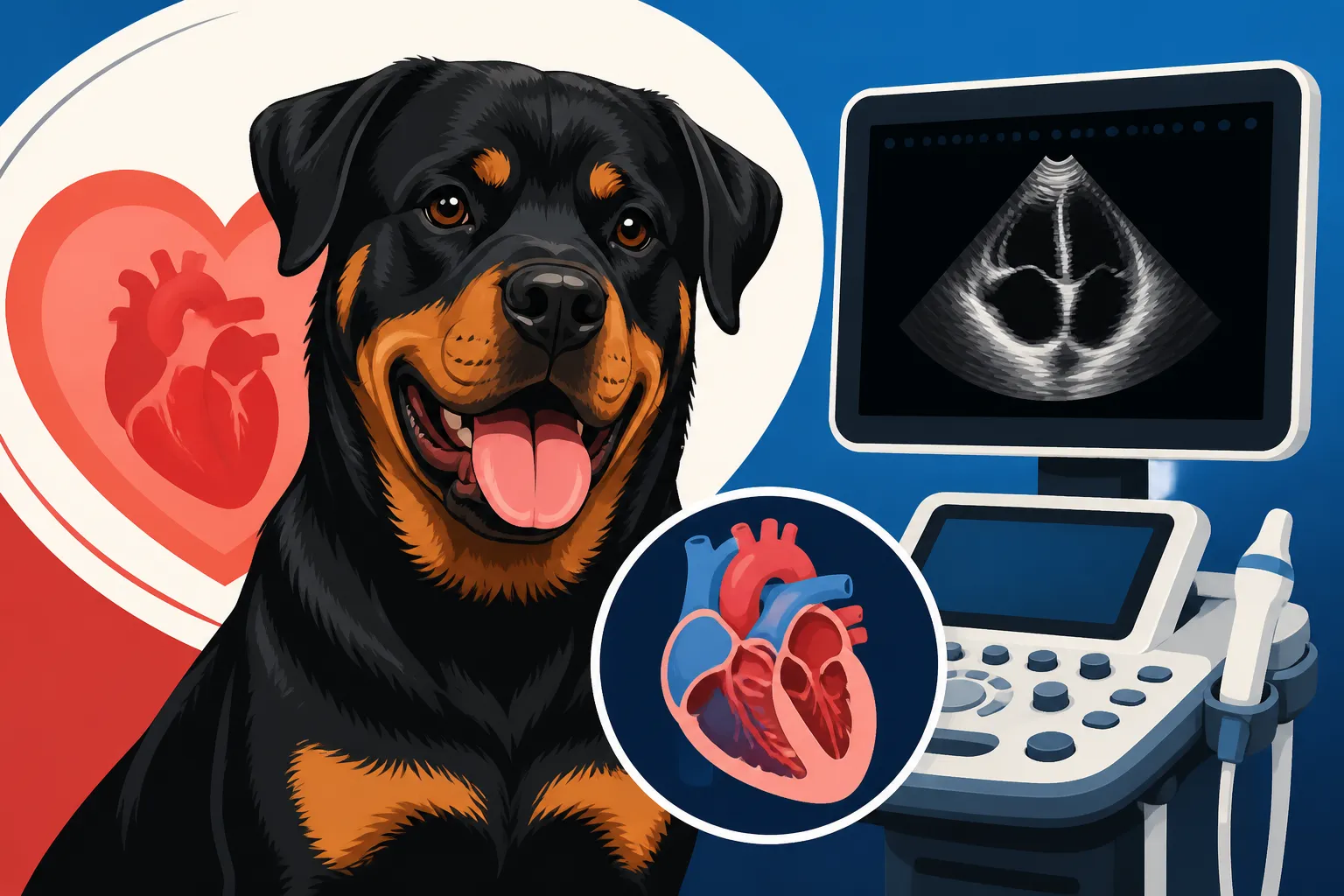
An echocardiogram is essentially an ultrasound of the heart. Your Rottweiler won't need anesthesia, which is a huge relief for many owners. Instead, they’ll typically lie calmly on a padded table, often on their side, while a skilled veterinary cardiologist or technician performs the scan. A small area of fur on their chest might be gently shaved or moistened with alcohol to ensure good contact for the ultrasound probe. Then, a cool, clear gel will be applied, similar to what's used in human ultrasounds.
The veterinary cardiologist will then use a handheld probe to get various views of your dog's heart. They'll be looking at the size of the heart chambers, the thickness of the walls, how the valves are opening and closing, and the speed and direction of blood flow. You’ll see the images appearing on a monitor, which, to an untrained eye, can look like a swirling, pulsing kaleidoscope. But for the cardiologist, it's a window into the precise workings of your dog's most vital organ. The entire procedure usually takes between 20 to 40 minutes, depending on your dog's cooperation and the complexity of the findings. The primary goal is to assess What the Cardiologist Looks For in a Rottweiler Heart – things like the presence of a subvalvular ridge, turbulent blood flow, and any compensatory changes in the heart muscle.
Ensuring Your Dog's Comfort and Cooperation
While the procedure itself isn't painful, any vet visit can be stressful for a dog, especially a large, strong-willed breed like a Rottweiler. Your presence and calm demeanor are your dog's greatest comfort. Before the appointment, make sure your Rottie has had a good bathroom break and hasn't eaten a huge meal, although fasting isn't usually required unless specifically instructed. Bringing their favorite blanket or a beloved toy can offer a sense of familiarity in an unfamiliar environment.
During the scan, speak to your dog in a soothing voice, offer gentle strokes, and if the clinic allows, you can often stand or sit right beside them, providing reassurance. Many clinics are experienced with handling larger, sometimes anxious, dogs and use positive reinforcement throughout the procedure. Treats are often used liberally to create a positive association. In rare cases, if a dog is exceptionally anxious and simply cannot remain still, a very mild sedative might be considered, but it's generally avoided to ensure the clearest possible reading of the heart's function without any drug-induced alterations. The more relaxed your Rottweiler is, the quicker and more accurate the cardiologist can be. This calm approach not only makes the experience better for your dog but also helps the cardiologist obtain the critical diagnostic images needed.
Decoding the Echocardiogram Results
Once the echocardiogram is complete, the cardiologist will interpret the findings. This is often the most anxious part for owners, waiting to hear what those images reveal. Understanding what the different grades of SAS mean is key to processing the information you receive.
Interpreting the Grades of SAS
Subaortic Stenosis is typically graded based on the velocity of blood flow through the narrowed area below the aorta. This velocity is measured in meters per second (m/s) and is converted into a pressure gradient, usually expressed in millimeters of mercury (mmHg). The higher the pressure gradient, the more severe the narrowing and the harder the heart has to work.
Here’s a general breakdown of how SAS is graded:
| SAS Grade | Pressure Gradient (mmHg) | Implications | Recommended Follow-up |
|---|---|---|---|
| Mild | < 50 mmHg | Generally good prognosis, often asymptomatic. Low risk of complications. | Annual vet checks, follow-up echo every 2-3 years. |
| Moderate | 50-80 mmHg | Increased risk of heart strain, potential for symptoms later in life. | Regular monitoring (6-12 months), lifestyle adjustments. |
| Severe | > 80 mmHg | High risk of heart failure, sudden death. Symptoms likely to develop. | Frequent monitoring (3-6 months), medication, strict lifestyle management. |
A mild diagnosis might mean minimal to no impact on your dog's daily life, with a normal lifespan expected, though continued monitoring is wise. A moderate diagnosis suggests a need for closer observation and potentially some lifestyle adjustments to minimize stress on the heart. In severe cases, the prognosis is unfortunately guarded, and aggressive medical management is often necessary to improve quality of life and extend survival. The cardiologist will explain these findings in detail, outlining the specific measurements and what they mean for your individual Rottweiler. Knowing How Vets Grade a Rottweiler Heart Murmur can help you understand the severity of the findings beyond just the presence of a murmur.
Understanding Other Potential Findings
While SAS is the primary concern for Rottweilers undergoing a two-year echocardiogram, the cardiologist isn't just looking for that one condition. An echocardiogram provides a comprehensive view of the heart, and other findings, though less common as primary issues at this age, can sometimes be detected.
For instance, the cardiologist will also assess for signs of left ventricular hypertrophy, which is the thickening of the heart muscle. In SAS, this hypertrophy is a secondary effect as the heart works harder to pump blood past the obstruction. However, hypertrophy can also be a sign of other conditions, though less likely to be diagnosed as a primary issue in a young, asymptomatic Rottweiler. The cardiologist will also examine all four heart valves for any signs of leakage (regurgitation) or other structural abnormalities. They will check the overall contractility of the heart muscle and look for any fluid accumulation around the heart (pericardial effusion), though these are typically seen in more advanced disease states.
Another condition that Rottweilers can be predisposed to, though often manifesting later in life or not being the primary screening target at two years via echo for SAS, is Dilated Cardiomyopathy (DCM). This is a disease of the heart muscle itself, where it becomes thin and weakened, leading to an enlarged heart that struggles to pump blood effectively. While an echo for SAS focuses on outflow obstruction, it can also provide initial clues about overall heart muscle health. If any suspicious findings are noted beyond SAS, the cardiologist will discuss them and recommend appropriate further diagnostics or monitoring. This comprehensive look is why the echocardiogram is such a powerful diagnostic tool for your Rottweiler's long-term health. Understanding conditions like Dilated Cardiomyopathy in a Rottweiler provides a broader perspective on Rottweiler cardiac health.
Managing a Rottweiler with a Cardiac Diagnosis
Receiving a cardiac diagnosis for your Rottweiler can be incredibly unsettling. However, with the right information and proactive management, you can significantly impact their quality of life and potentially their longevity. It's about teamwork with your veterinary cardiologist.
Treatment Options and Lifestyle Adjustments
For Rottweilers diagnosed with moderate to severe SAS, medication is often a crucial part of the management plan. Beta-blockers are commonly prescribed, such as Atenolol or Carvedilol. These medications work by slowing the heart rate and reducing the force of the heart's contractions, thereby decreasing the workload on the heart muscle and potentially improving its efficiency. They don't cure the physical obstruction of SAS, but they help the heart cope with the increased pressure. Your cardiologist will determine the appropriate medication and dosage based on your dog's specific condition.
Beyond medication, significant lifestyle adjustments are vital. Exercise modification is key: while a Rottweiler needs exercise, those with moderate to severe SAS will need to avoid strenuous activity, especially bursts of intense exertion. Long, slow walks are generally preferable to sprinting or intense play. Imagine trying to run a marathon with a pinched hose – it's just too much strain. Your cardiologist will provide specific guidelines, but the goal is to prevent the heart from working excessively hard. Diet also plays a role; maintaining a lean body condition is paramount, as extra weight puts additional strain on the heart. In some cases, a low-sodium diet might be recommended, particularly if the heart disease is progressing towards heart failure. It’s a lot to take in, but these changes can make a profound difference. It's important to understand the specific Medication for a Rottweiler in Heart Failure and the appropriate Exercise Limits for a Rottweiler With Heart Disease to keep them comfortable and stable.
Long-Term Monitoring and Prognosis
A cardiac diagnosis for your Rottweiler isn't a one-time event; it's a commitment to ongoing monitoring and care. Regular follow-up echocardiograms will be necessary to track the progression of the disease and to assess the effectiveness of any medications. Your veterinary cardiologist will recommend a schedule, which could be every six to twelve months, or even more frequently for severe cases.
As an owner, you'll become acutely aware of subtle changes in your dog's behavior or physical state. Be vigilant for signs such as increased coughing, especially at night or after exercise, lethargy, decreased exercise tolerance (they tire more easily), difficulty breathing, or any episodes of weakness or collapse. These can indicate that the heart disease is worsening or that the medication dosage needs adjustment. Keep a detailed log of these observations to share with your vet.
The prognosis for Rottweilers with SAS varies significantly depending on the severity of the condition. Dogs with mild SAS can often live full, normal lifespans with minimal intervention. Moderate cases require careful management but can still have many good years. Severe SAS, unfortunately, carries a guarded prognosis, and these dogs may have a significantly shortened lifespan. This is where pet insurance, like a plan from Healthy Paws, can be an absolute lifesaver. The costs associated with repeated specialist visits, echocardiograms, and lifelong cardiac medications can quickly add up, and having a good policy can provide immense financial relief, allowing you to prioritize your dog's care without added stress. Ultimately, the goal is always to maximize your Rottweiler's quality of life for as long as possible, making informed decisions with your veterinary team every step of the way.
The Role of Echocardiograms in Responsible Breeding
For anyone involved in or considering responsible Rottweiler breeding, the two-year echocardiogram is not just important for individual dog health, but for the entire breed's future. It's a cornerstone of ethical breeding practices designed to reduce the prevalence of inherited heart disease.
Why OFA Cardiac Clearance Matters
The Orthopedic Foundation for Animals (OFA) maintains a comprehensive public database of health clearances for purebred dogs, and cardiac health is a critical component for Rottweilers. For an OFA cardiac clearance to be considered definitive and accepted for breeding, the echocardiogram must be performed and interpreted by a board-certified veterinary cardiologist (DACVIM-Cardiology). This isn't just any vet; it's a specialist who has undergone extensive training specifically in veterinary cardiology, ensuring the highest level of diagnostic accuracy.
The OFA's recommendation for Rottweilers is for this definitive echocardiogram to be performed at two years of age or older. Why this specific age? Because, as discussed, this is when the heart has reached its adult size and any structural abnormalities like the fibrous ring of SAS will have fully developed. A clearance obtained before this age, even if performed by a cardiologist, is typically considered "preliminary" by the OFA because the condition can still progress or manifest more clearly. For a breeder aiming for the Canine Health Information Center (CHIC) certification, which compiles results from various health tests, a definitive cardiac clearance is mandatory. It’s one of The Five Clearances a Rottweiler Breeder Must Have to be considered truly responsible. This rigorous approach helps ensure that breeding animals are free from demonstrable congenital heart disease, thus protecting the health of future generations. It’s a testament to a breeder's commitment to the breed's well-being.
Impact on Future Generations
The decision to breed a Rottweiler carries an immense ethical responsibility, especially given the breed's predisposition to conditions like SAS. By strictly adhering to the two-year echocardiogram clearance, breeders play a pivotal role in curbing the incidence of this devastating disease. When only Rottweilers with clear, normal echocardiogram results (as certified by a board-certified cardiologist) are bred, it significantly reduces the likelihood of passing on the genetic components that contribute to SAS.
Even a dog diagnosed with mild SAS, while potentially living a normal life, should generally not be used for breeding. The goal isn't just to produce dogs that might be okay, but to actively improve the health of the breed with each generation. Responsible breeders understand that breeding "clear to clear" helps protect puppies from inheriting a condition that could cause them lifelong health struggles, early demise, and immense emotional and financial strain for their future families. This dedication is how responsible breeders distinguish themselves, demonstrating a commitment to health and longevity over mere appearance or titles. It's about ensuring Whether Rottweiler Heart Disease Runs in Lines is addressed head-on, through informed and ethical breeding choices. This foresight and commitment are crucial for the long-term health and reputation of the Rottweiler breed as a whole. Knowing the importance of Cardiac Clearance Before Breeding a Rottweiler helps ensure a healthier future for these magnificent dogs.
Disclaimer
This article is intended for informational purposes only and does not constitute professional veterinary advice. Always consult with a qualified veterinary professional for any health concerns or before making any decisions about your Rottweiler's care.