Recognizing Bloat in a Rottweiler
Few things strike as much fear into a Rottweiler owner's heart as the sudden, terrifying onset of bloat. This isn't just an upset tummy; it's a life-threatening emergency where every single minute counts, and knowing the signs could quite literally be the difference between life and death for your beloved companion. This guide will walk you through exactly what bloat is, how to spot its earliest, most subtle indicators, and what urgent steps you need to take the moment you suspect something is wrong.
Understanding What Gastric Dilatation-Volvulus Really Is
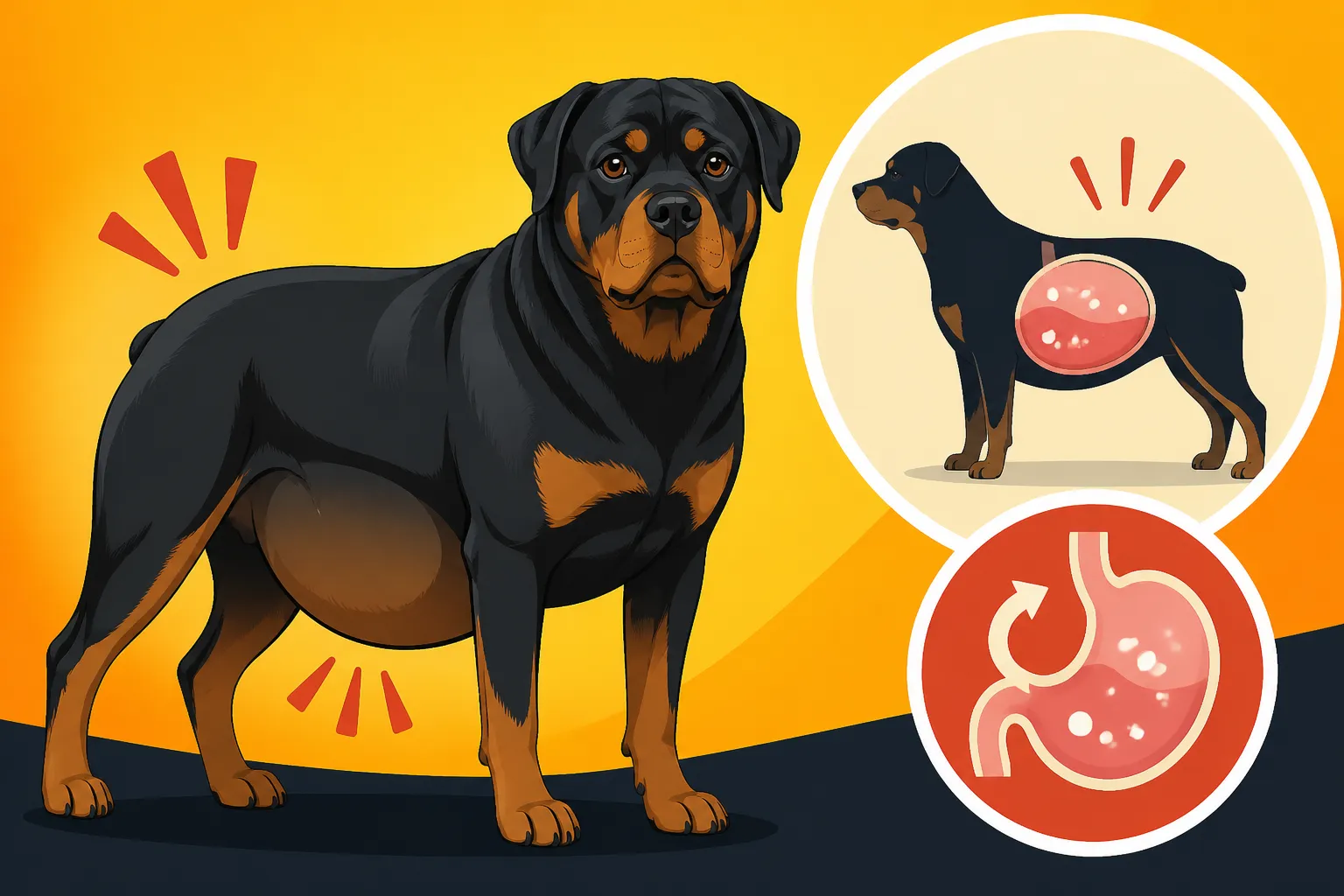
When we talk about "bloat" in Rottweilers, we're actually referring to a condition with a very long and scary name: Gastric Dilatation-Volvulus, or GDV. It's not just that their stomach gets distended with gas or fluid, which is bad enough, but in GDV, the stomach also twists on its axis. Imagine your dog's stomach like a sack, suspended by ligaments within their abdomen. If it fills up rapidly and then twists, it seals off both the entrance (from the esophagus) and the exit (to the small intestine). This creates an incredibly dangerous situation that escalates with frightening speed.
Gastric Dilatation: The Swelling of the Stomach
First, let's break down the "dilatation" part. This means the stomach fills with gas, fluid, or even food that can't escape. As the stomach expands, it puts immense pressure on surrounding organs, the diaphragm, and major blood vessels. This pressure restricts blood flow, especially to the hindquarters, and makes it incredibly difficult for your Rottweiler to breathe properly. The distension itself is painful and causes significant discomfort.
Think of it like blowing up a balloon inside a small box. The balloon pushes against all sides, compressing everything in its path. For your Rottweiler, this balloon is its stomach, and the box is its abdominal cavity. The sheer physical pressure can be enough to send a dog into shock, even before the twist occurs.
Volvulus Explained: The Terrifying Twist
The "volvulus" is the truly catastrophic part. This is when the distended stomach actually rotates, sometimes a full 180 to 360 degrees. This twisting motion effectively ties off both the esophagus and the duodenum (the first part of the small intestine), trapping everything inside. No gas, no fluid, no food can get in or out. This also pinches off the blood supply to the stomach itself, causing tissue to die rapidly.
This loss of blood supply to the stomach wall is incredibly serious. Within a few hours, parts of the stomach can become necrotic, meaning the tissue dies. As the tissue dies, toxins are released into the bloodstream, leading to systemic shock, organ failure, and a cascade of life-threatening problems. It’s a race against time from the moment the twist happens.
Why Bloat is a True Emergency
It’s hard to overstate the urgency of GDV. This isn't a "wait and see if they feel better" situation. Without immediate veterinary intervention, GDV is almost always fatal. The statistics are stark: studies show that without surgery, virtually all dogs with GDV will die. Even with surgery, the mortality rate can be significant, especially if treatment is delayed. The average lifespan for a Rottweiler, which is already a concern, can be cut tragically short by this sudden event.
The rapid progression means that what might start as subtle restlessness can quickly become a dog in severe pain, struggling to breathe, and then collapsing. The window for successful treatment is often measured in just a few hours. This is why knowing the signs and acting decisively is so paramount for Rottweiler owners. You need to be prepared to drop everything and rush to an emergency vet if you see these symptoms.
The Earliest Subtle Signs of Bloat in a Rottweiler
One of the biggest challenges with bloat is that the initial symptoms can be vague and easily mistaken for a simple stomach ache. But with a breed as prone to GDV as the Rottweiler, it’s critical to be hyper-aware and to recognize these subtle cues as potential red flags. Trust your gut instinct; if something feels off, investigate immediately.
Restlessness and Pacing
A common early sign is unusual restlessness or an inability to get comfortable. Your Rottweiler might pace incessantly, shift positions repeatedly, or keep trying to lie down only to get back up moments later. They might seem agitated, unable to settle, and frequently look at their abdomen, almost as if trying to understand what’s happening internally. This is often their way of trying to alleviate the discomfort of a distending or twisting stomach.
This isn't just normal fidgeting. This is a persistent, anxious restlessness that suggests internal distress. They might whine softly or sigh heavily as they move around, indicating a level of pain or unease that isn't typical for them. If your usually calm Rottweiler is suddenly exhibiting this kind of behavior, especially after a meal, it should immediately raise your suspicion.
Excessive Drooling or Licking
Another subtle, yet important, indicator can be excessive drooling or licking. A Rottweiler might drool more than usual, or repeatedly lick the air, their lips, or even the floor. This can be a sign of nausea and discomfort from the expanding stomach. They might also appear to be trying to swallow frequently, as if attempting to relieve pressure in their throat or stomach.
This isn't necessarily a massive puddle of slobber, but more drooling than is typical for your dog, or a persistent licking behavior that seems out of place. Coupled with restlessness, this can be a very early warning. Some dogs might also try to eat grass or gulp air, behaviors often associated with nausea.
Unproductive Retching Without Bringing Anything Up
This is perhaps the most classic and critical early sign of bloat: repeated attempts to vomit, often accompanied by gagging, but with little to no actual vomit produced. Your Rottweiler might heave and strain, making all the sounds and motions of throwing up, but nothing comes out, or perhaps only a small amount of foamy saliva. This is because the twisted stomach has sealed off the exit, preventing anything from moving into the esophagus.
If you see your Rottweiler making these desperate attempts to vomit without success, especially if they're also restless or drooling, consider it a blaring alarm bell. This symptom is often the point where owners realize something is seriously wrong and seek emergency help. The sound can be quite distressing to hear, a deep retching cough that sounds exhausting and futile. This is a strong indicator that you need to act fast. A Rottweiler Retching Without Bringing Anything Up is a serious sign that cannot be ignored.
Distinguishing Bloat from Other Upset Stomachs
It’s true that many of the early signs of bloat can overlap with more common, less severe gastrointestinal upsets. This is precisely why it’s so difficult for owners to recognize GDV quickly. However, there are key differences in the severity, progression, and specific symptoms that can help you differentiate a typical tummy ache from a true emergency.
Upset Stomach Versus Bloat Symptoms
A regular upset stomach might involve vomiting (actually producing bile or food), diarrhea, lethargy, or a temporary loss of appetite. While concerning, these symptoms often resolve with time, bland food, or over-the-counter remedies recommended by your vet. The dog might be uncomfortable but is usually able to settle, pass gas, or relieve themselves. They might eat some grass and then feel better.
Bloat, on the other hand, presents with a specific set of symptoms that are more acute and rapidly worsening. The key differences are the unproductive retching, the distended and hard abdomen, and the rapid deterioration of the dog's overall condition. A dog with bloat will not simply "sleep it off" or pass the gas. The physical obstruction and twisting mean the condition can only get worse.
Here's a quick comparison to help you distinguish between the two:
| Symptom | Typical Upset Stomach | Gastric Dilatation-Volvulus (Bloat) |
|---|---|---|
| Retching/Vomiting | Often productive (food, bile, grass) | Unproductive; dog heaves/gags but little to no actual vomit (maybe foam) |
| Abdominal Appearance | May be slightly tucked or mildly uncomfortable | Swollen, tight, firm, or distended abdomen (often on left side) |
| Behavior | Lethargic, may or may not eat, eventually settles | Restless, pacing, anxious, unable to get comfortable, looking at flank |
| Drooling/Licking | May or may not occur; usually less intense | Excessive, persistent drooling, lip-licking, gulping |
| Pain Level | Mild to moderate discomfort | Severe, rapidly worsening pain |
| Breathing | Normal | Rapid, shallow breathing; difficulty breathing as stomach expands |
| Gums | Pink and moist | Pale, white, or brick red; potentially tacky or dry |
| Progression | Slow, may improve, responds to home care/meds | Rapid, continuous worsening; never improves on its own |
Pain Response Differences
A dog with a typical upset stomach might show discomfort by lying curled up or avoiding food, but they are usually still approachable and may seek comfort. Their pain is often intermittent or mild enough that they can find a comfortable position.
In contrast, a Rottweiler experiencing bloat will exhibit intense, constant, and rapidly escalating pain. They might groan, whine, become visibly distressed, or even snap if their abdomen is touched (which you should avoid doing excessively once bloat is suspected, as it can worsen the situation). Their anxiety will be palpable, driven by both the internal pressure and the profound physical distress. They often stand with an arched back or in a "praying" position with their front legs down and rear elevated, trying to relieve pressure. This extreme level of discomfort is a significant red flag.
The Rapid Progression of Bloat Symptoms
Bloat doesn't wait around. Once the stomach twists, the clock starts ticking rapidly. What might begin as subtle restlessness can quickly descend into a full-blown medical crisis, with your Rottweiler exhibiting increasingly alarming signs of shock. Understanding this progression is vital to recognizing the urgency of the situation and avoiding dangerous delays.
Visible Swelling and Tenderness of the Abdomen
As the stomach continues to dilate with gas and fluid, you will often notice a visible swelling of the abdomen. This swelling typically appears on the left side, behind the last rib, giving your Rottweiler a distended, "barrel-chested" or bloated appearance. The abdomen will feel tight, hard, and extremely tender to the touch. It might even sound like a drum if you gently tap it. The visual change can be quite dramatic, especially in a breed like the Rottweiler, which normally has a well-defined waist.
This swelling is a clear indication that the internal pressure is reaching dangerous levels. Your dog will likely resist any attempt to touch their belly due to intense pain. They might also stand with their legs splayed slightly apart, trying to accommodate the increased abdominal girth. This is well past the "subtle" stage and demands immediate action.
Rapid Breathing and Pale Gums
As the distended stomach presses against the diaphragm, your Rottweiler's ability to breathe effectively will become severely compromised. You’ll notice rapid, shallow breaths, and they might appear to be panting even when they haven’t exerted themselves. Their gums, which are usually a healthy bubblegum pink, may become pale, whitish, or even bluish (cyanotic) due to poor oxygenation and compromised blood circulation. This is a sign that they are not getting enough oxygen and are heading into shock.
Their heart rate will likely also increase dramatically as their body tries to compensate for the reduced blood volume returning to the heart. You might notice their capillaries refilling slowly if you press on their gums, another sign of poor circulation. These are all critical signs of a deepening crisis and indicate that your dog's cardiovascular system is struggling to cope. The Emergency Signs That Send a Rottweiler In for bloat are undeniable and require immediate intervention.
Collapse and Shock
Without intervention, the condition will continue to worsen, leading to severe shock. Your Rottweiler might become very weak, stumble, and eventually collapse. Their body temperature can drop, and they will be unresponsive or only minimally responsive. At this stage, their pulse may be weak and thready, and their breathing will be extremely labored. This is the final, devastating stage of bloat, where the chances of survival diminish significantly with every passing minute.
The systemic effects of the twisted stomach, the dying tissue, and the release of toxins will overwhelm their body. This is a point of no return for many dogs if they haven't received emergency veterinary care. This is why recognizing the earlier signs, and acting before they reach this critical state, is absolutely paramount. No dog should ever be allowed to reach this stage at home; it means delays have been catastrophic.
What to Do the Second You Suspect Bloat
The moment bloat enters your mind as a possibility, you must act with extreme urgency. There is no time to wait, no "let's see if they improve." This is a veterinary emergency that demands immediate, decisive action. Hesitation can, and often does, cost lives.
Immediate Vet Contact and Emergency Transport
As soon as you notice any combination of the alarming symptoms – especially unproductive retching, restlessness, and a distended abdomen – pick up the phone immediately and call your nearest emergency veterinary hospital. Do not call your regular vet if it’s outside of business hours or if they don’t handle emergencies directly. Time is of the essence, and you need to go directly to a facility equipped to handle critical care and emergency surgery.
When you call, clearly state that you suspect your Rottweiler has bloat (Gastric Dilatation-Volvulus) and that you are on your way. This allows the veterinary team to prepare for your arrival, ensuring that staff, equipment, and a surgical suite are ready. Knowing what you're dealing with can save precious minutes upon arrival. Many emergency clinics, like those part of the VCA or BluePearl networks, are well-versed in managing these critical cases.
What to Expect at the Emergency Clinic
Once you arrive, the veterinary team will immediately assess your Rottweiler. They will likely perform a quick physical exam, take vital signs, and, most importantly, obtain abdominal X-rays to confirm the diagnosis of GDV. The X-ray will show the characteristic "double bubble" or "Popeye arm" sign if the stomach is twisted. Once GDV is confirmed, they will work quickly to stabilize your dog. This typically involves placing an IV catheter to administer fluids, pain medication, and potentially antibiotics. They may attempt to decompress the stomach by passing a tube down the esophagus or, in some cases, by trocarization (inserting a large needle through the abdominal wall into the stomach to release gas).
Following stabilization, surgical intervention (called gastropexy and detorsion) is almost always necessary to untwist the stomach and suture it to the abdominal wall to prevent future occurrences. This is where Rottweiler Bloat Surgery and the Odds of Survival comes into play, as it’s a major operation with inherent risks. Your vet will discuss these risks, the prognosis, and the costs involved. While the costs can be significant – Emergency Vet Bills a Rottweiler Owner Should Expect can run into thousands of dollars – it’s often the only option. This is exactly why many savvy owners carry robust pet insurance, with companies like Healthy Paws often being a popular choice, helping to ease the financial burden in such a sudden crisis.
What Not to Do While Waiting for Vet Care
In your panic, it's natural to want to "fix" things, but there are some critical things you should not do if you suspect bloat. Do not try to make your dog vomit; it won't work if the stomach is twisted and could cause aspiration. Do not try to give them antacids or other medications without veterinary instruction, as these will not address the underlying twist and may only delay crucial treatment.
Avoid excessive handling or attempting to massage their belly, as this can cause further pain or even worsen the twist. Your primary goal is safe and rapid transport to the veterinary clinic. Keep your dog as calm and still as possible during transport. The more stable they are, the better their chances are of arriving at the clinic in a condition that allows for immediate, life-saving intervention.
Why Rottweilers Are So Prone to Bloat
It’s a cruel irony that such a magnificent breed like the Rottweiler is predisposed to a condition as terrifying as bloat. Understanding the underlying reasons can help owners take proactive steps, even though GDV can never be entirely prevented. Genetics and physical conformation play significant roles, but environmental factors also contribute.
Deep-Chested Conformation and Genetics
One of the primary anatomical reasons Rottweilers are at high risk is their deep-chested conformation. Breeds with deep, narrow chests have more room for the stomach to swing and twist, much like a pendulum. This is a common trait shared with other at-risk breeds like Great Danes, German Shepherds, and Weimaraners. The ligaments that hold the stomach in place are simply not as effective in preventing rotation in such a cavity.
Beyond just the physical shape, there's a strong genetic component to bloat. If a Rottweiler's parents or close relatives had GDV, their risk significantly increases. This is why reputable breeders are often very open about the incidence of bloat in their lines and why some proactively perform Preventive Gastropexy Pricing for a Rottweiler on their breeding dogs or recommend it for puppies. This genetic predisposition means that even with perfect care, a Rottweiler can still be at risk.
Other Risk Factors for Bloat
While deep chests and genetics are major players, other factors can increase a Rottweiler's susceptibility to bloat. Age is one; older Rottweilers tend to be at a higher risk, with the incidence rising as they get past middle age. Stress and anxiety can also be contributing factors, as can certain eating habits.
Rapid eating, where a dog gulps down their food quickly, increases the amount of air they swallow, potentially contributing to stomach distension. Eating only one large meal a day, instead of several smaller ones, can also increase risk. This is why many vets recommend Splitting a Rottweiler's Food Into Two Meals. Excitement or strenuous exercise immediately before or after eating is also considered a risk factor, highlighting the importance of How Long to Wait After a Rottweiler Meal Before Exercise. Even the old advice about raised food bowls, once thought to prevent bloat, has actually been shown in some studies to potentially increase the risk, making The Raised Bowl Argument in Rottweiler Bloat a topic of ongoing discussion among veterinarians.
Preventing Bloat: Proactive Measures and Peace of Mind
While bloat can never be 100% prevented, there are definitely steps you can take to significantly reduce your Rottweiler's risk. These measures often revolve around diet, exercise, and, increasingly, surgical intervention for peace of mind.
Dietary and Feeding Strategies
How you feed your Rottweiler can make a real difference in their bloat risk. Instead of one large meal, break their daily food ration into two or three smaller meals throughout the day. This reduces the amount of food and gas in the stomach at any one time. Using a slow-feeder bowl or placing a large, non-chokable object (like a Kong or a rock) in their regular bowl can prevent them from gulping their food too quickly.
Ensure your Rottweiler has access to fresh water at all times, but avoid allowing them to drink large quantities immediately before or after strenuous activity. While the link isn't fully understood, some studies suggest that certain dry foods with specific ingredients might carry a slightly higher risk, though this is debated. Discuss your dog's diet with your vet, especially if you're concerned. Maintaining a healthy weight for your Rottweiler also reduces overall strain on their body.
Managing Exercise and Stress
Timing exercise around meals is crucial. Avoid vigorous exercise, intense play, or high-stress situations for at least an hour before and two hours after your Rottweiler eats. A short, leisurely walk to relieve themselves is fine, but anything that gets their heart rate up significantly or causes them to gulp air should be avoided during these critical periods.
Stress can also play a role, so try to keep your Rottweiler's routine as consistent and calm as possible. If you know a stressful event is coming (like a vet visit, travel, or fireworks), consider feeding them a smaller, easily digestible meal beforehand and ensuring they have a quiet, comfortable space. A calm dog is a healthier dog, and this is especially true when it comes to digestive health.
The Role of Prophylactic Gastropexy
For Rottweiler owners, perhaps the most impactful preventive measure is a prophylactic gastropexy. This is a surgical procedure where the stomach is permanently tacked or sutured to the abdominal wall, preventing it from twisting. While it doesn't stop the stomach from dilating (bloating with gas), it eliminates the lethal "volvulus" component. Many owners opt for this procedure when their Rottweiler is young, often at the same time as spaying or neutering.
If you're considering a gastropexy, discuss it thoroughly with your veterinarian. It’s an elective surgery, but for a high-risk breed like the Rottweiler, it offers immense peace of mind. Some vets perform traditional open surgery, while others offer less invasive laparoscopic gastropexy, which has a faster recovery time. This proactive step can dramatically improve the chances of survival should your Rottweiler ever experience the dilatation part of bloat. Knowing that a twist is unlikely can reduce much of the anxiety associated with this terrifying condition.
Disclaimer
The information provided in this article is for educational and informational purposes only and does not constitute veterinary advice. Always consult with a qualified veterinarian for any health concerns or before making any decisions about your pet's health or treatment. In case of a suspected emergency like bloat, seek immediate veterinary attention.