Why the Rottweiler Was Never Bred for Speed
It's a common misconception to look at a powerful, athletic breed like the Rottweiler and assume they're built for bursts of incredible speed, perhaps like a sleek Doberman or a lithe German Shorthaired Pointer. But if you've ever watched a Rottweiler move, especially in their early days, you'll notice a deliberate, ground-covering gait rather than a frantic dash. This guide is here to shed light on why, historically and physiologically, the Rottweiler was never bred for speed, but for something far more enduring and powerful.
The Historical Mandate: A Working Dog, Not a Racing Dog
To truly understand why the Rottweiler isn't a speed demon, we have to journey back in time, tracing their roots through centuries of dedicated work. Their entire genetic blueprint was forged for specific, demanding tasks that prioritized strength, endurance, and guarding capabilities over sheer velocity. Imagine a job where sprinting across open fields was less important than holding your ground against a stubborn bull or guarding a pouch of gold through a dangerous forest. That's the Rottweiler's legacy.
Roman Legions and Drover Duties
The ancestors of today's Rottweiler were dogs that accompanied Roman legions as they marched across Europe, over 2,000 years ago. These dogs, often referred to as Roman drover dogs or mastiff-types, weren't primarily combat animals, though they certainly could defend themselves and their charges. Their main role was to herd and guard the cattle that provided food for the marching army. Think about that for a moment: moving large herds of cattle over vast distances, through varied terrain, day in and day out. This wasn't a sprint; it was an endurance marathon, demanding unwavering focus and powerful presence.
These dogs needed to control the herd, prevent stragglers, and protect against predators or thieves. This required a sturdy build, immense stamina, and an intimidating presence. A fast, lightly built dog might have been able to chase a runaway calf, but it wouldn't have had the gravitas or physical heft to turn a whole herd, much less stand firm against a wolf. The work was slow, methodical, and required powerful body language and controlled force, not lightning-fast reflexes. You can read more about their ancient roles in How Roman Legions Used Their Drover Dogs.
The Butcher's Dog of Rottweil
Centuries later, as the Roman Empire faded, these dogs settled in the German town of Rottweil, which became a thriving cattle market town during the Middle Ages. Here, the breed truly began to take its distinct form, earning the name "Rottweiler Metzgerhund," or "Butcher's Dog of Rottweil." Their duties expanded beyond just droving cattle to market; they also guarded the butchers' shops and the substantial sums of money the butchers collected from sales.
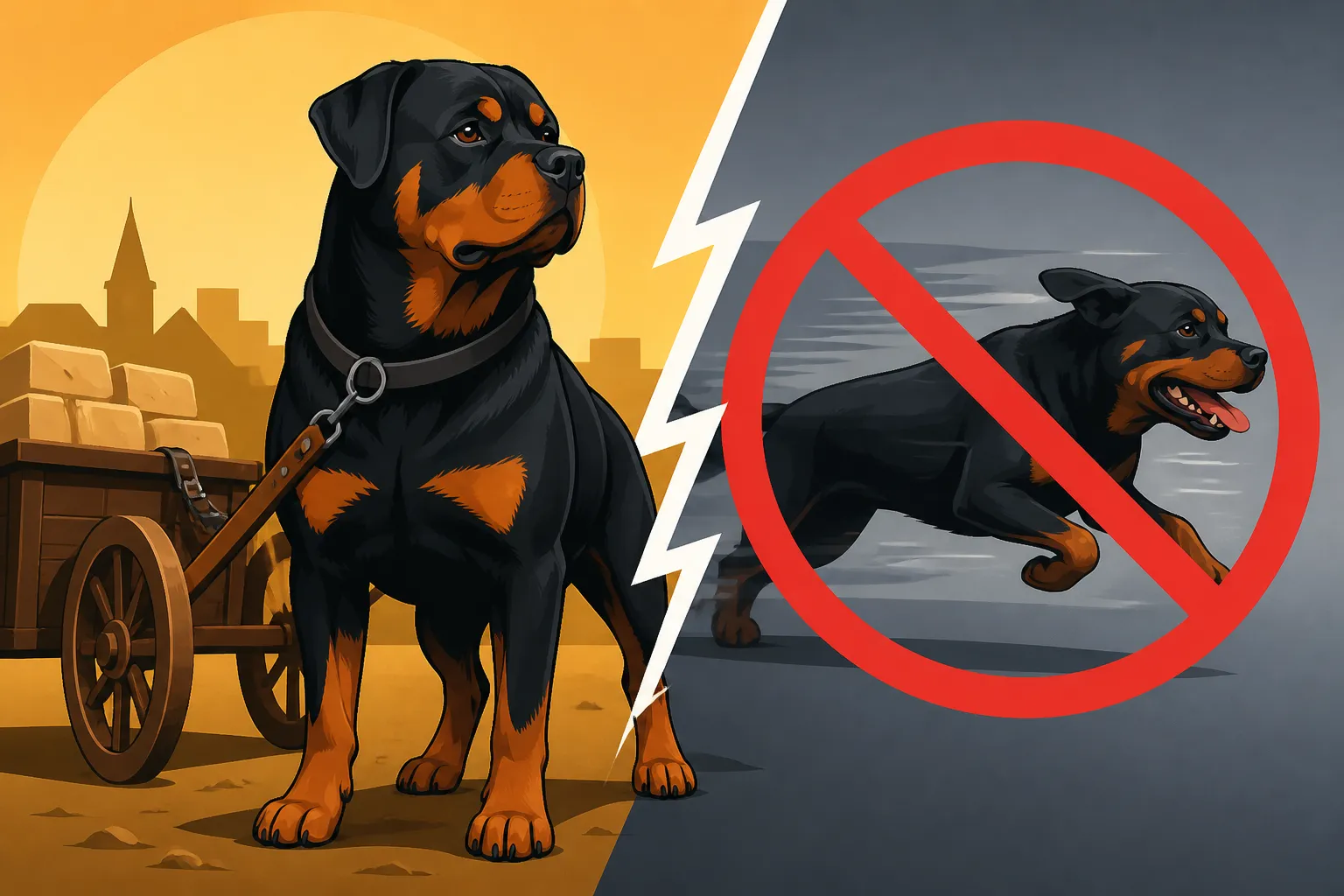
This job further cemented the need for strength, steadfastness, and intimidating presence over speed. A butcher's dog might pull a heavy cart laden with meat, needing brute force and solid traction rather than quick bursts. When guarding money, the dog needed to be a deterrent, capable of confronting a threat head-on, not outrunning it. The emphasis was always on control, power, and unwavering loyalty to their master and their task. For a deeper dive into their specific role, check out What a Metzgerhund Did in a Day's Work.
Physical Attributes Suited for Strength and Stamina, Not Sprinter Speed
When you examine a Rottweiler's physical conformation, it becomes abundantly clear that every aspect of their design points towards power, resilience, and sustained effort, rather than the explosive, fleeting speed of a true sprinter. They are built like canine linebackers, not track stars, and there's a good reason for that: their body perfectly matches the job they were bred to do.
Bone Structure and Musculature
A Rottweiler possesses a robust, heavy bone structure that provides a strong framework for their impressive musculature. Their chests are broad and deep, housing powerful lungs and a strong heart capable of sustaining long periods of moderate activity. The muscles themselves are dense, well-developed, and designed for generating substantial force and endurance. Think of a powerlifter versus a marathon runner, or even a shot-putter versus a 100-meter dash Olympian. The Rottweiler leans heavily towards the former.
Compare this to a sighthound like a Greyhound or a Whippet. Those breeds have fine bone, slender bodies, deep but narrow chests, and long, highly flexible spines — all adaptations for explosive acceleration and incredible top speeds. A Rottweiler's body is too broad, too heavily muscled, and too sturdy to ever achieve that kind of velocity. Their power comes from pushing, pulling, and holding, requiring stability and raw force, which their bone and muscle mass deliver. This fundamental build is why the Rottweiler is firmly placed in the working group, rather than a category focused on speed or agility. For more about their working classification, see Why the Rottweiler Sits in the Working Group.
Gait and Movement
The characteristic gait of a Rottweiler further illustrates their design for purpose rather than speed. They move with a powerful, ground-covering trot, a stride that is efficient and enables them to travel long distances without tiring quickly. It’s a purposeful, steady movement that speaks of confidence and strength, rather than a frantic pace. Their movement tends to be very deliberate and balanced, maintaining a strong connection to the ground with each powerful push from their hindquarters.
While they can certainly pick up speed and run when excited or playing, it’s not the effortless, floating gallop of a dog bred for racing. Their frame isn't designed for maximum extension and recoil. Instead, their broad frame and sturdy limbs provide stability and leverage. This type of movement conserves energy over distance, allowing them to work for hours, whether herding cattle or patrolling a property, which aligns perfectly with their historical roles.
Temperament and Instinct: Purpose-Driven Traits
Beyond the physical architecture, the very essence of a Rottweiler's temperament and innate instincts are geared towards their working heritage, reinforcing why speed was never a priority in their development. Their mental make-up complements their physical capabilities, creating a dog that approaches tasks with thoughtful determination rather than impulsive haste.
Deliberate and Self-Assured Nature
One of the defining characteristics of the Rottweiler temperament is their calm, self-assured, and deliberate nature. They are not a breed known for instant, frenetic reactions. Instead, they tend to observe, assess, and then act with a purpose. This "wait-and-see" approach is often misinterpreted as aloofness, but it’s actually a sign of their inherent confidence and thoughtful disposition. They take their time to weigh a situation before committing to a response.
In their historical role, particularly as guardians of cattle or money, a dog that reacted impulsively or with excessive speed might have caused more chaos than control. Imagine a dog that bolts through a herd, scattering animals rather than calmly guiding them. Their job required a cool head and a measured response, traits that don't typically accompany a "sprinter" mentality. This calm confidence is a hallmark of the breed, as described in The Calm Confidence a Rottweiler Standard Asks For. It’s a mental state that favors power and presence over quick bursts of energy.
Guarding and Herding Instincts
The Rottweiler's powerful guarding and herding instincts are deeply ingrained and directly reflect their origins. These instincts manifest as a desire to keep their "flock" (be it cattle, family, or property) together and safe. Herding, for a Rottweiler, often involves "body blocking" or "bumping" animals or people to redirect them, a technique that requires significant physical presence and strength, not speed. They are more likely to lean their weight into you, asserting control, than to zip around you in a flurry of movement.
Similarly, their guarding instinct is about protection and deterrence, which relies on a formidable presence and the perceived ability to overpower a threat. A Rottweiler stands its ground. It doesn't typically engage in a chase unless absolutely necessary, preferring to confront and control the situation. This focus on guarding and controlling territory or individuals, as explored in The Rottweiler Guarding Instinct and How to Shape It, reinforces their role as a powerful, steady presence, rather than a fast pursuit dog.
Modern Day Implications and Exercise
Understanding that your Rottweiler wasn't bred for speed has significant implications for how you approach their care, especially regarding exercise and joint health. While they might not be built for sprinting marathons, they are still incredibly athletic and require specific types of activity to thrive and remain healthy throughout their lifespan.
Exercise Needs of a Powerful Dog
Despite not being sprinters, Rottweilers are powerful working dogs that need consistent, appropriate exercise. This means regular, lengthy walks at a moderate pace, allowing them to explore and engage their senses. Hiking is often a fantastic activity for Rottweilers, as it provides varied terrain and encourages a steady, enduring pace that utilizes their natural stamina. Off-leash time in a secure area, where they can trot and gallop at their own discretion, is also beneficial, but always remember their powerful impulse control needs when practicing Rottweiler Leash Manners at a Hundred Pounds.
Mental stimulation is just as crucial as physical exercise. Because they are intelligent and purpose-driven, Rottweilers benefit greatly from training sessions, puzzle toys, and engaging activities that challenge their minds. Simply letting them out in the yard isn't enough; they need to do something. Think about activities like scent work, obedience trials, or even carting (if safely introduced and done in moderation) which tap into their heritage. Just like any large breed, maintaining a lean body condition is vital for their joint health. High-quality food available on platforms like Chewy, formulated for large breeds, can help ensure they get the right nutrition to support their robust frame without adding unnecessary weight. Rottweiler Obesity and the Load It Adds is a serious concern for their joints.
Avoiding High-Impact Activities
Given their heavy bone structure and the slower closure of their growth plates, Rottweiler puppies and adolescents are particularly vulnerable to injury from high-impact or repetitive strenuous activities. Their growth plates, which are areas of cartilage in young dogs where new bone forms, don't fully close until they are quite mature, often between 18 and 24 months of age. Pushing them too hard with activities like jumping, excessive running on hard surfaces, or long, forced jogs can lead to long-term joint issues such as hip and elbow dysplasia.
Instead, focus on low-impact activities during their formative years. Swimming, controlled walks, and gentle play are excellent choices. As they mature and their growth plates close, they can gradually be introduced to more strenuous activities, but always with an eye toward moderation and joint preservation. Even adult Rottweilers benefit from a focus on endurance and strength rather than intense, short bursts of activity that put excessive strain on their joints. Protecting their developing joints is paramount for a healthy life, which you can learn more about in Rottweiler Growth Plates Closing at Eighteen to Twenty-Four Months. Remember, the goal is long-term health, not pushing them to be something they're not naturally. Providing ample space on a comfortable, durable bed from Chewy for rest and recovery is also an important part of supporting their large, heavy bodies.
Here's a quick comparison of characteristics:
| Feature | Speed-Bred Dog (e.g., Greyhound) | Strength/Endurance-Bred Dog (Rottweiler) |
|---|---|---|
| Body Type | Lean, slender, aerodynamic | Broad, muscular, powerful |
| Bone Structure | Fine, light | Heavy, dense |
| Chest | Deep, narrow | Broad, deep |
| Spine | Highly flexible | Sturdy, less flexible |
| Musculature | Fast-twitch fibers for explosive speed | Dense, strong for sustained power |
| Gait | Gallop, flying trot | Powerful trot, ground-covering |
| Purpose | Chasing, racing | Herding, guarding, carting |
| Temperament | Often sensitive, reactive | Calm, self-assured, deliberate |
Disclaimer
This article is for general informational purposes only and does not constitute professional advice. Laws, prices and regulations vary by location and change over time. Consult a qualified professional for guidance on your specific situation.