Which Roman Dog Type the Rottweiler Descends From
It’s a question many Rottweiler owners and admirers ponder: where did these magnificent, powerful dogs actually come from? While their modern history is quite well-documented, tracing their true origins takes us back much further, right into the heart of the Roman Empire. This guide will take you on a journey through time, unraveling the ancient lineage that ultimately shaped the loyal, protective Rottweiler we know and love today.
Tracing the Rottweiler's Ancient Lineage Back to Rome
The idea that your stoic, self-assured Rottweiler has roots stretching back to the Roman legions might seem like something out of a historical epic, but it's remarkably true. These weren't just random camp followers; they were working dogs, indispensable companions to the marching armies, and their genetic legacy is woven deeply into the Rottweiler’s very being. We're talking about dogs that weren't bred for delicate features or fancy tricks, but for pure utility, strength, and an unwavering protective instinct.
The Roman Empire's Canine Companions: More Than Just War Dogs
When we think of dogs in ancient Rome, our minds might jump to images of massive, fearsome war dogs, charging into battle alongside soldiers. While such dogs did exist and were used for specific purposes, the vast majority of Roman working dogs had far more mundane, yet crucial, roles. The legions were not just fighting machines; they were self-sustaining communities on the move, and that meant feeding thousands of men across vast, often hostile, territories. This required large herds of livestock – sheep, goats, and especially cattle – to be driven alongside them for weeks or months on end.
Enter the Roman drover dog. These robust canines were essential for managing these massive herds. Imagine trying to keep hundreds of cattle moving in formation across varied terrain, through forests, over rivers, and past potential threats, all while keeping pace with a marching army. It was an enormous task, and without intelligent, powerful dogs to assist, it would have been nearly impossible. These dogs were the original movers and shakers of the Roman meat supply chain, valued for their stamina, their protective instincts against predators or thieves, and their sheer physical presence. Their practical application was paramount, making them an integral part of military logistics, far more than just guard dogs in the modern sense.
The Molossus: A Progenitor of Many Mighty Breeds
When we talk about the "Roman dog type" that the Rottweiler descends from, we're not pinpointing a single, clearly defined breed with a specific name like "Roman Rottweiler." Instead, historians and canine geneticists refer to a broad category known as the Molossus (or Molossian) type. This wasn't a breed in the modern sense of having a written standard and a closed gene pool, but rather a description of a type of large, heavily muscled dog with a powerful build and a strong guarding temperament, originating from the ancient region of Molossia in Epirus (modern-day Greece and Albania).
These Molossus-type dogs were renowned throughout the ancient world for their strength, courage, and protective abilities. They were used by various cultures, including the Greeks and Romans, for a multitude of tasks: guarding homes, farms, and livestock, as well as serving in battle. The Romans, with their pragmatic approach to conquest and logistics, recognized the immense value of these dogs and incorporated them into their military and civilian life. The dogs that accompanied the legions, while not purebred in our contemporary understanding, carried the indelible genetic blueprint of these formidable Molossus ancestors – a blueprint characterized by powerful jaws, broad chests, and a fearless demeanor. This inherent robustness and natural guarding instinct are clear echoes of their ancient heritage, still very much present in the modern Rottweiler.
The Drover Dog of the Roman Legions
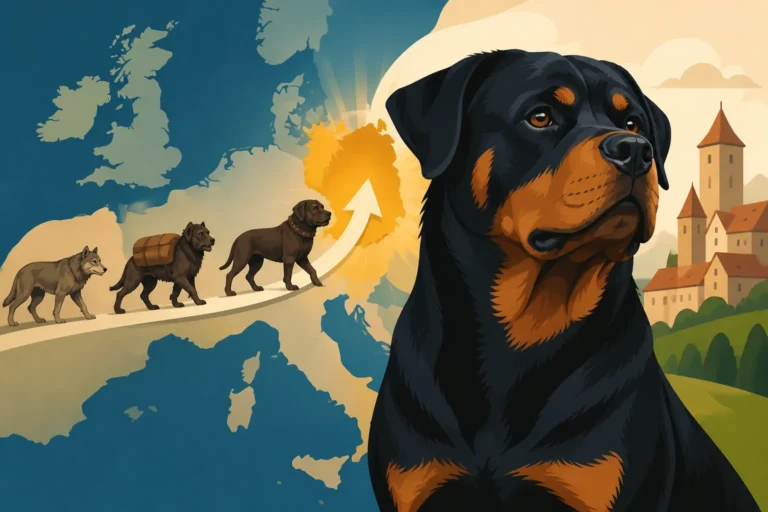
As the Roman Empire expanded, its legions brought not only their soldiers, engineers, and administrators but also their essential support systems. Among these were the dogs responsible for keeping the army fed, a role that saw them travel vast distances and eventually settle in new lands. This crucial journey laid the foundation for the Rottweiler’s eventual development.
Cattle Drives and the March Across the Alps
The sustenance of a Roman legion on a prolonged campaign was no small feat. Forget supply lines stretching back to Rome; that wasn't always feasible or reliable. Instead, legions often drove herds of cattle alongside them, ensuring a fresh and mobile food source. Imagine the sheer logistics: thousands of soldiers, camp followers, pack animals, and then hundreds, if not thousands, of cattle. This wasn't a leisurely stroll through the countryside; it was a military operation, often traversing difficult terrain, including the formidable Alps. How Roman Legions Used Their Drover Dogs is a fascinating look at this incredible feat.
The dogs accompanying these legions were paramount to the success of these cattle drives. These were not dainty creatures; they were strong, intelligent, and capable of handling large, often stubborn, animals. Their job was to keep the herd moving, prevent stragglers, and protect them from both human thieves and wild predators. These dogs would have been exposed to constant challenges, honing their instincts for control, protection, and endurance. Their deep-seated loyalty to their handlers and their innate ability to manage livestock were not just desirable traits; they were essential for survival on the march.
From Roman Camps to Rottweil: A Town Built on Cattle
As the Roman Empire solidified its hold over various territories, military outposts and civilian settlements sprang up. One such area, strategically located along vital trade routes, was the region that would eventually become the town of Rottweil, in what is now modern-day Germany. It was a place where the Roman presence was significant, and where their practical needs dictated the type of dogs that would flourish. The Molossus-type drover dogs, having accompanied the legions across the Alps, found a new home here.
Over generations, these Roman dogs interbred with local canine populations, slowly adapting to the specific climate and needs of the region. The area around Rottweil developed into a bustling cattle market, a crossroads where livestock from across the region was bought, sold, and transported. The descendants of those Roman drover dogs became indispensable to the local butchers and cattle dealers, who needed reliable, powerful dogs to manage their herds. This crucial transition period, as detailed in When Roman Dogs First Reached the Rottweil Area, saw the foundational characteristics of the future Rottweiler firmly establish themselves in this particular locale. The continuity of their working role ensured that the traits of strength, guarding, and herding were not just preserved but enhanced through selective utility.
Evolution into the Metzgerhund: The Butcher's Dog
The journey from Roman drover to modern Rottweiler is fascinating, culminating in the breed's definitive role in the town of Rottweil. It was here that the Roman dog type truly solidified its identity, adapting and refining its ancient traits to meet the specific demands of a thriving medieval market town.
Adapting to the German Landscape and Local Needs
After the decline of the Roman Empire, many of their settlements, including those in what would become Germany, faded or transformed. However, the descendants of the Roman drover dogs remained, having become integrated into the local communities. The area around Rottweil, with its strategic location at the confluence of trade routes, particularly for livestock, ensured that the need for robust cattle dogs endured. These dogs continued to work, herding and guarding livestock, now for the local populace rather than just the legions. This wasn't about a planned breeding program in the modern sense; it was natural selection based on utility. The dogs that were best at moving cattle, protecting property, and being loyal companions to their handlers were the ones that thrived and passed on their genes.
This period saw the gradual shaping of the breed, as the Roman stock intermingled with indigenous dogs, leading to a local type uniquely suited to the German landscape and the specific demands of the cattle trade. The raw strength and protective instincts of the Molossus type were preserved, but refined over centuries to produce a dog that was equally at home driving a herd of cattle through town or guarding a butcher's shop. This adaptation, centuries in the making, highlights how utility drove the physical and temperamental development of the Rottweiler, long before official breed clubs and standards ever existed.
The Rottweiler Butcher's Dog: Guarding More Than Just Livestock
By the Middle Ages, the town of Rottweil had become a major hub for the cattle trade, with butchers (or Metzgers) at its heart. These butchers needed dogs for much more than just herding livestock. They needed loyal, intimidating guardians. The dogs of Rottweil became known as "Metzgerhunds" – Butcher's Dogs. Their reputation was legendary. On market days, they would drive the cattle to town, often over significant distances, and then help manage them in the bustling market square. The Rottweiler's Home Town as a Cattle Market really illustrates the importance of this trade.
Once the cattle were sold and the transactions made, the butchers often carried large sums of money. This was where the Metzgerhund's protective instincts truly shone. Stories abound of butchers tying their money pouches around their Rottweiler’s necks, knowing that no one would dare approach these formidable guardians. How a Rottweiler Guarded a Butcher's Takings is a classic example of this trust. These dogs also protected the butcher's homes, shops, and families. They were versatile, fearless, and utterly devoted. Their job demanded a balance of intelligence, strength, and unwavering loyalty – traits that are still the hallmark of the breed today. They were the original multi-purpose working dogs, their value measured in their ability to perform strenuous tasks and protect valuable assets, solidifying the reputation of Rottweil as the origin of this magnificent breed. These dogs were also adept at tasks like carting, demonstrating their brute strength in another critical role for the butchers, as seen in Rottweilers Pulling Meat Carts Through Town.
Unpacking the Traits Passed Down Through Millennia
When you look at a modern Rottweiler, you're not just seeing a powerful, handsome dog; you're witnessing the culmination of centuries of purposeful breeding and natural selection. The jobs their ancient ancestors performed, from Roman cattle drives to guarding a medieval butcher's earnings, ingrained specific characteristics that define the breed even now.
Enduring Characteristics: Strength, Stamina, and Steadfastness
The Roman drover dogs, and later the Metzgerhunds, needed to be incredibly robust. Imagine the physical demands of driving large herds of cattle over long distances, often through challenging terrain and in varying weather conditions. This required immense physical strength and endurance. A dog with weak joints or poor stamina wouldn't have lasted long in such a role. Consequently, the Rottweiler developed a powerful, muscular build, designed for sustained effort and commanding presence. They are built like canine athletes, capable of bursts of speed but more importantly, possessing the stamina for a long day's work. This physical prowess is a direct inheritance from those early working ancestors.
Beyond the physical, there's the mental fortitude. These dogs couldn't be easily distracted or intimidated. They needed to be steadfast in their duties, whether facing a straying bull, a potential predator, or a thief eyeing a money bag. This instilled a deep sense of purpose and an unwavering, confident demeanor. When a Rottweiler gives you that calm, steady gaze, it's a testament to centuries of dogs that had to be dependable and sure of themselves, a trait that makes them such capable guardians and loyal family members. Their inherent calmness, even in the face of new situations, can be understood when you consider their past roles requiring consistent reliability. What the Rottweiler Was Actually Bred to Be touches on these core characteristics.
The Instincts That Remain: Herding, Guarding, and Devotion
Even if your Rottweiler has never seen a cow in its life, echoes of its drover and guardian heritage can often be seen in its everyday behavior. Many Rottweilers exhibit a natural inclination to "herd" their family members, gently nudging or blocking them, a clear throwback to their cattle-driving days. This can manifest as leaning against you, or even body-checking to direct you, an instinct rooted in moving stubborn livestock. Their legendary aloofness towards strangers, often misinterpreted as unfriendliness, is also a direct carryover from their guarding past. They don't typically rush to greet everyone; instead, they observe, assess, and decide if a newcomer poses a threat. This "wait-and-see" approach is a hallmark of a true guardian.
The Rottweiler's profound devotion to its family and territory is perhaps the strongest link to its past. They bond deeply with their human companions, seeing them as their "herd" to protect. This unwavering loyalty and inherent desire to guard are why responsible training and socialization are so crucial for Rottweilers, ensuring these powerful instincts are channeled positively. Understanding that your Rottweiler is predisposed to these behaviors, rather than dismissing them, is key to nurturing a well-adjusted and happy dog. It’s also why their temperament, Rottweiler Temperament and That Self-Assured Aloofness, is so distinctive.
| Historical Era/Role | Key Rottweiler Traits Developed/Reinforced | Modern Manifestation (Examples) |
|---|---|---|
| Roman Drover Dog | Strength, stamina, herding instinct, protective of "herd" | Powerful build, desire to push/nudge people, endurance for walks/play |
| Roman Camp Guardian | Alertness, territoriality, discerning with strangers | Aloofness with new people, strong guardian instinct for home and family |
| Medieval Metzgerhund | Loyalty, fearlessness, guarding valuables, carting ability | Deep family bond, brave demeanor, enjoys pulling (e.g., in draft work) |
| Continuous Utility Breeding | Intelligence, trainability, self-assured confidence | Eagerness to learn, calm under pressure, confident presence |
Understanding the deep historical roots of the Rottweiler isn't just a fun fact; it helps us appreciate the breed's natural predispositions. It explains their powerful build, their steady temperament, and their profound loyalty. When you look at your Rottweiler, you're seeing a direct descendant of those ancient Roman drover dogs, a living piece of history that continues to embody strength, devotion, and a natural guarding instinct. It’s a powerful connection to the past, and a reminder of the incredible journey this breed has undertaken.
Disclaimer
This article is for general informational purposes only and does not constitute professional advice. Laws, prices and regulations vary by location and change over time. Consult a qualified professional for guidance on your specific situation.