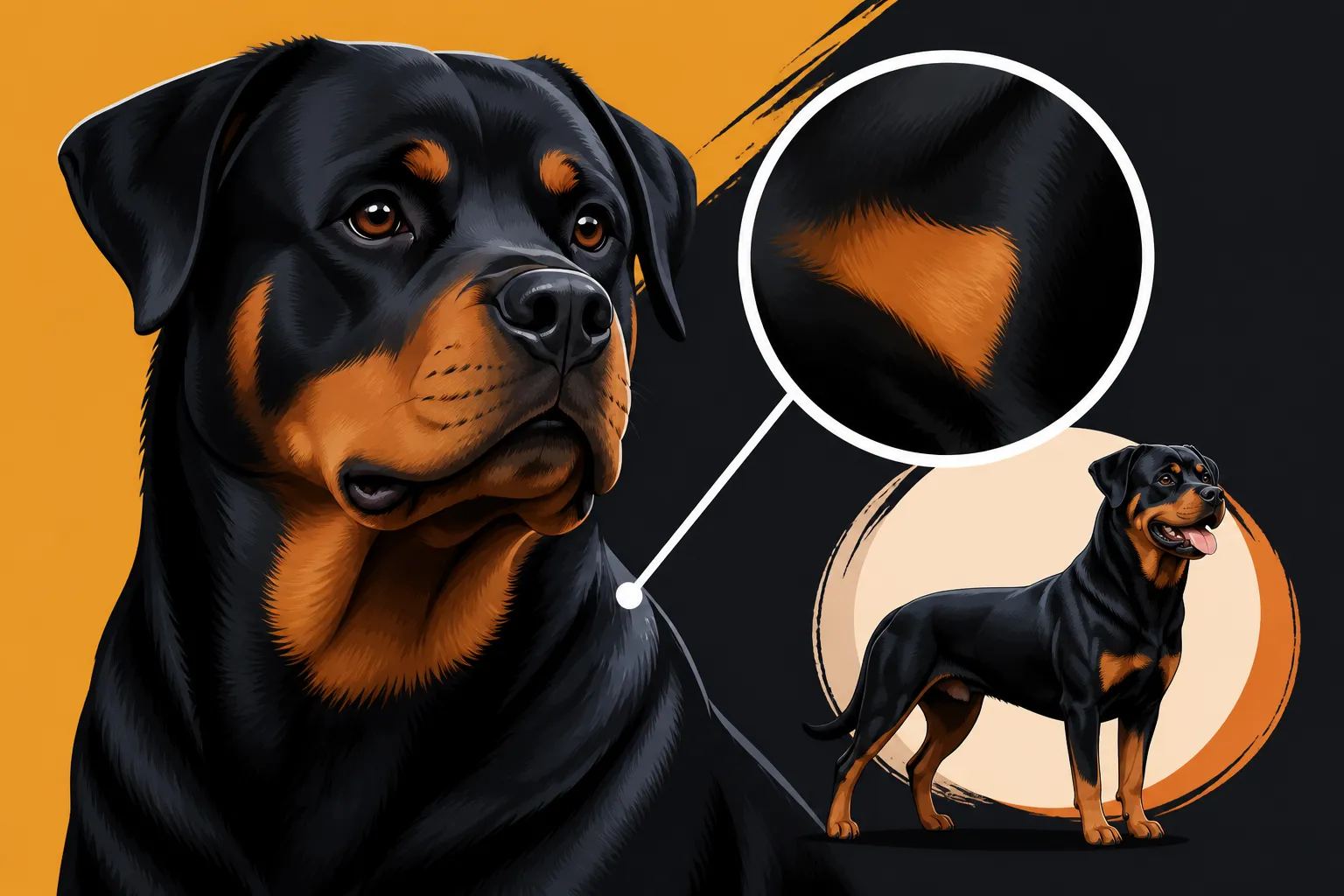
The Rottweiler Coat and Its Rust Markings
It’s easy to get lost in the powerful presence of a Rottweiler – their broad heads, their muscular bodies, that unmistakable air of calm confidence. But sometimes, in admiring their sheer majesty, we overlook the beautiful subtleties of their appearance, especially their iconic coat and its distinct rust markings. Many new owners or even those just admiring the breed often don't realize the specific characteristics that make up this classic look, and how important these details are both for the breed standard and for practical care. This guide will walk you through everything you need to know about the Rottweiler's coat, from its structure and color to what those striking rust markings truly mean, helping you appreciate your dog's appearance and understand its needs.
Understanding the Rottweiler Coat Standard
The Rottweiler's coat isn't just for show; it's a testament to their heritage as working dogs, designed for function and protection in varying environments. When you look at a Rottweiler, you're seeing centuries of purposeful breeding reflected in their very fur.
The Double Coat – Function Over Flash
A Rottweiler's coat is what we call a "double coat," meaning it consists of two distinct layers, each serving a crucial purpose. This isn't just a fancy term; it's an essential element that helped their ancestors thrive.
The outer coat is generally medium in length, lying flat and feeling quite coarse to the touch. It's the protective shield, designed to repel water, dirt, and minor abrasions. Think of it as their first line of defense against the elements, a sturdy armor that allows them to move through brush or withstand a sudden downpour without feeling every drop. This layer is consistently black, a deep, rich hue that makes them instantly recognizable. It’s what most people notice first, giving them that sleek, powerful silhouette.
Beneath this resilient outer layer lies the undercoat, a softer, denser, and often thicker layer of fur. This is their built-in insulation system. The density of the undercoat can vary quite a bit depending on the climate your Rottweiler lives in, thickening up in colder weather and thinning out when temperatures rise. It acts like a natural thermostat, keeping them warm in winter and helping to regulate their body temperature in summer. While the outer coat is always black, the undercoat can sometimes be a lighter shade, almost grayish, especially when you comb it out.
Historically, this robust double coat was vital for the Rottweiler Metzgerhund, or "butcher's dog," who spent their days droving cattle across long distances and guarding money pouches. Whether facing the cold dampness of German winters or dusty trails, their coat provided the necessary protection and comfort to perform their demanding duties. It's a reminder that every aspect of the Rottweiler, down to its hair, has a working-dog origin.
The Ideal Color – Black and Rust
When you picture a Rottweiler, you likely see that distinctive black and rust coloring. This isn't just a popular color scheme; it's the only one accepted by the breed standard and is a defining characteristic of a purebred Rottweiler.
The primary body color must be a solid, lustrous black. This black should be deep and even, covering the vast majority of their body. It's the canvas upon which their signature markings are painted. A rich, dark black coat speaks of good health and proper breeding, reflecting light with a subtle sheen that highlights their powerful musculature. Any other major body color, or even a faded, brownish-black, is considered a fault.
Contrasting beautifully with this black are the "rust" markings. These aren't just any tan or brown; they are specifically a rich, reddish-brown. This warm hue adds depth and character to the dog's appearance, breaking up the expanse of black with striking precision. The clarity and distinctness of these rust markings are crucial; they should be well-defined, not blurry or muddy, truly standing out against the black.
Together, the solid black and the vivid rust markings create that iconic, powerful look that Rottweilers are known for worldwide. It’s a color combination that projects strength and dignity, a visual shorthand for a breed that demands respect and admiration. This specific color pattern is not just aesthetic; it's a hallmark of the breed's identity, carefully preserved through generations of breeding to meet the established standard.
Deciphering the Rust Markings
The rust markings on a Rottweiler are not randomly placed splotches of color. Instead, they follow a very specific pattern outlined in the breed standard, almost like a detailed map. These markings are crucial for exhibition dogs, but for pet owners, understanding their placement gives a deeper appreciation for the breed's unique aesthetics.
Precise Placement of Markings
The breed standard for Rottweilers dictates exact locations for these rust markings, and it's quite detailed! It’s what makes a Rottweiler’s coloring so distinctive and immediately recognizable, setting them apart from other black and tan breeds.
You'll find these striking rust points above each eye, creating that intense, intelligent gaze. They also appear prominently on the cheeks, outlining the side of the muzzle, and distinctly on the throat. These facial markings give the Rottweiler's expression much of its character, often making them look thoughtful or deeply focused. When a Rottweiler turns its head, those cheek and muzzle markings truly pop, enhancing their strong profile.
Moving down the body, the chest is another key area, where two distinct rust triangles are typically visible. These triangles should be separate and clear, not merging into one large patch. On the legs, the rust is equally precise: you'll find it on both the inside and outside of the forelegs, as well as on the inside of the hind legs. Look closely and you'll also see these markings on the pasterns (the part of the leg just above the paw) and extending to the rear hocks. The feet also often have small rust markings on the toes, sometimes referred to as "pencil marks."
Finally, a Rottweiler's tail, whether naturally long or docked, will have rust markings underneath it and often outlining the anal area. The symmetry and clarity of these markings are highly valued in the show ring. Breeders work hard to achieve this precise pattern, as it's a direct reflection of adhering to the breed's established visual identity. It’s truly a specific blueprint for what a well-marked Rottweiler should look like.
Acceptable Shades and Intensity
While the placement of the rust markings is quite strict, there's a little more leeway when it comes to the exact shade and intensity of the color itself. This variation is part of the natural beauty of the breed, though some preferences exist.
The rust color can range anywhere from a lighter, almost golden tan to a deep, rich mahogany. All these variations are generally accepted within the breed standard, provided they are clear and distinct against the black. You might see a puppy with quite light tan markings that deepen with age, or a dog whose markings are a consistent, dark rust from a young age. What's most important is that the color is well-saturated and not dull or faded, which can sometimes happen with poor nutrition or excessive sun exposure.
It's also worth noting that the intensity of the rust markings can sometimes change throughout a Rottweiler's life. Puppies might have softer, lighter markings that mature into a deeper hue. Sun exposure can sometimes lighten the rust, while a period spent indoors or during winter might see the color appear more vibrant. Even diet can play a small role; a dog on a high-quality diet with good skin and coat support, like those found on Chewy, often exhibits more vibrant markings.
Ultimately, a rich, clear rust is generally preferred over markings that look washed out or muddy. Judges in conformation shows will often favor a Rottweiler whose rust markings are bold and well-pigmented, as this indicates excellent overall health and adherence to the desired aesthetic. However, for a beloved family pet, any shade of rust within the acceptable range is perfectly fine, as long as it's distinct and contributes to their handsome appearance.
Common Coat Variations and Faults
While the breed standard paints a clear picture of the ideal Rottweiler coat, nature sometimes has its own plans. It's common to see variations in Rottweilers, some of which are considered minor faults in the show ring, and others that are disqualifying. Understanding these helps you appreciate the breed's genetic makeup and recognize what is (and isn't) typical.
Markings That Are Too Large to Pass
Sometimes, a Rottweiler's rust markings can be a bit more generous than the standard allows. While we love our dogs no matter what, if you're interested in showing, these expanded markings can be considered a fault.
What constitutes "too large"? Essentially, it's when the rust color bleeds or spreads beyond the clearly defined areas specified in the standard. For example, if the two rust triangles on the chest merge into one big patch, or if the markings on the legs extend too far up the thigh or foreleg, they might be deemed excessive. Similarly, rust patches on areas that should be solid black, like the back or flanks, would also fall into this category. These larger markings disrupt the desired balanced appearance that the standard aims for, where the black dominates and the rust provides precise accents.
For a dog being evaluated in a conformation show, these overly large or merged markings can definitely impact their score. Judges are looking for an animal that adheres as closely as possible to every aspect of the written standard, and precise marking placement is one of those criteria. A dog might have excellent structure and temperament, but if their markings are deemed too extensive, it could prevent them from placing well.
However, for us pet owners, a Rottweiler with markings that are "too large" is no less a wonderful companion. These variations don't affect their health, temperament, or their ability to be a loving family member. They are still 100% Rottweiler at heart, and their unique markings just add to their individual charm. A reputable breeder will always be transparent about such cosmetic faults when selling a pet-quality puppy, ensuring you know exactly what to expect.
Unacceptable Colors and Markings
Beyond just oversized rust markings, there are certain coat colors and patterns that are considered severe faults or even disqualifications in the Rottweiler breed. These are important to recognize, especially if you're looking for a purebred dog, as they indicate a departure from the established genetic blueprint.
The most prominent unacceptable marking is any patch of white anywhere on the body, aside from a few stray white hairs that might appear naturally as part of aging or minor scarring. A distinct white blaze on the chest, white socks, or any other significant white patch is a disqualifying fault. This is because the Rottweiler standard calls for a purely black body with rust markings, and white indicates either a genetic anomaly or cross-breeding in the dog's lineage. It's a hard and fast rule that maintains the visual purity of the breed.
Even more significantly, any body color other than black – such as fawn, blue, or a true 'black and tan' where the tan is faded or covers too much area – is also disqualifying. Sometimes you hear about "red Rottweilers" or "blue Rottweilers," but these are not recognized by the breed standard and are often the result of cross-breeding or rare genetic mutations that deviate significantly from the established type. A true Rottweiler is black with rust, full stop. The standard is very clear in its aim to preserve a consistent appearance across the breed.
The reason these are considered faults and disqualifications is rooted in maintaining the breed's integrity. Breed standards are set to preserve the unique characteristics that define a breed, and specific coat color and pattern are fundamental to the Rottweiler's identity. Breeders who are dedicated to the Rottweiler standard will screen for these traits and make sure not to breed dogs that produce such disqualifying colors, ensuring the lineage remains true to type.
Long-Coated Rottweilers and Whether They Register
One variation that often surprises new Rottweiler owners is the "long-coat" or "fluffy" Rottweiler. They look undeniably Rottweiler in every other way, except their coat is much longer, softer, and often wavy, rather than the characteristic short, coarse double coat.
This longer coat is caused by a recessive gene. This means that a puppy can inherit the long coat trait only if both parents carry the gene. If a dog inherits two copies of this recessive gene (one from each parent), they will display the long coat. Dogs that carry one copy of the gene but have a normal short coat are called "carriers," and they can pass the gene on to their offspring. Responsible breeders often test for this gene to avoid accidentally producing long-coated puppies, especially if their focus is on conformation showing.
The presence of a long coat is a disqualifying fault in the show ring. A long-coated Rottweiler cannot compete in conformation shows because it does not meet the breed's official standard for coat length and texture. This can be disappointing for breeders who were aiming for show prospects, as it means the puppy cannot fulfill that role. Long-Coated Rottweilers and Whether They Register
However, for families looking for a companion, a long-coated Rottweiler makes an absolutely wonderful pet! Their long coat doesn't impact their health, temperament, or their ability to be a loyal and loving member of the family. In fact, some people even find the softer texture of the long coat appealing. These dogs are purebred Rottweilers, just with a genetic variation in their coat. If you encounter a long-coated Rottweiler, remember that they are just as deserving of love and a good home as their short-coated siblings, even if they won't be gracing the show ring.
Grooming and Care for the Rottweiler Coat
Even though Rottweilers have relatively short hair, their double coat still requires consistent care to keep them looking their best and to maintain good skin health. Many people mistakenly think a short coat means no grooming, but that couldn't be further from the truth.
Managing the Shedding Cycle
Yes, Rottweilers shed! And often, they shed more than people expect for a short-haired dog. Their double coat means they have a lot of fur to lose, especially during their seasonal "coat blow" twice a year, typically in spring and fall. During these periods, you might feel like you're living in a snowstorm of black and rust fur.
Regular brushing is absolutely essential to manage this shedding and keep your home from being completely overrun with dog hair. Investing in the right tools makes a huge difference. An undercoat rake or a deshedding tool like a Furminator can reach down past the coarse outer coat to pull out all that loose, dead undercoat that would otherwise end up on your furniture and clothes. Regular pin brushes and slicker brushes are also great for daily maintenance and spreading natural oils. You can find a fantastic selection of these grooming essentials on Chewy, making it easy to get what you need delivered right to your door.
Establishing a routine is key. Even outside of heavy shedding seasons, a few minutes of brushing a few times a week can significantly reduce the amount of hair floating around your house. During the coat blow, you might need to brush daily to keep up. This routine not only helps with shedding but also serves as a wonderful bonding experience and allows you to check your dog's skin for any issues. Rottweiler Undercoat Shedding Twice A Year
Bathing and Skin Health
Bathing your Rottweiler properly is another important aspect of coat care, but it's crucial not to overdo it. Too frequent bathing can strip their coat of its natural oils, leading to dry, flaky skin and a dull coat.
Generally, a Rottweiler only needs a bath every 2-3 months, or when they've gotten particularly dirty from an adventure. Of course, if they roll in something truly foul, adjust accordingly! When you do bathe them, always use a high-quality dog-specific shampoo and conditioner. Human products are formulated for different pH levels and can irritate your dog's skin. Look for shampoos that are moisturizing, hypoallergenic, or designed for sensitive skin if your Rottweiler tends to have issues. Retailers like Chewy offer a wide array of specialized shampoos and conditioners suitable for a Rottweiler's coat.
While bathing, take the opportunity to thoroughly check your Rottweiler's skin. Part their fur and look for any redness, rashes, bumps, or dry patches. Pay close attention to areas like their armpits, groin, and between their toes. These are common spots where skin issues or hot spots can develop, especially if moisture gets trapped or they have allergies. A healthy coat starts with healthy skin, so addressing any issues promptly with your vet is important. Bathing a Rottweiler Without Stripping the Coat Oil
Nutritional Impact on Coat Luster
What goes into your Rottweiler’s bowl has a direct and significant impact on the health and appearance of their coat. You truly are what you eat, and that applies to our furry friends just as much as it does to us!
A high-quality diet, rich in essential nutrients, is the cornerstone of a healthy, shiny coat. Look for dog foods that list real meat as the first ingredient and contain a good balance of fats, particularly omega-3 and omega-6 fatty acids. These healthy fats are crucial for skin hydration and coat luster, helping to reduce dryness and promote a glossy sheen. A well-nourished Rottweiler will typically have a coat that's vibrant, smooth, and sheds minimally outside of seasonal changes.
On the flip side, a dull, dry, brittle, or excessively flaky coat can often be a tell-tale sign of nutritional deficiencies or an underlying health issue. If your Rottweiler's coat suddenly loses its luster despite consistent grooming, it's worth reviewing their diet and consulting with your veterinarian. Sometimes a simple dietary change or the addition of a supplement can make a world of difference.
Supplements, particularly fish oil or other omega fatty acid blends, can be incredibly beneficial for coat health, especially for larger breeds like Rottweilers. These can help to boost skin moisture, reduce inflammation, and enhance the natural shine of their fur. You can easily find these supplements, dosed specifically for a dog of a Rottweiler's size and weight, at online pet retailers like Chewy. Always discuss any new supplements with your vet to ensure they're appropriate for your individual dog's needs. Fish Oil Dosed for a Hundred Pound Rottweiler
The Deeper Meaning of the Coat for Owners
While discussions of coat colors and markings can seem technical and geared towards the show ring, the truth is that these details carry a deeper meaning for every Rottweiler owner. They speak to the breed's history, health, and what it means to care for these magnificent dogs.
Beyond the Show Ring – Pet vs. Standard
It's easy to get caught up in the meticulous details of the breed standard, especially when discussing coat color and markings. For those who aspire to compete in conformation events, these specifics are paramount. However, for the vast majority of Rottweiler owners, whose dogs are cherished family members, variations from the standard are largely irrelevant to their dog's value as a companion.
A Rottweiler who has markings that are a bit too large, or a coat that's slightly softer than ideal, is no less a Rottweiler in spirit and certainly no less worthy of love. For a family pet, what truly matters is temperament, health, and the bond you share. Does your Rottweiler greet you with a happy rumble? Does he lean into your touch, offering his steadfast companionship? Does he keep a watchful eye over your home with that quiet confidence? These are the qualities that define a great Rottweiler companion, far more than the exact shade of rust on his cheeks. The Temperament Clause in the Rottweiler Standard
A responsible and ethical breeder will always prioritize health and temperament, regardless of whether a puppy is destined for the show ring or a family couch. They will be upfront about any cosmetic "faults" that would prevent a dog from being show-quality when you're choosing a pet puppy. These puppies are often available at a lower price point than top show prospects, offering a wonderful opportunity for families to welcome a purebred Rottweiler into their lives without focusing on exhibition criteria. Always ask for Health Papers to Ask a Rottweiler Breeder For to ensure you're getting a healthy pup, regardless of its markings.
The Rottweiler's Coat as a Marker of Health
Beyond aesthetics, your Rottweiler's coat is a vital indicator of their overall health. Changes in its appearance can often be the first visible sign that something is amiss internally, making regular observation during grooming much more than just a chore.
A dull, dry, flaky, or excessively shedding coat (outside of the normal seasonal blowouts) should always raise a flag. These symptoms can point to a range of underlying health problems. Common culprits include allergies, which can manifest as itchy skin, redness, and poor coat quality. Parasites, both internal and external, can also cause coat issues, making the fur look lackluster. Another significant cause can be thyroid issues, particularly hypothyroidism, which often presents with a dull, dry coat, excessive shedding, and sometimes even hair loss, especially along the flanks. Thyroid Disease Behind a Rottweiler's Dull Coat
Changes in coat texture or even a dramatic fading or lightening of the rust markings might also warrant a veterinary check-up. While some fading can occur with sun exposure, a sudden or widespread change could be indicative of a metabolic issue or other health concern. It’s always better to err on the side of caution and consult your veterinarian if you notice any persistent or concerning changes in your Rottweiler's coat.
Regular grooming sessions are your perfect opportunity for these health checks. As you brush, comb, and bathe your dog, you're not just tidying them up; you're performing a hands-on physical exam. Feel for any unusual lumps or bumps under the fur, check for skin lesions, inspect their paws, and look into their ears. Early detection of any issues, from skin infections to potential tumors, can make a significant difference in treatment outcomes. Lumps on a Rottweiler That Need Testing Your Rottweiler's coat truly is a window into their well-being.
| Feature | Ideal Rottweiler Coat | Common Faults/Variations |
|---|---|---|
| Color | Solid black with clearly defined rust markings | White patches, tan/fawn body color, dull/muddy rust markings |
| Marking Placement | Above eyes, muzzle, cheeks, throat, chest, legs, under tail | Markings that merge, spread excessively, or are absent in key areas |
| Coat Length | Medium length, coarse outer coat, dense undercoat | Long, wavy, or excessively soft coat (long-coat gene) |
| Texture | Flat, coarse outer coat; dense, soft undercoat | Silky, woolly, or excessively thin coat |
| Undercoat | Present, varies in density by climate | Absent or very sparse year-round |
Disclaimer
This article is for general informational purposes only and does not constitute professional advice. Laws, prices and regulations vary by location and change over time. Consult a qualified professional for guidance on your specific situation.