What Rottweil Made the Metzgerhund Do
It's easy to look at a majestic Rottweiler today and see a powerful, devoted family companion, or perhaps a serious working dog. But if we don't understand the centuries of history that shaped this incredible breed, we miss a huge piece of their puzzle. The Rottweiler didn't just appear; it was forged by the specific demands of a bustling German town, evolving into a specialist known as the "Metzgerhund," or butcher's dog, a role that defined its very essence. This guide will take you on a journey back in time, explaining what Rottweil demanded of its dogs and how those ancient jobs still echo in the Rottweiler we know and love today.
The Ancient Roots: Roman Drover Dogs Paving the Way
Before there was a "Rottweiler" as we know it, there were the ancestral dogs that laid the genetic and functional groundwork. To truly understand the Metzgerhund, we have to travel even further back, to the dogs that accompanied Roman legions across Europe. These were not simply pets, but vital working animals, essential to the logistics of a marching army.
The Roman Legions and Their Canine Companions
Imagine a vast Roman army on the move, legions stretching for miles across rough terrain. How did they feed thousands of soldiers and camp followers in an age before refrigerated transport and supply chains? They brought their food with them, often in the form of live cattle, sheep, and other livestock. These herds needed to be driven, guarded, and managed daily, a task far too immense for humans alone. This is where their robust, mastiff-type dogs came into play. These were powerful, formidable animals, bred not just for their imposing presence but for their intelligence and stamina. They were the original working dogs, ensuring the army's sustenance and guarding against both two-legged bandits and four-legged predators.
The Roman drover dogs were integral to the army's success, acting as living fences, moving livestock from pasture to camp, and protecting them overnight. Their strength allowed them to contend with stubborn cattle, and their protective instincts were honed by the constant threat of wolves or opportunistic thieves looking to snatch a meal. They learned to work closely with their human handlers, responding to commands and demonstrating remarkable problem-solving skills in dynamic situations. This constant, high-stakes work ingrained a deep sense of purpose and resilience into their very being, traits that would be passed down through generations.
Migration into Germanic Territories
As the Roman Empire expanded, so did its influence, and its canine companions traveled with it. When Roman legions established garrisons and settlements in the Germanic territories, particularly in regions that would later become parts of modern-day Germany, their drover dogs came along. These settlements often grew into important trading posts and towns, attracting local populations and their own indigenous dog breeds. Over time, these powerful Roman dogs interbred with the native strains, creating a unique blend that adapted to the local environment and needs.
The town of Rottweil, strategically located at a crossroads of ancient trade routes, was one such Roman settlement. It was here that these Roman-descended dogs found fertile ground to continue their evolution. They were valued for their strength, intelligence, and guarding capabilities, attributes essential for a community that relied heavily on livestock. This intermingling of ancient Roman genetics with local working dogs established the foundational stock for what would eventually become the distinct "Rottweiler" type. The traits of the Roman drover dogs—their powerful build, guarding instinct, and ability to handle large animals—became deeply embedded in the local canine population, ready to be further shaped by the specific demands of the blossoming cattle trade in Rottweil. You can learn more about this specific lineage in The Roman Drover Dogs Behind the Rottweiler.
Rottweil: The Town That Defined a Breed
The story of the Rottweiler is inextricably linked to the town of Rottweil itself, a place that thrived on commerce and, in particular, the bustling trade of cattle. It was the unique needs and environment of this town that truly molded the Rottweiler into its historical "Metzgerhund" identity.
A Crossroads of Commerce and Cattle
Centuries ago, Rottweil wasn't just any town; it was a vibrant medieval hub, a strategic point where Roman roads converged and where a thriving cattle market flourished. Imagine the scene: farmers and traders from all corners of the region converging with their herds, creating a bustling, often chaotic, atmosphere. This wasn't just about selling a few cows; it was large-scale commerce, with thousands of cattle moving through the town and its surrounding areas. The market days were a symphony of lowing cattle, shouting merchants, and the clatter of hooves, all centered around the wealth that livestock represented. This intense environment demanded a specific kind of dog – one that could not only manage large herds but also protect valuable assets in an era without sophisticated banking or security systems.
The prosperity of Rottweil was built on this trade. The town’s location in southwestern Germany made it a natural waypoint for cattle being driven from distant pastures to markets across Europe. But this prosperity also brought challenges. Large sums of money changed hands, making merchants and butchers prime targets for robbery. The cattle themselves, often driven for days or weeks, needed constant supervision and protection, not just from human thieves but from wild animals along the route. The very rhythm of the town, dictated by the movement and sale of livestock, created a perfect evolutionary pressure for a powerful, intelligent, and fiercely loyal dog. For more on the town's historical significance, check out The Rottweiler's Home Town as a Cattle Market.
The Rise of the "Metzgerhund" Butcher's Dog
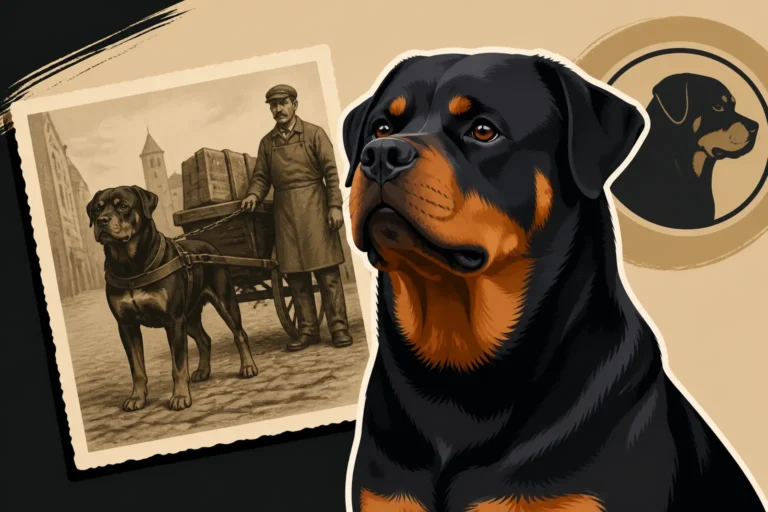
It was amidst this vibrant cattle trade that the Rottweiler truly earned its moniker: the "Metzgerhund," or "butcher's dog." The butchers of Rottweil were not just meat processors; they were central figures in the town's economy, often acting as livestock dealers and transporters themselves. They needed dogs that could assist with every aspect of their trade, from managing the live animals to protecting the freshly butchered meat and, most crucially, the money they earned. The term "Metzgerhund" wasn't just a casual nickname; it denoted a specific, highly valued professional role.
These dogs were renowned for their multi-faceted capabilities. They were strong enough to drive large, often unruly, cattle through crowded streets and market squares, using their body and presence to guide the animals without resorting to excessive force. They possessed an uncanny ability to read the movement of the herd and anticipate potential issues. But their duties extended beyond herding. They were also tasked with guarding the butcher's stall, ensuring that no one made off with valuable cuts of meat. Perhaps most famously, and somewhat apocryphally, the butchers would tie their leather money pouches around the necks of their Rottweilers, knowing that no thief would dare approach a dog of such formidable reputation. This blend of droving, guarding, and protective loyalty cemented the Metzgerhund as an indispensable partner in the butcher's daily life. Discover more about this specific job in Why Butchers Called the Rottweiler a Metzgerhund.
The Multifaceted Role of the Rottweiler Metzgerhund
The Rottweiler's historical job as the "Metzgerhund" was far more complex than just a simple guard dog. It involved a suite of demanding tasks, each requiring a specific blend of physical prowess, intelligence, and unwavering loyalty. These were true working partners, indispensable to the butchers and cattle drovers of Rottweil.
Driving and Guarding Livestock
Imagine a drover, perhaps with a single assistant, attempting to move a hundred head of cattle across open country or through a winding village path. It's a daunting task, and without skilled dogs, it would be nearly impossible. The Metzgerhund was perfectly suited for this. These dogs were not "herders" in the agile, quick-footed sense of a Border Collie, but rather "drovers." Their method was one of powerful presence, using their sturdy bodies and intimidating demeanor to keep the herd moving and in line. They would push against the flanks of stragglers, bark authoritatively, and physically block any attempts by cattle to break away. This direct, no-nonsense approach was effective for large, stubborn animals.
Beyond simply moving the livestock, the Rottweiler also provided crucial protection. Long journeys through the countryside were fraught with peril. There were wild animals like wolves that saw the herd as an easy meal, and human bandits who saw a lucrative opportunity. The Metzgerhund stood guard, ever vigilant. At night, they would circle the resting herd, their keen senses alert to any disturbance. A deep, resonant bark would warn off intruders, and their sheer physical power meant they were more than capable of defending their charges if challenged. This constant vigilance and the ability to act as a formidable deterrent were paramount, ensuring that the valuable livestock reached its destination intact.
Protecting the Butcher's Wares and Earnings
Once the cattle arrived in Rottweil and were processed, the Metzgerhund's duties shifted, but their protective instincts remained just as vital. Butchers, like any other merchants, dealt with perishable goods and valuable earnings in a time when security was far less sophisticated than it is today. A butcher's shop or market stall, laden with fresh meat, represented significant wealth, and it was the Rottweiler's job to ensure that wealth remained safe.
Picture a busy market square, full of distractions and potential pickpockets. The butcher couldn't be everywhere at once. This is where the Rottweiler's imposing presence and naturally reserved temperament shone. They would lie calmly near the stall, observing the comings and goings, their eyes missing nothing. Any suspicious loitering or attempt to snatch goods would be met with an immediate, decisive response. Perhaps the most famous aspect of their guarding role involved the day's takings. After a successful market day, butchers would often secure their money pouches around the dog's collar, knowing that the Metzgerhund's reputation alone was enough to deter almost any would-be thief. This trust placed in the dog speaks volumes about their loyalty and efficacy as guardians. You can delve deeper into this unique security measure by reading The Money a Rottweiler Was Trusted to Guard.
Pulling Carts and Transporting Goods
Before the advent of motorized vehicles and even widespread use of railways, dogs were essential draft animals in many parts of Europe. For the butchers of Rottweil, their strong and stout Metzgerhunds were invaluable for more than just droving and guarding; they were also used to pull carts. This was especially important for transporting goods over shorter distances within the town or to nearby villages.
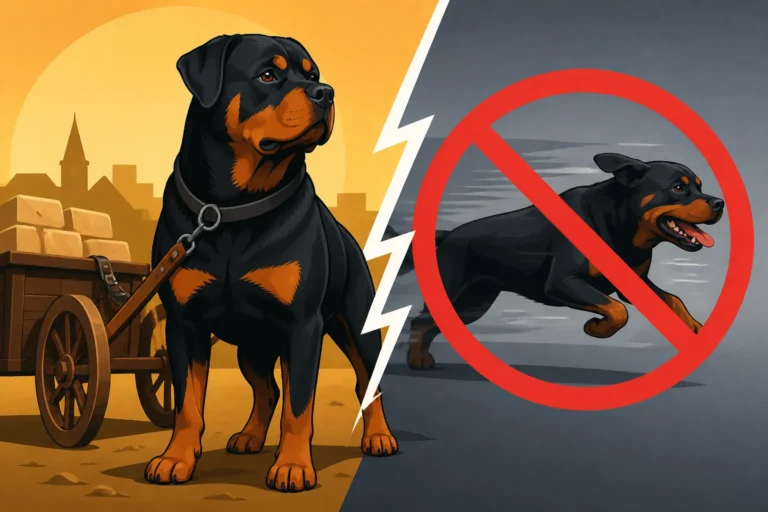
Imagine a butcher needing to move fresh cuts of meat, heavy barrels, or other supplies from the slaughterhouse to the market stall, or delivering orders to customers further afield. A sturdy dog, hitched to a purpose-built cart, could handle a significant load. This task required immense strength, endurance, and a calm disposition to navigate busy streets and interact with people. The Rottweiler’s powerful build, deep chest, and well-muscled hindquarters made them ideal for this kind of work. They were literally beasts of burden, making the butcher's trade more efficient and manageable. This practical utility further cemented their role as indispensable working partners, capable of contributing physically to the arduous demands of the day-to-day business. The history of this vital role is explored further in Rottweilers Pulling Carts Before the Railways. If you're looking for sturdy harnesses for a modern Rottweiler that still has a pulling instinct, you can often find a good selection of draft-appropriate gear on Chewy, designed for large, powerful breeds.
The Decline and Near Extinction of the Breed's Original Role
For centuries, the Metzgerhund thrived, a pillar of Rottweil's economy and culture. But progress, as it often does, eventually rendered its traditional roles obsolete, pushing the breed to the brink of disappearance.
The Industrial Revolution and Changing Transportation
The 19th century brought about a seismic shift in how goods and people moved. The Industrial Revolution introduced technologies that fundamentally altered the landscape of transportation. Most notably, the expansion of the railway network across Europe began to replace traditional methods of cattle droving. Instead of long, arduous drives that took weeks and required drovers and their dogs, livestock could now be transported by train, quickly and efficiently, from distant farms to urban markets.
This dramatic change hit the Metzgerhund hard. The need for dogs to drive herds over vast distances plummeted. Suddenly, a centuries-old profession was rendered largely irrelevant by the speed and scale of modern machinery. The drovers, and their indispensable canine partners, found their traditional jobs disappearing. It wasn't just the droving that suffered; even local transport began to shift as other forms of conveyance emerged. The Rottweiler, so perfectly adapted to its specific historical niche, faced a future where that niche no longer existed. The sheer efficiency of the railways meant fewer and fewer dogs were required for what had once been their defining work.
Legislation Against Cattle Driving
Further compounding the challenges brought by technological advancement were changes in legislation. As towns and cities grew, and public health and sanitation concerns became more prominent, many municipalities began to pass laws prohibiting the driving of cattle through urban centers. The sight and sounds, not to mention the mess, of large herds being driven through crowded streets were deemed incompatible with modern urban living.
These new regulations, enacted in various regions throughout the 19th century, effectively removed another layer of the Metzgerhund's historical duties. Even if railway transport wasn't always feasible, local laws made it impossible for butchers and drovers to continue their old practices. This legislative crackdown, combined with the rise of the railways, created a perfect storm that threatened the very existence of the Rottweiler as a working breed. With their traditional jobs stripped away, their numbers dwindled significantly, and the breed came perilously close to vanishing entirely. For a more detailed look at this period, see The 1800s Ban That Put Rottweilers Out of Work.
The Rottweiler's Revival and Modern Working Roles
Just when it seemed the noble Metzgerhund was destined for the history books, a dedicated group of enthusiasts recognized the breed's intrinsic value and spearheaded a remarkable revival, ensuring the Rottweiler's survival and its evolution into new, equally demanding roles.
A Fanciers' Effort to Preserve the Breed
By the turn of the 20th century, the Rottweiler's numbers had plummeted dramatically. It was no longer a common sight in the streets of Rottweil or on the drover's paths. Concerned fanciers, deeply impressed by the breed's intelligence, courage, and loyalty, feared its complete extinction. These early enthusiasts understood that the Rottweiler was more than just a working tool; it was a magnificent dog with a unique temperament and set of abilities. They began the arduous task of locating the remaining quality specimens and initiating controlled breeding programs to save the breed.
These dedicated individuals formed breed clubs, establishing standards and promoting the Rottweiler's resurgence. Their efforts were crucial, meticulously tracking bloodlines and advocating for the breed's inherent qualities. It was a true labor of love, driven by a passion to preserve a historical canine treasure. Without their foresight and commitment, the Rottweiler we know today might never have existed. This period of preservation efforts is a testament to the enduring appeal and intrinsic worth of the breed. Dive deeper into how this came about with The 1901 Revival of the Rottweiler.
Transition to Police and Military Work
The Rottweiler's innate qualities—its strength, intelligence, courage, and protective instincts—did not go unnoticed. As modern societies began to professionalize law enforcement and military operations, there was a growing need for highly capable working dogs. The Rottweiler proved to be an ideal candidate for these new, demanding roles. Their natural guarding drive, combined with a trainable nature and an intimidating presence, made them perfectly suited for police and military service.
They were trained as patrol dogs, excelling in tasks such as tracking, suspect apprehension, and protection. Their powerful bite force and unwavering loyalty made them formidable partners in dangerous situations. In the early 20th century, Rottweilers were among the first breeds employed by the police in Germany, quickly demonstrating their effectiveness in duties ranging from crowd control to searching for missing persons. This transition from drover to police dog showcased the breed's incredible adaptability and underscored the timeless utility of their ancestral traits. Modern working Rottweilers still require specific gear for training and deployment, and platforms like Chewy offer a wide range of durable harnesses, bite sleeves, and treat pouches suitable for their rigorous schedules. You can read more about their transition to these critical roles in Rottweilers in Police and Military Service.
Contemporary Roles: Therapy, Service, and Companion
While still revered for their working capabilities in protection sports and law enforcement, the modern Rottweiler has also found incredible success in a range of gentler, yet equally vital, roles. Their inherent loyalty, stable temperament, and surprisingly sensitive nature make them exceptional therapy and service dogs. A well-socialized and properly trained Rottweiler can bring immense comfort and assistance to individuals in need. They can be found visiting hospitals and nursing homes, offering calm, comforting presence to patients.
Furthermore, Rottweilers excel as devoted family companions. When raised with proper socialization and consistent training, they integrate beautifully into family life, forming deep bonds with their human pack. They are often described as "velcro dogs" by their owners, seeking to be close to their people. This evolution from a rugged, livestock-driving Metzgerhund to a gentle, intuitive therapy dog or a beloved family member speaks volumes about the breed's versatility and the profound depth of its character. They still retain that discerning nature, assessing situations before offering affection, a remnant of their watchful ancestors. For those interested in their gentle side, explore The Rottweiler Traits That Suit Therapy Work.
Understanding the Historical Temperament in Today's Rottweiler
Even centuries removed from their days driving cattle and guarding butchers' earnings, the Rottweiler's historical roles have left an indelible mark on their temperament and behavior. Understanding these roots is key to successfully living with and training a modern Rottweiler.
Self-Assured Aloofness and Discernment
One of the most defining characteristics of the Rottweiler, often misinterpreted by those unfamiliar with the breed, is their self-assured aloofness. Unlike some breeds that greet every stranger with unbridled enthusiasm, a Rottweiler typically maintains a reserved, watchful demeanor when encountering new people or situations. This isn't shyness or aggression; it's a direct echo of their Metzgerhund ancestry. Their ancestors were tasked with protecting valuable assets and managing large livestock. They couldn't afford to be indiscriminately friendly; they needed to be discerning, assessing potential threats or harmless passersby.
This "wait-and-see" attitude means a Rottweiler often takes its time to observe and evaluate before deciding whether to engage or accept a new person. They are not quick to offer their trust, but once earned, that trust is deep and unwavering. This trait makes them excellent natural guardians, as they are not easily distracted or swayed. However, it also means that proper socialization from a young age is paramount, ensuring they learn to calmly accept appropriate interactions while still maintaining their discerning nature. This historical trait is discussed in depth in Rottweiler Aloofness and Why It Reads as Cold.
Protective Instincts and Training Needs
The guarding instinct is hardwired into the Rottweiler's DNA, a direct inheritance from generations of dogs whose job was to protect. Whether it was a herd of cattle, a butcher's money pouch, or the family's home, the Rottweiler was bred to be a steadfast protector. This instinct, while incredibly valuable in the right context, requires careful management and direction in a modern household. Without proper guidance, a natural protective drive can manifest as undesirable behaviors like resource guarding or excessive territoriality.
Early and consistent training is not just recommended for Rottweilers; it's absolutely essential. Owners must establish clear boundaries and leadership from a young age, channeling the dog's protective urges into appropriate behaviors. Positive reinforcement techniques work wonders, teaching the dog what to guard (their home and family) and, more importantly, when and how to do so without becoming overly reactive or aggressive. Socialization needs to expose them to a wide variety of people, places, and other animals, teaching them to differentiate between genuine threats and everyday occurrences. Understanding and respecting this deeply ingrained protective nature, while providing consistent training, allows a Rottweiler to be a confident, well-adjusted family member and a reliable guardian. Learn more about harnessing this trait in The Rottweiler Guarding Instinct and How to Shape It.
Intelligence and Working Drive
The Metzgerhund needed to be smart. Driving cattle, guarding property, and interacting with their human partners required more than just brute strength; it demanded problem-solving skills, quick learning, and an eagerness to work. This high intelligence and strong working drive are still prominent features of the modern Rottweiler. They are quick studies, capable of learning complex commands and tasks, but this also means they get bored easily if not mentally stimulated.
A Rottweiler thrives when given a "job" to do, even if that job is as simple as daily training sessions, puzzle toys, or participating in dog sports like obedience, rally, or carting. If their intelligent minds are not engaged, they can become destructive or develop behavioral issues out of sheer boredom. This isn't a breed content to lie on the couch all day. They need engagement, interaction, and challenges. Investing in sturdy, engaging toys and puzzle feeders, which can be easily sourced from retailers like Chewy, can provide vital mental enrichment. Early puppy training is crucial for channeling this intelligence constructively. Consistent, positive reinforcement training not only builds a strong bond but also satisfies their innate desire to learn and cooperate. A well-trained Rottweiler is a joy to behold, a testament to their incredible intellect and willingness to work alongside their human companions. Rottweiler Puppy Training Through the First Year can offer a good starting point for new owners.
The Metzgerhund's Legacy: Traits and Impact
The table below summarizes the core aspects of the Rottweiler's historical role as the Metzgerhund, illustrating how these duties shaped the breed's enduring traits and impact.
| Historical Role | Specific Tasks | Resulting Temperament Trait(s) | Modern Manifestation (with training) |
|---|---|---|---|
| Cattle Droving | Guiding herds, preventing strays, physical presence | Powerful, persistent, intelligent | Confident gait, excellent obedience, herding instinct |
| Livestock & Property Guarding | Deterring thieves/predators, overnight vigilance | Reserved, protective, discerning | Aloof with strangers, devoted to family, strong watch dog |
| Money Guarding (Butcher's Pouch) | Absolute loyalty, fearlessness in defense | Utterly trustworthy, courageous | Reliable companion, excellent personal protection dog |
| Cart Pulling (Draft Work) | Transporting heavy goods, endurance, strength | Strong, hardy, calm under pressure | Powerful physique, enjoys physical work like carting or hiking |
| Butcher's Assistant | Working closely with handler, problem-solving | Intelligent, eager to please, trainable | Excels in dog sports, quick learner, loyal partner |
Disclaimer
This article is for general informational purposes only and does not constitute professional advice. Laws, prices and regulations vary by location and change over time. Consult a qualified professional for guidance on your specific situation.