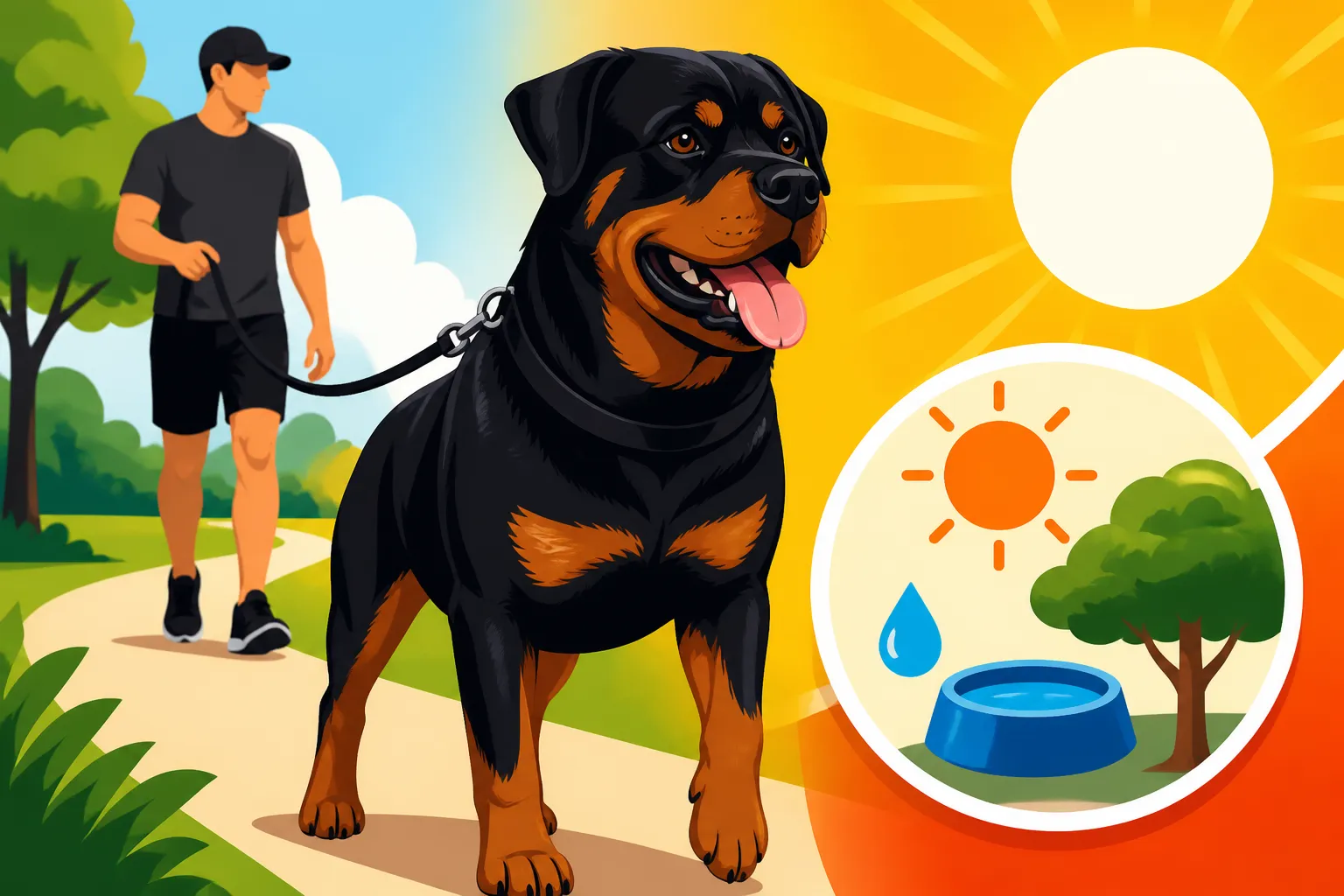
Exercising a Rottweiler in Summer Heat
Summer heat can turn a routine walk into a dangerous situation for a Rottweiler faster than you might think. As much as we adore seeing our big, powerful companions enjoy the outdoors, their dense coats and impressive musculature mean they don't handle the heat the same way we do, or even the same way a smaller, lighter-coated dog might. This guide is here to help you navigate those scorching months, offering practical strategies to keep your Rottweiler safely exercised and happy when the mercury rises.
Understanding Your Rottweiler's Heat Vulnerability
It's easy to look at a Rottweiler's calm, robust demeanor and assume they can handle anything, but hot weather is a genuine challenge for them. Their physiology makes them particularly susceptible to overheating, and understanding these factors is the first step in keeping them safe. We're not talking about a little panting here; we're talking about a serious health risk that can escalate quickly.
The Impact of a Black Coat
Think about wearing a black t-shirt on a sunny day versus a white one – it's a huge difference, right? The same principle applies to your Rottweiler's stunning black and rust coat. Dark colors absorb and retain heat from the sun's rays much more efficiently than lighter colors. This means that even if the ambient air temperature isn't brutally high, direct sunlight can turn your Rottweiler's body into a heat trap. It’s not just about how warm the air feels; it's about the radiant heat building up in their fur and skin.
This absorbed heat makes it harder for their body to naturally cool itself down. While their double coat does offer some insulation, in summer, it's working against them, holding that absorbed heat close to their body. You might see other dogs with lighter coats seeming to manage just fine, while your Rottweiler is struggling. It's not a sign of weakness; it's just physics, and it's a critical factor to always keep in mind when planning any outdoor activity.
Rottweiler Size and Metabolism
Let's face it, Rottweilers are big dogs. A healthy adult male can easily tip the scales at 100 to 135 pounds, with females not far behind. This impressive size, coupled with their dense muscle mass, means they generate a significant amount of internal body heat simply by moving around. Just like a larger engine in a car, their robust metabolic rate means more heat is produced during physical exertion.
When a Rottweiler exercises, their muscles are working hard, and that work generates heat. In cooler weather, this isn't usually an issue, as their body can dissipate the heat through panting and radiation. But in hot, humid conditions, this natural cooling system becomes overwhelmed very quickly. They're already working with a higher internal heat load than a smaller dog, so adding external heat from the environment and internal heat from exercise is a recipe for disaster. This is why even a moderate walk that might be perfectly fine for a Jack Russell can push a Rottweiler dangerously close to overheating. Keeping a Rottweiler lean on purpose, as discussed in Keeping a Rottweiler Puppy Lean on Purpose, can also help reduce the load on their body, but it won't eliminate the risk entirely.
Recognizing the Warning Signs of Overheating
Spotting the signs of heat stress early is absolutely crucial. Rottweilers are stoic dogs; they often don't complain until they're really in trouble. Waiting for obvious distress can be too late. You need to be vigilant and know what to look for, because minutes can make a difference between a close call and a serious emergency. Understanding these nuances can be a lifesaver. You can find more specific details in Rottweiler Heat Exhaustion Warning Signs.
Early Indicators of Heat Stress
Before full-blown heatstroke sets in, your Rottweiler will give you some subtle, and then not-so-subtle, clues that they're struggling. It's up to us, their guardians, to read these signals and act immediately.
- Excessive Panting: This is the most obvious one. While some panting is normal after exercise, if it seems exaggerated, labored, or unusually deep and fast for the level of activity, it's a red flag. Their tongue might also look wider or longer than usual, straining to maximize air exchange.
- Bright Red Gums or Tongue: Normally, a Rottweiler's gums are a healthy pink. If they become a vivid cherry red, it indicates that their body is working overtime to cool down, pushing blood to the surface.
- Drooling or Thick Saliva: If your dog is drooling excessively, or if their saliva becomes thick, sticky, and ropey, it's a sign of dehydration and struggling thermoregulation. Their body is losing fluids rapidly.
- Reduced Energy or Lethargy: Your normally enthusiastic Rottweiler might start lagging behind, seem less interested in play, or simply want to lie down in the shade. Don't mistake this for laziness; it's their body telling you it's too much.
- Seeking Shade or Water: They might actively pull towards shady spots or try to get into any available water source, even if it's just a puddle. This is instinctual and a clear plea for relief.
- Wobbly or Uncoordinated Gait: If they start stumbling, looking disoriented, or seem weak in their hindquarters, the heat is really starting to affect their central nervous system and muscle function. This is beyond "early" and requires immediate action.
If you observe any of these signs, even mild ones, stop the activity immediately. Get them to a cool, shaded area, and offer water. Don't push them to finish the walk or "just get home."
When Heat Exhaustion Becomes Heatstroke
Heat exhaustion is the precursor to heatstroke, and it can progress terrifyingly fast in a large breed like a Rottweiler. Recognizing the shift is vital. Heatstroke is a medical emergency that can lead to organ failure, brain damage, and death.
- Vomiting or Diarrhea: As their internal organs start to shut down due to extreme heat, gastrointestinal distress often occurs. This can exacerbate dehydration.
- Dizziness and Disorientation: Your Rottweiler might appear confused, bump into things, or lose their balance completely. Their eyes might seem glazed over, or they might stare blankly.
- Seizures: Uncontrolled muscle spasms or full-blown seizures are a critical sign that their brain is being severely affected by the high body temperature.
- Collapse or Loss of Consciousness: This is a dire emergency. If your Rottweiler collapses, cannot get up, or becomes unresponsive, you need immediate veterinary intervention.
- Rapid Heart Rate: You might feel their heart racing if you place your hand on their chest.
- Dark Red Gums or Bluish Gums: While bright red gums are an early sign, as heatstroke progresses, their gums might become very dark red or even bluish/purple, indicating poor oxygen circulation.
- Elevated Body Temperature: If you have a rectal thermometer, a temperature over 104°F (40°C) is cause for major concern, and anything over 106°F (41°C) is life-threatening. Do NOT rely solely on external temperature checks.
If your Rottweiler shows any signs of heatstroke, cooling them down while en route to an emergency vet is paramount. This includes applying cool (not icy) water to their armpits, groin, and paw pads, and offering small amounts of water if they can swallow. This is one of those Emergency Vet Bills a Rottweiler Owner Should Expect moments that you hope never happens, but must be prepared for.
Safe Exercise Strategies for Hot Weather
Preventing overheating is always better than treating it. With a bit of planning and adjustment, you can still provide your Rottweiler with the mental and physical stimulation they need without putting them at risk. It’s all about working smarter, not harder, when the sun is blazing.
Timing Your Walks and Play
The time of day you choose for exercise is perhaps the single most important factor in hot weather. Forget those midday strolls!
- Early Mornings are Your Best Friend: Get out as soon as the sun is up, or even before. This is when the pavement is coolest, and the air temperature hasn't had a chance to climb. A walk at 6 AM feels completely different than one at 9 AM, especially when factoring in the ground temperature. This is also when your Rottweiler will be most energetic and willing to engage.
- Late Evenings, After Sundown: Similarly, waiting until well after sunset allows the day's heat to dissipate. However, remember that pavement and asphalt can hold heat for hours, so even if the air feels cooler, the ground might still be dangerously hot. Always test the pavement with your hand (if you can't hold it for 5-7 seconds, it's too hot for paws).
- Avoid the Hottest Part of the Day: This usually means from 10 AM to 4 PM, but in extreme heat, it could be a wider window. During these peak hours, your Rottweiler should be indoors, in an air-conditioned space, or relaxing in a deeply shaded, cool area.
- Shorter, More Frequent Outings: Instead of one long walk, consider multiple shorter potty breaks and very brief excursions during cooler parts of the day. Ten minutes of sniffing around the yard in the shade can be more beneficial and safer than thirty minutes on a hot street.
Remember, a Rottweiler needs their exercise, but not at the cost of their health. Prioritize safety over routine, especially when the weather is unforgiving. How Far an Adult Rottweiler Should Walk should always be considered in the context of the current conditions.
Choosing the Right Surfaces and Environments
Where you choose to exercise your Rottweiler is just as critical as when. Different surfaces absorb and radiate heat differently, and the environment itself plays a huge role in cooling.
- Grass and Shaded Trails Over Pavement: Concrete, asphalt, and even artificial turf can become incredibly hot, burning paw pads and radiating heat back up to your dog's body. Always opt for grassy areas, natural dirt trails, or well-shaded park paths. These surfaces stay significantly cooler and are much kinder to sensitive paw pads. Rottweiler Paw Protection on Hot Pavement is essential reading if paved walks are unavoidable.
- Water Access is Key: If you have access to a safe body of water like a pond, lake, or kiddie pool, swimming can be an excellent low-impact exercise for Rottweilers that helps keep them cool. Just make sure the water is clean and free of strong currents or dangerous wildlife. Even wading in a shallow stream can make a big difference. Many Rottweilers enjoy a good splash!
- Seek Natural Shade: Dense tree cover provides invaluable relief from direct sunlight. If you're walking in an area with sparse trees, consider an alternative route. A tree-lined street or a wooded park offers a much cooler microclimate than an open field.
- Avoid Enclosed Areas: Dog parks, especially those with minimal shade and lots of asphalt, can be death traps on hot days. The combination of heat-retaining surfaces and the excitement of other dogs can lead to rapid overheating. Save these for cooler weather or very early mornings. Even your own Yard Shade a Black-Coated Rottweiler Needs is important.
Always be mindful of the surfaces your Rottweiler is on. If you wouldn't walk barefoot on it, neither should they.
Adjusting Exercise Intensity
Just because it's hot doesn't mean your Rottweiler needs to become a couch potato, but you absolutely must modify their usual activity level. High-intensity exercise in the heat is a recipe for disaster.
- Shorten Duration and Lower Intensity: Instead of a brisk 45-minute jog, opt for a leisurely 15-minute sniff-walk. Replace intense fetch sessions with short training drills in the shade. The goal is to provide mental stimulation and some light physical activity without pushing their body to generate excessive internal heat.
- Focus on Mental Games: During the hottest parts of the day, shift your focus to indoor mental enrichment. Puzzle toys, scent work games (hiding treats around the house), or practicing new tricks can tire out a Rottweiler's mind just as effectively as a physical workout, with no heat risk. Brands like Chewy offer a fantastic selection of brain games and slow feeders that can keep your dog engaged indoors.
- Consider Hydrotherapy or Indoor Facilities: If available, some pet rehabilitation centers offer hydrotherapy pools, which provide a controlled, cool environment for exercise. Similarly, some indoor dog training facilities might have climate-controlled spaces for rent where your Rottweiler can stretch their legs.
- Listen to Your Dog: This is paramount. If your Rottweiler seems less enthusiastic, slows down, or starts panting more than usual, it's time to call it quits. Don't push them, even if you had a longer walk planned. Their signals are your best guide. For a growing Rottweiler, this is especially true, as detailed in A Growing Rottweiler's Joints and Overexercise.
Think of it like this: your Rottweiler has a built-in "heat budget." In hot weather, that budget is very small, and intense exercise quickly spends it all, and then some. Conserve it wisely.
Essential Cooling Measures and Emergency Protocols
Even with the best planning, sometimes the heat catches us off guard, or an unexpected situation arises. Having a plan for cooling and knowing when to seek emergency help is critical for all Rottweiler owners.
Pre- and Post-Exercise Cooling
Preparing your Rottweiler before and helping them cool down after a summer outing can significantly reduce the risk of overheating.
- Pre-Cooling Rituals: Before you even step outside, consider moistening your Rottweiler's fur with cool water, especially on their chest, belly, and head. A damp towel applied to these areas for a few minutes can help lower their core temperature before activity. You can even find specialized cooling vests or bandanas designed to be wet and worn.
- Cooling Mats and Vests: These are excellent tools to have on hand. Cooling mats, often filled with a gel that activates with pressure, provide a cool surface for your dog to lie on. Cooling vests, which you soak in water before use, work by evaporation to keep their torso cool. Brands available on Amazon or Chewy often stock these, and they can be incredibly beneficial for keeping your Rottweiler comfortable during hot days, whether they're exercising or just lounging. Cooling Mats and Vests for a Rottweiler provides more detail.
- Post-Exercise Wind-Down: Once you're back inside, allow your Rottweiler to cool down gradually in an air-conditioned room or in front of a fan. Avoid immediately giving them a full bath with cold water, as a sudden temperature drop can cause shock. Instead, use cool, damp towels on their armpits, groin, and paw pads. Let them drink water slowly.
- Ice Packs (with caution): Small, wrapped ice packs can be placed in their armpits or groin area for short periods (5-10 minutes) to help cool major blood vessels, but always ensure a cloth barrier is between the ice and their skin to prevent frostbite.
These preventive and recovery steps are not optional; they are a vital part of summer care for a Rottweiler.
Hydration is Key
It goes without saying that water is essential, but for a large breed like a Rottweiler, "enough" water is a lot more than you might think, especially in the heat.
- Constant Access to Fresh Water: Your Rottweiler should have access to multiple bowls of fresh, cool water at all times, both indoors and outdoors. Consider adding a few ice cubes to their outdoor water bowl to keep it cooler longer.
- Carry Water on Walks: Never leave home without water for your dog, even for short walks. Collapsible bowls and water bottles designed for dogs are readily available. Offer water frequently, even if they don't seem thirsty. Water Intake for a Rottweiler on a Hot Day varies by activity level.
- Wet Food or Hydrating Additions: Some owners opt for adding a bit of water to their Rottweiler's kibble, or incorporating wet food into their diet during hot spells to boost hydration. Fresh food delivery services, such as Ollie, often provide meals with higher moisture content, which can contribute to overall hydration.
- Electrolyte Solutions (Vet Approved): If your dog has been extremely active or has shown mild signs of dehydration, consult your vet about dog-specific electrolyte solutions. Do not give human sports drinks, as they often contain ingredients that are harmful to dogs.
- Monitoring Urine Color: Keep an eye on their urine. It should be a pale yellow. Darker, concentrated urine can be a sign of dehydration.
Adequate hydration supports all their bodily functions, including their ability to regulate temperature. Don't underestimate its importance.
When to Call the Emergency Vet
Even if you've done everything right, sometimes things go wrong, and you need to be prepared to act fast. Knowing when to escalate from home care to professional medical attention can save your Rottweiler's life.
- Immediate Action for Heatstroke Symptoms: If your Rottweiler exhibits any of the severe heatstroke symptoms mentioned earlier – collapse, seizures, severe disorientation, uncontrolled vomiting/diarrhea, or unresponsive behavior – this is an absolute emergency. Don't delay.
- Cooling While Transporting: As you prepare to leave for the vet, continue actively cooling your dog. Wet them down with cool (not ice-cold) water, focus on their belly, armpits, and groin. Turn on the air conditioning in your car to full blast. This initial cooling can significantly improve their prognosis.
- Call Ahead: Always call your veterinary clinic or emergency animal hospital while you are on your way. This allows them to prepare for your arrival, ensuring that staff and equipment are ready to provide immediate care. Tell them your dog's breed and symptoms so they understand the urgency.
- Do Not Force Water: If your dog is unconscious, having seizures, or severely disoriented, do not try to force water into their mouth, as they could aspirate it into their lungs.
- Follow Veterinary Instructions: Once at the clinic, follow all instructions from the veterinary staff. They will likely continue active cooling, monitor vital signs, and provide IV fluids and other supportive care.
Being prepared for such an emergency, both mentally and practically, is an unfortunate reality of owning a large breed like a Rottweiler, especially in summer. It’s better to be over-cautious than to regret inaction.
| Temperature (Fahrenheit) | Humidity (Moderate) | Safe Exercise Condition | Recommended Actions |
|---|---|---|---|
| Below 70°F (21°C) | Low to Moderate | Generally Safe | Normal walks/play, monitor for heavy panting. |
| 70-79°F (21-26°C) | Moderate to High | Use Caution | Shorter walks, low intensity, plenty of water, stick to shade/grass. Avoid peak sun hours. Test pavement. |
| 80-89°F (27-31°C) | Moderate to High | High Risk | Very short potty breaks only, strictly early morning/late evening, stick to shade/grass. Focus on indoor mental enrichment. |
| 90°F+ (32°C+) | Any | Extreme Danger | Absolutely no outdoor exercise. Potty breaks only if necessary, brief and shaded. Keep indoors with AC, offer cooling mats/vests. |
Note: These are general guidelines. Individual Rottweilers may have different heat tolerances based on age, health, and fitness level. Always prioritize your dog's specific signals.
Disclaimer
This article is for general informational purposes only and does not constitute professional advice. Laws, prices and regulations vary by location and change over time. Consult a qualified professional for guidance on your specific situation.