Where Osteosarcoma Usually Appears on a Rottweiler
It's absolutely heartbreaking when your beloved Rottweiler starts showing signs of discomfort, especially when those subtle limps or unexplained aches might point to something far more serious than just a pulled muscle or an old injury. For Rottweiler owners, the fear of osteosarcoma, an aggressive bone cancer, is a heavy burden, and understanding where this devastating disease typically strikes can help you recognize the warning signs and seek timely veterinary intervention. This guide will walk you through the common locations where osteosarcoma appears in Rottweilers, helping you become a more informed advocate for your dog's health.
Why Rottweilers Face a Higher Risk of Osteosarcoma
Rottweilers, being large and giant breed dogs, unfortunately, have a disproportionately higher risk of developing osteosarcoma compared to smaller breeds. This isn't just bad luck; there are several biological factors at play that seem to contribute to this increased susceptibility. It’s a harsh reality that many of us face as Rottweiler parents, and it’s crucial to understand why our dogs are so vulnerable.
The Role of Rapid Growth and Bone Turnover
Think about how quickly a Rottweiler puppy grows into a magnificent adult – it's an incredible transformation in a relatively short amount of time. This rapid growth, especially during their first year and a half to two years, means their bones are undergoing immense changes and remodeling. Areas with high rates of cell division and growth, like the growth plates, are essentially hotspots for potential genetic mistakes. While the growth plates eventually close, the legacy of rapid bone turnover in certain areas can leave them more vulnerable later in life. It's like these areas have seen more "action" and thus have a higher chance of something going awry. This is part of why understanding Rottweiler Growth Plates and Why They Close So Late is so important, as these areas are particularly active.
Genetic Predisposition and Breed Lines
Beyond sheer size and growth rate, there's also a genetic component. Certain breed lines within Rottweilers seem to have a higher incidence of osteosarcoma, suggesting a hereditary link. This doesn't mean every Rottweiler is destined for it, but it does mean that if your dog's lineage includes ancestors affected by osteosarcoma, their risk might be elevated. Reputable breeders work hard to screen for many health issues, but osteosarcoma, with its complex genetic factors and later onset, remains a persistent challenge. This is one of the reasons why proactive health monitoring is so vital for our breed, even if a dog comes from well-screened parents. It emphasizes why ongoing vigilance and even considering options like pet insurance from providers like Healthy Paws can be beneficial for managing potential future costs of care.
Age and Contributing Factors
While osteosarcoma can occur at any age, it most commonly affects middle-aged to senior Rottweilers, typically appearing between 7 and 10 years old. However, there's also a smaller peak in younger dogs, often around 1-2 years of age. Factors like previous bone trauma or even certain environmental elements have been explored as potential contributors, though definitive links are still being researched. What we do know is that as our Rottweilers age, their risk increases, making it even more important to be aware of the signs and locations where this cancer frequently manifests. The later years are often when we see a cluster of health issues, and osteosarcoma is unfortunately a significant one among them.
The Most Common Locations for Osteosarcoma in Rottweilers
When osteosarcoma strikes a Rottweiler, it doesn't just appear randomly in any bone. There are specific sites that are far more prone to developing these aggressive tumors, primarily in the appendicular skeleton (limbs) but occasionally in the axial skeleton (trunk, head). Knowing these common spots is key for early detection.
The Long Bones of the Limbs
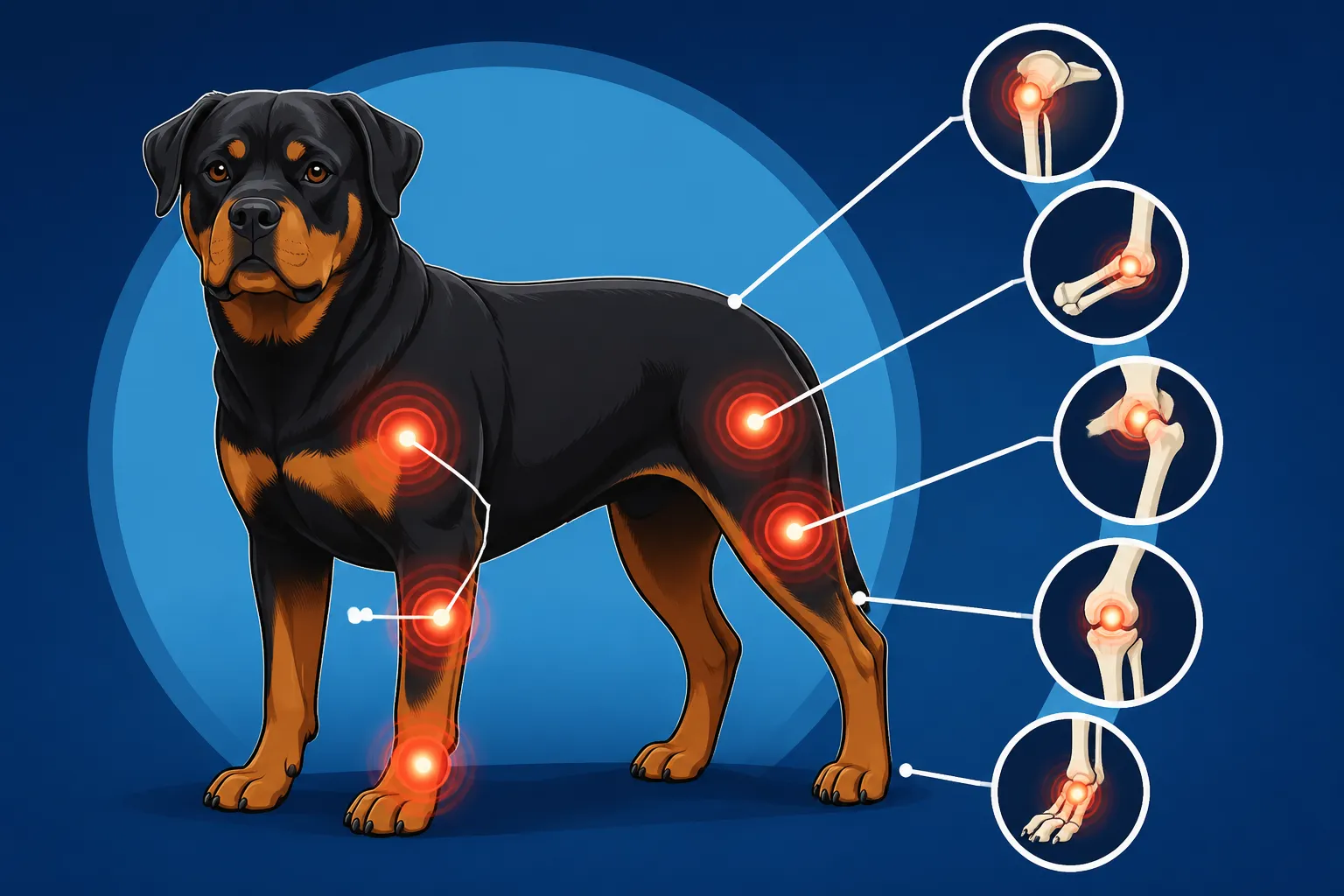
By far, the most frequent sites for osteosarcoma in Rottweilers are the long bones of the legs. Specifically, it has a predilection for areas away from the elbow and towards the knee. This means you'll often hear veterinarians talk about tumors forming in the following areas:
- Proximal Humerus: This is the upper part of the front leg bone, close to the shoulder joint. A tumor here can cause lameness that might initially be mistaken for shoulder arthritis or an injury. It’s a tricky spot because shoulder pain can be vague.
- Distal Radius and Ulna: These are the two bones in the lower part of the front leg, just above the wrist (carpus). Tumors here are very common and can cause noticeable swelling and pain in the "forearm" area. This is one of the classic spots where owners first notice something isn't right.
- Distal Femur: This is the lower part of the thigh bone, just above the knee joint. Given how much stress the knee joint takes, a tumor here can quickly become excruciating.
- Proximal Tibia: This is the upper part of the shin bone, just below the knee joint. Like the distal femur, this area around the knee is a frequent target, leading to lameness and swelling.
These specific locations are often areas of high metabolic activity in the bone, even after the growth plates have closed. The phrase "away from the elbow, towards the knee" is a classic veterinary mnemonic because it accurately describes the distribution: a lot of cases in the humerus (away from the elbow), radius/ulna (away from the elbow), and femur/tibia (towards the knee). If you notice your Rottweiler exhibiting The First Limp That Turns Out to Be Bone Cancer, particularly in one of these areas, it warrants immediate veterinary attention.
Less Common, But Still Significant, Axial Skeleton Sites
While the limbs account for the vast majority of osteosarcoma cases, these aggressive tumors can and do appear in other bones, particularly in the axial skeleton. These cases can sometimes be harder to diagnose because the signs might be less obvious than a limping leg.
- Ribs: Osteosarcoma can form on the ribs, leading to a palpable lump or swelling on the chest wall. Dogs might show pain when touched or have difficulty breathing if the tumor grows large enough to impede lung expansion. This can be tricky to distinguish from other chest wall masses initially.
- Vertebrae (Spine): Though rare, osteosarcoma can affect the spinal column. This can cause neurological symptoms, ranging from weakness and ataxia (wobbliness) to paralysis, depending on which part of the spine is affected and if the tumor impinges on the spinal cord.
- Mandible (Jaw) and Scapula (Shoulder Blade): These are even less common sites, but tumors can develop here. A jaw tumor might cause difficulty eating, drooling, or a visible swelling on the face. A scapular tumor might present as lameness or a mass felt on the shoulder area, often confused with muscle injuries.
It's important to remember that while these sites are less frequent, any unexplained lump, swelling, or persistent pain in your Rottweiler should always be investigated by a veterinarian. A good pet insurance plan, such as one from Healthy Paws, can provide considerable support for the diagnostic process and treatment regardless of where the tumor is found.
Summary of Common Osteosarcoma Locations
To help you visualize and remember these key areas, here's a quick overview:
| Common Location | Specific Bone Area | Initial Signs to Watch For |
|---|---|---|
| Front Leg (Appendicular) | Proximal Humerus (upper arm, near shoulder) | Lameness, swelling around shoulder/upper arm, reluctance to move shoulder |
| Distal Radius/Ulna (forearm, near wrist) | Swelling in forearm, lameness, pain when leg is touched | |
| Hind Leg (Appendicular) | Distal Femur (lower thigh, near knee) | Lameness, swelling around knee, pain when knee is flexed/extended |
| Proximal Tibia (upper shin, below knee) | Lameness, swelling below knee, shifting weight off leg | |
| Axial Skeleton (Less Common) | Ribs | Palpable lump on chest, pain when touched, labored breathing |
| Vertebrae (Spine) | Weakness, incoordination, neurological deficits, back pain | |
| Mandible (Jaw) | Swelling in jaw, difficulty eating, drooling |
This table provides a quick reference, but remember that early symptoms can be subtle and easily missed or attributed to other issues.
Recognizing the Subtle Signs of Bone Cancer by Location
The hallmark sign of osteosarcoma is often lameness or limping. However, depending on where the tumor is located, the specific signs you observe might vary. Being acutely aware of your Rottweiler's normal movement and behavior is your best defense. Don't dismiss a persistent limp, even a slight one, especially as your dog gets older.
Lameness and Swelling in the Limbs
When osteosarcoma develops in one of the long bones of the leg, the most common initial sign is a progressive lameness. This isn't usually a sudden, acute injury; rather, it often starts as a subtle, intermittent limp that gradually worsens over days or weeks. Your Rottweiler might seem fine after resting, only for the limp to return with activity.
- Foreleg Lameness: If the tumor is in the humerus, radius, or ulna, you'll likely see your dog favoring a front leg. They might carry the leg, refuse to bear weight, or appear stiff. You might notice them shifting their weight unevenly, putting more pressure on the unaffected front leg and their hindquarters. Over time, a palpable, firm, non-mobile swelling might develop around the tumor site, becoming hot to the touch. This swelling is often what prompts an owner to truly realize something is deeply wrong.
- Hindleg Lameness: Similarly, if the tumor is in the femur or tibia, the hindleg will be affected. Your Rottweiler might struggle to stand up, hesitate to jump into the car, or resist going up and down stairs. They might walk with a stiff gait or drag the affected leg slightly. The swelling can be very noticeable around the knee joint, making the limb look distorted or unusually thick. For many owners, this is the devastating realization that often leads to the diagnosis of Osteosarcoma Signs in a Rottweiler Leg.
Pain and Behavioral Changes
Beyond just limping, pain is a significant component of osteosarcoma. Bone tumors are incredibly painful, even in their early stages, because they're literally destroying bone from the inside out and stretching the periosteum (the membrane covering the bone).
- Generalized Pain Signs: Your Rottweiler might become withdrawn, less enthusiastic about walks or playtime, or reluctant to engage in activities they once loved. They might whine or cry when you touch the affected area, or even snap, which is completely out of character for most Rottweilers, especially if they are usually tolerant. Changes in appetite, restless nights, or an inability to find a comfortable position to lie down are also critical red flags. They might lick excessively at the painful site.
- Specific Pain Behaviors: If the tumor is in a rib, your dog might grunt or yelp when you pet their chest, or they might take shallow breaths. A spinal tumor can cause a hunched posture, difficulty lifting their tail, or yelping when you touch their back. Jaw tumors can make eating dry kibble incredibly painful, leading to drooling, dropping food, or showing a preference for softer diets. All of these subtle shifts in behavior are your Rottweiler's way of telling you something is gravely wrong, and it's essential to listen. Promptly addressing these signs with your vet, with the financial backing of pet insurance like Healthy Paws, can make a difference in your dog's quality of life.
The Importance of Not Waiting
Given the aggressive nature of osteosarcoma, time is truly of the essence. If you notice any persistent lameness, swelling, or unexplained pain, especially in one of the common locations listed above, do not wait. It's easy to assume it's just a sprain or arthritis, especially in an older dog, but delaying a diagnosis can allow the cancer to progress and metastasize. Even if it turns out to be something less severe, getting it checked out immediately will give you peace of mind and potentially save your dog's life if it is indeed osteosarcoma.
How Location Impacts Diagnosis and Treatment Paths
The location of an osteosarcoma tumor in a Rottweiler significantly influences how it's diagnosed, the treatment options available, and ultimately, the prognosis. A tumor in a limb, for example, offers different possibilities than one located on the spine or ribs. This complexity is why a thorough diagnostic workup is so critical.
Diagnostic Approach Based on Tumor Site
When your vet suspects osteosarcoma, the diagnostic journey typically begins with imaging, but the specific type of imaging and its focus will depend on the suspected location.
- Limb Tumors: For suspected limb osteosarcoma, X-rays are usually the first step. These can often show characteristic "sunburst" patterns or lytic (bone-destroying) lesions, which are strong indicators of bone cancer. If X-rays are suggestive, a biopsy of the bone is almost always required for a definitive diagnosis. This involves taking a small sample of the bone for pathological analysis. Depending on the location, this might be a fine-needle aspirate or a core biopsy. Further imaging, like a CT scan, might be used to get a more detailed view of the tumor's extent and to help plan surgery. It's also vital to perform chest X-rays, as osteosarcoma spreads aggressively, often to the lungs, and knowing if metastasis has already occurred changes the entire treatment plan.
- Axial Skeleton Tumors (Ribs, Spine, Jaw): These locations can be trickier. Rib tumors can be identified with X-rays and palpation, but often require a CT scan or MRI for better visualization of the mass and its relationship to surrounding structures (like lungs or spinal cord). Spinal tumors almost always require advanced imaging like MRI to assess spinal cord compression and plan delicate surgery if it's an option. Jaw tumors might also benefit from CT scans to show the extent of bone involvement and potential invasion into soft tissues. Biopsies here are also critical but can be more complex to obtain safely due to the proximity of vital structures.
The clearer the picture of the tumor's exact location and size, the better equipped your veterinary oncologist will be to recommend the most effective course of action. This comprehensive diagnostic phase can be costly, and a robust pet insurance policy, such as those offered by Healthy Paws, can be invaluable in making these critical tests accessible.
Treatment Modalities Influenced by Location
Treatment for osteosarcoma is multifaceted and heavily depends on where the cancer has developed. The primary goal is usually pain control and slowing the progression of the disease.
- Limb Amputation: For limb osteosarcoma, amputation of the affected limb is often considered the gold standard for immediate pain relief and removing the primary tumor. While this sounds drastic, many Rottweilers adapt remarkably well to three legs. The decision to amputate is a deeply personal and difficult one, but it can significantly improve quality of life and is often followed by chemotherapy to target microscopic cancer cells that may have already spread. We’ve explored Amputation Recovery Week by Week for a Rottweiler in detail, and it’s a testament to their resilience.
- Limb-Sparing Surgery: In some very specific cases where the tumor is in a suitable location (e.g., distal radius) and hasn't invaded too much surrounding tissue, limb-sparing surgery might be an option. This involves removing the affected bone segment and replacing it with a bone graft or prosthesis. This is a highly specialized procedure and isn't suitable for all tumors or all dogs, and carries its own set of potential complications.
- Radiation Therapy: When amputation isn't feasible or desired, or for tumors in axial skeleton locations, radiation therapy can be used for pain palliation. It doesn't cure the cancer but can shrink the tumor and significantly reduce pain, offering a better quality of life for a period. For tumors that are surgically inaccessible (like many spinal or extensive rib tumors), radiation might be the primary local treatment.
- Chemotherapy: Regardless of the local treatment chosen (amputation, limb-sparing, or radiation), chemotherapy is almost always recommended for osteosarcoma. This is because osteosarcoma is highly metastatic, meaning it spreads aggressively to other parts of the body, most commonly the lungs, even if the primary tumor is successfully removed. Chemotherapy aims to kill these circulating cancer cells and delay or prevent metastasis. There are specific Chemotherapy Protocols Used on Rottweilers that vets will discuss.
- Pain Management: For all osteosarcoma patients, comprehensive pain management is crucial. This can involve a combination of NSAIDs, opioids, and other pain medications tailored to the individual dog's needs and the tumor's location. Ensuring effective Pain Control for a Rottweiler With Bone Cancer is paramount to maintaining their comfort and quality of life.
Prognosis Considerations
The prognosis for Rottweilers with osteosarcoma is generally guarded, as it is a very aggressive cancer. However, the location of the tumor can play a role in survival times.
- Limb vs. Axial Skeleton: Generally, osteosarcomas in the limbs, especially when treated with amputation and chemotherapy, tend to have a better prognosis than those in the axial skeleton (ribs, spine, skull). This is often because limb tumors are more amenable to complete surgical removal, whereas axial tumors can be harder to remove entirely due to their location and proximity to vital organs or the spinal cord.
- Metastasis: The presence of detectable metastasis at the time of diagnosis (often seen on chest X-rays) significantly worsens the prognosis, regardless of the primary tumor's location. This underscores the importance of early detection and rapid treatment.
- Tumor Size and Aggressiveness: Larger tumors or those that are particularly aggressive (as determined by biopsy) may also have a less favorable outlook.
While the statistics can be daunting, it's important to discuss your individual Rottweiler's situation thoroughly with your veterinary team. Every dog is different, and advancements in veterinary oncology are constantly improving options for managing this challenging disease. Being prepared for the financial aspect of these treatments is also critical, and that’s where considering options like Healthy Paws can truly help manage the burden of significant veterinary bills.
Disclaimer
The information provided in this article is for general informational purposes only and is not a substitute for professional veterinary advice. Always consult with a qualified veterinarian for any health concerns or before making any decisions related to your Rottweiler's health or treatment.