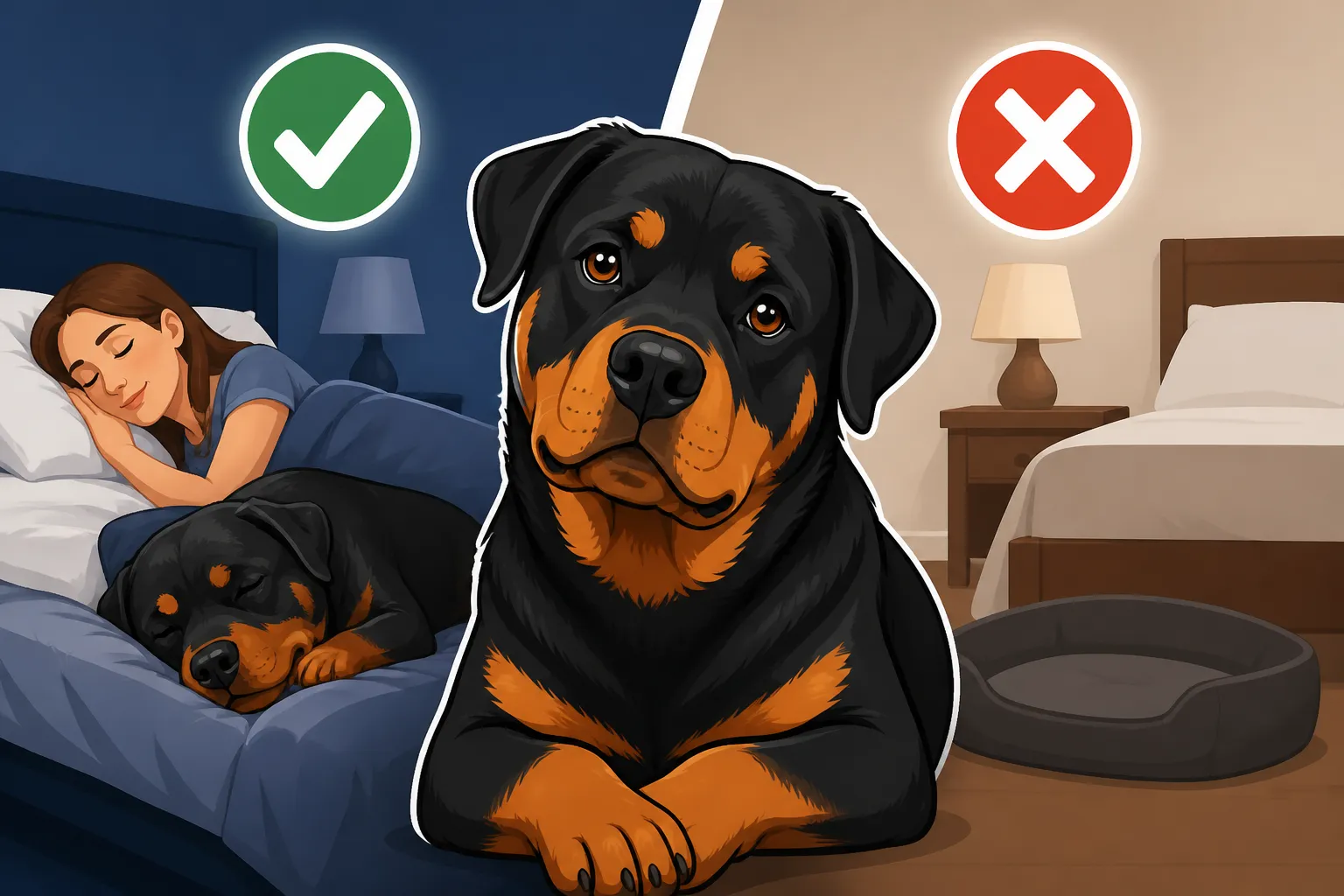
Whether a Rottweiler Should Sleep in Your Bedroom
It's a common dilemma for Rottweiler owners: you adore your loyal companion, but the thought of a dog their size sharing your most private space – your bedroom – can feel a little overwhelming. Are you setting yourself up for an eternal bed-hogging battle, or is it actually beneficial for your bond? This guide will dive deep into the nuances of having your Rottweiler sleep in your bedroom, exploring both the benefits for your connection and the practical considerations that need a realistic look.
The Instincts Behind Where a Rottweiler Sleeps
Understanding your Rottweiler's natural inclinations is the first step in deciding where they'll spend their nights. These magnificent dogs aren't just pets; they carry a strong historical legacy of guarding, protecting, and being close to their human companions. This deep-seated instinct plays a significant role in their comfort and behavior, even during sleep.
The Rottweiler's Natural Guardianship Role
Rottweilers were originally bred to herd and guard livestock, and later, to protect butchers' money as they traveled to market. This isn't just a fun historical fact; it's imprinted on their very being. They are naturally vigilant, inherently protective, and feel a strong sense of responsibility toward their family. For many Rottweilers, being close to their "flock" – you and your family – is a fundamental part of their sense of purpose. When your Rottweiler chooses to sleep near you, whether in the same room or just outside your door, it's often a manifestation of this deeply ingrained protective instinct. They want to be aware of what's happening, to feel that they are on watch, even in their sleep. It’s not necessarily about control, but about their perception of their role within the household. This natural drive to be vigilant can sometimes lead to Rottweiler Barking and When It Means Something if they perceive unusual sounds outside the bedroom, even when you'd rather they just slept through it.
Pack Dynamics and Your Rottweiler
While modern dog training often moves away from strict "pack leader" terminology, the concept of social hierarchy and belonging remains relevant for a breed like the Rottweiler. They thrive on clear structure and knowing their place within the family unit. For some, allowing a dog into the bedroom might feel like an elevation of status that could lead to behavioral issues. However, it's more about how you manage the dynamic than the location itself. A Rottweiler who understands and respects boundaries, and sees you as the consistent leader, isn't going to suddenly assume dominance because they're sleeping on the floor next to your bed. Instead, sleeping in the same room can actually reinforce their sense of belonging and security, knowing they are an integral part of the family group. This closeness can foster a deeper bond, but it requires careful attention to your overall training and household rules. If your Rottweiler already exhibits behaviors like Rottweiler Resource Guarding at Home, allowing them unrestricted access to your bedroom without addressing those underlying issues might be a recipe for trouble, as they could extend their guarding to this new "resource."
Pros and Cons of Your Rottweiler Sleeping in Your Bedroom
Deciding whether your Rottweiler should share your sleeping space is a personal choice, but it’s one that comes with both heartwarming benefits and practical challenges. It’s important to weigh these carefully, keeping in mind your specific dog’s temperament and your household’s lifestyle.
The Benefits of a Shared Sleeping Space
There’s a unique comfort and bond that develops when your Rottweiler sleeps in your bedroom. This isn't just a fluffy sentiment; there are genuine advantages to this arrangement.
First and foremost is the strengthening of the human-animal bond. Proximity builds connection. When your Rottweiler is close during the quiet hours of the night, it fosters a sense of security and intimacy. They feel safer, knowing you're nearby, and you might find their presence incredibly comforting. Many owners report a deeper sense of companionship, a feeling that they and their dog are truly a team, sharing even the most vulnerable moments of sleep. This constant, gentle reassurance can be particularly beneficial for Rottweilers prone to mild separation anxiety, as it reinforces that they are not alone.
Another significant benefit is enhanced security. Remember that innate guarding instinct? Even while asleep, a Rottweiler's presence can be a powerful deterrent. They are typically light sleepers when it comes to unusual sounds, and their deep, rumbling growl (or even just their physical size) is often enough to make potential intruders think twice. Knowing your vigilant protector is just a few feet away can bring immense peace of mind. This isn't about fostering aggression, but about leveraging their natural awareness to your advantage. It's a subtle, passive form of protection that comes from their very nature.
Finally, sleeping in the same room allows for quicker responsiveness to emergencies. If your Rottweiler suddenly falls ill, starts choking, or shows signs of bloat – a serious concern for the breed, where Recognizing Bloat in a Rottweiler in the critical early hours can be life-saving – you'll be alerted immediately. You'll hear changes in their breathing, notice restlessness, or be woken by them if they're trying to get your attention. This immediate awareness can make a critical difference in getting them the help they need, especially for a large breed where health issues can progress rapidly. It also means you can quickly tend to a sudden potty break need, preventing accidents and reinforcing house training.
Potential Challenges and Considerations
While the benefits are compelling, having a hundred-plus-pound dog in your bedroom isn't without its potential drawbacks. Being realistic about these challenges is crucial for a harmonious living situation.
One of the most common issues is space and comfort. Rottweilers are big. Even if they're on their own bed on the floor, they take up a significant footprint. They sigh, they stretch, they shift, and sometimes they snore. If your bedroom is small, or if you're a light sleeper, this can become a genuine problem. Their massive dog bed might block a pathway, or their nighttime movements might constantly disturb your rest. You need to consider if your bedroom can comfortably accommodate a large dog bed, like those often found on Amazon that are sized for giant breeds, without making the room feel cramped or becoming a tripping hazard in the dark.
Another significant factor is hygiene and cleanliness. Rottweilers shed, even with their relatively short coats. They can track in dirt, shed dander, and bring various allergens into your sleeping space. If you or your partner have allergies, or if you simply prefer a pristine bedroom environment, this can be a constant source of frustration. Regular grooming, including diligent brushing, is essential to mitigate shedding, but it won't eliminate it entirely. You'll likely find yourself cleaning and vacuuming your bedroom much more frequently than you would otherwise. This is also true if your Rottweiler is prone to skin issues or ear infections, where debris or odor might become more noticeable in close quarters. Rottweiler Ear Care Under a Drop Ear is crucial, and good hygiene prevents unpleasant surprises.
Behavioral considerations also play a role. While sleeping together can strengthen bonds, it can also exacerbate existing behavioral tendencies if not managed properly. For example, if your Rottweiler already struggles with Rottweiler Separation Anxiety in the First Month, allowing them to sleep in your bed might unintentionally make their alone time during the day even harder, as they become even more dependent on your constant presence. Furthermore, if your Rottweiler is prone to resource guarding (of space, you, or even their bed), a shared bedroom can be a high-stakes environment where these behaviors could escalate if not addressed with consistent training. Rottweiler Behavior Problems That Start Small can grow into significant issues if boundaries aren't clear, even in the bedroom.
Finally, there's the question of future flexibility. What happens if you need to travel and board your dog, or if a partner moves in who has severe allergies? If your Rottweiler has always slept in your bed and never been crated or accustomed to sleeping elsewhere, it can be incredibly difficult to change that routine later in life. Establishing some flexibility early on, even if they primarily sleep in your room, is a smart long-term strategy.
Establishing Boundaries and a Consistent Routine
Whether you decide your Rottweiler is a bedroom buddy or prefers their own space, establishing clear boundaries and a consistent routine is paramount. This breed thrives on structure, and ambiguity can lead to confusion and unwanted behaviors.
Crate Training and Designated Sleeping Areas
Even if your ultimate goal is for your Rottweiler to sleep in your bedroom, crate training is an invaluable tool. It provides them with a safe, secure den that is their space, a place they can retreat to and feel safe. A well-sized crate, like those sturdy models often found on Amazon or Chewy that can accommodate a large adult Rottweiler, ensures they have enough room to stand, turn around, and lie down comfortably. Crate training from a young age helps immensely with house training, preventing destructive chewing, and offering a reliable place for them to settle, whether it's for a nap or overnight.
If your Rottweiler won't be sleeping in your bedroom, it's vital to create an equally appealing and designated sleeping area elsewhere in the house. This could be a large dog bed in a quiet corner of the living room, a hallway where they can still feel close to the family action without being in your personal space, or their crate in a common area. The key is consistency. Always direct them to this spot at night, reward them for settling there, and make it a comfortable, inviting place. This helps prevent A Rottweiler That Destroys Doors When Left or other destructive behaviors out of frustration or anxiety if they feel they don't have a place of their own.
Regardless of where they sleep, ensure their bed is comfortable and supportive. Rottweilers are heavy, and good orthopedic support, especially as they age, is crucial for their joints. Investing in a high-quality dog bed can save you headaches and vet bills down the line.
Managing Resource Guarding in the Bedroom
The bedroom, being a personal space, can sometimes become a focal point for resource guarding behaviors in a Rottweiler if boundaries aren't clearly defined. Resource guarding isn't about being "mean"; it's an instinctual behavior where a dog protects items or spaces they value. For a Rottweiler, this could mean guarding their bed, a chew toy, or even you in the shared sleeping area.
To prevent this, consistency in training is key. Your Rottweiler should understand that all resources ultimately belong to you and that you control access. Practice trade-ups if they're guarding an item on their bed – offer a higher value treat for a less valuable toy. Ensure they respect your space by not jumping on the bed uninvited, or by moving off the bed when asked. If you notice signs like freezing, growling, or stiff body language when you approach their sleeping area or them while they are resting, it's a sign that you need to reinforce boundaries and seek guidance from a professional trainer if necessary. You want them to associate your presence near their sleeping spot with positive interactions, not threat. Remember, Why You Should Never Punish a Rottweiler Growl is important – it's communication, and punishing it only teaches them to suppress the warning, not the underlying feeling.
For dogs like Rottweilers, brands like BAXTER & Bella offer online training programs that can be incredibly helpful in teaching foundational obedience and managing these nuanced behavioral challenges from the comfort of your home. They often emphasize positive reinforcement and clear communication, which are vital for building trust and respect with your Rottweiler.
Transitioning Sleeping Arrangements if Needed
Life changes, and sometimes the initial sleeping arrangement for your Rottweiler might need to evolve. Perhaps a new baby is arriving, a family member with allergies is moving in, or your Rottweiler's health makes stairs (if their new spot is on a different floor) a challenge. Transitioning a Rottweiler's sleeping arrangements requires patience, consistency, and positive reinforcement.
Start by gradually moving their bed or crate further from your bed, or into a new room entirely, over several nights or even weeks. Make the new sleeping area incredibly appealing with comfortable bedding, special puzzle toys, or long-lasting chews they only get there. Teaching a Rottweiler to Settle Indoors in a designated spot is a great foundation for this. Spend time with them in the new area during the day, making it a positive place.
If they've been used to sleeping with you, they might protest. This is normal. Resist the urge to give in, as it will only teach them that persistence pays off. Ensure they've had ample exercise and a potty break before bed. You might need to temporarily sleep on a couch near their new area to provide comfort and reassurance without fully giving in. For a dog that struggles with being alone, even at night, practicing short periods of separation during the day can build their confidence. Consistency is your most powerful tool in making these transitions smooth and successful for both you and your loyal Rottweiler.
Here's a quick comparison of sleeping arrangements for your Rottweiler:
| Feature | In Bedroom Sleeping | Designated Area (Outside Bedroom) |
|---|---|---|
| Bonding | High: Promotes deep connection and companionship. | Moderate: Still good, but requires more intentional interaction. |
| Security | High: Immediate alert to unusual sounds/threats. | Good: Still a deterrent, but reaction time may vary. |
| Responsiveness (Health) | High: Quick awareness of illness or distress. | Moderate: May take longer to notice subtle changes. |
| Space Requirement | High: Needs significant floor space for a large bed. | Low to Moderate: Can be in a common area or separate room. |
| Hygiene/Allergies | High impact: More hair, dander, dirt in bedroom. | Low to Moderate impact on bedroom cleanliness. |
| Behavioral Management | Requires very clear boundaries to prevent guarding. | Easier to maintain personal space boundaries. |
| Flexibility | Lower: Harder to change later if routine is strict. | Higher: Easier to adapt to changes in household. |
| Owner Sleep Quality | Can be disturbed by dog's movements/noises. | Generally less disruption to owner's sleep. |
Ultimately, the decision of whether your Rottweiler sleeps in your bedroom is a deeply personal one, with no single "right" answer. What matters most is that you make an informed choice that supports both your comfort and your Rottweiler's well-being, backed by consistent training and clear communication. A well-adjusted, confident Rottweiler will thrive wherever they sleep, as long as they feel loved, secure, and understand their place within your family.
Disclaimer
This article is for general informational purposes only and does not constitute professional advice. Laws, prices and regulations vary by location and change over time. Consult a qualified professional for guidance on your specific situation.