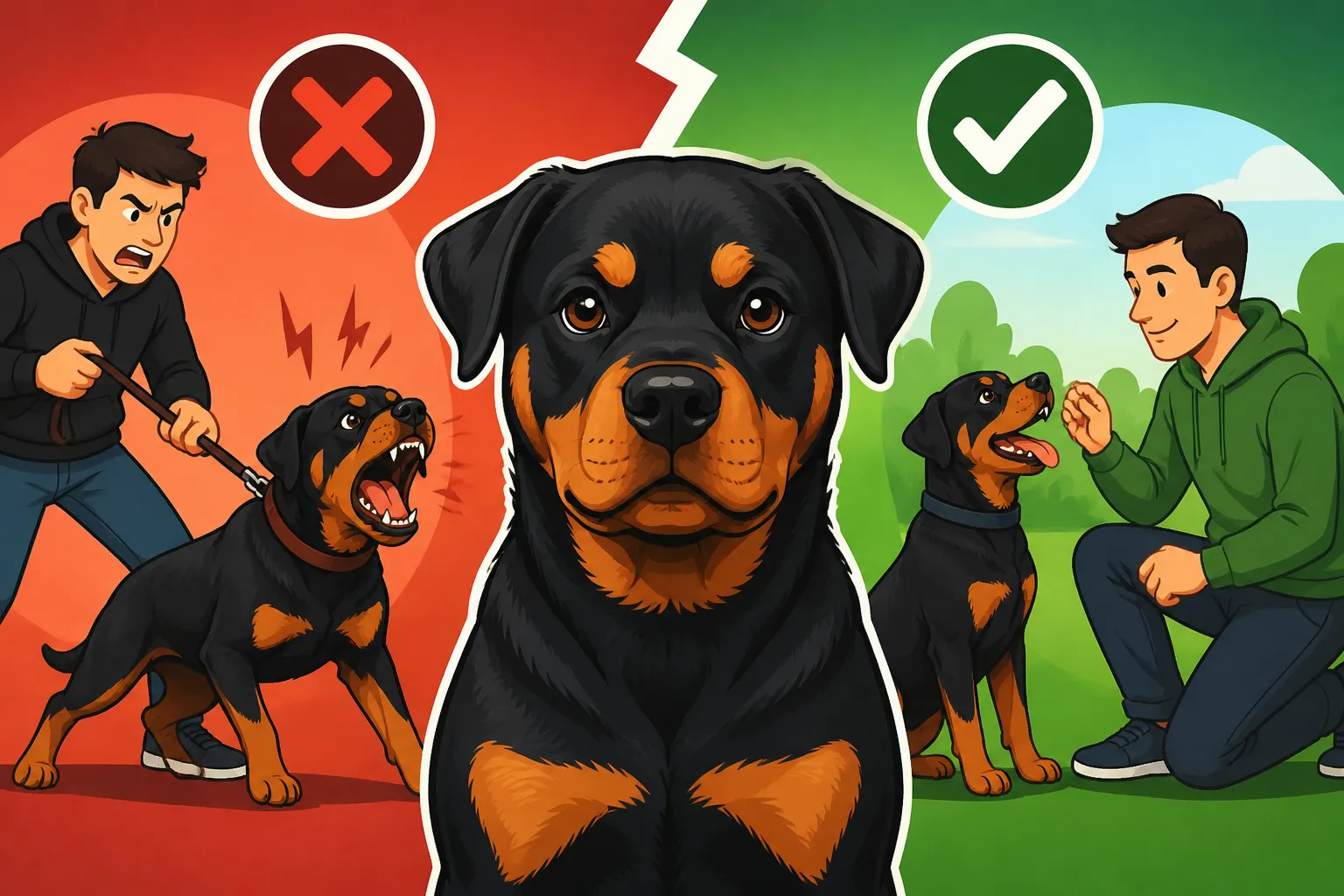
What Rottweiler Owners Get Wrong in the First Year
The first year with a Rottweiler puppy is a whirlwind of growth, boundless energy, and adorable clumsiness. But it's also a critical time where well-meaning owners often make common mistakes that can lead to significant behavioral challenges down the line. This comprehensive guide is here to walk you through those pitfalls, offering practical, empathetic advice to help you nurture your Rottweiler into a confident, well-adjusted companion.
Underestimating Their Size and Strength
It’s easy to look at a fluffy Rottweiler puppy and forget that they will, in a blink, transform into a powerful, substantial dog. This oversight is perhaps one of the most common and impactful errors new owners make. What's cute and manageable in a 20-pound pup can become dangerous and overwhelming in a 120-pound adult. Starting with the right mindset about their future size is paramount, even from day one.
Ignoring Puppy Training Because They're "Just a Puppy"
When you bring home a tiny, wobbly Rottweiler puppy, it’s understandable to feel like you have all the time in the world for serious training. They're so small, so innocent, and those little puppy nips are barely a tickle! Many owners fall into the trap of thinking, "Oh, we'll get serious about training when they're a bit older, when they can actually focus." This is a huge misstep. Your Rottweiler is absorbing information and forming habits from the moment they step into your home. Every interaction, every boundary (or lack thereof), is a training opportunity. Why Rottweiler Training Cannot Wait Until Six Months delves deeper into this urgency.
By postponing training, you allow undesirable behaviors to solidify. That adorable puppy jumping up to greet you? It becomes a dangerous full-body slam from a large adult. That gentle mouthing becomes painful, uncontrolled biting. The time between eight weeks and sixteen weeks is a crucial window for learning and socialization, and neglecting it means you're not just missing an opportunity, you're actively setting yourself up for a much harder road later. Investing in early, consistent training – even if it's just five-minute sessions throughout the day – pays dividends when your dog matures. Programs like BAXTER & Bella offer online resources that can be incredibly helpful for new puppy owners, guiding you through those initial critical weeks from the comfort of your home.
Letting Jumping and Mouthiness Slide
Those sharp little puppy teeth can feel like needles, but often, we excuse it as "just puppy play." Similarly, a small puppy launching itself onto your leg for attention seems endearing. The problem is, Rottweilers are powerful chewers with a strong prey drive, and their bite force as adults is significant. Allowing a puppy to mouth and bite hands, even playfully, teaches them that human skin is an acceptable chew toy. This habit, if not corrected early with firm but gentle redirection and bite inhibition training, can escalate into serious problems when they have an adult jaw. Teaching a Rottweiler Puppy That Teeth Hurt is a must-read for anyone dealing with this.
The same goes for jumping. A 10-pound puppy jumping on you is a nuisance; a 100-pound adult Rottweiler jumping can knock an elderly person over, injure a child, or simply be a painful, unwelcome greeting for anyone. It's vital to teach your Rottweiler from day one that all four paws must remain on the floor for attention. Consistent management, like turning away or stepping back every time they jump, and only rewarding them when they are calm, sets the stage for polite greetings as an adult. Remember, you're training for the 100-pound dog, not the 10-pound puppy.
Neglecting Early Socialization and Exposure
Rottweilers have a natural inclination to be protective and can be aloof with strangers. This is part of their breed heritage. However, this inherent trait doesn't mean they should be isolated; quite the opposite. Proper, extensive, and positive socialization during their formative months is absolutely critical to ensuring they grow into well-balanced adults who are confident, not fearful or reactive, in various situations.
Isolating Your Rottweiler Puppy from the World
Some owners, perhaps out of fear of disease before full vaccination or due to misunderstandings about the breed's protective nature, limit their Rottweiler puppy's exposure to the outside world. They might keep the pup strictly in the backyard or only introduce them to a very small circle of family members and known dogs. While caution regarding parvovirus and other diseases is absolutely warranted, isolation is a severe mistake. The critical socialization window for puppies closes around 16 weeks of age. During this time, puppies need to be exposed to as many new sights, sounds, smells, people, and safe, vaccinated dogs as possible.
Missing this window can lead to a dog who is fearful, anxious, or reactive to anything new or unfamiliar. A Rottweiler who hasn't seen children, men with hats, or heard sirens before might react with fear or aggression when suddenly confronted with them as an adult. Remember, socialization isn't just about playing with other dogs; it's about positive exposure to the entire human world. Think about Rottweiler Socialization Before Sixteen Weeks and creating a careful plan, perhaps carrying your puppy in a sling or cart to public places before they are fully vaccinated, just to expose them to the sounds and sights safely.
Not Introducing Them to Diverse Experiences
Beyond just people and dogs, your Rottweiler puppy needs to experience a vast array of environments and stimuli. This includes different surfaces (grass, pavement, gravel, stairs), different noises (traffic, vacuums, thunderstorms on a recording), different types of people (kids, elderly, people with canes or in wheelchairs), and different objects (umbrellas opening, skateboards, bicycles). Each positive experience builds their confidence and helps them understand that the world isn't a scary place.
Imagine a Rottweiler who has only ever walked on grass suddenly having to navigate slick linoleum at the vet, or one who has never heard fireworks reacting with extreme panic. These are real-world scenarios that can be mitigated with early, controlled, positive exposures. Take them for short, positive car rides, let them investigate new textures, and reward calm curiosity. This structured exposure helps them develop a strong foundation, making them less prone to reactivity and more adaptable to life's inevitable surprises. Introducing a Rottweiler Puppy to Strangers Safely emphasizes the importance of these varied interactions.
Misunderstanding Their Guarding Instincts
Rottweilers were historically bred as drover dogs and guardians. They possess a natural instinct to protect their family and territory. This is a fantastic trait, but it's one that must be understood, respected, and most importantly, managed from a young age. Many first-time Rottweiler owners either suppress this instinct incorrectly or, conversely, unintentionally encourage it to an unhealthy degree.
Encouraging Resource Guarding Without Realizing It
Resource guarding is when a dog shows aggressive behaviors (growling, snapping, biting) to protect a valued item like food, toys, or even a person. Rottweilers, with their guarding heritage, can be prone to this. Owners sometimes inadvertently encourage this by constantly taking things away from their puppy or by punishing growls. While it might seem logical to remove an item if a puppy is guarding it, doing so without teaching a "trade" can intensify the behavior, teaching the dog that humans are unpredictable thieves. Similarly, punishing a growl, which is a warning signal, only teaches the dog to skip the warning and go straight to a bite. Why you Should Never Punish a Rottweiler Growl explains this critical concept.
Instead, start early with positive reinforcement for sharing. Practice "trading up" – offering something even more appealing (a high-value treat) for an item you need to take. Make approaching their food bowl a positive experience by dropping in extra treats while they eat. Teach a "leave it" command with toys and food. This proactive approach builds trust and teaches your Rottweiler that humans are providers, not competitors, and that letting go of an item can lead to an even better reward. This applies to food bowls, favorite chew toys from brands like KONG (found on Amazon), and even their special resting spots.
Confusing Aloofness with Disinterest or Aggression
Rottweilers are not typically "everyone's best friend" dogs. They often possess a reserved, self-assured demeanor, especially with strangers. They observe, they assess, and they decide if someone is worth their attention. This natural aloofness is a breed trait, and it's important not to confuse it with disinterest, fear, or aggression. A well-socialized Rottweiler will be calm and confident, accepting of new people without necessarily showering them with affection. Why a Rottweiler Waits Before Deciding describes this characteristic beautifully.
A common mistake is trying to force a Rottweiler to be overly friendly or, at the other extreme, assuming their watchful nature means they are always on the verge of aggression. Neither is true. Instead of pushing them to greet every stranger, respect their space and allow them to make their own assessments from a distance. A calm, neutral acceptance of a new person is exactly what you want. Teaching them to "place" or go to their mat when guests arrive can be incredibly helpful for managing their presence without forcing interactions. Similarly, understanding their subtle body language, like a Reading a Still Rottweiler That Is Not Relaxed, can help you gauge their comfort level and intervene before any potential issues arise.
Overdoing or Underdoing Exercise and Mental Stimulation
Rottweilers are powerful working dogs, and they need a balance of appropriate physical exercise and mental engagement. Both too much and too little can lead to physical damage or behavioral problems, especially during their crucial first year of growth and development.
Pushing Physical Activity Too Soon
While Rottweilers need exercise, their joints and growth plates are incredibly vulnerable during their first 18-24 months. Over-exercising a young Rottweiler puppy, especially with high-impact activities like forced running, jumping from heights, or extensive stair climbing, can lead to serious and irreversible orthopedic issues like hip or elbow dysplasia. Their bones are still growing, and their growth plates haven't yet closed, making them susceptible to damage. Rottweiler Growth Plates Closing at Eighteen to Twenty-Four Months explains why this is such a delicate period.
The general rule of thumb for puppies is 5 minutes of structured exercise per month of age, twice a day. So, a four-month-old puppy would get two 20-minute walks. These should be leashed walks on soft surfaces, not strenuous jogs. Free play in a secure, level yard is great, but don't force them beyond what they naturally want to do. Avoiding repetitive jumping or long periods of running on hard surfaces is crucial for protecting their developing joints. Exercise Limits for a Rottweiler Under Six Months is a vital resource for navigating this delicate balance. Later, as they mature, you can gradually increase intensity, but always prioritize joint health.
Not Providing Enough Mental Enrichment
A tired dog is often a well-behaved dog, but "tired" doesn't just mean physically exhausted. For a smart, driven breed like the Rottweiler, mental stimulation is just as, if not more, important than physical exercise. A Rottweiler bored is a Rottweiler inventing their own (often destructive) entertainment. This might look like excessive chewing on inappropriate items, digging up the yard, or incessant barking. Many owners mistakenly believe that a huge yard is all a Rottweiler needs, but without engaging their minds, even a large space can lead to boredom.
Puzzle toys, chew puzzles that dispense treats, scent work games, and consistent short training sessions throughout the day can provide excellent mental exercise. Even simply learning new tricks, like "find it" with scattered kibble, or practicing impulse control games, can be incredibly enriching. Think about turning mealtime into a mental challenge with a slow-feeder bowl or a KONG Wobbler (available on Amazon), rather than just putting food in a dish. Rottweiler Mental Work on a Rainy Day offers great ideas for indoor enrichment. A mentally stimulated Rottweiler is far less likely to develop common behavior problems rooted in boredom and frustration.
Here’s a quick overview of some common mistakes and their potential long-term consequences:
| Mistake in the First Year | Potential Long-Term Consequence |
|---|---|
| Delaying obedience training | Disobedient, hard-to-manage adult dog; safety risks. |
| Allowing jumping/mouthiness | Injurious greetings, accidental bites from an adult Rottweiler. |
| Isolating puppy from new experiences | Fearful, anxious, or reactive adult dog; aggression. |
| Punishing resource guarding growls | Dog learns to bite without warning; escalated guarding behavior. |
| Over-exercising developing joints | Hip/elbow dysplasia, early arthritis, chronic pain. |
| Neglecting mental stimulation | Destructive behaviors, excessive barking, anxiety, frustration. |
| Not setting boundaries for furniture/space | Entitlement, guarding of prime spots, difficulty moving the dog. |
| Underfeeding or overfeeding calcium | Developmental orthopedic diseases, growth issues. |
The first year with your Rottweiler is a period of immense growth and learning, both for your puppy and for you. By proactively addressing these common pitfalls – recognizing their powerful potential early, prioritizing extensive and positive socialization, understanding their guarding instincts, and balancing their exercise and mental needs – you lay the groundwork for a lifetime of companionship with a confident, well-adjusted, and truly beloved family member. It takes dedication, patience, and a willingness to learn, but the reward of a well-behaved Rottweiler is immeasurable.
Disclaimer
This article is for general informational purposes only and does not constitute professional advice. Laws, prices and regulations vary by location and change over time. Consult a qualified professional for guidance on your specific situation.