Rottweiler Mental Work on a Rainy Day
Oh, the dreaded rainy day. You wake up, look outside, and see nothing but grey skies and pouring rain, and your heart sinks a little. You know exactly what’s coming: a big, beautiful, high-energy Rottweiler staring at you with that insistent gaze, wondering why their usual morning walk or romp in the yard isn't happening. We've all been there – a bored Rottweiler indoors can quickly turn into a destructive, mischievous Rottweiler. This guide is all about giving you practical, empathetic strategies to keep your magnificent companion mentally stimulated and happily engaged, even when venturing outside just isn't an option.
The Challenge of Indoor Boredom for a Rottweiler
It's easy to underestimate just how much a Rottweiler needs to do, even when the weather isn't cooperating. These aren't lap dogs content with a quick trot around the block. They're powerful, intelligent, and historically, they've always had a job to do. When that job, or even just their usual outdoor exploration, is taken away by bad weather, that energy and intelligence don't just magically disappear. They often get redirected, and not always in ways we appreciate.
Why a Rainy Day is More Than Just Inconvenient
For us humans, a rainy day might mean cozying up with a book or binge-watching a favorite show. For a Rottweiler, it can feel like a prison sentence. Their physical needs are immense; a quick run to the potty outside hardly burns off the steam they build up. But beyond the physical, their mental needs are just as significant. Think about it: a Rottweiler's ancestors were driving cattle and guarding butchers' carts. Their brains are wired for problem-solving, observation, and purposeful activity.
When these natural drives aren't met, that pent-up energy and intelligence can manifest in behaviors you'd rather avoid. Suddenly, your favorite couch cushion has become an investigative chewing project, your houseplants are being "pruned," or that peaceful afternoon nap is interrupted by a relentless "boof!" asking for attention. It's not malice; it's simply a strong, smart dog looking for something – anything – to do. They don't mean to be destructive; they're just finding their own entertainment, which often clashes with our idea of a well-kept home.
The Difference Between Physical and Mental Exercise
When we think of tiring out a dog, our minds often jump straight to physical exertion: long walks, fetching, running at the dog park. And yes, a Rottweiler certainly needs plenty of that when possible. But on a day when the elements forbid it, we need to shift our focus to their brains. A short sprint around the living room isn't going to cut it, nor is just letting them chew aimlessly for hours. We need to engage their minds in ways that demand focus, problem-solving, and decision-making.
Imagine working a physically demanding job versus a mentally demanding one. Both can leave you exhausted, right? It's the same for your Rottweiler. Using their nose, figuring out a puzzle, or learning a new command can be far more draining – in a good way – than simply trotting around the block. This mental engagement taps into their innate working dog instincts, providing a sense of purpose and satisfaction that physical exercise alone might not always achieve, especially when confined indoors. It's about channeling that impressive Rottweiler brain into positive, structured activities that prevent boredom from escalating into unwanted behaviors. Rottweiler Enrichment Beyond Walks explores this idea further, reminding us that variety is truly the spice of life for these intelligent dogs.
Engaging Your Rottweiler with Indoor Mental Stimulation
So, what exactly can you do when the rain just won't quit? The good news is, there's a whole world of indoor mental stimulation that can keep your Rottweiler happy and tired, without even stepping a paw outside. It's all about creativity and tapping into their natural instincts.
Puzzle Toys and Interactive Feeders
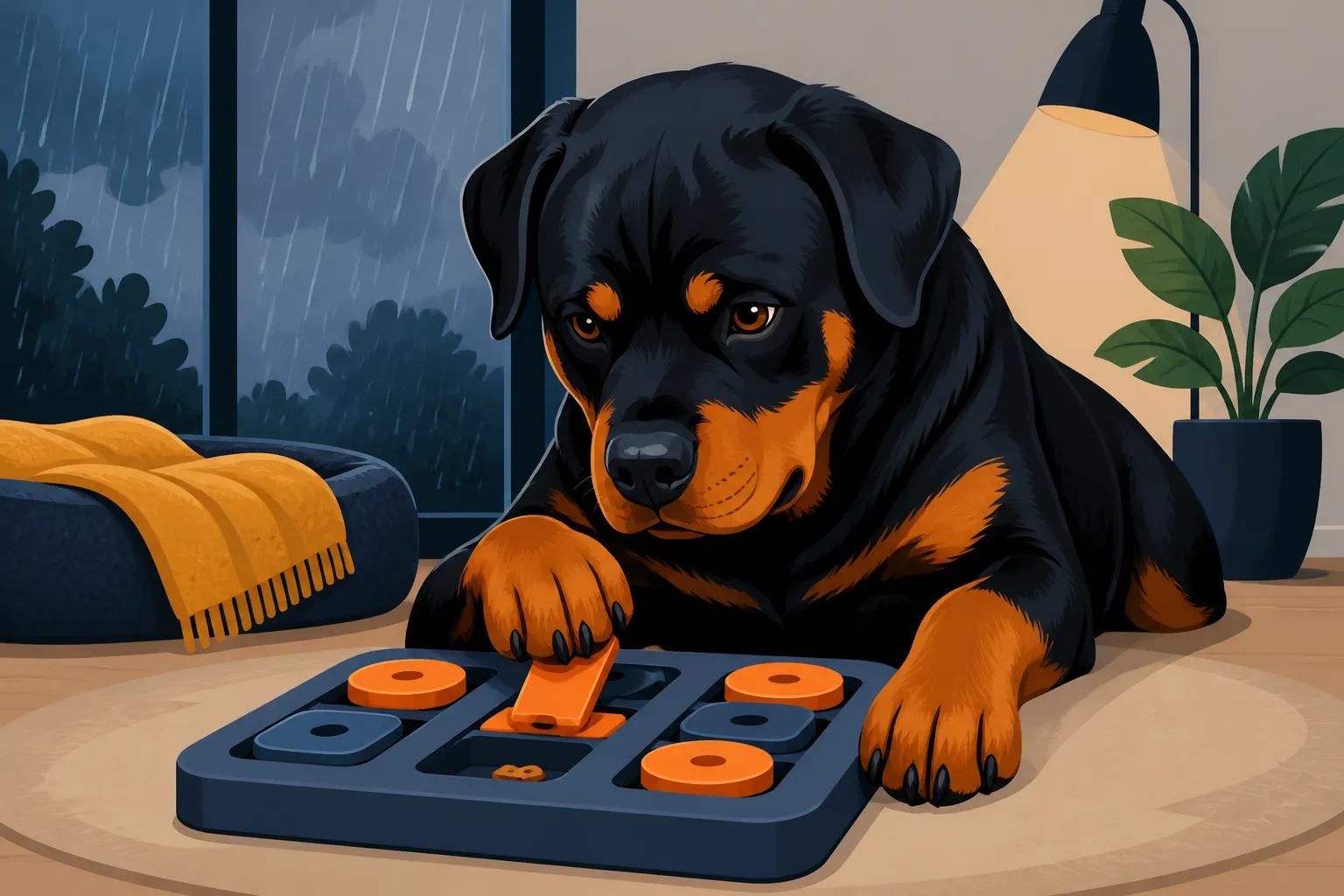
These are absolute lifesavers on a rainy day, or any day you need to keep your Rottweiler busy without constant supervision. Forget just dumping their kibble into a bowl. Puzzle toys make them work for their food, turning mealtime into a mental game. You'll find a vast array of options out there, from simple KONGs filled with peanut butter or yogurt and frozen, to more intricate treat-dispensing toys that require nudging, rolling, or flipping.
Consider a feeder ball that slowly releases kibble as your Rottweiler pushes it around, or a snuffle mat where they have to use their nose to root out hidden pieces of food. Instead of finishing a meal in 30 seconds, a puzzle feeder can extend mealtime to 15-20 minutes of focused, brain-engaging activity. This not only tires them out mentally but also slows down their eating, which can be a huge bonus for a breed prone to bloat. You can find many robust and large-breed appropriate puzzle feeders and interactive toys on platforms like Amazon, ensuring you get something durable enough for a strong Rottweiler jaw. Puzzle Feeders Built for a Rottweiler delves deeper into finding the right tools for your big companion.
Scent Work and Hide-and-Seek Games
Did you know your Rottweiler's nose is thousands of times more sensitive than yours? Scent work is incredibly enriching and exhausting for them. It taps into their natural instincts to hunt and track, even if it's just for a piece of kibble. Start simple: in a quiet room, show your dog a treat, let them sniff it, then place it a few feet away and say "find it!" Gradually, increase the difficulty by hiding treats under towels, behind furniture, or in different rooms. Your Rottweiler will be thrilled to use their powerful nose, and the mental effort of searching will wear them out surprisingly fast.
Another classic is hide-and-seek, and it's not just for kids! Have your Rottweiler sit-stay in one room while you go hide somewhere else in the house. Then call their name with excitement. When they find you, reward them with praise, a treat, or a quick game of tug. This game reinforces their recall, builds their confidence in navigating the house, and offers a fun, interactive way to burn off energy. The joy on their face when they "discover" you is priceless.
Indoor Training Sessions and Brain Games
Rainy days are perfect for honing those obedience skills or teaching new, fun tricks. Instead of seeing it as a setback, view it as an opportunity. Go beyond the basic "sit" and "stay." Can your Rottweiler learn to "weave" through your legs, "fetch" a specific toy by name, or "play dead"? Even advanced versions of existing commands, like a longer duration stay or a more precise heel indoors, can provide significant mental work.
Keep training sessions short – 5 to 10 minutes at a time – but do several throughout the day. This keeps their attention sharp and prevents frustration. Learning new skills builds their confidence and strengthens your bond. If you're looking for guidance, online training platforms like BAXTER & Bella offer virtual classes and trick tutorials that can be done entirely indoors, providing structured lessons you can follow at your own pace. Even just practicing Rottweiler Impulse Control Games can be a huge mental workout, teaching them patience and self-control. It's amazing how much a Rottweiler's brain can work when given a clear, consistent task.
Creative Indoor Activities to Prevent Destructive Behavior
When a Rottweiler gets bored, they'll invent their own activities, and often those activities involve things you don't want them getting into. The key is to provide acceptable outlets for their natural drives before they find unacceptable ones.
Chewing as a Productive Outlet
Rottweilers have incredibly strong jaws, and chewing is a natural, necessary behavior for them. It helps clean their teeth, relieves stress, and simply feels good. But you need to provide appropriate, durable chew items that can stand up to their power. A flimsy chew toy won't last five minutes and could even be a choking hazard. Look for solid rubber toys, large animal bones that are safely processed, or other heavy-duty options designed for extreme chewers.
Imagine your Rottweiler gnawing happily on a sturdy Nylabone or a frozen raw bone (if your vet approves) for an hour. That's an hour where they're not chewing on your furniture, your shoes, or the edge of the rug. It's a calming, self-soothing activity that satisfies a deep instinct. Always supervise new chew toys to ensure they're safe and appropriate for your dog's chewing style. Rottweiler Chew Toys That Survive the Jaw offers excellent guidance on selecting the best options for your powerful companion.
DIY Enrichment and Cardboard Box Fun
You don't always need fancy store-bought toys to engage your Rottweiler. Some of the best enrichment activities can be made with items you already have around the house. Take a cardboard box, for instance. Fill it with crumpled newspaper, empty toilet paper rolls, and a few hidden treats. Your Rottweiler will love "shredding" and digging through it to find the treasures. Supervise this activity to make sure they're not ingesting large pieces of cardboard, but allowing them to shred is a fantastic, natural stress-reliever.
Another idea is the "towel game." Lay a towel flat, scatter some kibble on it, and then roll or fold it up. Your Rottweiler has to use their nose and paws to unroll or unfold the towel to get the food. You can make it harder by tying knots in the towel. These simple, low-cost activities encourage problem-solving and keep their minds active, proving that Rottweiler Enrichment Beyond Walks doesn't have to be complicated or expensive.
The Power of Controlled Interaction
Even without a huge yard, you can still have meaningful, interactive play sessions indoors. Short, focused games with a favorite tug toy or a soft fetch toy can be incredibly rewarding. The key here is control. Instead of letting them go wild, incorporate commands like "sit," "wait," "take it," and "drop it" into the game. This turns a simple play session into a valuable training opportunity, reinforcing good manners while still burning off some steam.
Games that teach impulse control are particularly effective for Rottweilers, who often have a strong desire to get what they want. For example, hold a treat in your closed fist. Your dog will probably try to lick, paw, or nudge it. Wait until they stop and look at you, even for a second, then open your hand and reward them. This teaches them that calm waiting, not demand, gets results. Practicing Rottweiler Impulse Control Games like this for even a few minutes can be surprisingly tiring for them, as it requires intense focus and self-regulation. Remember, a Rottweiler that understands how to settle and calmly wait indoors is a much happier, and less destructive, companion.
Planning Your Rainy Day Rottweiler Schedule
Even on days when the weather dictates an indoor existence, a routine is your best friend. Rottweilers thrive on predictability and knowing what to expect. Just because you can't stick to the usual outdoor schedule doesn't mean you should abandon all structure.
Structuring the Day for Success
A well-structured indoor day prevents boredom from setting in. Think about alternating periods of mental engagement with periods of calm rest. This mimics their natural cycle of activity followed by downtime. Don't try to cram all the activities into one frantic hour; spread them out. A short training session in the morning, a puzzle toy for lunch, a sniffari in the afternoon, and a good chew in the evening can make a huge difference.
Here’s a sample schedule you might adapt for a particularly gloomy day:
| Time | Activity | Goal |
|---|---|---|
| 7:00 AM | Potty break (quick dash outside) | Essential relief |
| 7:30 AM | Breakfast in puzzle feeder | Mental stimulation, slow eating |
| 8:00 AM | Crate time/Rest | Quiet downtime, prevents overstimulation |
| 10:00 AM | Short training session (new tricks, recall) | Brain work, obedience reinforcement |
| 10:30 AM | Scent game (hide & seek with treats) | Nose work, problem-solving |
| 11:00 AM | Supervised chew session | Stress relief, appropriate outlet for chewing |
| 12:30 PM | Potty break | Essential relief |
| 1:00 PM | Rest/Nap time | Recharge, relaxation |
| 3:00 PM | Interactive play (tug, gentle fetch) | Bond building, energy release |
| 3:30 PM | DIY cardboard box enrichment | Shredding instinct, mental puzzle |
| 4:00 PM | Longer duration stay practice | Impulse control, focus |
| 5:00 PM | Potty break | Essential relief |
| 6:00 PM | Dinner in puzzle feeder | Mental stimulation, slow eating |
| 7:00 PM | Quiet time with family, soft petting | Relaxation, bonding |
| 9:00 PM | Last potty break | Essential relief |
| 9:30 PM | Settle into The Crate Size a Hundred Twenty Pound Rottweiler Needs | Safe, calm sleep space |
This kind of structure gives your Rottweiler purpose and helps them understand what’s coming next, even if it’s a quiet rest period. Learning Teaching a Rottweiler to Settle Indoors is a skill that will benefit them immensely.
Observing Your Rottweiler's Cues
Every Rottweiler is an individual. What works for one might not work as well for another. It's crucial to pay close attention to your dog's body language and behavior throughout the day. Are they still pacing, sighing excessively, or attempting to get into trouble despite your best efforts? They might need a different type of stimulation, or perhaps they're overstimulated and need a quiet break.
A Rottweiler who is truly bored might start destructive chewing, excessive barking, or attention-seeking behaviors like nudging you constantly. One who is satisfied and tired will likely choose to nap peacefully in their bed or in their crate. On the other hand, a dog that’s becoming frustrated with a puzzle toy or training session might give up easily, sigh, or even gently mouth your hand out of exasperation. In these cases, simplify the task, give them an easy win, or switch to a different activity altogether. Also, be mindful of subtle signs that something might be physically wrong; sometimes, what looks like boredom can actually be discomfort or even pain. Rottweiler Behavior Changes That Mean Pain highlights how important it is to differentiate between boredom and physical issues. Understanding these cues allows you to adapt your rainy-day plan to their specific needs, ensuring they stay happy, healthy, and well-adjusted, no matter the weather.
The weather doesn't always cooperate, and as Rottweiler owners, we know a simply "bad weather" day doesn't stop our dogs from having energy and needs. By leaning into mental stimulation, creative indoor games, and a thoughtful daily routine, you can turn those dreary rainy days into opportunities for growth, bonding, and happy exhaustion. Your Rottweiler's keen mind is just waiting for a challenge, and giving them productive outlets indoors will make all the difference in their overall well-being and your peace of mind.
Disclaimer
This article is for general informational purposes only and does not constitute professional advice. Laws, prices and regulations vary by location and change over time. Consult a qualified professional for guidance on your specific situation.