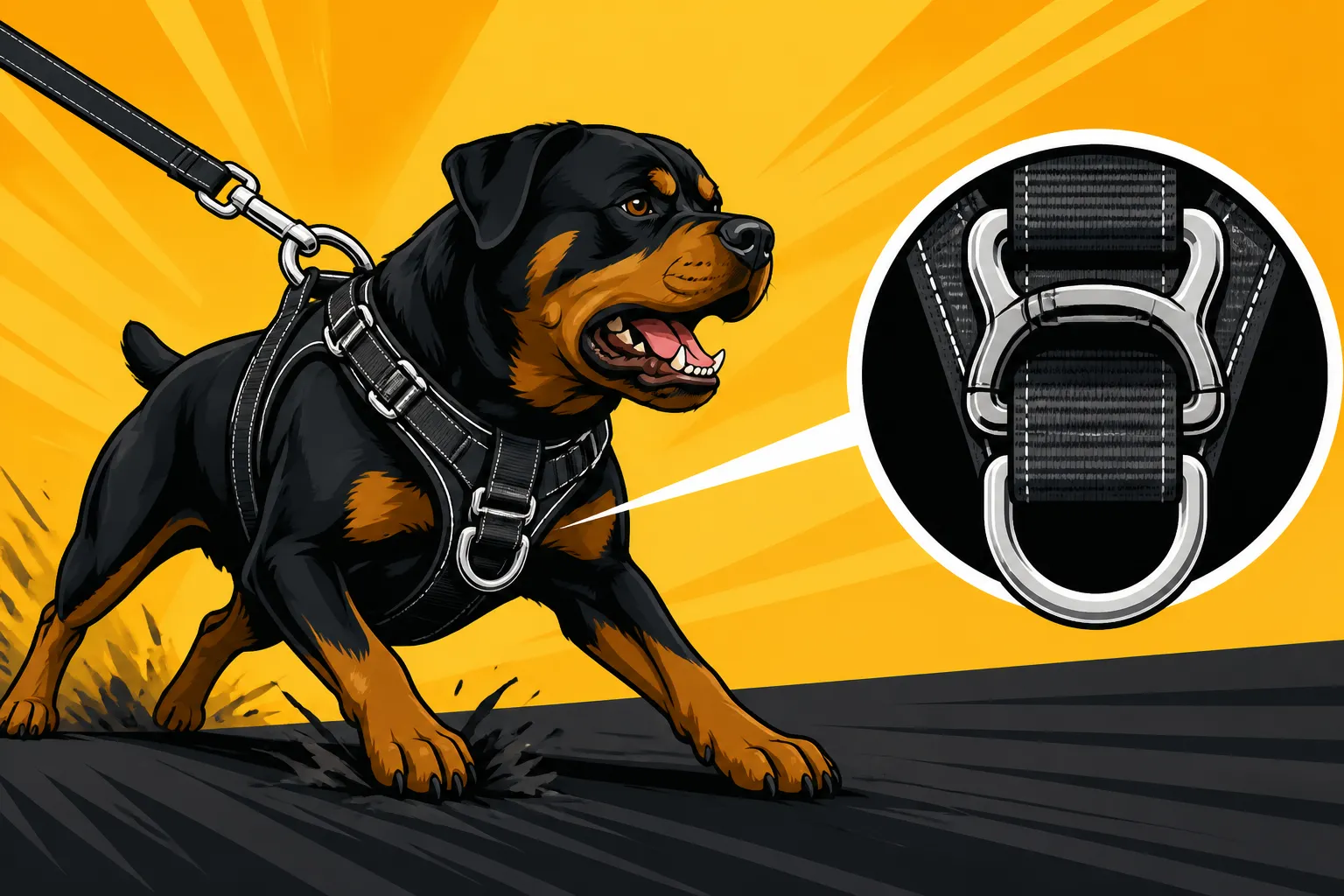
Harness Hardware That Holds a Pulling Rottweiler
If you've ever found yourself bracing against a sudden surge on the leash, feeling the give of what you thought was a sturdy harness, you know the frustration – and the potential danger – when hardware can't stand up to the power of a Rottweiler. This guide is here to unravel the mystery of why some harness components fail and how to choose the truly robust hardware that will safely and reliably keep your powerful companion by your side.
The Unyielding Reality: Why Standard Harness Hardware Fails a Rottweiler
Let's face it, a Rottweiler isn't just "a big dog." They are a breed built for strength, with a low center of gravity and an incredible amount of power packed into their frame. When a standard harness, designed for an average-sized dog, is put to the test by a full-grown Rottweiler, it's often a recipe for disaster. Owners frequently lament how quickly buckles snap, D-rings bend, or stitching unravels, leaving them in a precarious situation. It’s not a reflection of your dog's training (though training is crucial, as we'll discuss), but often a simple failure of engineering to match canine brawn.
The Power Behind the Pull: Understanding Rottweiler Strength
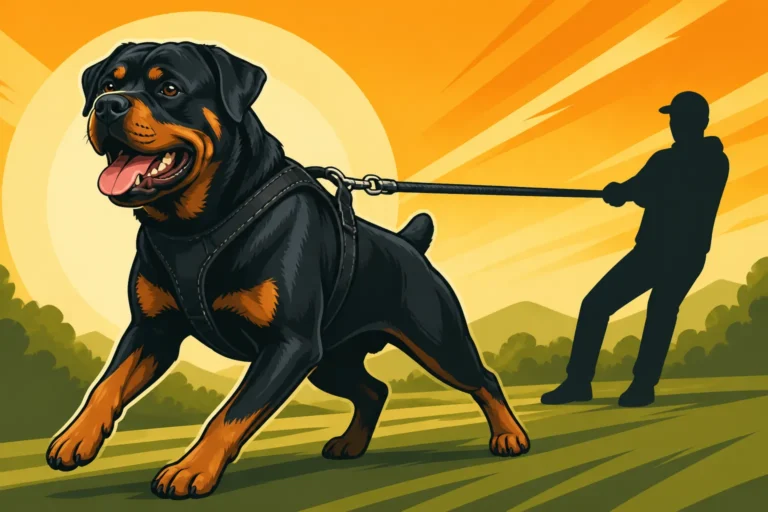
Imagine a 100-pound (or more!) animal, bred for generations to drive cattle, suddenly decide that squirrel across the street is the most fascinating thing in its world. That instant surge of power isn't just a gentle tug; it's a dynamic force, a combination of weight, muscle, and speed. A Rottweiler can easily generate hundreds of pounds of pull force when they're determined. Standard hardware, often made with thinner metals or plastics, is simply not engineered to withstand this kind of repeated, high-intensity stress. It’s like trying to tow a full-sized truck with a bicycle chain – it’s just not going to hold up. This immense power means that even a well-behaved Rottweiler can inadvertently stress weaker hardware during an unexpected lunge or sudden change in direction.
This isn't to say your Rottweiler is intentionally trying to break their gear. They're just being dogs, responding to their environment with the full capabilities of their physique. The challenge for us as owners is to anticipate this inherent strength and equip ourselves with gear that respects it. Anything less is not only an inconvenience but a significant safety risk, both for your dog and for those around you. We talk a lot about Teaching a Rottweiler Not to Pull at 110 Pounds, but even the best training needs the right tools to succeed.
Common Weak Points: Where Lesser Hardware Gives Out
So, where do these failures typically occur? Often, it's the points of connection: the D-rings where the leash attaches, the buckles that secure the harness around the dog, and the stitching that holds the webbing together. Cheap D-rings might be made from thin, unwelded wire that can easily pull open under pressure. Plastic buckles, while convenient, can become brittle with age or extreme temperatures, leading to sudden cracks and breaks. Even metal buckles can fail if they're not robust enough or are poorly designed.
Another common weak point is the webbing itself and the way it's stitched. Flimsy nylon webbing can fray quickly, and single-line stitching can rip right through, especially if it's not reinforced at stress points. Many mass-produced harnesses prioritize cost and aesthetics over true durability, making them visually appealing but functionally inadequate for a powerful breed like a Rottweiler. This is why you might feel like you're constantly replacing harnesses, only to be disappointed again.
The Dangerous Consequences of Sudden Failure
The implications of a harness failure are far more serious than just losing a few dollars on a cheap product. A sudden break can mean your Rottweiler is instantly off-leash in an uncontrolled environment. Imagine this happening near a busy street, in a park with other dogs or children, or when encountering wildlife. The risk of injury to your dog from traffic, to another dog from an uncontrolled interaction, or even to a person if your Rottweiler, though friendly, is perceived as a threat, is immense.
Beyond the immediate physical dangers, there's the emotional toll. The panic of a runaway dog, the fear of what might happen, and the potential for costly vet bills or liability claims are all very real consequences. This is why investing in truly reliable hardware isn't just about comfort or convenience; it's a critical component of responsible Rottweiler ownership and safety. The momentary peace of mind that comes from knowing your equipment won't fail is priceless.
Decoding Durability: What Makes for Rottweiler-Proof Harness Hardware
Now that we understand the problem, let's talk about solutions. When selecting a harness for your Rottweiler, you need to think of it as critical safety equipment, not just an accessory. The difference often lies in the quality and design of its individual components, particularly the hardware. You're looking for materials and construction methods that can confidently handle the force your Rottweiler can generate, day in and day out, for years to come.
Material Superiority: Stainless Steel and Industrial-Grade Composites
The first line of defense in durable harness hardware is the material itself. For metal components like D-rings, leash clips, and even some buckles, stainless steel is the gold standard. It's incredibly strong, resistant to rust and corrosion (which can weaken other metals over time), and maintains its integrity even under extreme stress. Avoid chrome-plated mild steel, which can chip, rust, and expose a weaker core. Look for solid, heavy-gauge stainless steel.
For buckles and other non-metallic parts, industrial-grade composite materials are essential. These aren't your typical thin plastic buckles. We're talking about high-density, impact-resistant polymers often used in climbing gear or military applications. These materials are designed to withstand significant force, temperature fluctuations, and UV exposure without becoming brittle or cracking. While some high-quality nylon or plastic buckles can be good, always prioritize those that feel substantial and solid. Sometimes, finding these quality materials requires a bit more searching online, perhaps on platforms like Amazon, where you can read detailed product specifications and user reviews.
Welded Rings and Robust Buckles: The Non-Negotiables
Beyond the material, the construction of the metal rings and buckles is paramount. All D-rings, O-rings, or any other metal loops on the harness should be welded shut. An unwelded ring, even if it's thick, has a weak point where the two ends meet and can be pried open by a determined pull. A welded ring, by contrast, forms a continuous, unbreakable loop. This small detail is often overlooked but is absolutely critical for a dog of a Rottweiler's power.
Buckles need to be equally robust. If they are metal, they should be thick, smoothly finished, and have a secure locking mechanism that won't accidentally release. If they are composite, look for "side-release" buckles that have a very strong spring and a clear, audible click when engaged. Some premium harnesses even feature redundant locking mechanisms, offering an extra layer of security. Always test the buckle yourself: does it feel secure? Can it be easily dislodged with a tug? It’s also worth considering if the buckle is recessed or protected in some way, minimizing accidental pressure releases.
Reinforced Stitching and Heavy-Duty Webbing
The strongest hardware in the world is useless if the webbing it's attached to rips or the stitching gives out. For a Rottweiler, you need heavy-duty webbing, typically thick nylon or polyester, with a high tensile strength. This webbing should feel substantial in your hand, not thin or flimsy. Look for multiple lines of stitching at all stress points, especially where the hardware is attached. "Box stitching" or "bar tack" patterns, which create a dense, reinforced area, are signs of quality craftsmanship.
Furthermore, consider the number of layers of webbing used, particularly at critical junctions. Double or triple-layered webbing provides extra strength and abrasion resistance, meaning the harness will last longer and be less likely to fail under strain. Good manufacturers will often use contrasting thread colors, not just for aesthetics, but to make the quality of the stitching evident. Remember, the harness is only as strong as its weakest link, and often, that link isn't the shiny metal but the fabric and thread holding it all together. When thinking about The Long Line Strength a Rottweiler Needs, the same principles apply to the webbing of your harness.
Choosing Your Armor: Harness Types and Their Hardware Demands
With a clear understanding of what makes hardware durable, let's explore how different harness types integrate these components and what to look for based on your specific needs with a Rottweiler. Each type has its own pros and cons, especially concerning how it distributes pressure and leverages its hardware.
| Harness Type | Primary Leash Clip Location | Hardware Focus | Best For | Considerations |
|---|---|---|---|---|
| Back-Clip | Top of the back | D-ring, Buckles, Webbing | Everyday walks, minimal pulling | Can encourage pulling, hardware must be strong |
| Front-Clip | Chest | Front D-ring, Buckles | Training to reduce pulling, better control | D-ring must be robust, comfortable chest strap |
| No-Pull (Specialized) | Front, sometimes under armpit | Front D-ring, Tensioning loops | Dogs with strong pulling habits | Often has more buckles/adjustment, check for chafing |
| Full-Body/Tracking | Multiple points | Heavy D-rings, Multiple buckles | Working, tracking, maximum security | More bulky, ensure proper fit and weight distribution |
Front-Clip and Back-Clip Harnesses: A Hardware Perspective
Traditional back-clip harnesses attach the leash to a D-ring located on the dog's back. For a Rottweiler, while convenient for a dog that doesn't pull, this design can inadvertently reinforce pulling behavior. When a strong dog pulls against a back-clip, their opposition reflex kicks in, making them pull even harder. The hardware here, particularly the D-ring, needs to be exceptionally strong, welded stainless steel to avoid catastrophic failure under sustained pressure. The buckles securing the harness around the chest and girth also need to be industrial-grade to prevent blowout.
Front-clip harnesses, on the other hand, feature a leash attachment point on the dog's chest. When a Rottweiler pulls, the leash redirects them sideways, steering them back towards you and making pulling less effective and less comfortable. This design is often recommended for Rottweiler Leash Pulling at Adult Weight. The hardware on a front-clip harness requires the same high standards for the chest D-ring, as it takes the primary force of any pull. Additionally, the webbing and stitching around the chest area need to be especially reinforced, as this is where the leverage is applied. Some handlers find that combining a front-clip harness with early training, perhaps from resources like BAXTER & Bella, can make a huge difference in managing a powerful puller.
Specialized No-Pull Designs and Their Unique Components
Beyond the basic front-clip, there are various specialized "no-pull" harness designs. These often incorporate additional straps, tightening mechanisms, or different attachment points to discourage pulling. For instance, some designs have loops that gently tighten around the dog's chest or legs when they pull, providing a mild deterrent. The hardware on these harnesses can be more complex, with multiple buckles, adjusters, and sometimes even elastic components.
When evaluating these, apply the same stringent hardware standards. Ensure all buckles are robust and secure, especially if they are part of a tensioning system. The D-rings, whether front or back, must be welded and strong. Pay close attention to the stitching on any moving or adjustable parts, as these areas experience increased friction and wear. While these harnesses can be very effective for managing a pulling Rottweiler, their complexity means more potential points of failure if the hardware isn't top-notch. Comfort for your dog is also key, as some designs can rub or chafe if not properly fitted.
Full-Body Harnesses: Maximum Security for Maximum Strength
For working Rottweilers, those engaged in activities like tracking, carting, or even simply for owners seeking the ultimate in security, full-body or "tracking" harnesses are an option. These harnesses distribute pressure over a larger surface area of the dog's body, often with straps over the back, chest, and sometimes even the hindquarters. The hardware on these types is typically designed for maximum durability, often featuring multiple heavy-duty, welded D-rings (for different attachment points or even for attaching weights for conditioning), and extremely robust buckles.
These harnesses are built to withstand immense pressure and provide excellent control. They often come with thicker, wider webbing to prevent digging into the dog's flesh, and redundant stitching throughout. If you're looking for a harness that feels truly indestructible, this might be the category to explore. However, they can be bulkier and require careful fitting to ensure comfort and freedom of movement. For general walks, they might be overkill, but for specific tasks or a particularly strong and determined puller, they offer an unparalleled level of hardware security. Just be sure to correctly size them, as Harnesses and Head Halters Sized for a Rottweiler can vary greatly by manufacturer.
Beyond the Purchase: Maintaining Your Rottweiler's Harness Hardware
Acquiring a high-quality harness with superior hardware is a fantastic start, but it's not the end of the journey. Even the best equipment requires regular care and inspection to ensure it remains safe and functional. Think of it like maintaining your car – you wouldn't expect it to run perfectly forever without checks and tune-ups. Your Rottweiler's harness is no different, especially given the forces it's subjected to daily.
Regular Inspection: Catching Wear Before It's Too Late
Make it a habit to inspect your Rottweiler's harness thoroughly at least once a week, and certainly before any major outing. Look at every single piece of hardware. Are the D-rings still perfectly welded? Are there any signs of bending, corrosion, or pitting? Do the buckles snap securely? Do they show any cracks, even hairline ones, especially in plastic components? Check the springs on the side-release buckles to ensure they're still strong and aren't sticking.
Beyond the hardware, examine the webbing. Look for fraying, thinning, or cuts, particularly around the edges and where it meets the hardware. Tug on all the stitched seams. Do they feel loose? Are any threads pulling out? Pay special attention to areas that experience the most friction, such as under the armpits or where straps cross. Catching these small signs of wear early can prevent a major failure down the line. If you notice any significant deterioration, it's time to consider a replacement.
Cleaning, Storage, and Protecting Your Investment
Just like any piece of gear, a harness needs to be kept clean. Dirt, grit, mud, and even natural oils from your dog's coat can accumulate and contribute to wear and tear. Gritty particles can abrade webbing and get into buckle mechanisms, making them stiff or prone to failure. Follow the manufacturer's cleaning instructions, but generally, a gentle hand wash with mild soap and water, followed by air drying, is sufficient. Avoid harsh chemicals or machine washing unless specifically stated, as these can degrade materials.
Proper storage is also important. Don't just toss the harness into a pile in the garage where it can get tangled, crushed, or exposed to extreme temperatures or chemicals. Hang it up in a dry, temperate place, away from direct sunlight (UV rays can degrade nylon over time). Keeping it clean and stored correctly not only extends its life but ensures that the hardware is always ready for action. Rottweiler Ear Care Under a Drop Ear isn't the only routine cleaning that makes a difference!
Knowing When It's Time for a Replacement
Despite your best efforts, nothing lasts forever. Even the highest quality harness will eventually show signs of significant wear. The decision to replace a harness isn't always easy, especially if it's been a long-time companion for your Rottweiler. However, prioritizing safety means knowing when to retire a piece of equipment. If you find yourself repeatedly noticing frayed edges, a buckle that's not quite as snappy as it used to be, or a D-ring that looks slightly stretched, don't wait for it to fail.
A good rule of thumb: if you have any doubt about the integrity of any part of the harness, it's time for a new one. The cost of a new, well-made harness is minuscule compared to the potential costs and heartache associated with a catastrophic failure. Consider setting a mental "lifespan" for your harness, perhaps every couple of years for heavy-duty use, and factor in a replacement into your budget. This proactive approach ensures your Rottweiler always has the secure, reliable connection they need, giving you the peace of mind to enjoy your walks together.
Disclaimer
This article is for general informational purposes only and does not constitute professional advice. Laws, prices and regulations vary by location and change over time. Consult a qualified professional for guidance on your specific situation.