Why a Rottweiler Freezes Over Its Bowl
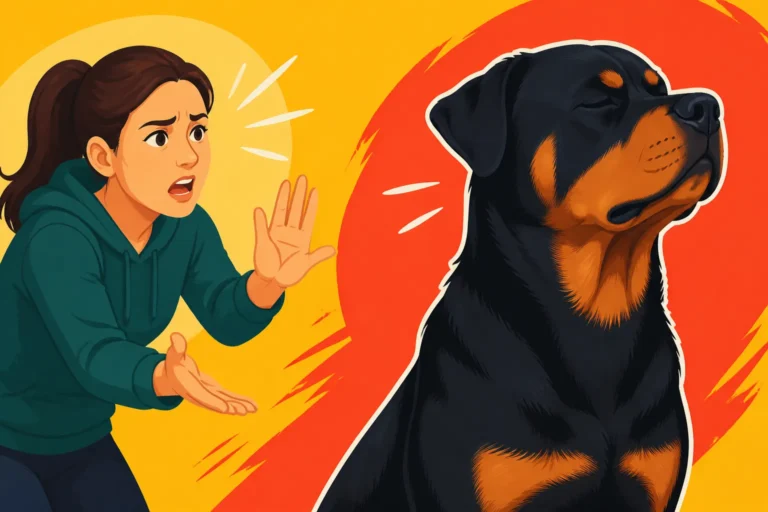
There’s a unique kind of tension that grips a household when a Rottweiler, a dog known for its steadfast loyalty and sometimes imposing presence, suddenly clamps down over its food bowl, freezing in place with an unreadable stare. This behavior, often misinterpreted or simply seen as "being protective," is actually a clear signal of resource guarding, and it can be incredibly frustrating – and even a little scary – for owners. This guide will walk you through why your Rottweiler might be doing this, what it means for your home, and crucially, how to gently and effectively address it.
Understanding Why Your Rottweiler Freezes Over Its Bowl
When your Rottweiler suddenly becomes rigid over their food bowl, perhaps dropping their head low or giving a hard stare if you approach, they are exhibiting a behavior known as resource guarding. It's not just about a stubborn streak; it's a deep-seated instinct amplified by various factors. For a large, powerful breed like the Rottweiler, understanding the roots of this behavior is key to managing and mitigating it safely.
The Instinctive Roots of Resource Guarding
At its core, resource guarding is a natural, survival-driven behavior for many animals, including dogs. In the wild, access to food means survival, and protecting that food from rivals or perceived threats is paramount. Your Rottweiler, despite living in a cozy home with a full belly, still carries these ancient instincts within them. They perceive their food, toys, sleeping spots, or even their favorite human as valuable resources that might be taken away. When they "freeze" over their bowl, it's their way of saying, "This is mine, and I'm not letting it go." It's not a sign of aggression in the typical sense, but rather an assertion of ownership driven by an innate desire to secure vital assets.
Think about a pack of wild canids; the higher-ranking individuals get first dibs, and they certainly don't tolerate challenges to their meal. While your home isn't a wild pack, your Rottweiler's primal brain still defaults to these survival mechanisms. They aren't trying to be "bad"; they are simply responding to a perceived threat based on millennia of evolutionary programming. This behavior can be particularly pronounced in breeds like Rottweilers, who were historically bred for guarding and protection roles, carrying a stronger predisposition to protect what they consider theirs. You can learn more about this natural tendency in Rottweiler Resource Guarding at Home.
Early Experiences and Learned Behavior
While instinct plays a huge role, a Rottweiler's individual experiences, particularly during their formative puppy months, can significantly shape whether resource guarding manifests strongly. A puppy who had to compete for food in a large litter, or one who was routinely bothered or had their food taken away by humans or other animals, might quickly learn that they need to guard their bowl aggressively to eat in peace. Even subtle actions on our part can inadvertently teach them this. For instance, if you've ever reached into their bowl to "show them who's boss" or taken a bone away without offering a fantastic trade, you might have unintentionally reinforced their need to protect.
Conversely, a puppy raised in an environment where resources were plentiful and human interaction around food was consistently positive and non-threatening is less likely to develop severe guarding issues. This is why early positive exposure is so vital. If a dog has learned that humans approaching their bowl always means good things (like extra treats dropped in, or even better food appearing), then they are less likely to perceive an approach as a threat. The key is to shift their perception from "you're taking something" to "you're giving something."
What "Freezing" Actually Looks Like
The "freeze" is often one of the first and most subtle signs of resource guarding, though it can escalate quickly. It's more than just standing still. When your Rottweiler freezes over its bowl, you might notice a very specific set of body language cues:
- Body Posture: Their body becomes rigid and still, often leaning over or directly shielding the bowl. Their weight might shift, planting them firmly over the food.
- Head Position: The head is often lowered, sometimes even into the bowl itself, with their eyes fixed on the approaching person or animal, or intensely on the food itself.
- Stiff Tail: If your Rottweiler has a natural tail, it will likely be held stiffly, possibly slightly lowered or straight out, rather than wagging loosely.
- Eyes: This is a big one. You might see what's called "whale eye," where the whites of their eyes are visible on either side, indicating tension and stress. Their gaze will be hard and unwavering, not soft or blinking.
- Mouth and Lips: The lips might be tightly closed, or you might see a subtle lifting of the lip, showing just a hint of teeth. A slight tension around the muzzle is common.
- Sounds (or lack thereof): Sometimes, the freeze is completely silent, which can be even more unnerving because it's a precursor to a growl or snap. If a sound does accompany it, it might be a low, rumbling The Rottweiler Grumble That Is Not a Growl or a soft growl that quickly becomes more intense if the perceived threat continues to advance.
Recognizing these subtle cues early is crucial. The freeze is a warning signal. If ignored, it's likely to escalate to growling, snapping, or even biting. Understanding these signals helps you intervene before the situation becomes truly dangerous.
The Risks of Allowing Resource Guarding to Continue
Ignoring resource guarding, especially in a powerful breed like a Rottweiler, is like ignoring a ticking time bomb. What starts as a subtle freeze over a food bowl can quickly escalate, causing serious issues for the dog, the family, and anyone who interacts with your pet. The risks are not just theoretical; they are very real and can have lasting consequences.
Escalation to Aggression
The most significant risk is the escalation of the behavior to overt aggression. The "freeze" is essentially a dog's polite (in canine terms) request for you to back off. If that request is ignored, the dog will feel compelled to use stronger signals to communicate its discomfort and intent to guard. This progression often looks like this:
- Freeze: The initial, silent warning.
- Growl: A vocal warning that signals clear displeasure and a threat.
- Snarl/Lip Curl: More intense visual warning, showing teeth.
- Snap/Air Bite: A warning bite that doesn't make contact or barely nips.
- Bite: Contact is made, ranging from a quick nip to a serious puncture.
Many owners make the mistake of punishing a growl, believing they are "fixing" the problem. However, punishing a growl only teaches the dog not to warn you. It removes their communication, meaning they might skip the growl and go straight to a bite in the future, which is far more dangerous. Why You Should Never Punish a Rottweiler Growl explains this critical concept in depth. Allowing the guarding to continue reinforces the idea that aggression is a successful strategy for keeping valuable resources, making future aggressive responses more likely and potentially more severe.
Impact on Household Harmony
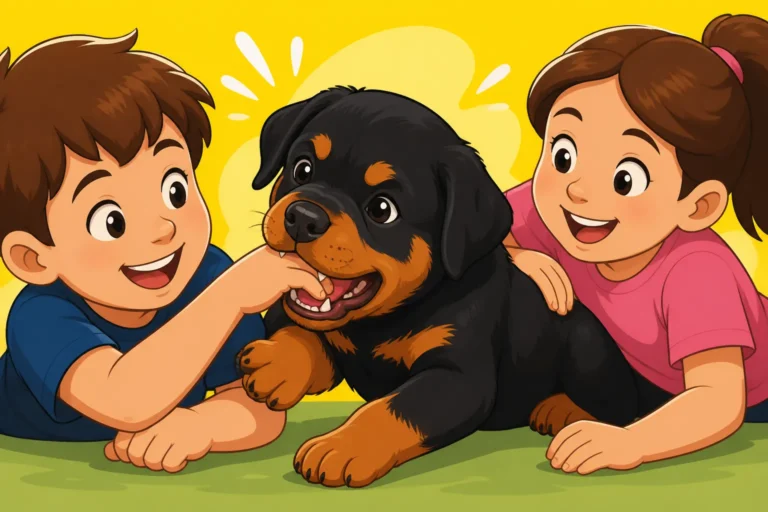
Resource guarding can severely disrupt the peace and enjoyment of your home. Imagine a scenario where mealtimes become a source of anxiety, not just for your Rottweiler, but for every family member. Children might be too scared to walk past the dog's bowl, or even enter the kitchen while the dog is eating. Other pets in the house might also be at risk; a guarding Rottweiler won't discriminate and can become aggressive towards another dog or cat who simply walks too close. This creates an environment of stress and fear, diminishing the quality of life for everyone involved.
It makes simple daily routines, like refilling the water bowl or cleaning around their eating area, fraught with tension. You might find yourself tip-toeing around your own home, constantly trying to avoid triggering your dog. This isn't fair to you, your family, or your Rottweiler, who is also living in a state of heightened anxiety around their perceived "stuff." A dog that guards its bowl can also start guarding other things – toys, sleeping spots, even specific people – leading to a pervasive problem. A Rottweiler That Guards a Person talks about this advanced form of guarding.
Safety Concerns for Family and Guests
Beyond household harmony, the direct safety implications are profound. A large, strong breed like a Rottweiler, even with a single bite, can cause significant injury. If a child, unknowing or simply curious, approaches a guarding dog, the consequences can be tragic. Guests visiting your home might inadvertently cross an invisible boundary, leading to an unexpected and dangerous encounter.
Consider a scenario: a visiting niece drops a toy near your Rottweiler's bowl. She reaches to pick it up, and your dog, deep in a guarding trance, snaps. Or perhaps a family member needs to intervene during a sudden illness or emergency, but your dog is guarding its critical resource. This behavior limits your ability to safely handle and care for your dog in unexpected situations. It also carries legal and ethical responsibilities; as an owner, you are accountable for your dog's actions, and a bite incident can lead to severe emotional, financial, and legal repercussions. Addressing resource guarding isn't just about training; it's about ensuring the safety and well-being of everyone who shares a space with your powerful companion.
Practical Strategies to Address Bowl Guarding
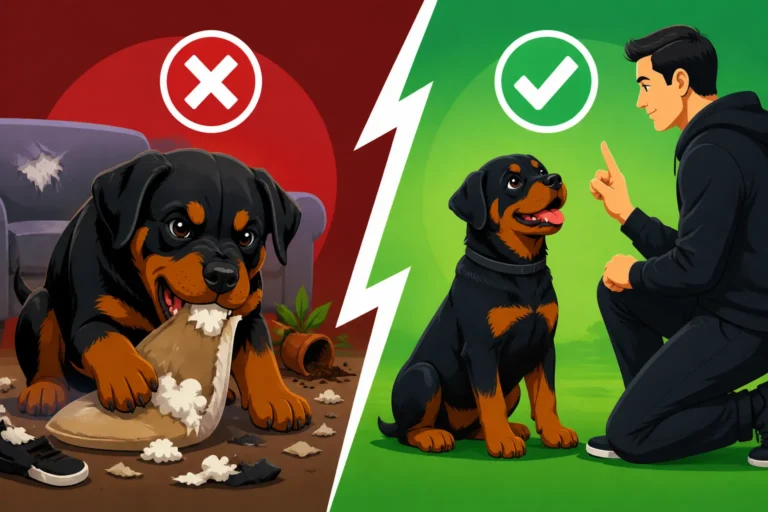
Addressing resource guarding requires a thoughtful, consistent, and positive approach. It’s about changing your Rottweiler’s emotional response to people approaching their food, transforming fear or possessiveness into anticipation of good things. Remember, punishing resource guarding often makes it worse, driving the behavior underground and making it more dangerous.
Building Trust Through Positive Association
The core of tackling bowl guarding is to teach your Rottweiler that human presence near their food always means something good is about to happen, not something bad. This fundamentally shifts their perception from threat to reward.
Here’s how you can start:
- "Walk-by and Drop" Method: When your Rottweiler is eating, walk casually past their bowl at a distance where they show no signs of freezing or guarding. As you pass, gently toss a high-value treat (like a piece of cooked chicken, cheese, or hot dog) into their bowl or near it. Continue walking. Do not stop, hover, or try to pet them. Repeat this frequently during meal times, gradually decreasing the distance until you can walk right by, drop a treat, and move on without them reacting negatively. The goal is for them to look forward to you approaching because it means bonus treats!
- Gradual Proximity: Start by simply being present in the room while they eat, ensuring you are far enough away that they remain relaxed. Slowly, over days and weeks, reduce that distance. Each time you get a little closer without a reaction, that's a win. Always maintain a calm, non-threatening demeanor.
- Positive Reinforcement for Calmness: If your Rottweiler looks up at you while eating with a relaxed expression (no whale eye, no stiff body), mark that moment with a quiet "good dog" and toss another treat. You're rewarding their calm acceptance of your presence.
This method, though requiring patience, is incredibly powerful because it rewires their brain to associate you with generosity, not deprivation. For consistent positive training, resources like BAXTER & Bella offer online courses that guide owners through these types of behavior modifications step-by-step, ensuring you build a solid foundation of trust.
The "Trade-Up" Method for Valuables
Sometimes, you need to take something from your Rottweiler, whether it’s a dangerous object they’ve grabbed or a beloved bone they're guarding. The "trade-up" method teaches them that giving something up voluntarily leads to an even better reward. This method works best for objects rather than the primary food bowl during meals, but the principles are the same:
- Offer a Higher-Value Item: If your Rottweiler has something they are guarding, approach them with an undeniably irresistible treat or toy – something truly better than what they have.
- Exchange, Don't Snatch: Hold the higher-value item near their nose. The moment they release what they have to take your offering, immediately take the guarded item. Don't engage in a tug-of-war or try to snatch it; make the exchange quick and smooth.
- Practice Consistently: Start practicing with low-value items (like a regular chew toy) that they aren't intensely guarding. Offer a high-value treat in exchange. Once they take the treat, give them back the original item (or a different, equally good one) as an added bonus, reinforcing the idea that giving things up is not a permanent loss. Over time, you can work up to items they value more.
This method builds confidence and reduces anxiety around you taking things. You're teaching them that surrendering an item isn't a loss, but a temporary exchange for something even better. Taking a Bone Back From a Rottweiler Safely provides excellent detailed steps for this process.
Management Techniques to Prevent Incidents
While you're working on behavior modification, it's crucial to implement management strategies to prevent guarding incidents from happening. Prevention is always better than reaction, especially with a strong dog.
- Designated Eating Space: Feed your Rottweiler in a quiet, undisturbed area where they won't feel the need to guard against family members, other pets, or even loud noises. This might be a separate room, a crate, or a corner away from foot traffic. Make sure children and other pets know this is a no-go zone during meal times.
- Separate Meals for Multi-Dog Households: If you have multiple dogs, feed them in entirely separate rooms or crates to eliminate competition. Even if they don't guard against you, they might guard against each other. Feeding a Rottweiler Away From Other Dogs offers more advice here.
- No Free-Feeding: Stick to scheduled mealtimes and pick up the bowl after 15-20 minutes, even if they haven't finished. Free-feeding can increase guarding because the food is always available and can be seen as an ongoing resource to protect.
- Supervise High-Value Items: Only give high-value chews or bones when you can supervise them closely, or in a safe, designated area where no one will approach. Products found on Amazon, like durable KONG toys stuffed with treats, can provide enrichment without creating intense guarding issues, as they are less likely to be perceived as something that will be "taken away" in the same manner as a bone.
- Use a Barrier: If necessary, use a baby gate or crate to create a physical barrier between your eating dog and the rest of the household during meals. This gives everyone peace of mind.
By combining these management techniques with positive training, you create a safe environment while you systematically work on changing your Rottweiler's underlying emotional response to food.
Preventing Resource Guarding in Rottweiler Puppies
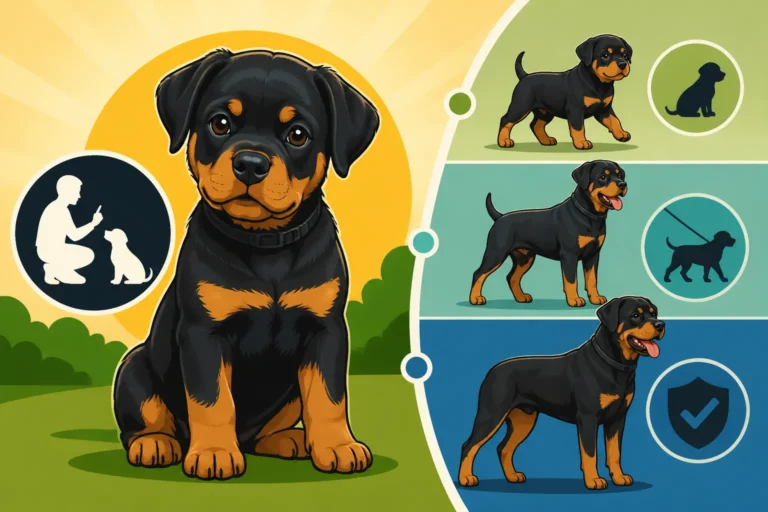
The best way to deal with resource guarding is to prevent it from ever starting. For Rottweiler puppies, whose guarding instincts can be strong, early and consistent proactive measures are absolutely critical. Starting right from the moment they come home sets them up for a lifetime of trust and calm mealtimes.
Early Socialization and Handling
A well-socialized puppy is generally a more confident and less anxious dog, which can reduce the likelihood of resource guarding. Exposing your Rottweiler puppy to a variety of positive experiences, people, places, and other friendly dogs helps them develop a resilient temperament.
- Puppy Classes: Enroll in puppy socialization classes. These provide a controlled environment for your puppy to interact with other dogs and people, learning appropriate social behaviors. Look for classes that incorporate positive reinforcement and address handling.
- Regular Handling During Meals: From day one, get your puppy comfortable with you being near their food. While they are eating, gently pet them on their back, touch their ears, or stroke their side. The goal is to make them associate human touch during meal times with comfort and safety, not threat. If they stiffen, back off slightly and proceed more slowly.
- Positive Mealtime Interruptions: Occasionally, during a meal, gently pick up their bowl for a few seconds (only if they are completely relaxed with your presence) and then immediately give it back, perhaps with a super special treat added in. This teaches them that you taking the bowl means it's coming right back, possibly even better than before. This practice is part of Rottweiler Puppy Training Through the First Year.
- Exposure to People: Introduce your puppy to various people, including children (under strict supervision), in a calm and controlled manner. Have friends or family members toss a treat into the puppy's bowl as they walk by, reinforcing positive associations with different individuals.
The more your puppy sees humans as generous providers and positive presences, the less likely they are to feel the need to guard. Socializing a Rottweiler Puppy Properly has more ideas on broad socialization.
Setting Up a Safe Eating Environment
The physical environment where your Rottweiler puppy eats plays a huge role in preventing guarding. The aim is to create a peaceful, secure space where they feel no competition or threat.
- Quiet Location: Designate a specific, quiet spot for your puppy's meals that is away from high-traffic areas, distractions, and other pets. A corner of the kitchen, a laundry room, or even their crate can work perfectly.
- No Competition: If you have other pets, always feed them separately. Even if your older dog isn't a resource guarder, their presence might trigger competitive instincts in a young Rottweiler puppy. Use baby gates or feed them in different rooms.
- Consistent Schedule: Feed your puppy on a consistent schedule. This helps build routine and reduces anxiety about when their next meal will come, which can lessen the perceived need to guard.
- Appropriate Bowls and Surfaces: Use sturdy, non-tippable bowls. Some puppies might guard more if their bowl slides around. Consider a non-slip mat underneath. Also, avoid raised bowls for puppies, as some studies suggest this could increase bloat risk in large breeds like Rottweilers, and there's no evidence it reduces guarding.
Teaching Gentle Taking and Sharing
Beyond just the bowl, teaching your Rottweiler puppy to be comfortable with you taking things from them and to share is essential. This builds a foundation for handling all types of resources.
- "Leave It" and "Drop It": Start teaching these commands early with low-value toys and treats. "Leave It" teaches them to ignore an item, while "Drop It" teaches them to release an item from their mouth. Reward generously when they comply. These commands are invaluable for preventing guarding of objects.
- Controlled Play: Engage in supervised play with toys. During play, periodically ask your puppy to "drop it," reward them when they do, and then immediately give the toy back or offer a different toy. This teaches them that giving up a toy doesn't mean it's gone forever.
- Treat Games: Play games where you hold a treat in your hand and only release it when they offer a calm, gentle lick or take it softly. This helps in Teaching a Rottweiler to Take Treats Gently. Avoid letting them snatch or "mug" treats from you.
- Introducing Different Objects: Offer your puppy a variety of chew toys and bones. Ensure they have access to plenty of appropriate chews so they don't feel a scarcity that might lead to guarding. Occasionally, when they are relaxed with a chew, walk by and gently toss an even better chew next to them, teaching them that your approach is always positive.
By proactively integrating these strategies into your Rottweiler puppy's upbringing, you can significantly reduce the chances of resource guarding developing into a serious issue, fostering a much happier and safer environment for everyone.
Disclaimer
This article is for general informational purposes only and does not constitute professional advice. Laws, prices and regulations vary by location and change over time. Consult a qualified professional for guidance on your specific situation.