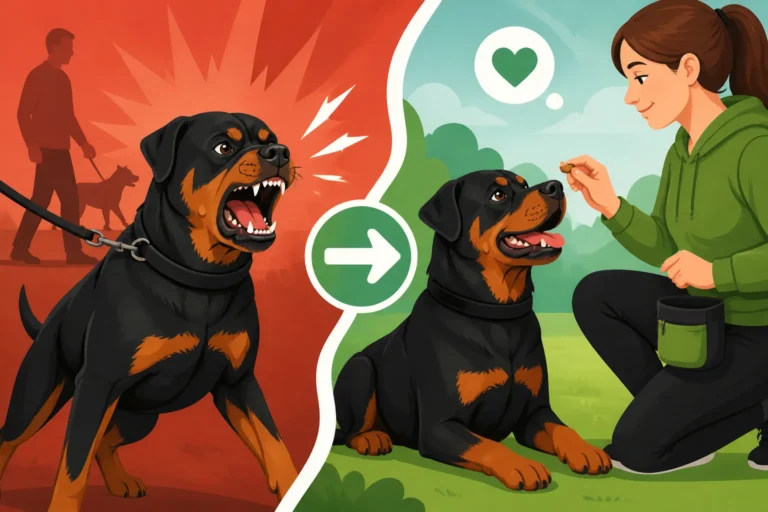
Teaching a Rottweiler to Take Treats Gently
It’s a scenario many Rottweiler owners know all too well: you go to offer your beloved companion a treat, and instead of a gentle, polite take, you get a lunge, a snap, or a mouth that feels like a vice clamp on your fingers. It’s not aggression, not usually anyway, but an overwhelming enthusiasm that can be painful and, let’s be honest, a little alarming with a dog of this size and power. This guide is here to walk you through how to teach your Rottweiler to take treats with the grace and delicacy you both deserve, turning those treat moments into enjoyable, bonding experiences rather than a test of your finger strength.
Understanding Why Rottweilers Can Be Rough with Treats
Before we dive into training techniques, it's important to understand the 'why' behind your Rottweiler's less-than-gentle treat manners. It's rarely malicious, but rather a combination of natural instincts, learned behaviors, and sheer excitement. A big dog with a powerful jaw doesn't always realize its own strength, and it's up to us to teach them the nuance.
The Power and Enthusiasm of a Rottweiler
Let's face it, Rottweilers are big, strong dogs. They were historically bred for jobs that required immense physical power, like driving cattle and pulling carts, earning them the name "Metzgerhund" or "butcher's dog" in their native Rottweil. That power translates to an incredibly strong jaw and a robust body. When a dog like that gets excited about a treat, their natural inclination might be to grab it quickly and firmly before it disappears. They aren't trying to hurt you; they're simply being efficient and enthusiastic. They might not have the fine motor control in their mouth that a smaller, more delicate breed might possess, and they rely on us to guide them.
Think about it from their perspective: a delicious morsel is appearing, and they want it! Their brains are often saying "get it now!" This raw enthusiasm, combined with their physical capabilities, means they might inadvertently be too rough. It’s not about them being mean; it’s about learning control and refinement.
Lack of Early Bite Inhibition Training
Many puppies naturally learn bite inhibition through play with their littermates and mother. When a puppy bites too hard, a littermate will yelp and stop playing, teaching the aggressor to temper their bite. Unfortunately, this learning can sometimes be cut short if puppies are separated from their litter too early, or if humans don't continue this vital training. If a Rottweiler puppy wasn't consistently taught Teaching a Rottweiler Puppy That Teeth Hurt when they were young, those rough puppy nips can easily escalate into rough treat-taking habits as an adult.
It’s crucial to understand that even when they’re puppies, teaching them gentleness with their mouths is paramount. A Rottweiler puppy’s mouth feels pretty sharp, and if they’re allowed to mouth and grab without correction, they won't develop the soft mouth required for delicate treat taking. This often links directly into general Rottweiler Bite Inhibition and the Adult Mouth training, which should be a cornerstone of their early education.
Resource Guarding Tendencies
While not always the primary cause for rough treat taking, some Rottweilers can have underlying resource guarding tendencies. This isn't necessarily full-blown aggression, but a desire to secure valuable items quickly. A treat, especially a high-value one, is certainly a valuable resource. If your Rottweiler feels even a subtle need to snatch it before you change your mind, or before another perceived rival (even a phantom one) gets it, they might grab it with more force than necessary. This is especially true if they've had experiences where treats were taken away, or they had to compete for food. This tendency might manifest as a quick, hard grab, perhaps combined with a stiff body posture or a lowered head. Understanding the nuances of Rottweiler Resource Guarding at Home can provide context here, even if it's not the primary issue.
Foundational Steps for Gentle Treat Taking
Teaching your Rottweiler to take treats gently is a process that requires patience, consistency, and a few clever techniques. It's about setting them up for success and rewarding the behavior you want to see.
Starting with Low-Value Treats and Open Hand Delivery
When you begin this training, start with treats that are not super exciting. Think dry kibble or small, crunchy biscuits, not chunks of steak. The goal is to reduce their initial excitement so they can focus on how they take the treat, not just getting the treat. Offer the treat in an open palm, not pinched between your thumb and forefinger. This removes the risk of your fingers being accidentally nipped if they grab too enthusiastically.
Hold your hand flat, treat visible. If your Rottweiler lunges or snaps, immediately close your hand, hiding the treat. Do not say anything, do not reprimand. Just close your hand. Wait. As soon as they back off, even a tiny bit, or show a moment of stillness, open your hand again. The moment they approach gently, or even just touch your open palm with their nose softly, reward them by letting them take the treat. This teaches them that rough behavior makes the treat disappear, while gentleness makes it accessible. This simple, clear feedback loop is incredibly powerful.
The "Mouse Trap" Technique
This technique is a fantastic way to teach a Rottweiler to be incredibly gentle. Take a treat and place it firmly between your thumb and forefinger, but instead of offering it outright, hold your hand in a loose fist, with just a tiny bit of the treat peeking out. This is your "mouse trap."
When your Rottweiler tries to grab it too hard, their teeth will meet your fingers instead of the treat. It's not painful for you, but it's an unpleasant sensation for them and they won't get the treat. They'll quickly learn that a strong bite doesn't work. When they use their lips or tongue gently to try and get the treat, then you slowly open your fingers enough for them to take it. The moment they are gentle, they get the reward. This forces them to refine their mouth movements and practice using their lips and tongue instead of their teeth.
This method works wonders for dogs that tend to vacuum up treats with excessive force. You’ll be amazed at how quickly they learn the subtle finesse needed. Remember, consistency is key here. Every single treat, every single time. It might feel a little slow at first, but the payoff is a dog that understands soft mouths.
Using a Barrier or Another Hand to Create Space
Sometimes, the sheer anticipation can overwhelm a Rottweiler, and they forget their manners. For these situations, creating a physical barrier can be very helpful. You can use your non-treating hand to gently block their nose or mouth from lunging at the treat. Hold the treat in one hand, and place your other hand flat against their chest or under their chin, creating a momentary physical boundary. This helps them pause and think before acting.
Alternatively, some trainers suggest teaching them to "wait" or "take it" while the treat is on the ground, or even in a bowl at first, before moving to hand-feeding. This removes your fingers from the equation entirely during the initial stages. You can also have them sit or lie down first, using their body posture to encourage a calmer demeanor. The popular BAXTER & Bella online training program, for instance, often emphasizes foundational obedience and impulse control before moving to more advanced behaviors, which would absolutely translate here. Getting them into a controlled "sit" or "down" before offering the treat provides a much better starting point. Rottweiler Impulse Control Games can also be hugely beneficial in teaching them patience and self-control, which directly translates to gentle treat-taking.
Advanced Techniques and Consistency
Once your Rottweiler understands the basics of gentle treat taking, it’s time to generalize the behavior and ensure it sticks, regardless of the treat type or environment.
Practicing with High-Value Treats and Different Environments
As your Rottweiler becomes consistent with low-value treats, gradually introduce higher-value treats. Start with slightly more appealing biscuits, then move to soft training treats, and eventually to small pieces of chicken or cheese. Always start with the "mouse trap" or open palm technique. If they revert to rough behavior, go back to a lower-value treat until they regain their gentle manners. The idea is to incrementally increase the challenge.
Also, practice in various environments. Start in a quiet room at home, then move to a slightly busier area, then your backyard, and eventually during walks or at the park. Each new environment presents different distractions and requires your Rottweiler to apply their learned behavior in a new context. This generalization is crucial for making the behavior reliable. If you're doing Rottweiler Puppy Training Through the First Year, incorporating this into daily lessons is a must.
Teaching a "Gentle" Cue
Adding a verbal cue like "gentle," "softly," or "nice" can be incredibly helpful. Once your Rottweiler is reliably taking treats gently using the physical techniques described, start adding the verbal cue just before they take the treat. For example, hold out your open palm or use the "mouse trap" method, say "gentle," and then allow them to take the treat if they are soft. If they are rough, hide the treat and try again.
Over time, your Rottweiler will associate the word "gentle" with the action of taking a treat politely. This gives you a tool to remind them even before they approach your hand. This cue becomes especially useful when you have guests who might not be as adept at the physical cues, or when you're in a situation where you need quick, clear communication. You want them to understand that "gentle" means a soft mouth and controlled approach.
The Role of Consistent Reinforcement
Consistency is the absolute bedrock of all successful dog training, and especially so for a powerful breed like the Rottweiler. Every single person who interacts with your Rottweiler and offers them a treat must adhere to the same rules. If one family member allows rough treat-taking, it undermines all the gentle training you've put in. Make sure everyone in the household, and even regular visitors, understands and implements the chosen technique.
Using a designated "training pouch" that you fill with small, soft treats can also help ensure consistency. Companies like Ruffwear or Kurgo offer sturdy pouches that you can find on Amazon, making it easy to always have treats ready for practice. Reward every instance of gentle treat-taking, especially in the early stages. Don’t take their good manners for granted; let them know they did it right! This positive reinforcement solidifies the desired behavior. Remember, you're building a strong habit, and that takes repetition and unwavering consistency from everyone involved. This is part of Training a Rottweiler Before It Outweighs You – establishing good habits while they are still manageable.
Troubleshooting Common Challenges
Even with the best techniques, you might encounter some bumps in the road. Here's how to address common challenges when teaching your Rottweiler to take treats gently.
Dealing with Extreme Excitement or Impulsivity
Some Rottweilers are just bundles of pure joy and excitement, and that can make gentle treat taking a real hurdle. If your dog is so excited they're practically vibrating, making it impossible for them to even think about being gentle, you need to address the underlying excitement first. This is where basic obedience and impulse control come into play, which is a big part of what BAXTER & Bella focus on in their training philosophy.
Before even presenting the treat, ask for a reliable "sit" or "down-stay." If they can't hold it, they're too excited. Step back, wait for them to calm, or even put them on a short leash to manage their body. Only when they are calm and able to hold a basic command should you attempt to offer the treat using the "mouse trap" or open palm method. Gradually increase the duration of their "stay" before releasing them to take the treat. This teaches them that calm behavior, not frantic excitement, leads to rewards. You can also use redirection – if they lunge, immediately redirect them to a quick "sit" or "paw" command, reward that if they do it calmly, and then re-attempt the gentle treat.
When Accidental Nips Still Happen
Even with careful technique, sometimes a strong jaw or an overly eager grab can still lead to an accidental nip. It happens, especially if you're still in the early stages of training with a high-energy Rottweiler. When this occurs, it's crucial not to yelp or pull your hand away dramatically, as this can actually reinforce the behavior by turning it into a "game" or startling your dog.
Instead, let out a soft "ouch" or "nope," immediately withdraw the treat, and turn your back or walk away for a few seconds. This communicates that the interaction is over because of their rough mouth, without being punitive or scary. Re-engage only when your dog is calm. Repeat the exercise, making the conditions easier if needed (e.g., lower-value treat, more obvious barrier). This mirrors how puppies learn Rottweiler Puppy Play Biting With Children from each other; a sharp yelp and play stopping.
Generalizing the Behavior to All Family Members
One of the biggest challenges is ensuring that everyone in the household reinforces the same behavior. It's a common pitfall where one person diligently trains, but another, perhaps less patient or less aware, allows the dog to be rough. This creates confusion for your Rottweiler, who might think, "Oh, I have to be gentle with Mom, but I can grab from Dad." This can become a significant Rottweiler Behavior Problems That Start Small.
Hold a family meeting and demonstrate the gentle treat-taking method. Have everyone practice with your Rottweiler, providing real-time feedback. If children are involved, supervise closely and ensure they are comfortable and safe with the chosen technique. It might be helpful for children to use a spoon to offer treats initially, keeping their fingers further away, until your Rottweiler is absolutely reliable. Emphasize that consistency is not optional; it's essential for your dog's understanding and for everyone's safety. Consider putting up a small reminder near where treats are stored.
This uniform approach across all interactions is vital for your Rottweiler to truly grasp that gentle is the only way to get treats, regardless of who is offering them. It’s an investment in their manners and your peace of mind.
| Training Technique | Description | Benefits | Best For |
|---|---|---|---|
| Open Hand Delivery | Treat on a flat, open palm; close hand if dog is rough, open if gentle. | Protects fingers, clear consequence for roughness. | Initial stages, dogs with general enthusiasm. |
| "Mouse Trap" Fist | Treat barely visible in a loose fist; open for gentle lips/tongue. | Forces refined mouth control, direct feedback on tooth pressure. | Dogs that tend to snap or grab hard with teeth. |
| Barrier Hand/Body | Use other hand or body to create space, asking for a sit/stay first. | Manages extreme excitement, provides a moment to think. | Highly excitable or impulsive Rottweilers. |
| Verbal Cue "Gentle" | Add word "gentle" just before soft treat take. | Creates a clear command for polite behavior, useful for others. | Generalizing the behavior, long-term consistency. |
| Withdraw & Turn Away | If nip occurs, remove treat, turn back. | Non-punitive correction, teaches consequences. | Addressing accidental nips or continued roughness. |
Disclaimer
This article is for general informational purposes only and does not constitute professional advice. Laws, prices and regulations vary by location and change over time. Consult a qualified professional for guidance on your specific situation.